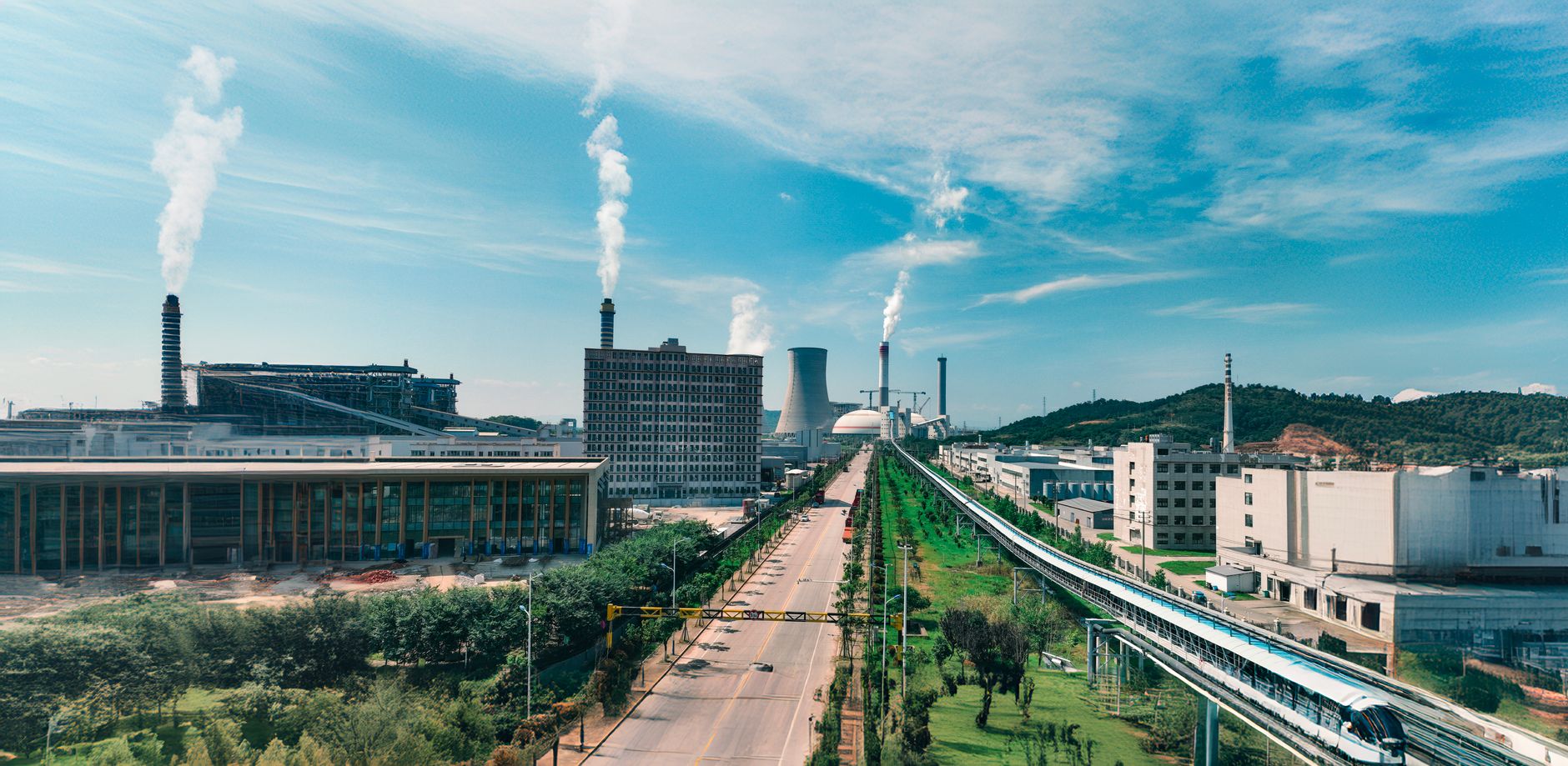
When business strategists compare China’s export provinces, Guangdong and Zhejiang dominate the conversation. But the province consistently generating the highest GDP in China is Jiangsu. Home to 85 million people and thirteen prefecture-level cities, Jiangsu sits along the Yangtze River with an industrial base so dense and diversified that it defies easy summary. In 2023, Jiangsu’s GDP reached approximately ¥128.2 trillion RMB (roughly $17.8 trillion USD at purchasing power parity), making it the wealthiest province on the Chinese mainland. For US-China trade professionals, understanding Jiangsu is not optional. It is foundational.
A Province Built on Industry, Not Ideology
Jiangsu’s industrial identity was not engineered by a single policy initiative. It accumulated over decades, shaped by geography, state investment, foreign direct capital, and a culture of practical entrepreneurship embedded in the Yangtze Delta. The province sits at the confluence of three forces: the financial weight of nearby Shanghai, the manufacturing legacy of its cities, and the global demand channels opened through Suzhou’s landmark Special Economic Zone.
The Suzhou Industrial Park (SIP), established in 1994 as a flagship joint venture between the Chinese and Singaporean governments, remains the single most important institutional innovation in Jiangsu’s modern economic history. Suzhou Industrial Park became the blueprint for China’s wider network of special economic zones – importing Singaporean governance standards, building world-class infrastructure before tenants arrived, and demonstrating that foreign firms could operate in China with predictable rules. Today, SIP hosts over 4,000 foreign-invested enterprises from more than 100 countries, generating annual industrial output exceeding ¥500 billion RMB. Samsung, Bosch, Siemens, and Honeywell all have significant Suzhou operations.
The Cities and What They Make
Jiangsu’s strength lies in geographic industrial clustering – a principle where entire supply chains concentrate within a few hundred kilometers, achieving efficiency that single-factory models cannot replicate.
Suzhou: Electronics, Semiconductors, and Advanced Manufacturing
Suzhou is Jiangsu’s largest industrial city by output. Its economy pivots on electronics, precision machinery, and – increasingly – semiconductors. Hua Hong Semiconductor, one of China’s leading chip foundries, operates facilities in Wuxi (Jiangsu’s third-largest city), producing 200mm and 300mm wafers for automotive, IoT, and power applications. SK Hynix and Samsung have invested in memory chip facilities in and around Wuxi. Suzhou itself hosts major facilities for electronics assembly firms serving Tier 1 global brands, with Samsung, Bosch, Siemens, and Honeywell all maintaining significant operations there.
Nanjing: Petrochemicals, Automobiles, and Research
Nanjing, Jiangsu’s provincial capital, carries a different industrial profile. The city is home to SAIC-Volkswagen’s Nanjing manufacturing base, which produced approximately 600,000 vehicles in 2022. Nanjing’s Yangtze River Industrial Corridor concentrates petrochemical capacity: Sinopec Yangzi Petrochemical processes over 11 million tonnes of crude oil annually. The corridor also hosts BASF-YPC, a joint venture between BASF AG and Yangzi Petrochemical that employs over 2,500 people and produces core chemicals for plastics, coatings, and adhesives distributed across East Asia.
Wuxi: Sensors, IoT, and the Semiconductor Push
Wuxi – a city of 7.5 million between Suzhou and Nanjing – has emerged as one of China’s most important semiconductor and sensor manufacturing clusters. The Ministry of Industry and Information Technology (MIIT) designated Wuxi as a key node in China’s Integrated Circuit industrial policy, channeling state-backed capital into Hua Hong’s expansion and local IC design firms. CMOS sensor manufacturer OmniVision chose Wuxi for a major packaging facility. Wuxi has also built an Internet of Things (IoT) industrial cluster – branded as the China Sensing Valley – that produces hardware components embedded in smart factories, logistics tracking systems, and consumer electronics globally.
Changzhou: Solar Cells and New Energy Equipment
Changzhou is where Jiangsu’s solar dominance crystallizes. The city hosts manufacturing operations for CATL’s battery production (a satellite facility separate from its main Fujian base), as well as solar cell manufacturers including Trina Solar, headquartered locally. China’s solar panel industry transformed from importer to global dominator in under two decades, and Changzhou sits at the heart of that story – supplying solar cells and modules to markets in the US, Europe, India, and Latin America representing hundreds of gigawatts of installed capacity.
Nantong: Textiles, Shipping, and Offshore Engineering
Nantong, on the northern bank of the Yangtze Delta, built its industrial base on textiles and has evolved into a center for ship repair, offshore platform construction, and heavy equipment manufacturing. COSCO Shipping Heavy Industry and China Merchants Heavy Industry both operate major Nantong yards. The city’s Rudong Offshore Wind Base has become China’s largest offshore wind equipment manufacturing cluster, assembling nacelles, towers, and foundations for domestic projects and increasingly for export to European wind developers.
Jiangsu and the Global Export Machine
In 2023, Jiangsu’s total trade in goods reached approximately $710 billion USD, making it China’s second-largest exporting province after Guangdong. The province exported $422 billion in goods – a figure exceeding the total exports of Mexico and South Korea. Electronics and electrical equipment account for the largest share, followed by mechanical equipment, textiles, chemicals, and steel products.
Foreign-invested enterprises (FIEs) play an outsized role in Jiangsu’s trade. Approximately 60% of the province’s exports originate from FIEs – significantly higher than most other Chinese provinces. This reflects the depth of Jiangsu’s integration into global supply chains: international companies manufacture here not merely for low labor costs (wages have risen sharply since the 1990s) but because the surrounding ecosystem of suppliers, logistics, technical talent, and infrastructure makes it the most cost-effective location for mid-to-high complexity manufacturing in East Asia.
The Office of the United States Trade Representative (USTR) tracks Jiangsu-origin goods as a significant component of US-China bilateral trade, particularly in electronics, solar equipment, and chemicals. Understanding Jiangsu’s export structure is directly relevant for any US importer assessing tariff exposure under Section 301 measures.
The Pharmaceutical Cluster: Often Overlooked, Strategically Critical
Jiangsu houses one of China’s two dominant pharmaceutical manufacturing clusters. The province is home to Jiangsu Hengrui Medicine, China’s largest domestic pharmaceutical company by revenue, with 2023 revenues of approximately ¥28.2 billion RMB. Hengrui has partnered with Merck, AstraZeneca, and Bristol-Myers Squibb in oncology out-licensing deals that have become a template for Chinese pharma’s global ambitions.
The Taizhou China Medical City, located in central Jiangsu, is a dedicated pharmaceutical and health technology special economic zone that has attracted over 3,000 enterprises – including CROs, CDMOs, generic drug manufacturers, and biotech startups. This cluster sits adjacent to a dense network of active pharmaceutical ingredient (API) producers that supply global generic manufacturers in India, Europe, and the United States.
Infrastructure That Enables Scale
Jiangsu’s logistics infrastructure matches its industrial ambition. The province operates 13 civil airports, including Nanjing Lukou International (NKG), which handled over 18 million passengers in 2023. Its port system includes Lianyungang – the eastern terminus of the New Eurasian Land Bridge – and Suzhou-area ports feeding Shanghai’s Yangshan container hub across the Yangtze estuary.
High-speed rail connectivity is exceptional even by Chinese standards. Jiangsu has four HSR corridors, including the Shanghai-Nanjing Intercity Railway (251km in 66 minutes), connecting every major city cluster to Shanghai’s financial hub. A company headquartered in Suzhou can source components from Changzhou, process them in Wuxi, and ship through Shanghai – all within a single morning’s logistics cycle.
What Jiangsu Means for US-China Business
For US companies, Jiangsu presents both opportunity and supply chain due diligence requirements. The province’s concentration of joint ventures, special economic zones, and English-capable business environments makes it arguably the most accessible province for foreign manufacturing partnerships. The Suzhou Industrial Park has an administrative system oriented toward making foreign businesses operational – tax registration, environmental approvals, labor law navigation – with staff who have processed hundreds of international companies.
On the risk management side, Jiangsu-origin products are subject to all Section 301 tariff layers that affect Chinese goods broadly, plus specific sector tariffs in solar, semiconductors, and EVs. US importers should audit their Jiangsu supplier base for tariff classification accuracy and country-of-origin documentation.
The Yangtze River Delta as a whole – encompassing Jiangsu, Shanghai, and Zhejiang – accounts for roughly a quarter of China’s GDP, a concentration of industrial and financial capability with few global parallels. Jiangsu is its northern anchor. For any professional sourcing, investing, or building partnerships in China, Jiangsu is not background context. It is the map itself.
Understanding how Jiangsu compares to Guangdong and Zhejiang’s export strategies is essential for sourcing professionals building a multi-region China procurement plan. The three provinces serve different product categories, price points, and buyer profiles – and mapping those distinctions accurately is the difference between a resilient supply chain and a reactive one.