When most people think of China’s industrial export machine, they picture smartphones, solar panels, or electric vehicles. Agricultural machinery rarely makes the shortlist. That’s a mistake — and an expensive one for any buyer, distributor, or agribusiness executive who hasn’t been paying attention.
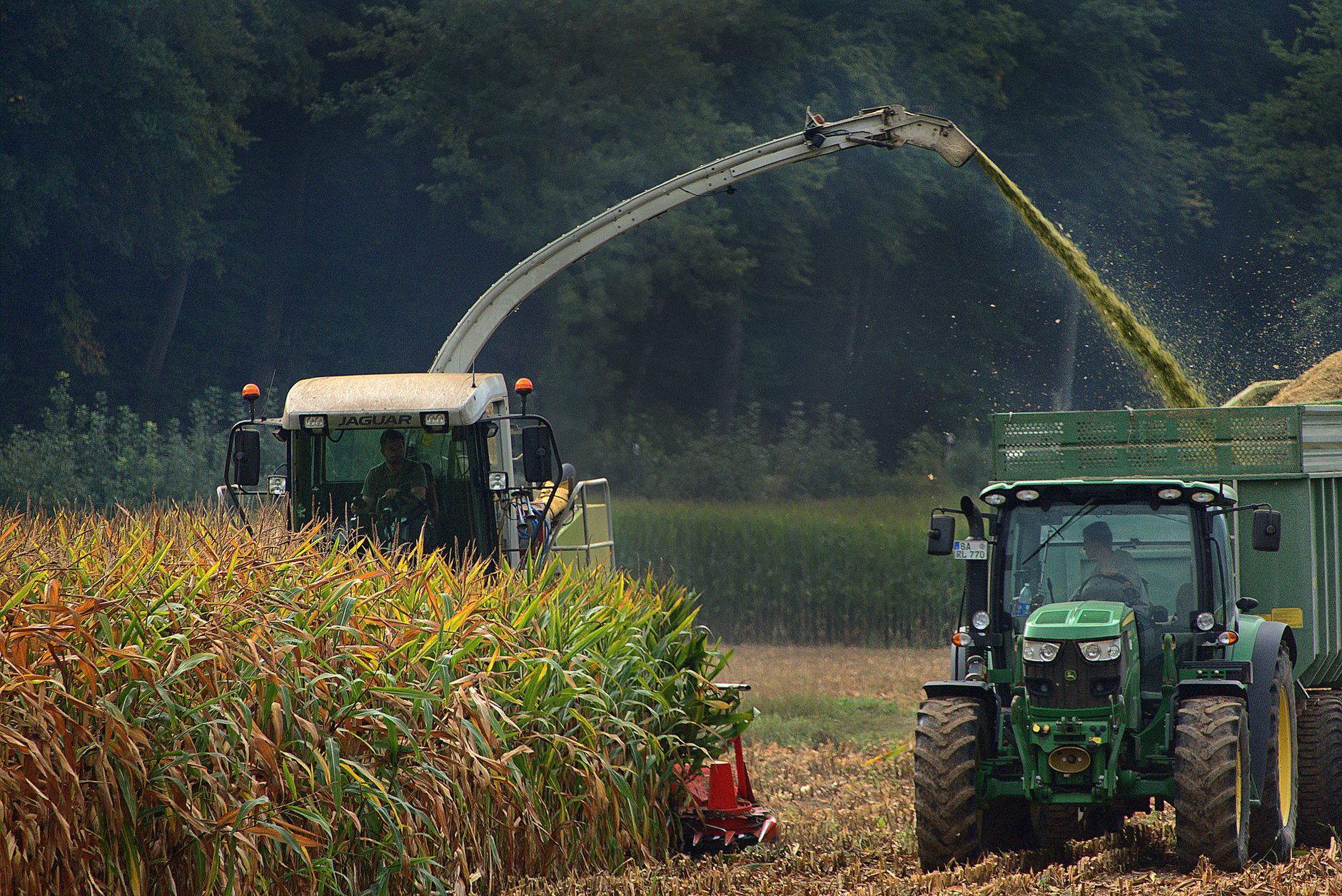
China is now the world’s largest producer and exporter of agricultural machinery. In 2023, China’s farm equipment output exceeded ¥450 billion (approximately $62 billion), accounting for nearly a third of global production by volume. Companies like LOVOL Heavy Industry, YTO Group, and Zoomlion Agricultural Machinery have quietly built a global presence that rivals Deere, CNH Industrial, and AGCO in key developing markets — and are increasingly competitive in Europe and Southeast Asia.
How China Built a Farm Equipment Powerhouse in Three Decades
China’s agricultural mechanization push was a deliberate state policy, not a market accident. The State Council of China has subsidized farm mechanization since the early 2000s through its agricultural machinery purchase subsidy program — one of the largest sectoral subsidies in any economy. Between 2004 and 2023, Beijing disbursed over ¥300 billion in machinery purchase subsidies to Chinese farmers, creating a massive domestic captive market that funded the R&D and scale-up of domestic manufacturers.
The results are measurable. China’s overall crop mechanization rate rose from under 30% in 2003 to over 73% by 2022, according to the Ministry of Agriculture and Rural Affairs of China. That transition required tens of millions of tractors, combine harvesters, rice transplanters, and irrigation systems — all produced overwhelmingly by domestic manufacturers. As domestic demand matured, these manufacturers began exporting aggressively. Chinese agricultural machinery exports surpassed $10 billion annually by 2022 and continue growing, with primary destinations in South and Southeast Asia, Sub-Saharan Africa, Central Asia, and Latin America.
The Key Players Foreign Buyers Need to Know
LOVOL Heavy Industry
LOVOL (formerly Foton Lovol International Heavy Industry) is headquartered in Weifang, Shandong Province, with annual sales exceeding ¥25 billion. It produces the full spectrum: wheeled tractors (25-350 HP), combine harvesters, and rice transplanters. LOVOL exports to over 100 countries and has assembly operations in Pakistan, India, and several African nations. Its tractors have achieved European CE certification — a bar most Chinese manufacturers have not yet cleared — enabling direct retail in EU markets. At Agritechnica 2023, LOVOL displayed its first fully electric 100 HP tractor, signaling intent to match China’s broader electrification push.
YTO Group Corporation
YTO Group, based in Luoyang, Henan Province, traces its origins to the First Tractor Factory established in 1955 with Soviet technical assistance. Today it produces over 200,000 tractors annually under majority state ownership through China National Machinery Industry Corporation (SINOMACH). YTO’s international footprint is significant: the company acquired the McCormick tractor brand for European markets and operates manufacturing joint ventures in Senegal, Morocco, and Belarus. For Western OEMs evaluating sourcing or white-label manufacturing, YTO’s volume capacity and sub-$15,000 price points for mid-range tractors are hard to ignore.
Zoomlion Agricultural Machinery
Better known internationally for construction cranes, Zoomlion’s agricultural division has become a serious force in high-end harvesting and plant protection equipment. Established through the 2013 acquisition of Italian company Ladurner and significant domestic expansion, Zoomlion Agricultural produces intelligent combine harvesters with GPS guidance, yield mapping sensors, and cloud connectivity. The Changsha-based company filed over 1,200 agricultural machinery patents between 2018 and 2023 and is positioning itself as a premium, technology-forward competitor — not a low-cost alternative. This mirrors the broader trajectory of Chinese industrial brands described in our analysis of XCMG, Sany, and Zoomlion’s construction equipment conquest.
The US-China Agricultural Equipment Trade: Bilateral Dynamics
The relationship between US and Chinese agricultural machinery sectors is more interdependent than competitive headlines suggest. While the US imposed Section 301 tariffs of 25% on Chinese agricultural machinery imports beginning in 2018, US companies continued importing Chinese-made components — hydraulic systems, transmissions, and steel castings — that flow into American-assembled equipment. John Deere, AGCO, and CNH Industrial all source components from Chinese suppliers.
On the export side, the International Trade Administration (ITA) identifies agricultural equipment as one of the highest-potential US export categories to Asia and Africa — precisely the markets where Chinese companies are most competitive. Despite trade friction, China imported $1.4 billion of US agricultural equipment in 2022, primarily large row-crop tractors above 300 HP and specialized harvesting machinery where American brands command premium pricing and reputation for durability.
The Section 301 tariff structure administered by the Office of the United States Trade Representative (USTR) remains in place as of September 2026, with Chinese agricultural machinery facing 25% import duties. Importers should work with licensed customs brokers to confirm current classification, as several sub-categories have been subject to CBP reclassification rulings in 2024 and 2025. On the Chinese side, imported agricultural equipment faces standard import duties of 10-14% plus VAT, and Beijing’s purchase subsidy program applies only to domestically produced equipment — making distribution partnership strategy critical for foreign brands competing in China’s domestic market.
Technology Convergence: Where China Is Catching Up Fast
The conventional wisdom — that Chinese agricultural machinery wins on price but loses on quality — is rapidly becoming obsolete at the mid-to-high end. Three convergence trends are reshaping the competitive map:
Precision agriculture integration: LOVOL and Zoomlion have partnered with Chinese satellite navigation providers (BeiDou) and agri-data platforms to offer GPS-guided variable rate application and automated steering at price points 30-40% below comparable Western systems. The infrastructure foundation for this is China’s growing digital farming ecosystem, explored in our analysis of China’s agricultural technology revolution.
Agricultural drone integration: China’s unmatched position in agricultural drones — led by DJI’s AGRAS series and XAG (a Guangzhou-based specialist) — is being bundled with ground machinery into integrated precision systems. DJI AGRAS drones treat approximately 1 billion acres annually. The convergence of air and ground machinery on unified digital platforms is an area where Chinese companies hold a structural first-mover advantage.
Drivetrain vertical integration: Weichai Power — the Weifang-based engine giant — acquired a controlling stake in LOVOL to vertically integrate power train supply across the Weichai-LOVOL ecosystem. This gives the group full control over diesel engines through final machine assembly, a structural cost advantage that Western manufacturers cannot easily match in low-to-mid HP classes.
What US Agribusinesses and Distributors Should Do Now
For American agribusinesses, distributors, and OEM manufacturers, China’s farm equipment sector presents both competitive risk and genuine commercial opportunity. Several strategic postures are worth considering:
Component sourcing evaluation: US equipment manufacturers facing cost pressure should conduct a structured assessment of Chinese component suppliers — particularly for hydraulic cylinders, structural steel fabrications, and electrical systems. Chinese Tier-2 suppliers can reduce bill-of-material costs by 15-25% without sacrificing performance on non-critical components. Our guide to US-China supply chain management provides a practical framework for qualification.
Market segmentation by HP class: American brands are unlikely to compete on price in the under-100 HP tractor segment in developing markets. Defensible territory is large-frame row-crop equipment (250+ HP), precision grain harvesting, and technology-integrated systems where service network density and software support matter as much as hardware cost.
Technology licensing opportunities: Several Chinese manufacturers have approached Western precision agriculture software firms and sensor companies about licensing agreements. Given China’s stated goal of reaching 80% mechanization by 2035, the addressable market for precision ag technology is substantial. Foreign technology providers willing to engage through appropriate legal structures — reviewed against applicable export control frameworks — have real opportunity here.
The Bottom Line
China’s agricultural machinery industry has quietly become one of the most consequential manufacturing sectors in global trade. LOVOL, YTO, and Zoomlion are not third-tier imitators — they are increasingly capable, technology-integrated manufacturers with global footprints, state-backed balance sheets, and price structures that are reshaping competitive dynamics in developing markets while beginning to challenge premium positions in developed ones.
For US agribusinesses, manufacturers, and distributors, the strategic response is not alarm — it’s analysis. Understand where Chinese manufacturers are genuinely competitive, where American brands hold defensible advantages, and where bilateral collaboration on components, technology, and distribution creates value that neither side can generate alone. That is the posture that converts a competitive challenge into a lasting bilateral commercial opportunity.