
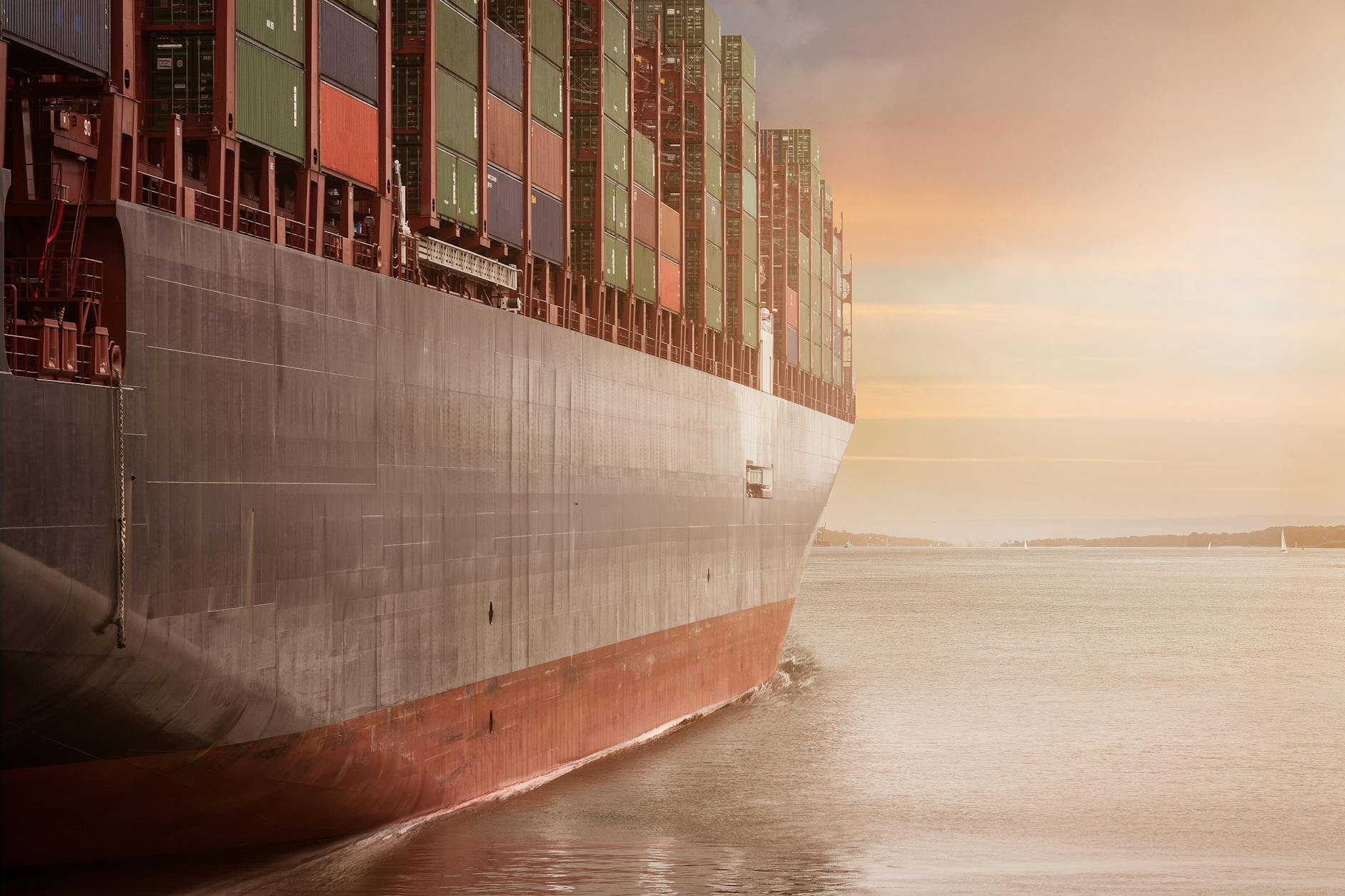
Despite years of trade friction, rising tariffs, and geopolitical posturing, the US-China supply chain remains the most consequential bilateral trade corridor in the world. China accounted for approximately $427 billion in US goods imports in 2024, spanning electronics, machinery, apparel, furniture, and consumer goods. No other sourcing market comes close in scale, capability, or cost efficiency. For most US companies, the question is not whether to engage with Chinese supply chains but how to do so intelligently, with risk factored in and contingencies built out.
This guide covers everything a US business needs to know: why China still dominates as a sourcing market, what the real risks look like in 2026, how to diversify strategically, and how to build supply chain resilience without abandoning the cost advantages that made China the world’s factory in the first place. For broader strategic context, see our guide on US-China Trade in 2026: Tariffs, Restrictions, and What Businesses Need to Know.
Why Companies Still Source from China
The case for China as a manufacturing base did not collapse with the trade war. It changed shape. Companies that claimed they were “moving out of China” in 2019 often discovered they were moving finishing steps to Vietnam or Mexico while still sourcing components, tooling, and raw materials from Chinese suppliers. The underlying advantages that built China’s dominance have not disappeared.
Depth of the Manufacturing Ecosystem
China’s manufacturing advantage is not just about labor costs. It is about ecosystem depth. In Shenzhen’s electronics cluster, you can source a PCB, enclosure, battery, firmware development team, and third-party tester within a 30-minute drive of each other. The same cluster density exists in Zhejiang for hardware and tools, in Guangdong for apparel and textiles, and in Yiwu for small commodities. No other country replicates this concentration. When Apple considered moving iPhone assembly to India, one of the structural barriers was the absence of a comparable supply cluster for the hundreds of specialized components that Chinese suppliers produce at scale.
Cost Competitiveness
China’s manufacturing wages have risen substantially since 2010. Average factory wages in coastal provinces now run $500 to $800 per month, compared to $150 to $250 in Vietnam or Bangladesh. But wage comparisons miss the full cost picture. Chinese factories offer faster tooling, higher production volumes, tighter quality consistency, and more flexible MOQs than newer manufacturing nations. Total landed cost, not just direct labor, is what matters. For mid-to-high complexity products, China often remains the lowest total-cost option even at current wage levels.
Speed to Market
Chinese manufacturers have built supply chain infrastructure — ports, logistics networks, bonded warehouses, freight forwarder density — that compress lead times in ways that competitors elsewhere cannot yet match. For consumer electronics and fast-moving goods, the ability to run a 30-day production cycle from order to ocean freight matters enormously to US importers managing seasonal demand.
The Risks in 2026
Acknowledging China’s strengths does not mean ignoring the risks. The risk profile has changed meaningfully since 2018, and several categories of exposure require active management.
Tariffs and Trade Policy Volatility
The US has maintained Section 301 tariffs on the majority of Chinese goods since 2018, with rates ranging from 7.5% to 25% across product categories. In 2025, additional tariff escalations extended coverage and raised rates on strategic sectors including semiconductors, solar panels, electric vehicles, and medical equipment. The USTR’s annual review process means rates can change on relatively short notice. For companies with Chinese-sourced inputs, tariff exposure is now a permanent line item in landed cost calculations, not a temporary aberration. The USTR Section 301 investigation tracker is the authoritative source for current rates and pending reviews.
Export Controls and Technology Restrictions
The Bureau of Industry and Security (BIS) Entity List and the Foreign Direct Product Rule have reshaped technology sourcing. US companies cannot supply certain advanced semiconductors, chip manufacturing equipment, or software tools to designated Chinese entities. Chinese companies face parallel restrictions on accessing US-origin technology above defined capability thresholds. For supply chains involving electronics, advanced materials, or dual-use components, a legal review of export control obligations is no longer optional.
Single-Source Dependency
The COVID-19 pandemic revealed the fragility of single-source supply chains with brutal clarity. Factories that shuttered in Wuhan in February 2020 triggered shortages in US markets by April. Port congestion in Shanghai in 2022 added weeks to lead times and pushed freight rates to historic highs. The lesson is not that China is uniquely unreliable but that any single-source concentration is a structural vulnerability, regardless of geography.
Geopolitical Disruption Risk
The Taiwan Strait remains the highest-consequence geopolitical flashpoint in the global supply chain. Taiwan produces the majority of the world’s advanced logic semiconductors through TSMC. Any conflict scenario that disrupted Taiwan Strait shipping lanes would immediately affect ocean freight routes connecting Chinese manufacturers to US importers. Scenario planning for supply chain disruption now needs to include geopolitical triggers, not just operational ones.
The China+1 Strategy
China+1 is not a new idea, but it has moved from strategic aspiration to operational priority for a significant number of US companies since 2020. The model is straightforward: maintain China as a primary or significant sourcing base while developing production capability in at least one alternative country. The goal is risk distribution, not China exit.
Emerging Alternative Manufacturing Hubs
Vietnam is the most established China+1 destination for labor-intensive manufacturing. Samsung, Nike, Apple supplier Foxconn, and dozens of US consumer goods brands have built significant Vietnamese production capacity. The country’s advantages include relatively low wages, strong port infrastructure in Ho Chi Minh City and Haiphong, and a USTR-approved preferential trade framework. Limitations include a shallower supplier ecosystem than China, infrastructure bottlenecks outside major industrial zones, and a smaller skilled workforce.
India is the most important long-term alternative. With a population of 1.4 billion, a large English-speaking workforce, and an established manufacturing base in textiles, pharmaceuticals, and auto parts, India is investing heavily in electronics assembly through its Production Linked Incentive (PLI) scheme. Apple, Samsung, and Foxconn have all committed to India manufacturing capacity. The principal challenges are logistics infrastructure, customs clearance friction, and state-level regulatory inconsistency.
Mexico is the China+1 option that makes the most sense for nearshoring. Under USMCA, goods manufactured in Mexico enter the US with zero tariff if they meet rules-of-origin requirements. Mexico’s manufacturing base — automotive parts, aerospace components, electronics assembly — is mature and clustered in northern states like Nuevo Leon and Baja California. For US companies targeting fast delivery cycles or tariff elimination, Mexico offers advantages that Southeast Asian options cannot match on logistics cost or transit time.
Bangladesh and Cambodia retain cost advantages for apparel and basic consumer goods but lack the supplier depth needed for anything beyond simple assembly.
Evaluating Alternatives: The Five-Factor Framework
Choosing a China+1 country requires evaluating five factors: total landed cost (including tariffs, freight, and MOQ premiums), supplier capability and ecosystem depth, political stability and trade agreement status, lead time and logistics infrastructure, and labor availability and skills match. A sourcing decision that optimizes only on wage rates often creates hidden costs elsewhere.
IP Protection in Chinese Supply Chains
Intellectual property risk is real and specific in Chinese supply chains. It is also manageable with the right legal infrastructure. The most common failure mode is companies that source from Chinese factories without contracts or with contracts that fail to address IP assignment, tooling ownership, and manufacturing rights.
NNN Agreements
A Non-Disclosure Agreement (NDA) designed for Western markets does not protect you in China. Chinese courts will not reliably enforce a US-law NDA. The appropriate instrument is a China-specific NNN agreement covering three obligations: Non-Disclosure (supplier cannot share your proprietary information), Non-Use (supplier cannot use your IP to produce goods for other buyers), and Non-Circumvention (supplier cannot bypass you to deal directly with your customers). This agreement should be drafted in Chinese, governed by Chinese law, and specify Chinese courts or arbitration bodies for dispute resolution. For the full picture on navigating legal contracts in this market, see our guide on How to Negotiate Contracts with Chinese Companies.
Common IP Theft Vectors
The most frequent IP exposure points in Chinese manufacturing relationships are: supplier-produced unauthorized overruns sold through gray market channels, design files shared with competitor manufacturers, tooling used to produce knock-offs after the commercial relationship ends, and former employees who start competing factories using proprietary process knowledge. Each of these risks can be addressed through contract provisions, factory audits, and physical security measures for tooling. Register your trademarks and patents in China before, not after, you begin sourcing there — China is a first-to-file jurisdiction for IP registration.
Quality Control and Factory Audits
Quality control failures are among the most expensive operational problems US importers face. A shipment of 10,000 units with a 5% defect rate that passes through customs before the defects are discovered creates customer service costs, return logistics, and reputational damage that dwarfs the cost of a pre-shipment inspection.
Types of Quality Inspection
Pre-Production Inspection (PPI): Conducted before manufacturing begins, verifying that raw materials, components, and tooling meet specifications. Catches problems before they become embedded in a production run.
During Production Inspection (DPI): Conducted when 20 to 30 percent of production is complete. Identifies process deviations early enough to correct them without scrapping the full run.
Pre-Shipment Inspection (PSI): The most common inspection type. Conducted when at least 80 percent of production is finished and goods are ready for packing. Inspectors use AQL (Acceptable Quality Level) sampling standards to test a statistically valid sample against your product specifications.
Third-Party Auditors
Established third-party inspection companies operating in China include SGS, Bureau Veritas, Intertek, QIMA, and Asia Quality Focus. Costs typically run $200 to $350 per inspection day. For factory audits covering ethical compliance (labor practices, safety standards), SA8000 and SMETA (Sedex Members Ethical Trade Audit) are the recognized standards that US retailers and brands often require from their suppliers.
For companies selling into China’s domestic logistics networks rather than exporting, our deep-dive on China’s Logistics and Last-Mile Delivery covers the inbound side of the equation.
Logistics and Freight
Getting goods from a Chinese factory to a US distribution center involves a sequence of decisions that materially affect both cost and lead time. Understanding the options is essential to supply chain planning.
Freight Options
Ocean Freight (FCL and LCL): Full Container Load (FCL) is the standard mode for high-volume importers. A 40-foot container from Shanghai to Los Angeles takes approximately 14 to 21 days in transit. Less-than-Container Load (LCL) allows smaller shipments to share container space but adds handling costs and longer transit times due to consolidation. In 2024, Trans-Pacific spot rates normalized significantly from the 2022 peaks — a 40-foot container to the US West Coast ran $2,000 to $4,500 depending on seasonal demand.
Air Freight: Approximately 4 to 6 times the cost of ocean freight per kilogram, but transit time of 2 to 5 days makes it viable for time-sensitive, high-value goods, samples, or emergency restocking.
Rail Freight: The China-Europe Railway Express (CRE) offers a middle option for goods destined for Europe or transshipped through Central Asian hubs. Not a standard option for US-bound cargo.
Incoterms
The Incoterms used in your purchase contract determine which party bears freight risk and cost at each stage. FOB (Free on Board) is the most common Incoterm in US-China trade: the supplier is responsible for loading goods onto the vessel, and the buyer assumes risk from that point. EXW (Ex Works) places maximum responsibility on the buyer from the factory gate. DDP (Delivered Duty Paid) places all responsibility on the supplier, including US customs duties — useful for small importers but typically more expensive because the supplier prices in their risk premium. The World Bank’s Logistics Performance Index provides useful comparative data on logistics efficiency across sourcing countries.
Customs Clearance and HTS Classification
Accurate HTS (Harmonized Tariff Schedule) classification is critical under the current tariff regime. Misclassification can result in underpayment of duties (triggering penalties) or overpayment (leaving money on the table). A licensed US Customs Broker can classify goods correctly, file entry documents, and manage CBP inquiries. For companies importing regularly from China, an ongoing broker relationship is more cost-effective than ad-hoc clearance arrangements.
Nearshoring and Reshoring — When It Makes Sense
The political appeal of “bringing manufacturing back” to the US has been strong since 2020, but the economics are specific and do not apply equally across product categories. Understanding when reshoring makes business sense — versus when it is a political narrative that doesn’t pencil out — is necessary for rational supply chain planning.
Reshoring makes the strongest economic case for: products with high labor automation potential (where wage differentials matter less), goods with high transport costs relative to value, products requiring short customization cycles or made-to-order manufacturing, and items where “Made in USA” carries enough brand premium to offset higher production costs. Consumer surveys consistently show that American buyers will pay 5 to 15 percent more for domestically manufactured goods in certain categories (apparel, food, personal care), but the premium rarely covers the full cost differential for complex manufactured goods.
Nearshoring to Mexico, as discussed above, often delivers the best of both worlds: USMCA tariff benefits, much shorter lead times than Asia, and a mature manufacturing ecosystem with competitive total costs. For US companies in automotive, electronics assembly, and industrial equipment, Mexican nearshoring has grown substantially as a China complement or substitute.
The US Department of Commerce’s manufacturing resources provide sector-specific reshoring data and incentive information for companies evaluating domestic production.
Building a Resilient Dual Supply Chain
A resilient supply chain is not one that has eliminated China — it is one that has reduced single-point-of-failure dependencies while preserving access to China’s ecosystem depth. The dual supply chain model — maintaining Chinese suppliers as primary or secondary sources while qualifying alternatives — is the operational approach that most large US importers are now executing.
Key principles for a resilient dual supply chain:
Qualify, don’t just identify, alternatives. “Identifying” an alternative supplier in Vietnam means nothing operationally. Qualifying means placing trial orders, running production validations, and having that supplier on your approved vendor list with real production experience behind it. Many companies learned in 2020 that a supplier they had “identified” three years earlier could not actually fulfill production when needed.
Maintain active relationships with secondary suppliers. A backup supplier you haven’t ordered from in two years may have changed ownership, lost key staff, or pivoted their production focus. Keep secondary suppliers warm with periodic orders, even if volumes are small.
Separate component sourcing from assembly. Some companies that depend on Chinese components for cost reasons assemble in a third country to manage tariff exposure. This requires careful analysis of rules of origin under the relevant trade frameworks but can be a legitimate structural solution for certain product categories.
Build safety stock strategically. The carrying cost of safety inventory is real, but so is the revenue impact of a stockout. Tiered safety stock levels — higher for high-tariff-risk or single-source components, lower for commodity items with multiple qualified suppliers — balance these trade-offs.
For more on the broader context of doing business in China as part of a long-term strategy, see our comprehensive resource: The Complete Guide to Doing Business in China (2026). And for companies entering the Chinese market as sellers rather than sourcing it as a production base, China Market Entry: A Step-by-Step Guide for Western Companies covers the regulatory and commercial entry process in detail.
Practical Checklist for Supply Chain Risk Assessment
Use this checklist to audit your current US-China supply chain exposure and identify the highest-priority actions.
Concentration Risk
- What percentage of your COGS is sourced from China? If it exceeds 50%, single-country concentration is a material risk.
- Do you have more than 30% of any critical component sourced from a single Chinese supplier?
- Have you qualified at least one alternative supplier for your top 5 inputs by spend?
Tariff Exposure
- Have you verified the current Section 301 tariff rate for each HTS code you import?
- Are you using a licensed customs broker who reviews classification accuracy annually?
- Have you modeled the landed cost impact of a 10-point tariff increase on your top-volume SKUs?
IP Protection
- Do you have China-law NNN agreements with all suppliers who have access to proprietary designs, processes, or customer data?
- Are your trademarks and patents registered in China?
- Do your factory contracts specify tooling ownership and restrict unauthorized use?
Quality and Compliance
- Do you conduct pre-shipment inspections on at least 80% of shipments by value?
- Have you conducted a factory audit in the past 18 months for each Tier 1 supplier?
- Are your suppliers compliant with UFLPA (Uyghur Forced Labor Prevention Act) requirements? CBP has authority to detain goods with any nexus to Xinjiang-region production.
Logistics and Resilience
- What is your current safety stock level for critical components, and when was it last reviewed?
- Do you have an emergency freight protocol (air freight authorization thresholds, backup freight forwarders)?
- Have you reviewed your Incoterms in light of current freight rate volatility and insurance coverage?
Relationship and Intelligence
- Do you have direct relationships with factory owners or management, not just a trading company intermediary?
- Do you have someone on the ground in China — employee, agent, or retained consultant — who can conduct factory visits and flag problems early?
- Are you tracking geopolitical developments that could affect your key sourcing regions?
Conclusion
The US-China supply chain will not disappear. It will evolve. Companies that approach it with clarity — understanding both the enduring competitive advantages and the specific, manageable risks — will outperform those who either ignore the risks or overcorrect toward total decoupling. The tools exist to build supply chains that are both cost-competitive and resilient: supplier diversification, proper legal documentation, rigorous quality inspection, strategic inventory management, and active relationship maintenance. None of these is complicated in principle. Execution requires discipline and investment, but the cost of inaction — supply disruptions, tariff exposure, IP loss, or quality failures — is reliably higher.