
When China formally launched the Belt and Road Initiative (BRI) in 2013, most Western analysts treated it as ambitious diplomatic messaging. A decade later, the BRI has financed ports, railways, power grids, and digital networks across more than 140 countries, fundamentally altering how global trade infrastructure is organized and who controls it.
For any professional in international trade, logistics, or cross-border investment, the BRI is no longer optional reading — it shapes freight rates, financing access, and the commercial geography of dozens of markets. This guide breaks down what the BRI actually builds and what the real business implications are.
What the BRI Actually Builds: Hard Infrastructure With Strategic Logic
The BRI’s most visible outputs are physical: ports, expressways, railways, industrial parks, and energy pipelines. China’s Ministry of Commerce reported that between 2013 and 2023, Chinese enterprises signed over $1.1 trillion worth of construction contracts in BRI partner countries. The China Development Bank and China Exim Bank together have disbursed an estimated $600-800 billion in project financing over that period, according to AidData’s tracking database.
The initiative’s two foundational corridors — the overland Silk Road Economic Belt and the Maritime Silk Road — address China’s own logistical vulnerabilities as much as they extend commercial reach. Roughly 80 percent of China’s oil imports transit the Strait of Malacca, a chokepoint China cannot unilaterally control. Port investments in Gwadar (Pakistan), Hambantota (Sri Lanka), and Bagamoyo (Tanzania), combined with trans-Central Asian rail networks, create alternative supply routes that reduce that exposure.
The business community often misreads BRI as purely state-driven geopolitics. In reality, Chinese firms — both state-owned and private — compete fiercely for BRI contracts. China Communications Construction Company (CCCC), China Railway International Group (CRIG), and PowerChina are among the largest contractors. These are commercially operated entities with revenue targets, equity investors, and international bond obligations. Their BRI portfolios are genuine business operations, not aid programs.
The Key Corridors: What They Mean for Business
China-Pakistan Economic Corridor (CPEC)
The flagship BRI project connects Kashgar in Xinjiang to Gwadar Port on the Arabian Sea across 3,000 kilometers of challenging terrain. Total committed investment exceeds $62 billion, financing 8,000 MW of new energy capacity, Gwadar Port expansion, and the M-4 motorway network. For energy and logistics companies, CPEC creates an Arabian Sea access point that bypasses the Strait of Malacca entirely.
China-Europe Railway Express
The corridor with the most immediate commercial relevance for Western businesses, the China-Europe Railway Express (CR Express) has grown from 17 train trips in 2011 to over 17,000 trips annually by 2023, according to China State Railway Group data. The network now serves over 200 Chinese cities and more than 100 European cities. Transit time averages 12-15 days — roughly half the duration of ocean freight from China to Germany, and dramatically cheaper than air freight. During the 2021-2022 shipping disruptions, when ocean freight rates spiked to 10x pre-pandemic levels, CR Express became a critical alternative — and companies including Volkswagen, HP, and Bosch have made it a permanent fixture in their supply chain toolkit.
Laos-China Railway and the Indochina Corridor
Completed in December 2021 at a cost of $6 billion, the Laos-China Railway transformed a landlocked country into a land-linked hub. Freight from Kunming in Yunnan Province now reaches Vientiane in under 12 hours, connecting onward toward Bangkok via Thailand’s existing rail network. In its first two years of operation, the railway carried approximately 26 million tons of freight — substantially above initial projections.
The Port Investment Strategy: Who Controls the Terminals
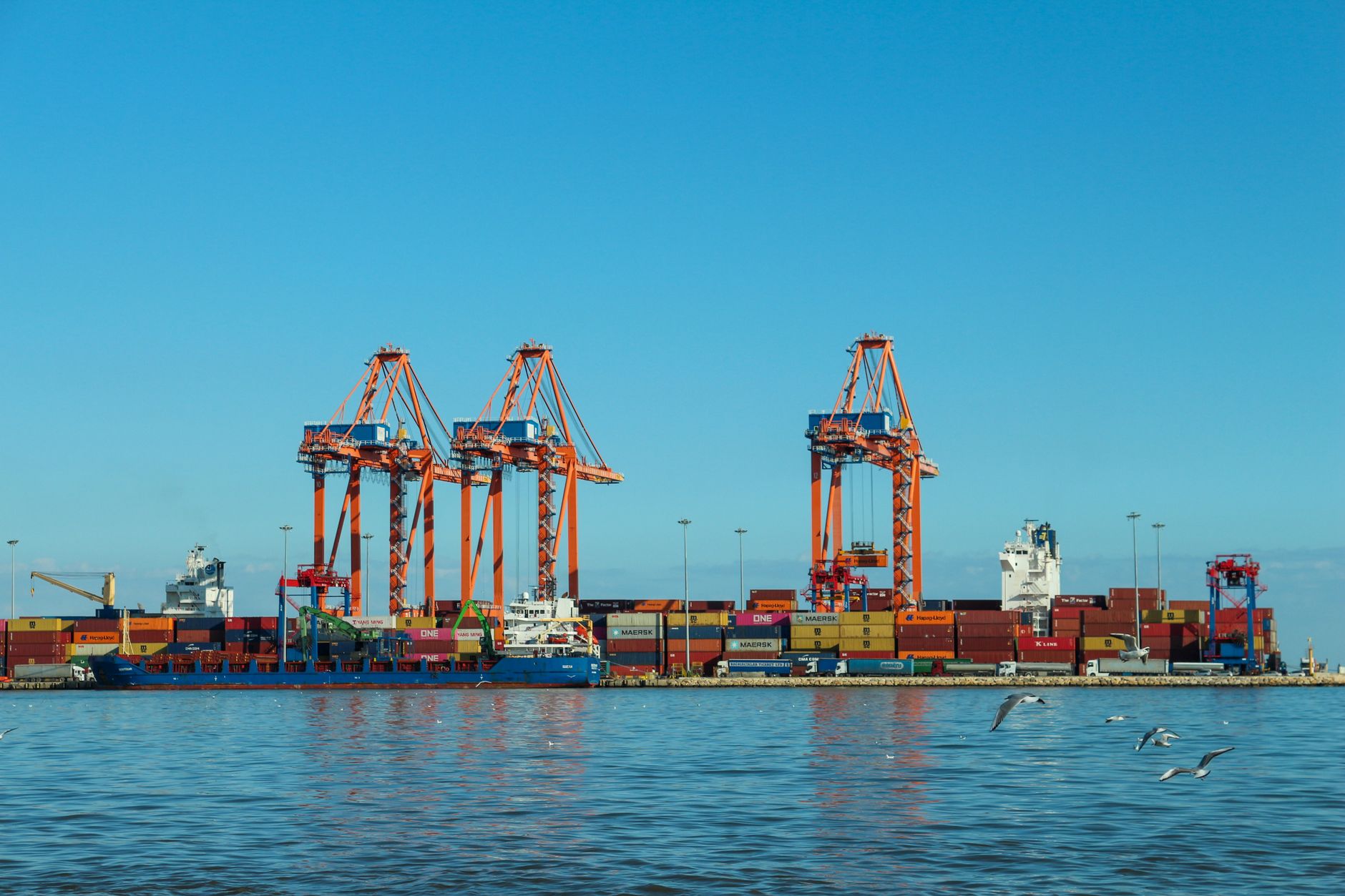
China’s port investment strategy deserves particular attention from global logistics and shipping executives. COSCO Shipping and China Merchants have systematically acquired equity stakes or operational rights in ports across the BRI network: Piraeus in Greece (COSCO holds 67% of the port authority), Khalifa Port in Abu Dhabi, Colombo Port City in Sri Lanka, and operational concessions in Haifa, Israel. The cumulative result is a network of port terminals with common management systems, booking infrastructure, and coordinated pricing logic — a structural advantage that competing shipping alliances have been slow to replicate.
Port terminal fees, dwell times, and berth availability are measurably better at Chinese-operated terminals for COSCO alliance vessels, according to maritime research firm Drewry. Understanding this should inform port selection decisions for any company managing significant international freight volumes.
The Digital Silk Road: BRI’s Second Infrastructure Layer
Less publicized than ports and railways, the Digital Silk Road represents the BRI’s technology infrastructure dimension — and carries its own distinct business implications. Huawei has constructed national 4G and 5G networks in over 70 countries under the BRI umbrella. Alibaba’s Lazada platform and Ant Group’s digital payment infrastructure have embedded Chinese fintech architecture into Southeast Asian consumer markets.
UnionPay is accepted in over 180 countries and has specifically targeted BRI corridor nations for expansion. For Chinese exporters entering frontier markets, buyers in Ethiopia, Cambodia, or Kazakhstan may find RMB-denominated digital payment systems more accessible than slow, expensive dollar-denominated correspondent banking. China’s state-owned enterprises have structural capital access advantages that make this kind of long-horizon investment feasible at a scale private competitors rarely match.
How Foreign Companies Can Engage Commercially
Several models have proven viable for Western and third-country companies seeking to participate in BRI economic corridors rather than simply observe them from the outside.
Third-party logistics and last-mile operations: Chinese contractors build infrastructure but create commercial opportunities for international operators. DHL, DB Schenker, and Maersk operate significant forwarding and last-mile distribution businesses in BRI corridor cities, feeding cargo through Chinese-built ports and rail networks.
Industrial park tenancy: BRI-linked special economic zones in Ethiopia (Eastern Industrial Zone), Cambodia (Sihanoukville SEZ), and Zambia (Chambishi Copper Belt SEZ) offer competitive lease rates and tax incentives to manufacturers seeking proximity to Chinese-managed export logistics infrastructure. The Suzhou Industrial Park model — the blueprint for China’s SEZ architecture — has been replicated in modified form across dozens of BRI partner countries.
Construction equipment and materials: Caterpillar, Komatsu, and Liebherr regularly supply heavy equipment to Chinese-managed BRI projects across Africa and Central Asia. The supply chain for a major BRI port or railway is genuinely multinational even when the headline contractor is Chinese.
The BRI in 2026: Smaller Projects, Higher Standards
Under Xi Jinping’s direction, China announced a qualitative shift in BRI strategy beginning in 2021 — moving from quantity of projects toward a “small and beautiful” approach emphasizing green infrastructure, digital connectivity, and health-related investment. This reflects both a response to international criticism and a practical adjustment after several large projects encountered cost overruns and political friction.
China’s National Development and Reform Commission (NDRC) — the primary government agency overseeing BRI policy, accessible at ndrc.gov.cn — has published revised project screening guidelines emphasizing environmental impact assessments and higher standards for local labor content. The US Department of State’s Belt and Road Initiative overview provides a useful comparative framework for understanding how Western governments are positioning competing initiatives, including the G7’s Partnership for Global Infrastructure and Investment (PGII).
For businesses, the practical implication is that BRI project quality and governance are incrementally improving, while Western-backed alternatives are beginning to offer real competition in specific markets. The next decade will likely produce a more multipolar infrastructure financing landscape — better for project host countries, and creating more options for companies seeking to participate rather than simply compete around the margins. Our 2026 BRI update covers the latest corridor developments and specific commercial opportunities in greater operational detail.
The Bottom Line
The Belt and Road Initiative is not a monolith, a geopolitical weapon, or a development charity. It is the world’s largest coordinated infrastructure investment program, executed through a mix of state policy banks, state-owned enterprises, and commercially driven private contractors, across 140+ countries with widely varying outcomes.
For Chinese companies, BRI creates market access and logistics infrastructure supporting export and investment ambitions across Asia, Africa, and the Middle East. For Western companies, it creates competitive pressure in frontier markets, usable infrastructure in underserved corridors, and a roster of Chinese enterprise partners worth engaging.
Dismissing the BRI as propaganda or embracing it as pure development benevolence are both analytical failures. The more useful posture is the one seasoned trade consultants have always recommended: follow the infrastructure, map the corridors, identify where capital is flowing, and position your business accordingly. The BRI has been moving billions of tons of cargo and hundreds of billions in capital for over a decade. That is a business reality.