
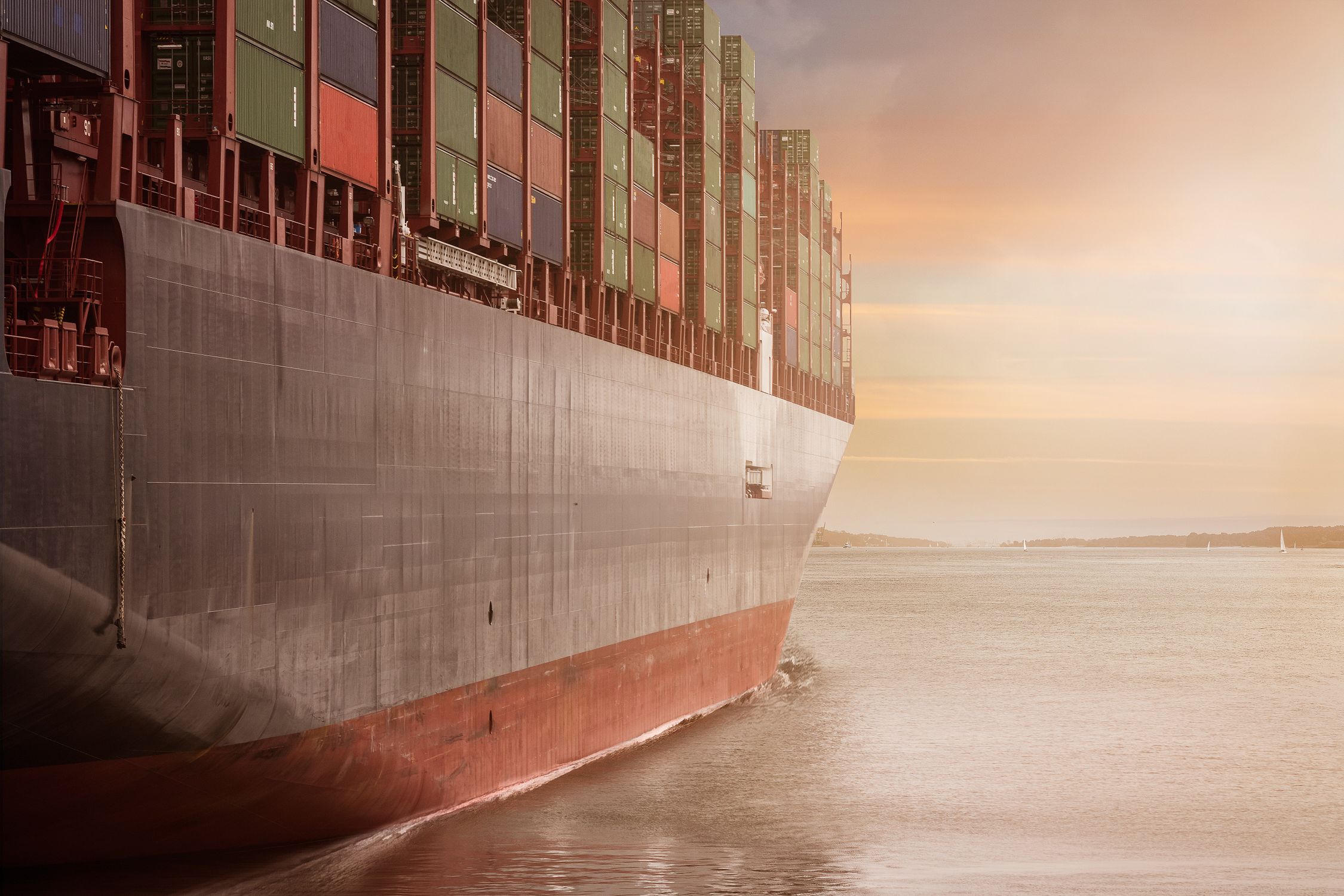
When a container ship departs Shanghai, Rotterdam, or Los Angeles, there is a meaningful chance it was built in China, operated by a Chinese carrier, and loaded at a Chinese-owned terminal. That is not an exaggeration — it is a data point that defines modern global trade. At the center of this story is COSCO Shipping Holdings, the world’s largest state-owned ocean carrier, and the broader Chinese maritime ecosystem it anchors.
Understanding how China built this dominance — through decades of deliberate industrial policy, aggressive capacity expansion, and strategic port equity investments — is essential for any supply chain professional, trade executive, or policy analyst working across the Pacific.
From Mao’s Merchant Fleet to Global Giant
COSCO — the China Ocean Shipping Company — was founded in 1961 by order of Premier Zhou Enlai. At its inception, the fleet consisted of a handful of secondhand vessels purchased from foreign sellers. The mission was strategic: give the People’s Republic a sovereign shipping capability so that China’s foreign trade would not depend entirely on Western or Soviet carriers.
For the first three decades, COSCO operated largely on domestic and intra-Asian routes. The real transformation began after China’s accession to the World Trade Organization in 2001. As Chinese manufacturing exports surged, COSCO’s fleet expanded rapidly to meet demand. Between 2001 and 2015, the company grew from a mid-sized regional carrier into one of the top five global ocean shipping operators by capacity.
The decisive moment came in 2016, when COSCO Group merged with China Shipping Group to form COSCO Shipping Holdings Co., Ltd. The combined entity became the world’s fourth-largest container carrier by TEU (twenty-foot equivalent unit) capacity. By 2024, through organic growth and strategic acquisitions, COSCO Shipping operated a fleet of over 500 vessels with a combined capacity exceeding 3.1 million TEUs, firmly among the top three ocean carriers globally.
The Fleet: Scale That Shapes Global Freight Rates
Scale in container shipping is not merely a competitive advantage — it is market-moving power. The three largest ocean alliances, which collectively carry over 80 percent of all containerized freight, set the tempo for global logistics costs. COSCO’s membership in the Ocean Alliance (alongside CMA CGM, Evergreen, and OOCL, which COSCO itself acquired in 2018) gives the company direct influence over routing, capacity deployment, and rate negotiations that affect importers and exporters worldwide.
The 2018 acquisition of Orient Overseas Container Line (OOCL) for approximately $6.3 billion was particularly significant. OOCL had long been regarded as the most efficient operator in container shipping by service quality metrics. Absorbing it gave COSCO premium terminal access in Hong Kong, Long Beach, and Kaohsiung — ports that sit at the chokepoints of transpacific and intra-Asian trade.
For American importers and logistics managers, the practical implication is direct: when you book a container from Yantian or Ningbo to the US West Coast, COSCO-affiliated capacity is very likely involved — either the vessel itself, the port terminal, or both.
China’s Broader Maritime Infrastructure: Beyond the Carrier
COSCO Shipping does not operate in isolation. It is part of a densely interconnected Chinese maritime ecosystem that includes shipbuilders, port operators, and policy banks.
China’s shipyards — led by CSSC (China State Shipbuilding Corporation) — produce approximately 50 percent of all new commercial vessels delivered globally by gross tonnage. This means COSCO has preferential access to new tonnage at below-market prices through domestic procurement, while Western carriers must compete for slots at South Korean and Japanese yards. That structural cost advantage compounds over time.
On the port side, China Merchants Port Holdings and COSCO Shipping Ports together hold equity stakes in terminals across dozens of countries — from Piraeus in Greece to Khalifa Port in Abu Dhabi to Terminal Link facilities in Europe. This port equity network, which has drawn scrutiny from the US State Department and the European Commission, gives Chinese maritime capital a physical presence at the world’s key cargo chokepoints. For an in-depth look at that port equity strategy, see our dedicated analysis: COSCO, China Merchants, and the Port Equity Playbook.
What This Means for US-China Trade Professionals
For supply chain professionals navigating bilateral trade, several operational realities flow from China’s maritime dominance.
Rate Leverage and Booking Priority
Chinese exporters — particularly large manufacturers working through state-owned trading companies — often have preferred customer agreements with COSCO that give them priority booking during peak seasons and rate stability unavailable to smaller shippers. American importers sourcing directly from Chinese factories may find that leveraging those freight forwarder relationships during the pre-Golden Week rush (September-October) or post-Chinese New Year restocking cycle can significantly affect landed costs.
Port Dwell and Terminal Selection
At the US West Coast, COSCO-affiliated vessels primarily call at the Ports of Long Beach and Los Angeles. The congestion events of 2021-2022, during which container ships anchored offshore for weeks, disproportionately affected importers whose freight moved on COSCO or Ocean Alliance vessels. Understanding which terminals handle your cargo, and which labor agreements govern them, is foundational supply chain risk management.
Regulatory Risk and OFAC Considerations
In 2020, the US Department of Defense placed COSCO Shipping on its list of companies with alleged military ties, triggering compliance reviews at major US financial institutions and logistics providers. The designation has not resulted in direct sanctions on commercial shipping operations, but US companies should have counsel review OFAC and Export Administration Regulations (EAR) compliance obligations when entering significant commercial relationships with COSCO entities. This regulatory complexity fits a broader pattern explored in our coverage of China’s state-owned enterprises going global.
The Belt and Road Maritime Dimension
COSCO’s expansion cannot be separated from China’s Belt and Road Initiative (BRI), which explicitly designated a “Maritime Silk Road” as one of its two major corridors. Under this framework, Chinese state banks — primarily the China Development Bank and the Export-Import Bank of China — have provided financing for port upgrades across Southeast Asia, South Asia, East Africa, and the Mediterranean that give COSCO and China Merchants preferred access or equity stakes upon completion. The coordinating body for this outbound investment is China’s Ministry of Commerce.
The Piraeus example is the most studied: COSCO’s 2016 acquisition of a 51 percent stake in the Port of Piraeus Authority transformed a struggling Greek terminal into one of the fastest-growing container ports in Europe, with throughput rising from 880,000 TEUs in 2010 to over 5.6 million TEUs by 2023. For an analysis of how these infrastructure investments connect to trade dynamics more broadly, see our coverage of how China’s Belt and Road Initiative is reshaping global trade infrastructure.
Practical Guidance for Businesses on Both Sides
Several concrete steps follow from understanding COSCO’s market position.
Diversify carrier relationships. The concentration of global capacity in three alliances means any single carrier disruption can cascade. Building relationships with at least two carriers across different alliances is basic risk management, particularly for seasonal goods with narrow delivery windows.
Monitor geopolitical signal. The US Trade Representative’s Section 301 investigation into Chinese shipping, shipbuilding, and logistics — initiated in 2024 — has the potential to impose fees on Chinese-built vessels calling at US ports. Logistics managers should scenario-plan for a 10-20 percent transpacific rate increase driven by regulatory action, not demand-supply imbalance alone.
Leverage the integrated logistics ecosystem. China’s cross-border logistics capabilities — including the Cainiao, JD Logistics, and SF International networks detailed in our analysis of China’s cross-border fulfillment systems — increasingly integrate with COSCO’s port and ocean freight infrastructure to offer end-to-end solutions that can reduce total landed cost for volume shippers.
The Bottom Line
COSCO Shipping is not just a carrier — it is a strategic instrument of Chinese industrial policy that happens to move the containers that stock global shelves. Its fleet scale, port equity network, domestic shipbuilding advantage, and BRI-enabled infrastructure access give it structural advantages no purely commercial Western competitor can easily replicate.
For US-China trade professionals, this is not a reason to avoid COSCO — it is a reason to understand it. The companies that navigate China’s maritime dominance most effectively will treat COSCO not as a vendor but as a strategic counterpart: one that must be benchmarked, monitored for geopolitical shifts, and factored into any serious global supply chain strategy.