
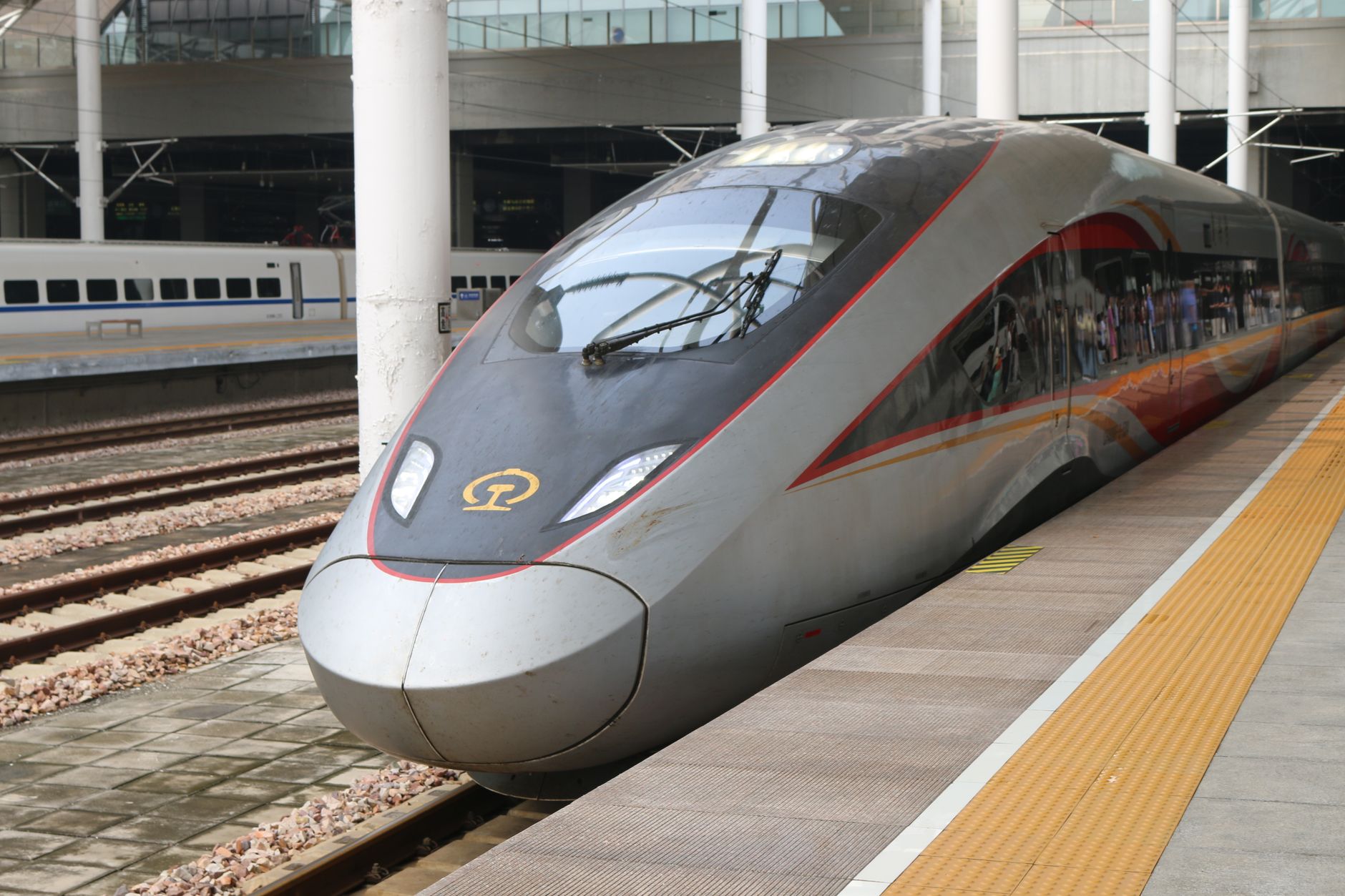
In less than three decades, China built the world’s most extensive high-speed rail network from scratch — 46,000 kilometers of track connecting 550 cities, carrying 2.5 billion passengers annually, at a per-kilometer cost roughly one-third of comparable European or American projects. For infrastructure investors, policymakers, and global logistics professionals, China’s HSR revolution is not just a transportation story. It is a masterclass in state-led industrial strategy, technology transfer, and the economic multiplier effects of long-horizon infrastructure investment.
Understanding what worked and what failed in China’s HSR buildout is essential knowledge for any professional at the intersection of US-China trade and global supply chains.
How It Started: The 2004 Decision That Changed Everything
China’s HSR story begins with a single policy document: the National Development and Reform Commission‘s 2004 Medium and Long-Term Railway Network Plan. The plan called for 12,000 kilometers of dedicated passenger lines by 2020 — a target eventually exceeded by nearly four times. The Ministry of Railways negotiated technology transfer agreements with Alstom, Siemens, Bombardier, and Kawasaki in exchange for market access. Foreign manufacturers sold China their technology, trained Chinese engineers, and helped establish domestic production lines. Within a decade, those domestic lines were competing directly with their former teachers on third-country contracts.
The approach was deliberate and controversial. Critics argued China reverse-engineered proprietary technology behind the shield of joint venture requirements. Chinese officials countered that every transfer was commercially negotiated and that subsequent innovations — including the CR400AF “Fuxing” platform, developed entirely by state-owned CRRC Corporation — represented genuinely original engineering. Whatever one’s view, the operational outcome was undeniable: China went from zero high-speed rail in 2007 to operating more than the rest of the world combined by 2012.
The Economics: What Made It Financially Viable (and What Didn’t)
China’s HSR network was not built as a commercial enterprise. It was built as an economic development instrument — and that distinction matters for anyone drawing investment lessons from the model.
The primary financier was China Railway Corporation (now China State Railway Group), which borrowed from state policy banks at below-market rates. By 2023, cumulative network debt had reached approximately 6.1 trillion yuan (roughly $850 billion USD) — one of the largest single infrastructure liabilities in history.
The profitable lines tell an important part of the story. The Beijing-Shanghai corridor, opened in 2011, reached operational profitability within two years and now cross-subsidizes loss-making regional routes. The Beijing-Guangzhou and Shanghai-Shenzhen corridors perform similarly. These trunk routes share one characteristic: they connect megacities with populations exceeding 10 million, with business travel demand dense enough to support 350 km/h services running every five to fifteen minutes at peak.
Smaller-city routes are a different story. Lines connecting tier-3 and tier-4 cities — built partly for political equity, partly to stimulate regional development — operate well below capacity. The lesson for global infrastructure investors is precise: HSR as a commercial product works at very high population densities and distances of 200–1,200 km. As a development tool in lower-density corridors, it requires sustained public subsidy.
The Technology Transfer Lesson: From Student to Competitor
Perhaps the most strategically significant lesson from China’s HSR buildout is what happens when a large, disciplined market absorbs foreign technology at scale. When Siemens transferred CRH3 technology and Kawasaki transferred Shinkansen-derived designs in the mid-2000s, neither company fully anticipated the pace at which Chinese engineers would iterate on those foundations.
CRRC, the state-owned manufacturer that emerged from the 2015 merger of CNR and CSR, is now the world’s largest rolling stock manufacturer — producing more trains annually than its next five competitors combined. Its Fuxing CR400AF platform, operating at 350 km/h in regular commercial service, holds multiple world speed records. CRRC has since won contracts in Boston, Chicago, and Los Angeles. The company that once paid for knowledge is now selling it. CRRC’s global rail contracts strategy illustrates how that competitive escalation plays out across international procurement markets.
For US and European firms negotiating technology transfers with Chinese partners in any sector — not just rail — the HSR model offers a cautionary template. The initial market access gains are real, but the competitive timeline is often shorter than Western partners expect.
Regional Economic Impact: The Cities That Won and Lost
China’s HSR network has reorganized economic geography in measurable ways. The winners have been overwhelmingly large hub cities — Beijing, Shanghai, Guangzhou, Chengdu, Wuhan — which gained faster connections to secondary markets while attracting talent that previously stayed dispersed.
Smaller intermediate cities saw complex outcomes. Cities like Hengyang in Hunan found themselves within two hours of major metros — but the net talent flow often moved toward the hubs. This “suction effect,” documented by economists at Fudan and Peking University, carries important implications globally: connectivity can accelerate regional divergence as easily as it reduces it.
The positive effects are equally documented. A World Bank study found cities on China’s HSR network experienced per capita GDP growth roughly 2–4 percentage points higher than comparable non-rail cities over 2008–2018. Business formation, hotel capacity, and service sector employment all showed measurable lifts within five years of line opening.
Supply Chain Implications for US-China Trade Professionals
For professionals managing US-China supply chains, China’s HSR network has practical implications that rarely make it into business press coverage.
First, the network has fundamentally altered China’s internal labor market. Workers in Chongqing, Wuhan, and Xi’an can reach Guangdong factories more efficiently, reducing wage arbitrage between inland and coastal regions. This gradual equalization has accelerated China’s transition from low-cost assembly to higher-value manufacturing — directly affecting sourcing decisions for US importers.
Second, the cargo rail network — distinct from HSR passenger lines — has been upgraded in parallel. The China-Europe Railway Express, running from Chengdu and Chongqing to European terminals, carries electronics, automotive parts, and pharmaceuticals in 12–18 days — faster than ocean freight and cheaper than air. How the Belt and Road Initiative is reshaping global trade infrastructure covers the broader strategic context.
Third, domestic connectivity has accelerated inland manufacturing clusters — particularly in Zhengzhou, Wuhan, and Chengdu — that now compete directly with Pearl River Delta factories for foreign procurement. US buyers who exclusively sourced from Guangdong five years ago increasingly find comparable capability in cities that were off the supply chain map a decade earlier. Shenzhen’s evolution from factory floor to innovation hub reflects exactly this dynamic: when interior cities gain connectivity, coastal hubs must move up the value chain.
What Global Investors Can Replicate — and What They Cannot
The most common mistake international observers make is treating China’s HSR model as directly replicable without accounting for the institutional conditions that made it work. The buildout depended on four factors operating simultaneously: state-controlled land acquisition at administratively set prices; a 40%+ national savings rate; a political system capable of overriding local routing opposition; and a manufacturing base large enough to absorb and iterate on transferred technology within one investment cycle.
High-income democracies cannot simply import the model. The US Department of Transportation’s Build America Bureau and comparable European agencies face precisely this gap — the infrastructure ambition exists, but the institutional machinery to execute at Chinese speed and cost does not.
What is replicable: the corridor-prioritization logic; structured technology transfer with clear IP sunset clauses; and anchor-hub stations as urban regeneration catalysts.
The Road Ahead: Saturation and Strategic Implications
China’s HSR expansion has slowed materially since 2020. The 2021–2025 Five-Year Plan called for roughly 9,000 kilometers of new track versus the 16,000+ kilometers added during 2016–2020. The most commercially viable corridors are built, and the 6.1 trillion yuan debt load on China State Railway Group demands discipline before further expansion. Maintenance costs on ageing ballastless slab track are rising — and unlike construction, maintenance generates no new economic activity.
For global businesses, the relevant question is not whether China will keep building, but how the existing network reshapes the competitive environment. It deepens internal market integration, accelerates inland manufacturing competitiveness, and gives Chinese logistics operators structural connectivity advantages to Central Asia and Europe. Companies sourcing from, selling into, or competing against Chinese manufacturers need to factor that connectivity dividend into long-range planning.
China’s high-speed rail revolution is a story about what happens when a society makes a generational bet on infrastructure as an economic multiplier. The bet has paid off unevenly — spectacularly on trunk routes, expensively on development corridors — but the competitive advantages it has embedded in China’s economy are durable and compound over time.