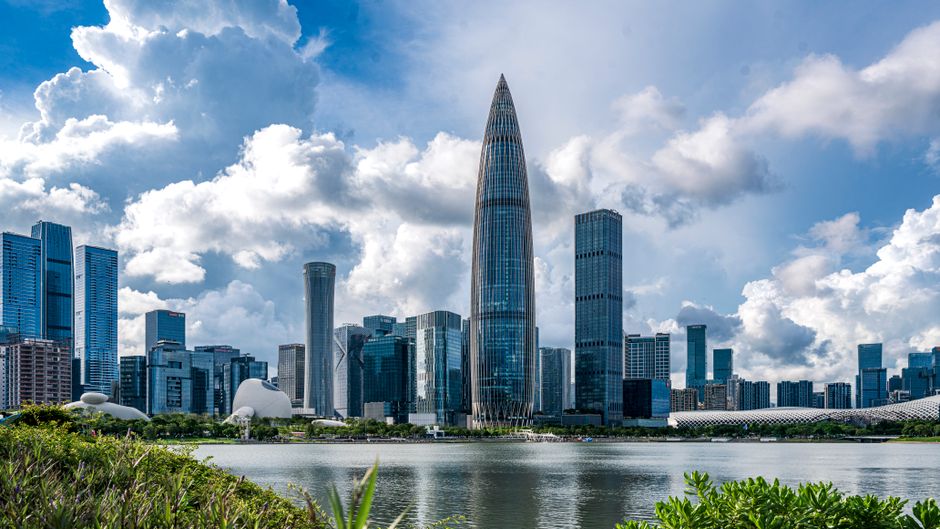
Shenzhen did not exist as a city forty years ago. In 1980, it was a cluster of fishing villages with a population of around 30,000 on the eastern bank of the Pearl River Delta. Today, it is home to more than 17 million people, hosts the headquarters of some of the world’s most influential technology companies, and generates a GDP exceeding $560 billion. No city in modern history has compressed this kind of transformation into a single generation.
For foreign executives and sourcing professionals, Shenzhen represents the most complete hardware innovation ecosystem on earth, sitting within one metropolitan area. Understanding how it got here, and what it looks like today, is essential for anyone operating in US-China trade.
From Special Economic Zone to Manufacturing Capital
Shenzhen’s origin story begins with a political decision. In 1980, the Chinese government designated it as one of the country’s first Special Economic Zones (SEZs), allowing foreign investment, market-based pricing, and private enterprise under rules that did not apply elsewhere in China. Positioned adjacent to Hong Kong, the city was the flagship experiment in export-oriented manufacturing.
The city’s early decades were defined by contract manufacturing. Global brands flooded in, and Shenzhen’s infrastructure scaled rapidly. By the 1990s, it had become the world’s most concentrated export manufacturing hub. What distinguished Shenzhen from other low-cost regions, however, was what happened next: rather than remaining a pure OEM destination, it developed a dense cluster of component suppliers, logistics specialists, tooling manufacturers, and electronics trading markets. Nowhere else on earth can you source 10,000 unique electronic components, get custom PCBs fabricated overnight, and negotiate tooling for a new product — all within a 15-minute radius.
The Rise of the Technology Giants
The transformation from factory city to innovation hub was anchored by world-class technology companies headquartered in Shenzhen. Huawei, founded by Ren Zhengfei in 1987 with approximately ¥21,000 in registered capital, now generates annual revenues exceeding $99 billion. Tencent, founded in 1998 by Ma Huateng, grew from an instant messaging service into one of the world’s largest technology conglomerates, with WeChat processing over one billion daily active users.
DJI, founded in 2006 by Frank Wang out of a Hong Kong dormitory room, built its R&D and manufacturing operations in Shenzhen and captured approximately 70% of the global consumer drone market within a decade. BYD, founded in 1995 as a battery manufacturer by Wang Chuanfu, now operates the most vertically integrated EV supply chain in the world — producing its own batteries, semiconductor chips, and vehicle frames. BYD’s 2023 global sales exceeded 3 million vehicles.
Huaqiangbei: The World’s Electronics Marketplace
No analysis of Shenzhen is complete without Huaqiangbei, the electronics trading district in central Shenzhen. This roughly one-square-kilometer area contains dozens of multi-story markets housing thousands of vendors selling components, finished goods, prototype services, and specialized tooling. For hardware startups globally, it functions as a physical component search engine — with same-day sourcing for obscure parts and overnight PCB fabrication readily available.
The market also serves as an early indicator of global consumer electronics trends. New form factors and emerging product categories often appear in Huaqiangbei six to twelve months before they surface in Western retail, making it a valuable intelligence-gathering venue for sourcing professionals beyond just a purchasing destination.
The Semiconductor Ambition
Shenzhen has become a focal point for China’s push to develop domestic semiconductor capability. SMIC operates facilities in Shenzhen alongside its Shanghai headquarters, and the city hosts dozens of chip design companies across the value chain. In 2023, Shenzhen’s semiconductor industry output exceeded $30 billion, with companies like HiSilicon (a Huawei subsidiary), Goodix Technology, and Sunwave Communications operating locally. The concentration of chip design talent adjacent to contract manufacturing creates a rapid product development pathway few global cities can replicate.
Shenzhen’s Role in the Pearl River Delta Ecosystem
Shenzhen anchors the eastern edge of the Pearl River Delta (PRD), the world’s largest manufacturing conurbation. Guangzhou, Dongguan, Foshan, and Zhongshan each offer specialized capabilities that feed into a broader regional supply chain. Dongguan handles precision parts and apparel; Foshan leads in ceramics and appliances; Guangzhou provides financial services and the Canton Fair. The Guangzhou-Shenzhen high-speed rail reduced intercity travel to 33 minutes, functionally integrating both cities’ labor and capital markets.
For foreign buyers, a Shenzhen-based sourcing operation can efficiently access the full PRD manufacturing spectrum — design in Shenzhen’s tech parks, enclosures from Dongguan, displays from local Shenzhen vendors, and shipping from Yantian Port — all within a 90-minute logistics radius.
Practical Implications for Foreign Business
Foreign companies engaging with Shenzhen in 2026 operate in a market significantly evolved from its OEM origins:
Labor and Manufacturing Costs
Average monthly manufacturing wages in Shenzhen exceed ¥6,000 ($830), compared to under ¥2,000 in inland provinces. This has pushed lower-value assembly work toward Southeast Asia and inland China, while Shenzhen retains higher-value production requiring skilled workers and component ecosystem proximity. Companies seeking pure labor cost arbitrage will find better options elsewhere; those needing tight supply chains and engineering proximity will find Shenzhen irreplaceable.
Intellectual Property Risks
IP protection has improved materially from the early 2000s, but the same dense supplier network that enables rapid innovation also enables rapid copying. Foreign companies should implement layered IP strategies: PCT international patent filings, NDA-backed supply chain agreements, and phased manufacturing arrangements that segment proprietary subassemblies from commodity components.
Regulatory Navigation
For US executives, engaging with Shenzhen requires compliance with export controls under the Bureau of Industry and Security’s Export Administration Regulations — particularly for technology transfers involving semiconductors, AI, and defense-adjacent categories. On the Chinese side, the Shenzhen Municipal Bureau of Commerce (commerce.sz.gov.cn) maintains updated guidance on foreign-invested enterprise registration, Qianhai Free Trade Zone incentives, and market entry requirements.
Shenzhen also operates several technology parks — including the Gaoxin High-Tech Industrial Park and the Qianhai Shenzhen-Hong Kong Modern Service Industry Cooperation Zone — that offer subsidized space, investment matching services, and preferential tax treatment for qualifying foreign-invested enterprises. The broader cross-border e-commerce infrastructure also runs through Shenzhen, with Yantian and Shekou ports handling significant volumes of cross-border export shipments under licensed pilot zone frameworks.
A City That Rewrote the Rules
Shenzhen’s trajectory from fishing village to global innovation hub is not simply an interesting story — it is a structural reality that shapes global supply chains, consumer electronics pricing, and technology competition. The city’s next chapter, anchored in advanced semiconductors, electric vehicles, and AI-driven manufacturing, is already underway. Foreign companies that understand Shenzhen’s capabilities, constraints, and regulatory environment will be better positioned to source intelligently, partner strategically, and compete effectively in a world where the supply chain increasingly runs through Guangdong Province.