
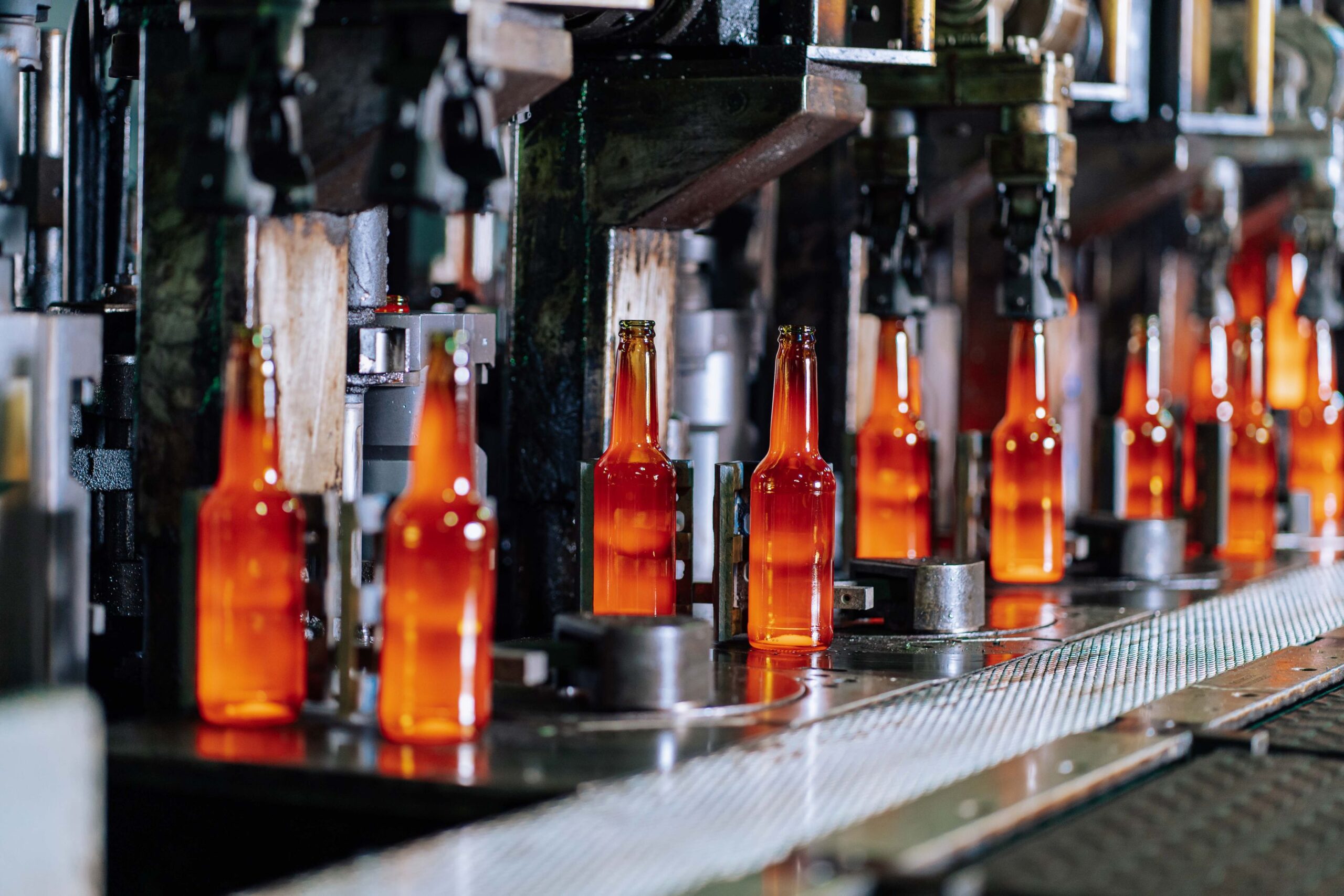
When an Oscar-winning documentary about a Chinese billionaire reopening a shuttered GM factory in Dayton, Ohio became one of Netflix’s most-watched original films, it introduced millions of Western viewers to a story they had never considered: a Chinese manufacturer as a major employer in the American heartland. The film was American Factory. The billionaire was Cao Dewang. The company was Fuyao Glass.
Fuyao’s story, however, is not simply a feel-good narrative about US-China cooperation. It is one chapter in a much larger industrial saga: how China built the world’s largest and most integrated glass manufacturing sector, reshaping supply chains from Detroit to Dubai in the process.
A Sector Defined by Scale
China produces roughly 60% of the world’s flat glass — the type used in automotive windshields, building facades, solar panels, and smartphone screens. According to data from the National Bureau of Statistics of China, the country’s glass output has grown consistently for three decades, driven by infrastructure investment, automotive expansion, and the global solar energy boom.
The industry is anchored by four major players:
- Fuyao Glass Industry Group — the world’s largest automotive glass supplier by volume
- CNBM (China National Building Material Group) — the world’s largest building materials manufacturer, with glass as a core segment
- Xinyi Glass Holdings — a Hong Kong-listed float glass and automotive glass giant with operations across Asia and the Middle East
- CSG Holding — specializing in ultra-thin glass for consumer electronics and architectural applications
Together, these companies control a supply chain that feeds the global automotive, construction, solar, and electronics industries. For Western buyers, they represent both a critical dependency and, increasingly, a direct competitive force.
Fuyao: From Fuqing to Flint
Fuyao was founded in 1987 by Cao Dewang in Fuqing, Fujian Province. Cao started with a borrowed factory and a government-allocated float glass production line. By the mid-1990s, Fuyao had become the dominant domestic supplier of automotive safety glass to Chinese OEMs. By 2010, it was the world’s second-largest automotive glass manufacturer. Today, it holds approximately 30% of the global automotive glass market, supplying every major automaker including Ford, Toyota, Volkswagen, and BMW.
The US investment — Fuyao’s acquisition and refit of the former GM stamping plant in Moraine, Ohio in 2014, at a cost of more than $1 billion — was a strategic bet on proximity to American automotive customers. By 2019, Fuyao America employed over 2,300 workers and had become one of the largest Chinese-owned manufacturing operations on US soil. The experience was contentious: union organizing drives, cultural clashes between Chinese management styles and American labor norms, and OSHA safety citations all featured in the documentary and the business press. But Fuyao did not retreat. The plant now operates profitably, and Fuyao has continued expanding its US production capacity.
For US-China trade observers, Fuyao’s American footprint represents something important: a Chinese company choosing to manufacture in the United States rather than simply export to it. This is a model increasingly relevant as tariff environments shift. It also illustrates the broader pattern documented in how Chinese industrial companies master overseas market entry through direct investment — absorbing short-term costs in exchange for long-term market access and customer proximity.
CNBM: The State-Owned Giant Behind Global Construction
China National Building Material Group (CNBM) is one of the largest state-owned enterprises in the world, with annual revenues exceeding $50 billion. Its glass operations span float glass, engineering glass, and solar photovoltaic glass through subsidiaries including China Triumph International Engineering and CNBM Fiber Glass.
CNBM’s involvement in Belt and Road infrastructure projects has made it a significant force in emerging-market construction supply chains. When a high-rise curtain wall is installed in Dubai or a solar farm is commissioned in Southeast Asia, the glass frequently originates from CNBM or its network. For US businesses, CNBM’s state ownership carries complexity: as a state-owned enterprise, it operates under different capital cost assumptions than private competitors — a dynamic that US antidumping investigations have scrutinized repeatedly.
The US International Trade Administration has maintained antidumping and countervailing duty orders on Chinese flat glass products since 2013. These orders remain in force and shape pricing decisions for any American builder or glazing contractor sourcing from China directly.
The Solar Glass Dimension
China’s glass industry is not limited to windows and windshields. Solar photovoltaic glass — the highly transmissive tempered glass covering solar panels — has become one of the fastest-growing segments globally, and China dominates it entirely.
Xinyi Solar Holdings and FLAT Glass Group together hold over 60% of world PV glass capacity. Their cost structures — built on large-scale furnaces, cheap soda ash from Shandong, and deep process integration — give them advantages Western producers cannot match.
This matters for any Western company involved in solar development, EPC contracting, or module manufacturing. The glass in most solar panels installed in the United States was made in China. When tariffs hit Chinese solar modules, PV glass is often caught in the crossfire — a complexity that installers, developers, and policy-makers continue to navigate. This sector-level dominance reflects the same OEM-to-OBM evolution reshaping Chinese manufacturing broadly. The US International Trade Commission has been the focal point for multiple solar trade remedy cases that directly implicate PV glass supply.
How the US-China Glass Trade Works in Practice
The US glass industry is not passive in the face of Chinese competition. Domestic producers including Guardian Industries and AGC Flat Glass North America have successfully obtained trade protection for certain categories. But the relationship is more nuanced than the tariff headlines suggest:
- Automotive glass moves more freely. Much of the automotive glass installed in US-assembled vehicles comes from Fuyao’s Ohio plant — domestically produced, Chinese-owned, and not subject to flat glass ADD orders.
- Specialty glass fills gaps domestic producers cannot. Ultra-thin display glass, high-transmission solar glass, and anti-reflective coated glass for precision optics are categories where Chinese suppliers serve US electronics and solar manufacturers without viable domestic alternatives.
- Architectural glass often arrives through third countries. Vietnamese, Thai, and Malaysian processors — often using Chinese-sourced float glass as feedstock — ship processed architectural glass to US construction projects. Tariff enforcement in this category is complex and ongoing.
For US procurement teams, understanding which segment of the value chain is subject to which trade remedy, and which country-of-origin rules apply to processed versus raw glass, is essential due diligence. This mirrors the broader challenge documented in how Guangdong-based manufacturers are restructuring their export strategies in response to tariff pressure — building third-country platforms while maintaining Chinese supply chain efficiency.
Lessons for US-China Business Professionals
The glass industry offers several practical lessons for anyone operating at the US-China commercial interface:
Fuyao’s cultural integration challenges are instructive. As other Chinese manufacturers have discovered when building US operations, managing cross-cultural teams — around safety culture, labor organizing rights, and management hierarchy — requires deliberate investment. Fuyao’s early difficulties in Ohio are a case study every Chinese company considering US manufacturing should examine before committing capital.
Chinese glass companies are sophisticated commercial partners. Fuyao and Xinyi operate to international quality standards (IATF 16949 for automotive, ISO 9001 broadly), provide PPAP documentation for automotive customers, and maintain dedicated export and technical service teams. The perception of Chinese glass as a low-cost commodity play is outdated.
The bilateral structure is evolving fast. As Chinese producers accelerate third-country production platforms — Xinyi in Malaysia, CNBM in Egypt and Indonesia — the origin of glass products entering the US market is becoming more complex. Tracking the full supply chain, not just the final invoice, is necessary for both buyers managing compliance risk and policy-makers designing effective trade measures.
The energy transition amplifies Chinese glass’s strategic importance. Low-emissivity coatings, vacuum insulated glazing, and building-integrated photovoltaics are segments where Chinese R&D investment is accelerating. For US and European buyers who treat glass as a commodity, this is a strategic warning: the glass products required for net-zero buildings and low-carbon energy are being developed and scaled primarily in China. Managing that dependency — through sourcing diversification, joint ventures, or policy — is a conversation the construction, automotive, and energy industries need to be having now.
Fuyao’s journey from a government-allocated production line in Fujian to a Netflix documentary set in Ohio captures something essential about the US-China industrial relationship: not a story of one side winning, but of deep interdependence — and of two countries learning, imperfectly, to build something together.