If you have ever ordered a pair of sneakers online, assembled flat-pack furniture, or plugged in an electronic device, there is a strong probability that some part of that product passed through Guangzhou or the broader Pearl River Delta (PRD). Accounting for roughly one-quarter of China’s total export value despite covering less than 0.4 percent of the country’s land area, the PRD is one of the most productive manufacturing zones in human history. For any importer, sourcing professional, or market-entry strategist, understanding this region is not optional — it is foundational.
Guangzhou: The City That Built China’s Export Economy
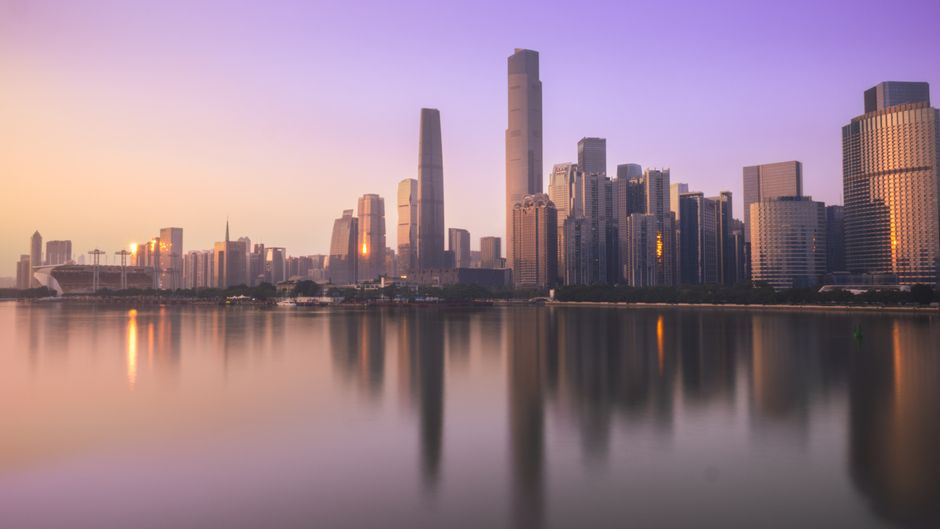
Guangzhou, historically known as Canton in Western trade records, is the capital of Guangdong Province and has served as China’s principal maritime trade gateway for more than 2,000 years. Long before Shanghai was a financial powerhouse and Shenzhen was a thought experiment, foreign merchants were buying silk, porcelain, and tea in Guangzhou’s factories — the original term for trading posts, not production facilities.
Today Guangzhou is a city of roughly 18 million people and the third-largest metropolis in China by GDP, generating approximately RMB 3.04 trillion ($420 billion USD) in 2023. Its port handled 648 million tons of cargo in 2023, ranking among the world’s busiest by throughput. The city anchors major automotive joint ventures through GAC Group (partnerships with Toyota, Honda, and Stellantis) and hosts more than 6,000 foreign-invested enterprises in its development zones.
Twice a year, Guangzhou hosts the Canton Fair — formally the China Import and Export Fair — the world’s largest trade exhibition by any measure. In its spring 2024 edition, the Fair attracted over 246,000 overseas buyers from 214 countries and territories, generating export intentions exceeding $58 billion. For any serious importer, attending the Canton Fair remains one of the highest-leverage activities available.
The Pearl River Delta: Nine Cities, One Industrial Organism
The PRD is not a single city — it is an interconnected network of nine cities that function as a unified industrial ecosystem. The core cities are Guangzhou, Shenzhen, Dongguan, Foshan, Zhongshan, Zhuhai, Jiangmen, Huizhou, and Zhaoqing. Each has carved a distinct industrial niche while sharing infrastructure, logistics networks, and labor markets.
- Shenzhen — electronics, hardware, software, and venture capital. Home to Huawei, Tencent, BYD, and DJI. The region’s innovation center.
- Dongguan — electronics components, footwear, textiles, and furniture. Sometimes called “the world’s workshop” due to the sheer density of contract manufacturers.
- Foshan — ceramics, building materials, furniture, and home appliances. Its Shunde district is the global capital of white goods manufacturing, home to Midea and Galanz.
- Zhongshan — lighting, locks, garments, and household products. More than 60 percent of China’s lamp exports originate here.
- Zhuhai — precision equipment, biomedical devices, and software. Connected to Macau via the Hong Kong-Zhuhai-Macau Bridge.
Collectively, the nine PRD cities generated a combined GDP of approximately RMB 14.6 trillion ($2 trillion USD) in 2023, according to data from the Guangdong Provincial Government. That makes the PRD larger than the economies of Australia or South Korea. The region accounts for roughly 13 percent of China’s total trade volume.
The Greater Bay Area: A Policy Upgrade for the Region
In 2019, Beijing launched the Guangdong-Hong Kong-Macao Greater Bay Area (GBA) initiative, integrating the PRD’s nine cities with Hong Kong and Macau into a coordinated development zone targeting 87 million people and $2 trillion in combined GDP. For foreign businesses, the GBA is actively lowering barriers: the Qianhai Shenzhen-Hong Kong Cooperation Zone offers preferential corporate tax rates as low as 15 percent for qualified enterprises in finance, logistics, and professional services, versus the standard 25 percent national rate. The U.S. Consulate General in Guangzhou has identified the GBA as a priority zone for American business engagement.
How the PRD Supply Chain Actually Works
PRD supply chains function as clusters, not individual factories. A consumer electronics device might involve circuit board design in Shenzhen, copper wire from Dongguan, injection-molded housings from Zhuhai, and final assembly in a Guangzhou export processing zone. Component suppliers are typically within two hours of assembly — dramatically reducing lead times — but the same density creates concentration risk: disruption in Dongguan can cascade across multiple product categories simultaneously.
The PRD’s logistics infrastructure is among the most developed on earth. Guangzhou Baiyun International Airport is the world’s seventh busiest by cargo volume. The PRD is served by four major commercial ports — Guangzhou Port, Shenzhen’s Yantian and Shekou terminals, and Zhuhai Port — collectively handling more than 80 million TEUs annually. The Guangzhou South railway hub connects the region to China’s high-speed rail network, enabling same-day delivery to Shanghai, Beijing, and Chengdu for time-sensitive samples and components.
Key Sectors for International Buyers
Consumer Electronics and Components
The PRD produces an estimated 70-80 percent of the world’s consumer electronics at some point in their supply chain. Huaqiangbei in Shenzhen is the global epicenter for electronic components, but the manufacturing base extends throughout Dongguan and into Huizhou. If your product has a circuit board, motor, display, or battery, the PRD is where you source it. Our detailed analysis of how Pearl River Delta factories supply the world’s gadgets covers the component ecosystem in depth.
Apparel, Footwear, and Textiles
While some garment production has shifted to Southeast Asia over the past decade, the PRD remains the world’s dominant sourcing hub for mid-to-premium apparel. The story of Shein’s Guangzhou supply chain illustrates how ultra-fast fashion economics depend on the density of fabric mills, dye houses, and CMT factories clustered within a 30-kilometer radius of Guangzhou’s Haizhu and Panyu districts.
Furniture and Building Materials
Foshan’s ceramics and furniture clusters are the global price-setting mechanism for these categories. The Lecong furniture market in Shunde is the world’s largest furniture wholesale market, spanning over 30 million square meters. It is where Western retailers from IKEA to Home Depot ultimately trace a significant portion of their sourcing decisions.
Electric Vehicles and New Energy
The PRD is rapidly becoming the global center of gravity for EV manufacturing. BYD’s headquarters and largest production base is in Shenzhen. GAC Aion, VOYAH (owned by Dongfeng), and Leapmotor all have significant PRD operations. The region also hosts the majority of China’s EV battery cell manufacturing not based in Fujian or Jiangsu, including facilities operated by CATL, BYD, and EVE Energy. The Guangdong vs. Zhejiang comparison provides useful context for understanding where different product categories cluster across China’s two most important export provinces.
Practical Sourcing Guidance
China’s Ministry of Commerce maintains the MOFCOM enterprise registry for verifying manufacturer registration, export licenses, and business scope. Third-party audits (SGS, Bureau Veritas, QIMA) are standard for orders above $50,000. PRD factories typically accept lower MOQs than Yangtze Delta peers: 500 units for mid-complexity electronics, 200 for apparel. Standard lead times are 30-45 days for established SKUs, 60-90 days for new tooling. Monitor the U.S. Federal Reserve’s H.10 foreign exchange release for CNY/USD benchmarks on long-cycle contracts. Pre-Chinese New Year production slots fill by early October — plan accordingly.
The Geopolitical Layer: Risks and Opportunities
Section 301 tariffs continue to affect Guangdong-manufactured exports to the United States. Many PRD manufacturers have responded with “China plus one” strategies, establishing parallel capacity in Vietnam, Malaysia, and Mexico. For importers, this enables sourcing finished goods from third-country facilities while maintaining PRD relationships for components and tooling, where tariff exposure is lower. Hong Kong-based sourcing offices operating under common law contracts — with PRD manufacturing across the border — remain a viable structural model for Western companies managing compliance requirements. The PRD’s workforce depth, supply chain density, and institutional knowledge are not replicable elsewhere on a 5-10 year horizon. The strategic question is not whether to engage, but how to manage risk appropriately.
The Bottom Line
The Pearl River Delta is the single most consequential manufacturing geography on earth for international trade. Understanding its city-level specializations, its logistics architecture, its policy environment, and its seasonal rhythms is not academic exercise — it is competitive advantage. Whether you are placing your first order or renegotiating a seven-figure annual contract, the importer who knows the PRD beats the one who doesn’t.