
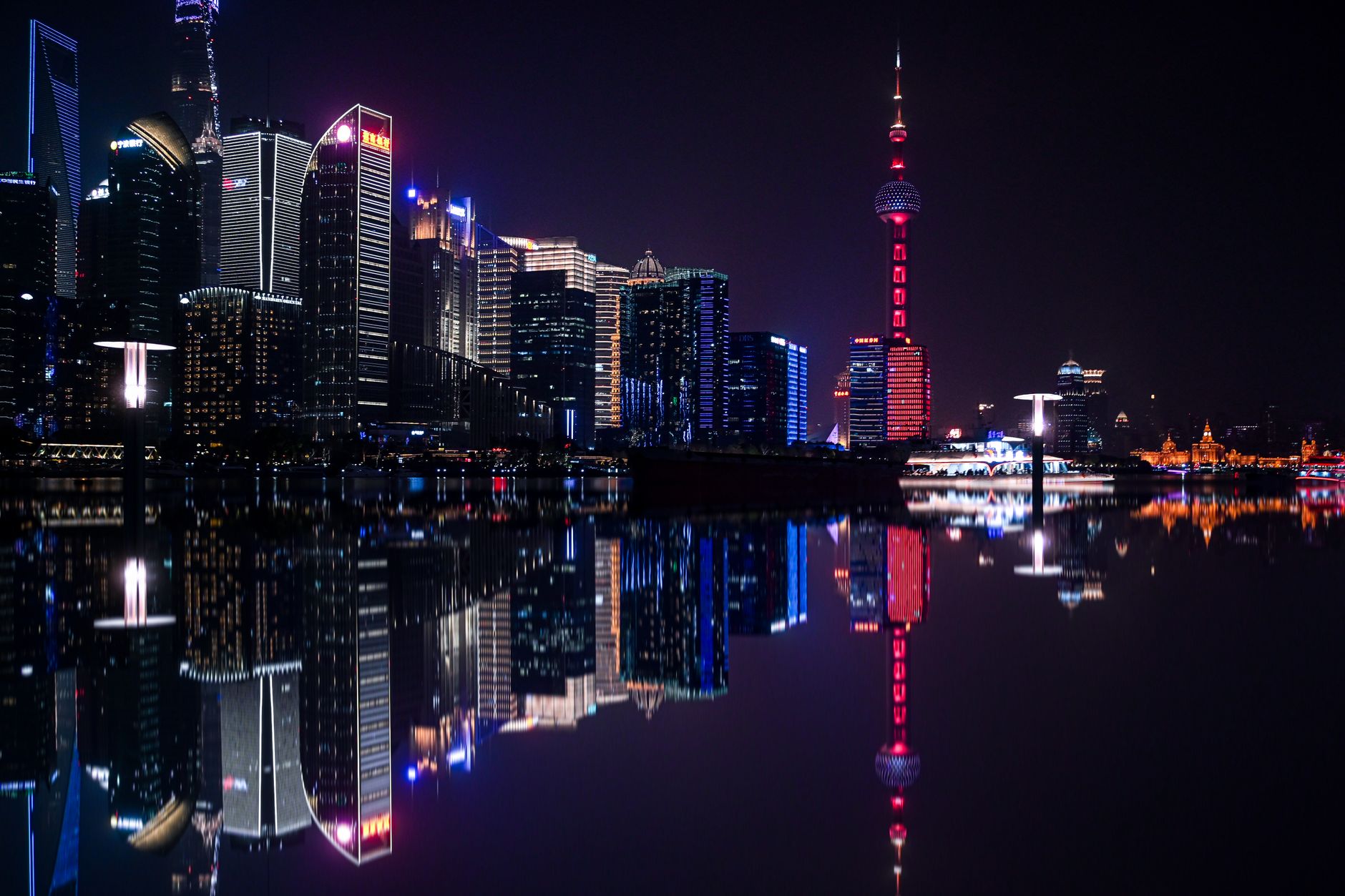
When Western executives think about doing business in China, Beijing gets the political headlines and Shenzhen gets the tech buzz. But for most foreign companies — whether they are setting up a regional headquarters, accessing capital markets, or building a manufacturing-to-market supply chain — Shanghai remains the indispensable gateway. China’s most internationally integrated city is also its most commercially consequential, and understanding what makes Shanghai tick is foundational knowledge for any serious player in US-China trade.
The Numbers That Define Shanghai’s Economic Weight
Shanghai is home to roughly 25 million permanent residents and contributes approximately 3.8% of China’s total GDP despite covering less than 0.06% of its land area. In 2023, the city’s GDP exceeded 4.7 trillion RMB (approximately $650 billion), making it larger than the entire economies of Norway or Austria. The Port of Shanghai has been the world’s busiest container port every year since 2010, handling over 49 million TEUs annually — nearly double the throughput of Los Angeles and Long Beach combined.
More than 76,000 foreign-invested enterprises operate in the city. Over 700 Fortune 500 companies have established regional headquarters here. That concentration is not coincidental — it reflects Shanghai’s unique combination of legal infrastructure, talent depth, and financial connectivity that no other Chinese city fully replicates.
The Shanghai Free Trade Zone: China’s Most Important Open Economy Laboratory
In September 2013, China launched the China (Shanghai) Pilot Free Trade Zone — the first of its kind on the mainland. The zone has since expanded to over 240 square kilometers, including the Lingang New Area established in 2019. The FTZ grants foreign businesses a range of operational freedoms unavailable in the broader Chinese market: liberalized foreign ownership caps in specific sectors, simplified customs procedures, yuan convertibility trials, and a negative list approach to foreign investment that defines what is restricted rather than what is permitted.
The Lingang expansion targets advanced manufacturing, integrated circuits, biomedicine, and artificial intelligence — sectors where Beijing wants to attract global technology partners while building domestic capability. The US Commercial Service maintains detailed guidance on FTZ applications and market entry processes for American companies considering the zone. This test-first, replicate-second model is part of what makes Shanghai so strategically significant — as we explored in our analysis of Suzhou Industrial Park: The Blueprint for China’s Special Economic Zones, Shanghai’s FTZ philosophy has become a template for China’s broader economic opening.
Finance and Capital Markets: Why Shanghai Is China’s Wall Street
The Shanghai Stock Exchange (SSE), founded in 1990, is the world’s third-largest by market capitalization, with over 2,200 listed companies and a combined market cap exceeding $7 trillion. The exchange houses China’s A-share market, progressively opened to foreign institutional investors through the QFII scheme and the Shanghai-Hong Kong Stock Connect launched in 2014. The Shanghai Gold Exchange is one of the world’s largest physical gold trading venues, and the China Foreign Exchange Trade System (CFETS) is the dominant platform for onshore renminbi FX trading.
For US financial firms, Shanghai offers access that Beijing does not. Goldman Sachs, JPMorgan, Morgan Stanley, and Citigroup all maintain significant Shanghai presences and have used the city’s WFOE (Wholly Foreign-Owned Enterprise) structure to build securities and asset management operations. The 2020 removal of foreign ownership caps in the securities sector — a reform piloted through the Shanghai FTZ — triggered a wave of expansions that continues today.
The Talent Ecosystem: Why Companies Put Their Asia Leadership in Shanghai
Shanghai produces and attracts talent at a scale that no other Chinese city matches for internationally oriented businesses. Fudan University, Tongji University, and Shanghai Jiao Tong University are among China’s elite institutions; SJTU consistently ranks in the global top 50 in engineering and computer science. The city graduates over 200,000 students annually. English proficiency is measurably higher here than in Beijing, Guangzhou, or Chengdu. The professional service sector — law firms, accountancies, management consultancies, headhunters — is denser and more internationally experienced than anywhere else on the mainland.
Key Districts and Where Industry Clusters
Pudong: Finance, Tech, and Trade Headquarters
The Lujiazui financial district in Pudong is China’s most concentrated cluster of banks, investment firms, and multinational regional headquarters. Zhangjiang Hi-Tech Park hosts over 400 biomedical companies and major R&D centers for Roche, AstraZeneca, and several Chinese AI firms. The surrounding area has become the preferred address for tech companies seeking proximity to both capital and government relationships.
Puxi: Consumer Brands, Media, and Professional Services
The historic west bank of the Huangpu River remains the center of gravity for luxury retail, advertising, and media production. The former French Concession hosts hundreds of premium F&B and fashion concepts. Jing’an District is home to L’Oreal China, Unilever’s China operations, and scores of advertising agencies shaping how global brands speak to Chinese consumers.
Lingang: Advanced Manufacturing at Scale
Tesla’s Gigafactory Shanghai, which began production in January 2020, is located in the Lingang New Area. It is Tesla’s most cost-efficient plant globally, producing roughly 950,000 vehicles per year. Lingang also hosts SMIC advanced semiconductor fabs and CATL battery production lines. As we detailed in China’s Free Trade Zones: How Foreign Businesses Can Use the FTZ Advantage, Lingang offers the most aggressive incentive package of any FTZ in the country.
Regulatory Environment: Key Considerations in 2026
Shanghai operates under the same national regulatory framework as the rest of China, but its local implementation is consistently more business-friendly and its officials more experienced in handling foreign investment. The State Council of China has designated the city as a testbed for regulatory reform. Key compliance areas include data localization under the 2021 Personal Information Protection Law (PIPL), sector-specific equity caps under the updated negative list, and transfer pricing scrutiny from the State Taxation Administration — an area requiring local counsel experienced in STA interactions.
The relationship between Shanghai’s regulatory sophistication and its role as a national replication model connects directly to what we covered in How Tiered Cities Differ for Business: Tier 1 vs Tier 2 vs Tier 3 in China — Shanghai’s Tier 1 classification reflects not just size but institutional depth that lower-tier markets cannot match.
Shanghai as a Bilateral Trade Bellwether
For US companies, Shanghai’s openness to foreign investment is both an opportunity and a real-time indicator of where US-China relations are trending. When the relationship is under pressure, the business climate in Shanghai often signals shifts before they appear in official policy. When it is stable or improving, the city sees accelerated foreign investment approvals, expanded sector access, and looser implementation of existing restrictions.
Understanding Shanghai is not optional for serious US-China business practitioners. It is where the relationship between the world’s two largest economies is most visibly built, tested, and maintained — one deal, one partnership, and one factory at a time. For companies navigating bilateral trade complexity alongside geopolitical uncertainty, the evolution of China’s cross-border trade pilot zones — many of which trace their design philosophy directly to Shanghai — offers critical context for what China is building toward and where the next generation of bilateral opportunities will emerge.