
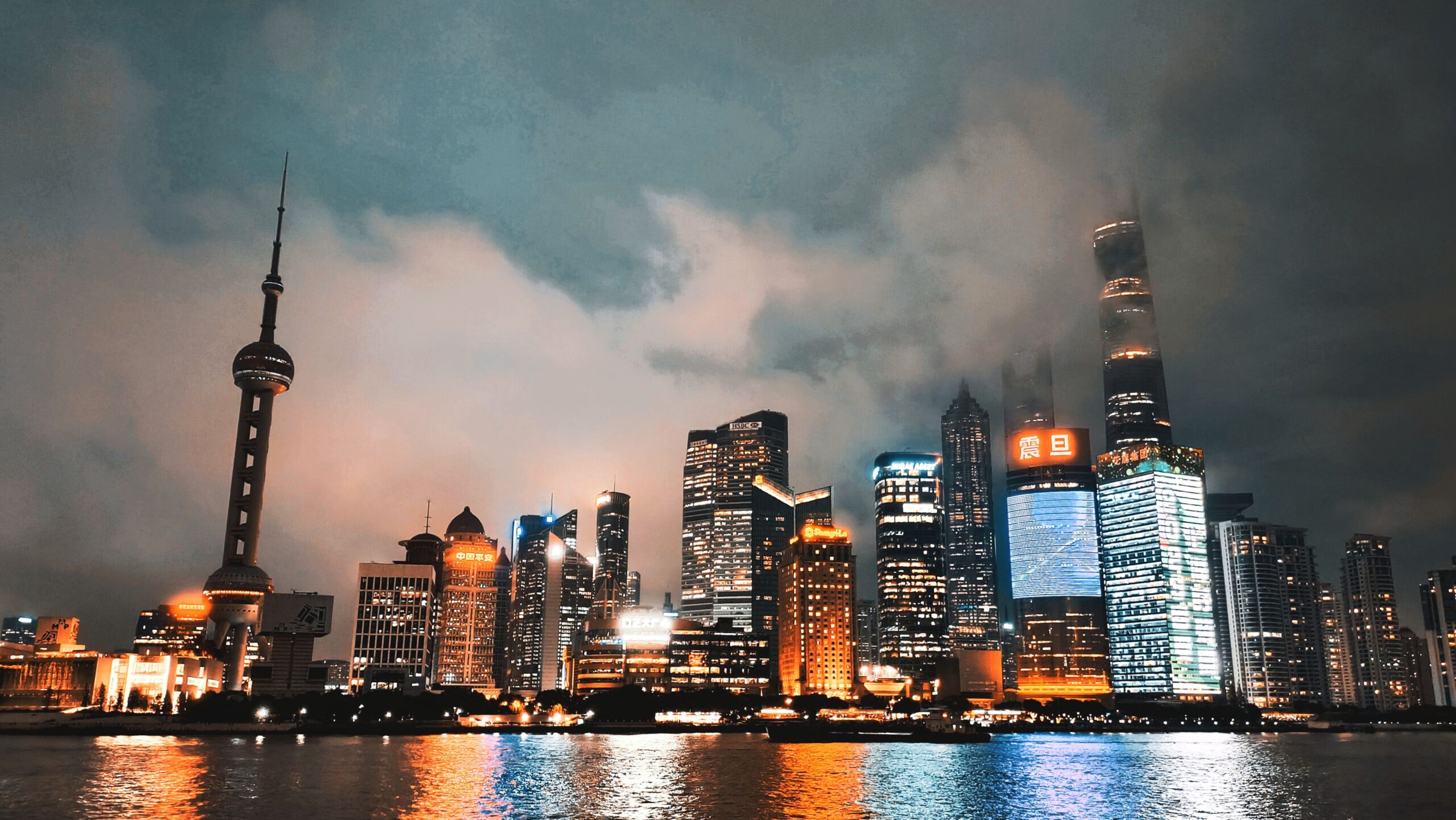
Not all Chinese cities are created equal. A foreign company that succeeds in Shanghai can fail in Zhengzhou using the exact same strategy. The difference often comes down to one overlooked variable: tier. China’s informal but widely used city-tier classification system profoundly shapes consumer behavior, labor markets, regulatory environments, competitive dynamics, and market entry costs. Understanding how Tier 1, Tier 2, and Tier 3 cities differ is not optional — it is foundational to any China market strategy.
What Does “City Tier” Actually Mean?
China does not have an official government-designated tier system. The classification emerged organically, driven by economic output, population size, infrastructure, political status, and consumer sophistication. It has since been adopted widely by consultancies, multinationals, and Chinese market researchers as a practical shorthand.
The most referenced framework today typically distinguishes four or five tiers, but for business planning purposes the first three are most operationally relevant:
- Tier 1: Beijing, Shanghai, Guangzhou, Shenzhen — China’s economic powerhouses with the highest GDP per capita, strongest international connectivity, and most mature regulatory environments.
- Tier 2: Chengdu, Hangzhou, Wuhan, Xi’an, Nanjing, Tianjin, Chongqing, Suzhou, and roughly 15-20 other provincial capitals and major economic hubs. Fast-growing, increasingly cosmopolitan, and often more affordable than Tier 1.
- Tier 3 and below: Hundreds of prefectural-level cities with populations typically between 1 and 5 million. Often overlooked by foreign companies but increasingly important as Tier 1 and 2 markets saturate.
China’s Ministry of Commerce (MOFCOM) tracks regional consumption and investment data across all these city clusters, and its provincial commerce bureaus are valuable first stops for understanding local market conditions.
Tier 1 Cities: Maximum Reach, Maximum Cost
Beijing, Shanghai, Guangzhou, and Shenzhen collectively represent China’s most sophisticated, internationally integrated markets. These cities account for a disproportionate share of China’s luxury consumption, technology investment, and foreign direct investment inflows.
For foreign companies, the advantages are real: established legal infrastructure, English-speaking talent pools, a dense ecosystem of international law firms, accounting firms, and logistics providers, and consumers who have significant experience with foreign brands. Shanghai’s free trade zone and Shenzhen’s special economic zone status also offer specific licensing and tax advantages worth exploring.
The disadvantages are equally real. Commercial real estate costs in Tier 1 cities rival Hong Kong and Singapore. Competition is ferocious — virtually every major global brand is already present. Talent acquisition is expensive, with senior bilingual managers commanding salaries that exceed many Western markets. And in sectors like food and beverage, beauty, and consumer electronics, brand differentiation is exhausting to maintain when every competitor has already staked a claim.
For most foreign market entry strategies, Tier 1 cities make sense as a beachhead — a place to learn the market, establish legal entity, build brand recognition — but rarely as the end goal. Doing business in Shenzhen requires particular attention to its tech-forward consumer culture and the density of Chinese domestic competitors in the innovation space.
Tier 2 Cities: Where the Real Growth Story Is
If Tier 1 cities are China’s shopwindow, Tier 2 cities are its engine room. Cities like Chengdu, Hangzhou, Wuhan, Xi’an, and Nanjing have GDP growth rates that frequently outpace their Tier 1 counterparts, driven by government-led industrial relocation, rising domestic consumption, and university-educated populations hungry for new products and experiences.
Chengdu is arguably the most prominent example. It has emerged as the retail and consumption capital of western China, with consumer spending that rivals some Tier 1 benchmarks despite significantly lower operating costs. Luxury brands including Chanel and Louis Vuitton opened flagship stores in Chengdu ahead of some European cities. Doing business in Chengdu offers a distinct profile from the coastal megacities — more leisurely negotiation culture, stronger emphasis on relationship-building, and a consumer base that skews toward lifestyle and entertainment spending.
Hangzhou deserves special mention for its digital economy. As the home of Alibaba, it hosts a concentration of e-commerce talent, logistics infrastructure, and digital payment ecosystem depth that foreign companies in retail and technology should actively exploit. Wuhan, meanwhile, is China’s logistics crossroads — its position at the intersection of the Yangtze River corridor and major rail lines makes it a natural hub for distribution-heavy businesses.
Operational cost savings in Tier 2 can be dramatic. Office rents typically run 40-60% below comparable Tier 1 space. Mid-level talent is more available and less expensive. Local government incentives — tax breaks, subsidized industrial park space, accelerated business registration — are often more aggressive in Tier 2 cities competing for foreign investment prestige.
Tier 3 Cities: The Underserved Frontier
Tier 3 cities are where China’s next consumer wave is forming. Combined, China’s hundreds of Tier 3 and lower-tier cities represent a consumer population larger than the United States. Disposable incomes are rising, smartphone penetration is near-universal, and these consumers are making their first purchases in categories — personal finance products, premium food, international travel, skincare — that first-tier consumers have already cycled through.
The challenge for foreign companies is distribution. Physical retail reach into Tier 3 cities traditionally required partnering with Chinese distributors who had regional logistics infrastructure. E-commerce, particularly through platforms like Taobao, Pinduoduo, and JD.com, has partially flattened this barrier — a brand with strong digital presence can technically reach a consumer in Yancheng or Zhangjiakou. But building brand trust without physical presence remains difficult.
Consumer behavior also diverges meaningfully from higher-tier cities. Price sensitivity is higher. Brand recognition matters less than social proof — word of mouth, livestream endorsements, and community buying schemes (a hallmark of Pinduoduo’s group purchase model) carry outsized influence. Products that emphasize status signaling perform differently than in Tier 1 cities, where consumers already have established brand literacy.
Foreign companies in consumer goods, agricultural products, and healthcare should evaluate Tier 3 markets specifically for volume-driven, lower-margin strategies rather than premium positioning plays.
Regulatory Differences Across Tiers
The formal regulatory framework for foreign business — company registration, work permits, import licensing — is set nationally and applies uniformly. However, enforcement intensity, processing timelines, and local government responsiveness vary considerably.
In Tier 1 cities, foreign enterprises benefit from experienced commerce bureaus, dedicated foreign investment service centers, and officials who have processed hundreds of WFOE registrations. In lower-tier cities, the same process may encounter officials unfamiliar with edge cases, slower processing, or requirements for additional documentation not technically mandated nationally.
MOFCOM’s Foreign Investment Negative List and the State Administration for Market Regulation (SAMR) govern business registration across all tiers, but local implementation is where Tier 2 and 3 can surprise you. Engaging a local service provider with established relationships in the specific city you are targeting — not just national-level contacts — is consistently good advice.
The US Commercial Service China operates offices in Beijing, Shanghai, Guangzhou, Chengdu, and Wuhan, and can provide introductions and commercial intelligence for companies evaluating specific city markets. Their team-level knowledge of local market conditions is genuinely useful and free to US companies.
Workforce and Talent Considerations
The talent equation shifts meaningfully across tiers. Tier 1 cities offer the broadest talent pools but the most competitive and expensive hiring environments. Bilingual executives, experienced international trade managers, and specialist technical talent are concentrated in Beijing and Shanghai.
Tier 2 cities increasingly produce strong domestic talent — university graduates from China’s top provincial universities who prefer to stay local rather than compete in Tier 1 markets. For roles that do not require bilingual capabilities, Tier 2 hiring can deliver better value with lower attrition risk. Many Tier 2 employees have watched peers burn out in Shanghai and actively prefer a local career trajectory.
China’s Hukou system continues to shape talent mobility. Employees with Hukou registered in a Tier 1 city are reluctant to accept transfers to Tier 3 locations, even at significant salary premiums, because the Hukou affects school access for their children, social insurance benefits, and property purchase rights. Workforce planning across tiers must account for this structural friction.
Choosing the Right Entry Point
There is no universal answer to which tier is right for your business. The decision framework should account for:
- Product positioning: Premium international brands typically need Tier 1 or strong Tier 2 launch cities to establish credibility before cascading to lower tiers.
- Distribution model: Businesses with heavy physical logistics requirements should evaluate proximity to logistics infrastructure — Wuhan, Tianjin, and Zhengzhou are Tier 2 cities with disproportionate distribution advantages.
- B2B vs. B2C: B2B companies often find Tier 2 industrial cities (Suzhou, Dongguan, Ningbo) offer the best combination of manufacturing client density and manageable operating costs.
- Budget: For companies with limited initial capital, a Tier 2 or even Tier 3 pilot can prove the business model before committing to Tier 1 rents and salaries.
- Competitive white space: In many product categories, Tier 1 is saturated while Tier 2 and 3 markets still offer first-mover advantages for foreign brands willing to invest in market education.
A sequenced approach — launch in Tier 1, prove the model, then scale into Tier 2 using the same brand credibility — has worked for many consumer goods companies. But it is not the only path. Several successful foreign brands have reversed the script, deliberately targeting Tier 2 and 3 first to build volume before entering the prestige Tier 1 markets.
Digital Commerce Cuts Across All Tiers
One strategic development that reshapes the tiered city calculus is the maturity of China’s digital commerce infrastructure. A brand selling through Tmall, JD.com, or via WeChat mini-programs and official accounts can technically reach consumers in any tier without a physical footprint. Cross-border e-commerce (CBEC) channels allow foreign brands to sell into China without a domestic legal entity, reaching Tier 3 consumers who are digitally connected but geographically distant from foreign retail.
This does not eliminate the importance of tiered city strategy — brand building, customer service, regulatory compliance, and logistics all still require on-the-ground decisions — but it dramatically lowers the minimum viable investment needed to test a lower-tier market before committing to a full entry.
The Bottom Line
China’s tiered city system is not a bureaucratic quirk — it is a practical map for resource allocation. The companies that struggle most in China are often those that treat it as a single market, replicating a Tier 1 strategy across every geography and wondering why results vary. The companies that succeed tend to be those that treat Tier 1, Tier 2, and Tier 3 as genuinely distinct markets requiring adapted products, pricing, distribution, and marketing approaches.
Start with clear business objectives, map them against the city-tier profiles outlined here, and use resources like the US-China Business Council and MOFCOM’s provincial investment guides to build a city-specific picture before committing capital. The complexity is real, but so is the opportunity — and the tier framework is one of the most useful lenses for navigating both.