In 2023, BYD surpassed Tesla to become the world’s best-selling electric vehicle manufacturer. By mid-2026, that milestone looks less like a peak and more like a launching pad. BYD — short for Build Your Dreams — is executing one of the most aggressive international expansion campaigns in automotive history, entering dozens of markets simultaneously while building manufacturing capacity outside China at scale for the first time. For Western supply chain managers, investors, and trade professionals, understanding BYD’s global strategy is no longer optional background knowledge. It is essential context for navigating the next decade of mobility markets.
From Shenzhen Battery Maker to Global Automotive Force
BYD was founded in Shenzhen in 1995 by Wang Chuanfu, a chemist with a background in battery research at the Beijing General Research Institute for Nonferrous Metals. The company’s early years centered on rechargeable battery manufacturing for consumer electronics — it became a major supplier to Nokia, Motorola, and Samsung before pivoting to electric vehicles following its 2003 acquisition of Qinchuan Automobile.
The decisive competitive advantage emerged with BYD’s proprietary blade battery, a lithium iron phosphate (LFP) cell design that the company claims reduces thermal runaway risk while improving energy density compared to conventional prismatic cells. By 2021, BYD had discontinued internal combustion engine-only passenger vehicles entirely — one of the first major automakers globally to make that commitment fully. Annual vehicle sales reached 3.02 million in 2023 and approximately 4.27 million in 2024, with plug-in hybrids (PHEVs) and pure battery EVs each accounting for roughly half of the total. Revenue for fiscal year 2024 reached approximately RMB 777 billion (roughly $107 billion USD at prevailing exchange rates). The company employs over 900,000 people, making it one of China’s largest private employers. Warren Buffett’s Berkshire Hathaway, an early investor, has reduced its stake since 2022 but continues to hold a position — an unusual endorsement that gave BYD significant credibility with Western institutional investors when it mattered most.
The International Playbook: Europe, Southeast Asia, and Beyond
Europe: The Premium Test Case
Europe is BYD’s highest-profile international battleground. The company entered Norway in 2022 and expanded to over 20 European countries by 2025, selling models including the Atto 3 SUV, Seal sedan, and Dolphin hatchback at prices competitive with Volkswagen’s ID series and Tesla’s Model 3. The EU’s countervailing duties on Chinese EVs — BYD received an additional 17.4% tariff on top of the existing 10% import duty following the 2024 European Commission investigation — accelerated a localization decision already in planning. A plant in Szeged, Hungary broke ground in 2024, targeting initial annual capacity of approximately 150,000 vehicles with production expected to begin in 2026. Hungarian manufacturing bypasses the EU tariff structure and qualifies vehicles under EU content consideration frameworks, dramatically improving the competitive economics for BYD’s European models.
Southeast Asia: Volume and Manufacturing Hub
Thailand has emerged as BYD’s regional manufacturing anchor. A factory in Rayong Province opened in mid-2024 with 150,000-unit annual capacity, targeting both domestic Thai sales and broader ASEAN exports leveraging the ASEAN Free Trade Area framework. Indonesia is strategically important given its extensive nickel reserves — a critical battery input — and its government’s ambitions to develop a domestic EV supply chain. BYD is in active discussions about local assembly arrangements that would qualify vehicles for Indonesian EV incentive programs. Vietnam, Malaysia, and the Philippines are established sales markets with dealer networks in place.
Latin America and the Middle East
In Brazil, BYD is converting a former Ford plant in Camaçari, Bahia into a facility expected to produce up to 150,000 vehicles annually for South American markets. Ford had exited Brazil in 2021, and BYD’s acquisition of the idle facility was both commercially efficient and symbolically resonant — a Chinese automaker occupying space vacated by an American icon. Mexico is strategically attractive given USMCA proximity to the US market, but politically complicated: US concerns about Chinese manufacturers using Mexican facilities to circumvent tariffs have created significant regulatory uncertainty. In the Middle East, BYD sells in the UAE, Saudi Arabia, Israel, and Jordan, where limited EV subsidies mean the company must compete on product value rather than incentive-driven demand — a useful proof point for its pricing and quality positioning.
Vertical Integration as Structural Advantage
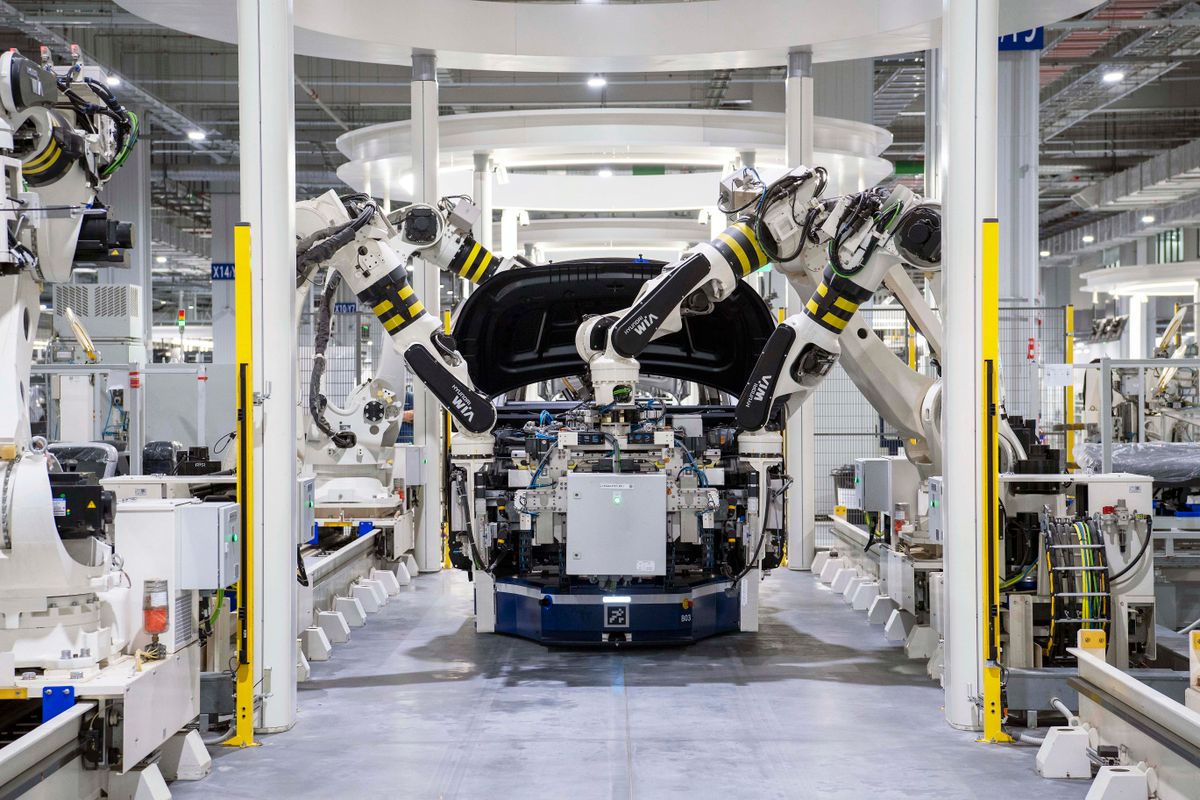
BYD’s most durable competitive advantage is vertical integration at a scale no Western competitor has matched. Unlike most automakers who source battery cells from suppliers, BYD manufactures its own cells, modules, and battery management systems through its FinDreams Battery subsidiary. It produces its own electric motors, power electronics, and increasingly its own semiconductors through BYD Semiconductor, reducing exposure to the supply constraints that disrupted competitors during the 2021 to 2023 chip shortage cycle. Understanding the broader competitive dynamics of China’s battery supply chain is essential context for anyone assessing BYD’s long-term cost structure against Western and Korean competitors.
The blade battery’s LFP chemistry avoids cobalt — among the most expensive and geopolitically concentrated battery inputs — giving BYD a structural raw material cost advantage over NMC-based battery packs used by many competitors. Toyota has licensed blade battery technology through its joint venture with BYD in China, a significant validation. For context on how China controls the raw materials underpinning this advantage, see our analysis of China’s lithium supply chain dominance.
Trade Policy and the US Market
The United States remains effectively closed to Chinese EVs. Section 301 tariffs were raised to 100% on Chinese electric vehicles in 2024, a rate that makes direct imports commercially non-viable. BYD does not currently sell passenger vehicles in the US and has no credible near-term path to doing so without domestic US manufacturing — a prospect facing regulatory and political obstacles that go beyond simple economics. The US Department of Commerce has documented the trade action rationale in detail, while China’s Ministry of Commerce has formally contested the measures through official diplomatic channels.
For Western automotive supply chain companies, BYD’s global expansion creates both competitive pressure and partnership opportunity. BYD is actively sourcing non-Chinese components for its international models to meet local content requirements and reduce trade compliance exposure. European and American suppliers of specialized materials, software, and vehicle electronics are receiving an increasing volume of procurement outreach from BYD’s international purchasing teams. The company that positions itself as a preferred international supplier to BYD benefits from exposure to one of the fastest-growing automotive OEM programs in the world.
Product Architecture and Brand Building
BYD organizes its lineup into two primary series. The Dynasty series — Han, Tang, Song, Qin — targets the domestic Chinese market with naming conventions calibrated for local cultural resonance. The Ocean series — Seal, Dolphin, Atto 3, Sea Lion — is designed for international markets with globally neutral aesthetics and nomenclature. Above both sits the Yangwang ultra-luxury sub-brand, launched in 2023, with the U8 SUV priced above RMB 1 million (approximately $138,000). This positioning challenges Land Rover, Porsche Cayenne, and Mercedes G-Class in a segment where Chinese brands had previously been absent. The DenzA sub-brand, a joint venture with Mercedes-Benz, targets the premium D-class sedan segment.
This product breadth is significant: BYD is not competing only on price. It is building a full brand architecture from entry-level to ultra-luxury with deliberate intent. China’s broader automotive export surge — of which BYD is the most prominent component — is restructuring global supply chains and forcing traditional OEMs to accelerate EV roadmaps or absorb market share losses.
Implications for Western Business
For companies in adjacent sectors — fleet management, insurance, aftersales services, charging infrastructure, financial services — BYD’s entry into new markets creates a substantial new category of corporate client with procurement and operational requirements. BYD actively seeks local partners in every new geography for dealer development, aftersales service networks, and charging infrastructure buildout. The partner who secures BYD’s aftersales relationship in Brazil or its charging network contract in Hungary gains revenue tied to a rapidly scaling installed base.
Comparative strategic context is useful: Geely’s acquisition-led international strategy — Volvo, Polestar, Lotus, London Electric Vehicle Company — offers a different model from BYD’s organic greenfield approach. Both reveal the range of tools Chinese automakers are deploying to build durable international positions. BYD’s expansion is credible in a way earlier Chinese automotive export efforts were not, backed by genuine product competitiveness, deep capital, and a management team with demonstrated execution. Businesses watching from the sidelines are already late to their analysis.