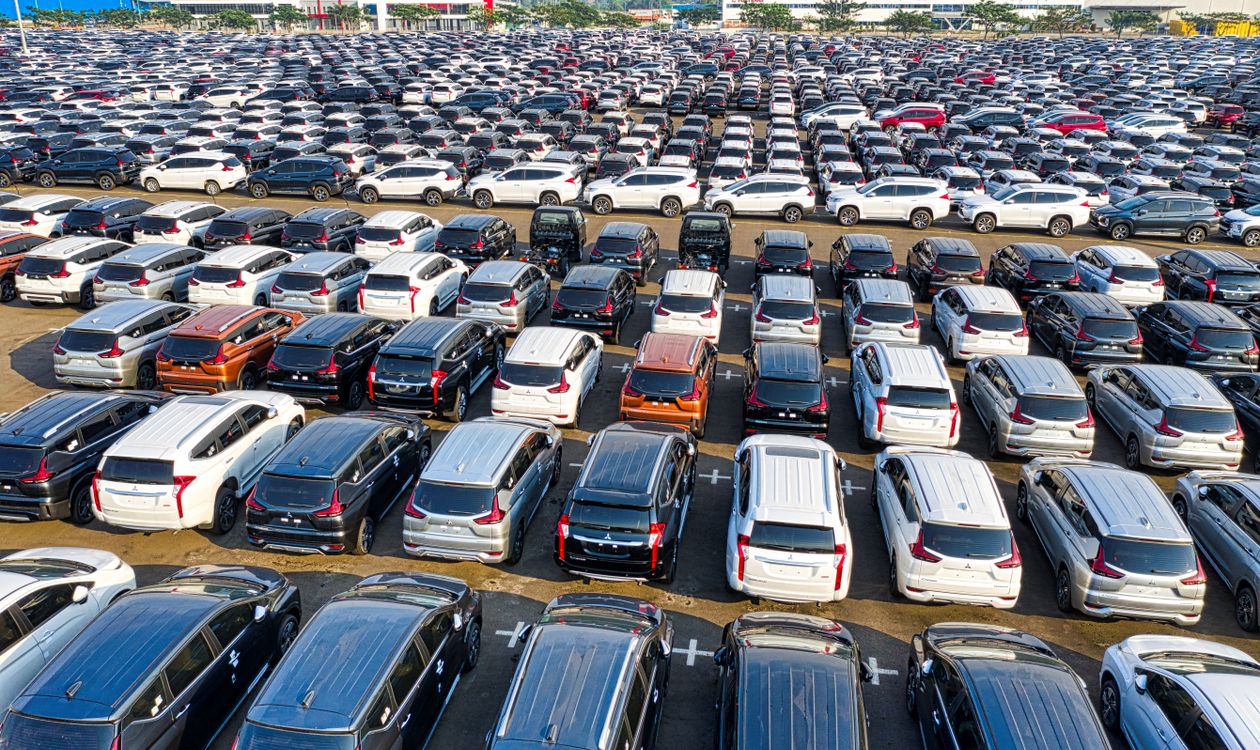
In 2023, China overtook Japan to become the world’s largest automobile exporter, shipping more than 5.22 million vehicles abroad. In 2024, that number climbed further to approximately 5.86 million units. Behind those headline numbers sits a complex industrial ecosystem — one anchored by SAIC Motor Corporation, China’s largest state-owned automaker, and increasingly propelled by a new generation of electric-first brands rewriting the rules of global competition.
For foreign businesses — automotive suppliers, distributors, investors, or policy professionals — understanding how China’s auto industry arrived at this moment is not optional. It is fundamental to understanding where global manufacturing, trade, and mobility are heading.
SAIC Motor: The State-Owned Foundation of China’s Auto Industry
SAIC Motor Corporation Limited (上汽集团), headquartered in Shanghai, is the largest automobile manufacturer in China by volume. In 2023, SAIC produced approximately 5.25 million vehicles and reported revenues exceeding RMB 900 billion (roughly USD 124 billion). The group employs more than 170,000 people across manufacturing, R&D, finance, and logistics.
SAIC’s history traces to 1955 when the Shanghai Automobile Industry Corporation was established to produce commercial vehicles. That changed decisively in 1984 when SAIC entered a landmark joint venture with Volkswagen — one of the first Sino-foreign automotive JVs in China — followed by a partnership with General Motors in 1997. These JVs transferred manufacturing processes, quality management systems, and engineering capabilities that SAIC’s engineers absorbed and built upon. The VW and GM plants in Shanghai became training grounds for a generation of Chinese automotive talent. SAIC’s leadership understood the joint venture model was a means, not an end: the goal was to develop proprietary Chinese brands capable of competing globally without foreign partners.
From Domestic Giant to Global Exporter
SAIC’s international ambitions crystallized in the early 2010s with the relaunch of MG Motor — a marque acquired through the purchase of Rover Group assets in 2007. Rather than selling MG only in China, SAIC positioned it as a global vehicle brand, investing in design studios in London and Shanghai and targeting Europe, Australia, Southeast Asia, and the Middle East.
By 2022, MG had become the top-selling Chinese car brand in Europe, with strong numbers in the UK, Norway, and Germany. The MG4 electric vehicle won the 2023 Car of the Year award in several European categories. SAIC exported over 1.2 million vehicles in 2023, placing it among the largest auto exporters of any single corporate group worldwide.
SAIC is not alone in this export surge. BYD, the world’s largest electric vehicle company by sales volume, exported over 500,000 EVs in 2024, targeting Brazil, Thailand, Australia, and European markets. NIO, Li Auto, and XPeng have expanded into Norway, Germany, and the Netherlands as European beachheads. And Geely’s acquisition of Volvo set the precedent for Chinese automotive M&A that reshaped global assessments of Chinese industrial capital.
The Industrial Policy Behind the Export Surge
China’s auto export boom is the product of deliberate, multi-decade industrial policy. Beginning in 2009, the central government launched subsidy programs for new energy vehicles (NEVs). By 2022, cumulative NEV subsidies had exceeded RMB 200 billion (approximately USD 28 billion). While direct purchase subsidies were phased out at end-2022, infrastructure investment in charging networks, battery manufacturing capacity, and R&D grants continued.
The NEV mandate policy requires automakers selling in China above a volume threshold to maintain a minimum ratio of NEV credits — effectively turning China’s domestic market into a pressure cooker for EV innovation that produced globally competitive companies. Export infrastructure investment followed: inland manufacturing hubs like Chongqing built rail and river logistics connecting production centers to coastal ports. According to China’s Ministry of Commerce (MOFCOM), automotive products ranked among the top five export categories in 2023 — a position the sector had never previously held. MOFCOM publishes current export data at mofcom.gov.cn.
Why Chinese Automakers Compete on Price
The central question foreign industry professionals ask: how can Chinese automakers sell a competitive EV in Europe for 20 to 30 percent less than equivalent offerings from Volkswagen, Stellantis, or Renault? The answer is structural.
Battery Supply Chain Integration
Chinese automakers benefit from deep domestic supply chains where battery cells, rare earth permanent magnets, and power semiconductors are produced at scale and at costs Western OEMs cannot match through import. CATL, which supplies cells to SAIC, BYD, NIO, and many others, prices cells at roughly 30 to 40 percent below European battery producers. China’s rare earth processing dominance further reduces EV drivetrain input costs across the entire industry.
Engineering Speed
SAIC and peers have compressed vehicle development cycles significantly. While a traditional program at Ford, BMW, or Toyota runs 48 to 60 months from concept to production, Chinese OEMs have executed programs in 24 to 36 months using modular platforms and agile software development processes borrowed from the technology industry. The result is faster market response and lower amortized engineering cost per vehicle.
The Tariff Response: EU and US Countermeasures
In 2024, the EU announced provisional countervailing duties on Chinese-made EVs following a trade investigation — ranging from 17.4 percent on BYD vehicles to 38.1 percent on SAIC-produced vehicles, on top of the existing 10 percent base tariff. The United States moved more aggressively: under the 2024 Section 301 tariff review, the duty on Chinese EVs was raised from 25 percent to 100 percent, effectively closing the US market to direct Chinese EV exports at scale. The US International Trade Commission publishes detailed trade remedy records at usitc.gov, providing the evidentiary basis for these measures.
Chinese automakers’ response has been strategic: rather than retreating, SAIC, BYD, and Chery have announced local assembly operations in Thailand, Hungary, Brazil, and Turkey — building inside markets to avoid import tariffs while gaining preferential access to regional trade blocs. This mirrors the strategy of Japanese and Korean automakers in the 1980s and 1990s when they faced similar protectionist responses.
Implications for Foreign Businesses
For Western automotive suppliers, the rise of Chinese OEMs as global exporters presents a dual reality. They represent large procurement opportunities — Chinese automakers sourced approximately USD 38 billion in automotive parts from abroad in 2022 (MOFCOM data). Suppliers who meet Chinese quality standards and commercial terms can win significant contracts. But Chinese automakers are simultaneously developing domestic alternatives, particularly in software, infotainment, and advanced driver assistance systems, narrowing the window for foreign supplier penetration.
For distributors in emerging markets — Southeast Asia, the Middle East, Latin America, and Africa — Chinese brands now offer credible, cost-competitive vehicles actively seeking local distribution partnerships. SAIC’s international division operates a structured distributor recruitment program with territory exclusivity, marketing support, and logistics assistance.
For investors and M&A professionals, the Chinese automotive ecosystem presents opportunities across the value chain: battery materials, charging infrastructure, autonomous driving software, and fleet management platforms are all areas where Chinese companies seek international capital and strategic partners.
The Road Ahead
China’s trajectory as an automobile exporter is not a temporary phenomenon. It is structural — rooted in a decade of industrial policy investment, supply chain development, and engineering talent accumulation. SAIC Motor’s arc, from a state factory producing Soviet-era trucks to a global automaker whose MG brand wins European design awards, encapsulates the broader story of Chinese industrial development. The global auto industry is entering a period of realignment in which the competitive map will look substantially different in 2030 than it did in 2020. For foreign businesses, understanding this ecosystem is not an academic exercise. It is a commercial imperative.