
When Li Shufu, the founder of Zhejiang Geely Holding Group, told an early investor in the 1990s that he wanted to build a Chinese car company to compete with the world’s best, the response was polite skepticism. Geely was making motorcycles. China’s auto industry was dominated by joint ventures between foreign brands and state-owned enterprises. No private Chinese automaker had ever gone global.
Today, Geely controls one of the most strategically assembled automotive portfolios in the world. Volvo Cars, Lotus, Polestar, Proton, LEVC (the maker of London’s iconic black taxis), Lynk & Co, and stakes in Mercedes-Benz and Aston Martin — all sit under the Geely umbrella. Combined, the group sold over 2.8 million vehicles in 2023, generating revenues exceeding $60 billion USD. Understanding how Geely built this empire — and what it signals about Chinese outbound investment — is essential reading for any business professional working across the US-China corridor.
The Volvo Acquisition: Proof of Concept
The 2010 acquisition of Volvo Cars from Ford Motor Company for $1.5 billion USD remains the defining moment in modern Chinese M&A history. Ford had paid $6.45 billion for Volvo in 1999 and sold it at a steep loss after the 2008 financial crisis forced the company to shed non-core assets. Li Shufu saw not a distressed asset, but a world-class engineering platform.
The transaction was controversial at the time. Many Western analysts predicted Geely would strip Volvo for technology and let the brand decay — the “reverse vampire” theory of Chinese M&A. It did not happen. Instead, Geely did something unusual: it left Volvo largely alone. The Swedish company kept its headquarters in Gothenburg, retained its own management structure, maintained its engineering teams, and continued developing vehicles independently.
What Geely extracted from the deal was not technology theft but something more valuable — legitimacy, manufacturing knowledge, and access to sophisticated supply chains. Volvo’s safety research, which pioneered the three-point seatbelt, gave Geely engineers a model for product development rigor. Within three years of the acquisition, Geely’s domestic vehicles were measurably improving in quality benchmarks. The Volvo relationship was a masterclass in learning through proximity rather than extraction.
By 2023, Volvo Cars had posted record revenues of SEK 473 billion (approximately $44 billion USD), with a global delivery volume of 708,716 vehicles — its best performance in 96 years of operation. Volvo’s EV push, anchored by the EX30 and EX90 models, has positioned it as a credible premium electric brand in Europe and North America. The brand that Ford wrote off has become Geely’s most valuable global asset.
Polestar: The EV Spinout With a Global Capital Strategy
In 2017, Geely and Volvo jointly formed Polestar as a standalone electric vehicle brand. The strategic logic was clean: Volvo would focus on premium family vehicles with electrification, while Polestar would target performance-oriented EV buyers competing directly with Tesla and Porsche.
Polestar’s 2022 listing on the NASDAQ via a SPAC merger with Gores Guggenheim — valuing the company at approximately $20 billion at peak — gave Geely a Western-listed EV entity with access to US capital markets. This is a playbook worth studying. Rather than listing a Chinese entity on a Chinese exchange, Geely created a Swedish-branded EV company with Swedish management, listed it in New York, manufactured it initially in Chengdu (with European production launching in 2023), and positioned it as a credible European premium brand.
Polestar vehicles are sold in the United States, Europe, and China. The Polestar 2, its flagship sedan, consistently receives favorable reviews from outlets including Car and Driver and Automotive News. For US investors and consumers, the Chinese ownership is rarely foregrounded — Polestar markets itself as Swedish. This brand architecture is a deliberate and sophisticated response to Western consumer sensitivity around Chinese-made products.
Lotus: Reviving a British Icon in China
In 2017, Geely acquired a 51% stake in Lotus Cars, the storied British sports car manufacturer founded in 1948 and best known for engineering lightweight, driver-focused vehicles that punched far above their manufacturing cost in performance metrics. Lotus had long suffered from chronic underinvestment and ownership instability — passing through hands including General Motors and Proton.
Under Geely, Lotus has undergone arguably the most dramatic transformation in its 75-year history. The company relocated its headquarters operations to a new manufacturing facility in Wuhan — a $1.5 billion investment — while retaining its UK base at Hethel in Norfolk for engineering, testing, and heritage production. The Lotus Eletre, the brand’s first SUV and its first fully electric vehicle, launched in 2023 at a starting price of approximately $95,000 USD and represents a direct assault on Porsche Cayenne and Ferrari Purosangue buyers.
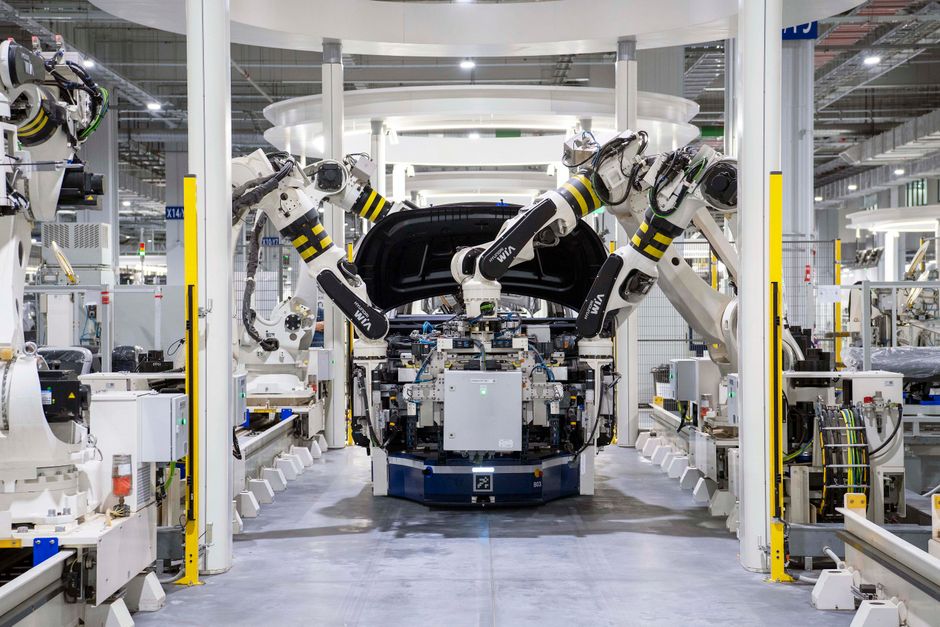
The Wuhan factory is significant beyond Lotus. It is one of the most advanced automotive manufacturing facilities in China, producing both Lotus vehicles and serving as a platform for Geely’s broader luxury EV ambitions. The decision to build it in Wuhan — a city already home to major automotive manufacturers and a deep talent pool in engineering — reflects sophisticated industrial site selection rather than political gesture. For more on Wuhan’s role in China’s manufacturing landscape, see our detailed breakdown of Wuhan and Central China’s industrial corridor.
The Mercedes-Benz Stake: Patient Capital at Its Most Sophisticated
In February 2018, Geely disclosed that it had quietly accumulated a 9.69% stake in Daimler AG (now Mercedes-Benz Group) — making Li Shufu the single largest individual shareholder of one of the world’s most prestigious automotive groups. The stake, acquired through open-market purchases and derivatives instruments totaling approximately $9 billion USD, was assembled without triggering German regulatory disclosure requirements until completion.
The move generated immediate controversy in Germany and Brussels, prompting calls for stricter foreign investment screening mechanisms in the EU — many of which were subsequently enacted through the EU Foreign Subsidies Regulation. But Geely’s rationale was strategic: access to Mercedes-Benz’s hydrogen and electrification research, a seat at the table for next-generation mobility platforms, and a signal to global capital markets that Chinese private enterprises could operate as sophisticated institutional investors, not merely manufacturers seeking technology transfer.
Geely’s stake in Mercedes-Benz remains one of the largest Chinese private-sector investments in a German industrial company. It sits alongside a broader pattern of Chinese outbound investment that our analysis of China’s outbound M&A evolution explores in depth.
LEVC and Proton: The Ecosystem Logic
Not all of Geely’s acquisitions target prestige. The 2013 acquisition of a controlling stake in Proton Holdings — Malaysia’s national automaker — gave Geely a Southeast Asian manufacturing base with established distribution networks across ASEAN markets. Proton’s X50 and X70 SUVs, both built on Geely platforms, have become bestselling vehicles in Malaysia and are expanding into other regional markets. This is market entry via acquisition, not greenfield — a faster and often cheaper path to regional distribution than building from scratch.
LEVC (London Electric Vehicle Company), formerly the manufacturer of the traditional London black taxi, was acquired by Geely in 2013 and subsequently invested with over £300 million to develop an electric range-extender powertrain. The TX electric taxi now operates in London, Tokyo, Oslo, and other major cities. It is a low-visibility but high-strategic-value brand — giving Geely municipal fleet contracts, urban mobility data, and regulatory relationships in markets where Chinese consumer vehicles might face resistance.
What This Means for US-China Business Professionals
Geely’s global strategy offers several actionable lessons for professionals navigating the US-China business environment.
Brand Architecture as Market Access
Geely rarely enters a market as Geely. It enters as Volvo, Polestar, Lotus, or LEVC. This brand architecture strategy allows Chinese capital to access consumer markets in North America and Europe where a “Made in China” label creates headwinds. For US companies considering Chinese investment partners, understanding this dynamic is critical — the ownership structure behind a brand matters more than the brand name itself.
Operational Independence as a Retention Strategy
Geely has consistently allowed acquired brands to retain operational autonomy. This is not altruism — it is recognition that the premium value in brands like Volvo, Lotus, and LEVC resides precisely in their perceived independence from Chinese corporate culture. Destroying that independence would destroy the value of the acquisition. Western firms entering partnership or sale discussions with Chinese acquirers should examine Geely’s model as a benchmark for negotiating operational covenants.
Regulatory Navigation Is a Core Competency
Geely’s Mercedes-Benz stake acquisition demonstrated that Chinese conglomerates have developed sophisticated legal and financial capabilities for navigating Western regulatory environments. US businesses, investors, and policymakers should operate with the assumption that large Chinese enterprises are not naive about disclosure requirements, CFIUS review processes, or EU foreign investment screening — they have advisors and track records in all of these arenas. The US Department of Commerce’s Bureau of Industry and Security publishes updated guidance on foreign investment review that US companies should consult when evaluating Chinese investment inquiries: www.bis.doc.gov.
The EV Transition as an Acceleration Opportunity
Geely’s multi-brand EV strategy — with Polestar, Lotus Eletre, Volvo’s fully electric lineup, and its domestic brands Zeekr and Galaxy — positions the group to benefit from electrification across multiple price segments and geographies simultaneously. This is not coincidental; it reflects a deliberate portfolio construction designed to capture EV growth regardless of which segment accelerates fastest. For US and European companies in the EV supply chain, Geely’s brands represent significant potential as customers, partners, and competitors simultaneously.
China’s Ministry of Commerce maintains a publicly accessible database of approved outbound investment filings, providing useful data on the scale and direction of Chinese corporate global expansion: www.mofcom.gov.cn.
The Road Ahead
Geely’s most direct domestic competition in the EV segment — BYD, NIO, Li Auto, and XPeng — has accelerated significantly since 2022, squeezing Geely’s domestic market share. The company’s response has been to double down on the premium global strategy: Zeekr, Geely’s luxury EV brand, filed for a US IPO in 2024 on the New York Stock Exchange, raising approximately $441 million in its debut.
The company faces real challenges: Polestar has struggled with production costs and equity dilution concerns; the Mercedes-Benz relationship has not produced the technology-sharing outcomes Li Shufu may have envisioned; and geopolitical tensions around Chinese-owned automotive brands are intensifying in both the US and EU, with new tariff regimes affecting Chinese EV exports. For context on how those EV tariff dynamics affect the broader Chinese automotive sector, see our analysis of NIO, Li Auto, and XPeng taking on Tesla, as well as our coverage of SAIC Motor and China’s auto export boom.
But Geely’s fundamental strategic insight — that Chinese capital can build global brand equity through patient, operationally respectful acquisition rather than extraction — has proven durable across 15 years and multiple economic cycles. It is a model that will be studied, replicated, and debated in boardrooms from Detroit to Brussels to Shanghai for years to come.
Li Shufu started making motorcycles in a factory town in Zhejiang. He now holds equity stakes in some of the most storied automotive brands on earth. The trajectory of Geely is, in miniature, the trajectory of Chinese industrial ambition itself: methodical, patient, internationally sophisticated, and genuinely transformative.