
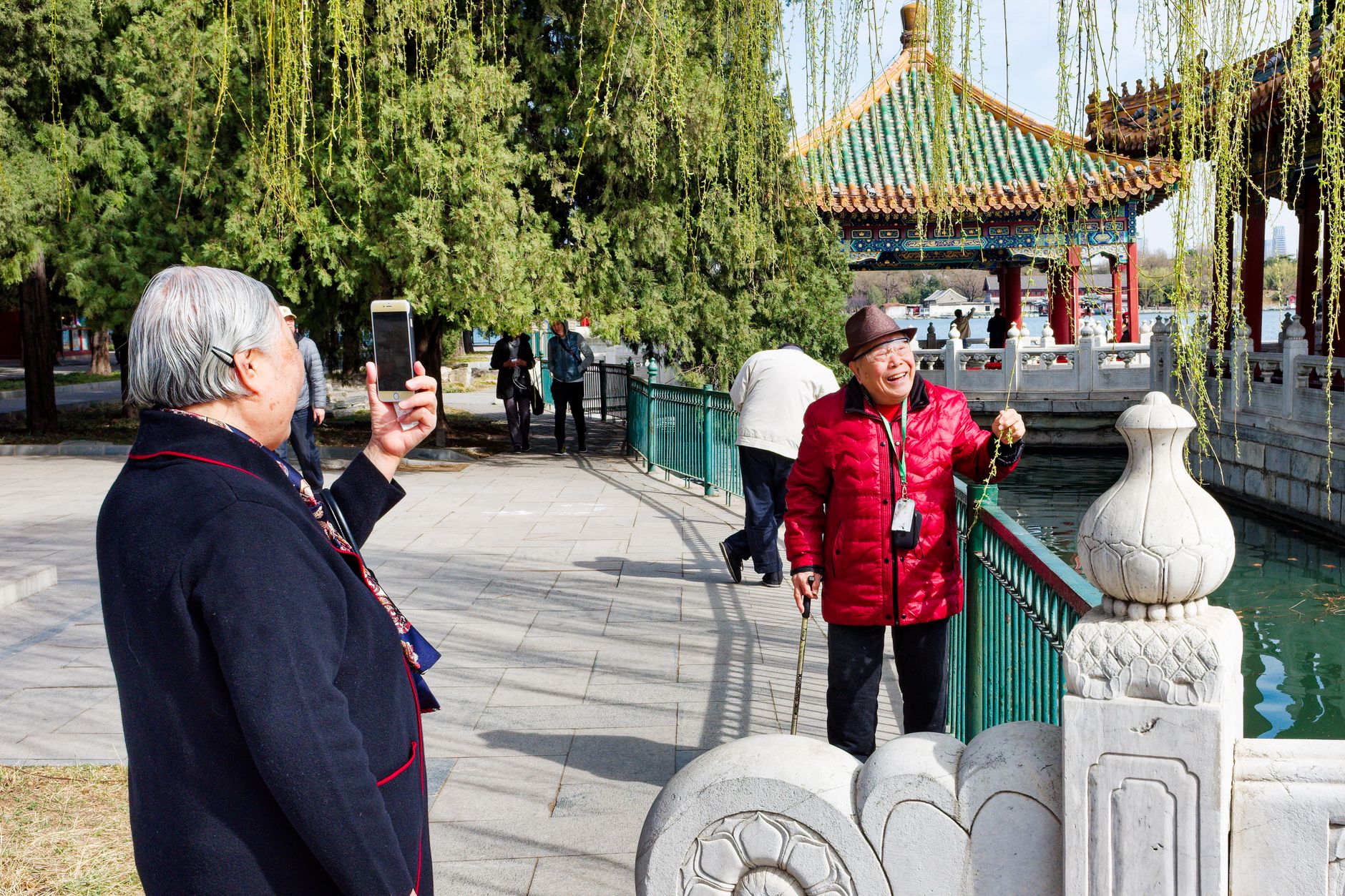
China’s population is aging faster than almost any major economy in history. By 2035, more than 400 million Chinese citizens will be over 60 — roughly the combined populations of the United States and Canada. That demographic shift, accelerated by four decades of the one-child policy, is already reshaping healthcare, financial services, real estate, consumer goods, and technology sectors in ways that create significant, concrete opportunities for foreign businesses that understand how to navigate them.
This is not a distant forecast. China’s National Bureau of Statistics confirmed that adults over 60 now represent 21.1% of the total population as of the latest census cycle — officially crossing the “deep aging” threshold defined by the United Nations. Government policy is responding at scale, and where policy goes in China, capital and market access follow.
The Scale of the Silver Economy
China’s “silver economy” — the constellation of goods and services consumed by older adults — was valued at approximately RMB 5.4 trillion (roughly $740 billion USD) in 2023 and is projected to exceed RMB 20 trillion by 2030, according to the China Research Center on Aging. For context, that trajectory makes it one of the largest consumer market expansions globally over this decade.
The Ministry of Civil Affairs (MCA) has designated “elderly care services” as a priority sector under the 14th Five-Year Plan, explicitly calling for expanded participation by foreign-invested enterprises. The National Development and Reform Commission (NDRC) has included senior care infrastructure — rehabilitation hospitals, assisted living facilities, home care platforms — in its “encouraged” category under the Foreign Investment Industry Guidance Catalogue, which means favorable tax treatment, simplified approval, and in some pilot zones, relaxed equity caps for foreign investors.
What this means practically: a foreign company entering this sector today is entering with regulatory tailwinds rather than headwinds, which is a relatively rare condition in China’s tightly managed service economy.
Healthcare and Medical Devices: The Biggest Near-Term Sector
Geriatric care is creating an enormous gap between what China’s public healthcare system can supply and what the population needs. China has roughly 4 doctors per 1,000 population — well below the OECD average of 3.7, but critically underdistributed, with rural and secondary cities facing severe shortages of geriatric specialists. The government’s response has been to push market-based solutions, including actively courting foreign-invested hospitals and medical device manufacturers.
Foreign medical device companies find China’s aging population particularly relevant across several categories: orthopedic implants, hearing aids, cardiovascular devices, incontinence management, ophthalmic equipment, and cognitive health diagnostics. The National Medical Products Administration (NMPA) — China’s FDA equivalent — has accelerated review timelines for “urgently needed” devices and drugs that address conditions prevalent in elderly populations, including Alzheimer’s treatments, heart failure drugs, and joint replacement implants.
Under the Hainan Free Trade Port’s Medical Tourism Policy, introduced in 2021 and expanded in 2023, foreign medical devices not yet approved by NMPA can be used in clinical settings on Hainan Island, providing a market access route that bypasses the standard 2-4 year approval timeline. Medtronic, Stryker, and Zimmer Biomet have all leveraged this route to test products ahead of national licensing.
For Western companies in diagnostics, remote monitoring, or digital health, the opportunity is even more direct. China’s National Health Commission (NHC) has been actively building the “Internet+Health” infrastructure — telemedicine platforms, wearable health device standards, and community health management systems — and has issued procurement guidelines that include foreign technology vendors.
Elder Care Services: A Sector With Few Foreign Incumbents
China’s residential elder care sector is dramatically undersupplied. The standard benchmark cited by the Ministry of Civil Affairs is 35 beds per 1,000 elderly persons; China currently sits around 30 nationally, and many of those are low-quality public facilities. The government has explicitly stated it wants private and foreign capital to build the gap.
Foreign operators face a more favorable entry environment here than in most Chinese service sectors. The NDRC’s 2021 Negative List removed elder care services from the restricted foreign investment list entirely. Several provinces — including Guangdong, Beijing, Hainan, and Shandong — have designated “senior care industry demonstration zones” where foreign companies can establish wholly foreign-owned enterprises (WFOEs) in care services, which was previously difficult.
The practical challenges are real: local licensing (handled at the district level by Civil Affairs bureaus), real estate access, staffing pipelines for qualified caregivers, and consumer trust (Chinese families traditionally prefer domestic-managed facilities for cultural reasons). The most successful foreign entries have used joint ventures with established Chinese partners who handle local relationships, while the foreign partner provides training protocols, technology systems, and brand credibility. SinoUnited Health, backed by international investors, and the Raffles Medical Group expansion into elder care are examples of this model in practice.
Understanding how to structure a joint venture in China is foundational before entering this sector — the equity splits, profit repatriation clauses, and exit mechanisms are all critical in a long-cycle service business.
Financial Services: Wealth Management and Insurance
China’s elderly cohort is increasingly wealthy in relative terms. The cohort entering retirement today largely benefited from two to three decades of property appreciation in tier-one and tier-two cities. Many retirees are asset-rich but income-uncertain — exactly the profile that drives demand for wealth management products, annuities, long-term care insurance, and reverse mortgage instruments.
China’s insurance regulator, the National Financial Regulatory Administration (NFRA, formerly CBIRC), has been expanding the approved product set for elderly-focused insurance and has issued guidance encouraging the development of “commercial long-term care insurance” — a product category that barely existed in China five years ago. Foreign insurers with existing China licenses (AIA, Manulife, MetLife’s former subsidiary) are developing dedicated senior product lines.
Foreign asset managers approved under the QFII or WFOE PFM license frameworks can also offer tailored retirement savings products to Chinese retail investors — though distribution at scale requires either a partnership with a Chinese bank or a significant footprint on Ant Group’s Yu’e Bao-style platforms. This is where understanding China’s capital markets and finance channels becomes operationally critical.
Consumer Products: The Senior Lifestyle Segment
Chinese seniors are increasingly active consumers with distinct preferences. Research from Nielsen IQ China (2024) found that adults over 60 now account for over 18% of total discretionary consumption in urban areas, with particularly high spending on health supplements, functional foods, travel, and technology designed for ease of use.
Several product categories are materially underserved:
- Adaptive technology: Smartphones, tablets, and smart home devices optimized for older users (large fonts, simplified interfaces, voice navigation). Huawei and Xiaomi dominate, but foreign brands with strong ergonomic or accessibility credentials have differentiation potential.
- Nutraceuticals and functional foods: Foreign health supplement brands, particularly those with clinical backing or Western-brand prestige, perform well with Chinese seniors who associate imported products with quality. The registration pathway under the NMPA’s “Health Food” category (保健食品, bǎojiàn shípǐn) requires 24-36 months but confers a formal approved claim that commands significant price premium.
- Senior travel and experiential services: Cross-border and domestic travel among the 60-70 age cohort is growing rapidly. Tour operators with senior-specific programs, medical support on-trip, and accessible infrastructure are increasingly in demand.
For foreign consumer brands, the distribution question matters enormously. Older Chinese consumers tend to shop through different channels than younger ones — WeChat mini-programs, offline pharmacy chains (such as Guoda, Yifeng, and Jianke), community group-buying platforms, and traditional in-store retail. The e-commerce strategy that works for the middle-class millennial market does not automatically translate. You can read about how China’s consumer markets are shifting more broadly to understand the channels and behavioral drivers at play.
Technology: AI, Robotics, and Care Infrastructure
China is investing aggressively in technology to address its care labor shortage. The Ministry of Industry and Information Technology (MIIT) has included “elder care robotics” in its national robotics development plan, with direct subsidies for domestic manufacturers and integration pilots in state-run elder care facilities. This creates technology procurement opportunities for foreign companies willing to sell or license technology to Chinese partners rather than operate directly.
AI-based health monitoring, fall detection systems, smart bed sensors, and rehabilitation robotics are all categories where foreign technology companies have led in research and development, while Chinese manufacturers have scale and cost advantages. Technology licensing, co-development agreements, or OEM supply arrangements are the most realistic near-term structures.
The US-China Business Council has published analysis on how American tech companies can maintain commercial relationships in sensitive sectors while managing export control compliance — a mandatory consideration for any hardware or dual-use technology involved in elder care AI.
Regulatory and Market Entry Considerations
Several regulatory realities shape the entry calculus across these segments:
Foreign Investment Catalogues: The MOFCOM/NDRC joint Foreign Investment Negative List and the Encouraged Industries Catalogue are the primary navigation tools. Senior care services, geriatric medical devices, and healthcare IT are all either encouraged or permitted with no equity restrictions. Review the current version at the MOFCOM foreign investment guidance portal.
Provincial Variation: Because elder care licensing is administered at the provincial and municipal level, market entry conditions vary significantly. Shanghai and Hainan offer the most streamlined processes; provinces in central and western China may require longer timelines and more local partnership investment.
Data and Privacy Compliance: Healthcare and personal data collected from elderly patients falls under both the Personal Information Protection Law (PIPL) and the Healthcare Data Security regulations issued by the NHC. Foreign companies must ensure data localization compliance and cross-border data transfer mechanisms are in place from day one — retroactive compliance is significantly more expensive.
Procurement Channels: Government-funded elder care projects are often procured through local government procurement platforms or state-owned development companies. Understanding how to engage with state-owned enterprise counterparts in the healthcare space is essential — a topic covered in depth in our analysis of the role of state-owned enterprises in China’s economy.
The Window of Opportunity
Demographics move slowly and predictably, but markets move fast when policy accelerates them. China’s aging population is one of the most reliably forecastable demand shifts in the global economy over the next two decades, and the government has made clear it intends to partially market-solve the supply gap. Foreign businesses that enter now — with appropriate localization, regulatory groundwork, and local partnerships — will have first-mover advantage in a set of sectors where incumbent competition is relatively thin compared to the scale of the opportunity.
The US Commercial Service maintains China-specific resources for healthcare and life sciences market entry that are worth reviewing as part of any formal market assessment. Their China Country Commercial Guide includes updated sector profiles, tariff data, and in-country contact directories through US embassies and consulates in Beijing, Shanghai, Guangzhou, and Chengdu.
The companies that succeed here will not be those treating China’s silver economy as an afterthought or a secondary market. They will be the ones who do the regulatory work, build the right partnerships, and treat this as what it is: one of the most significant new consumer markets opening in this decade.