
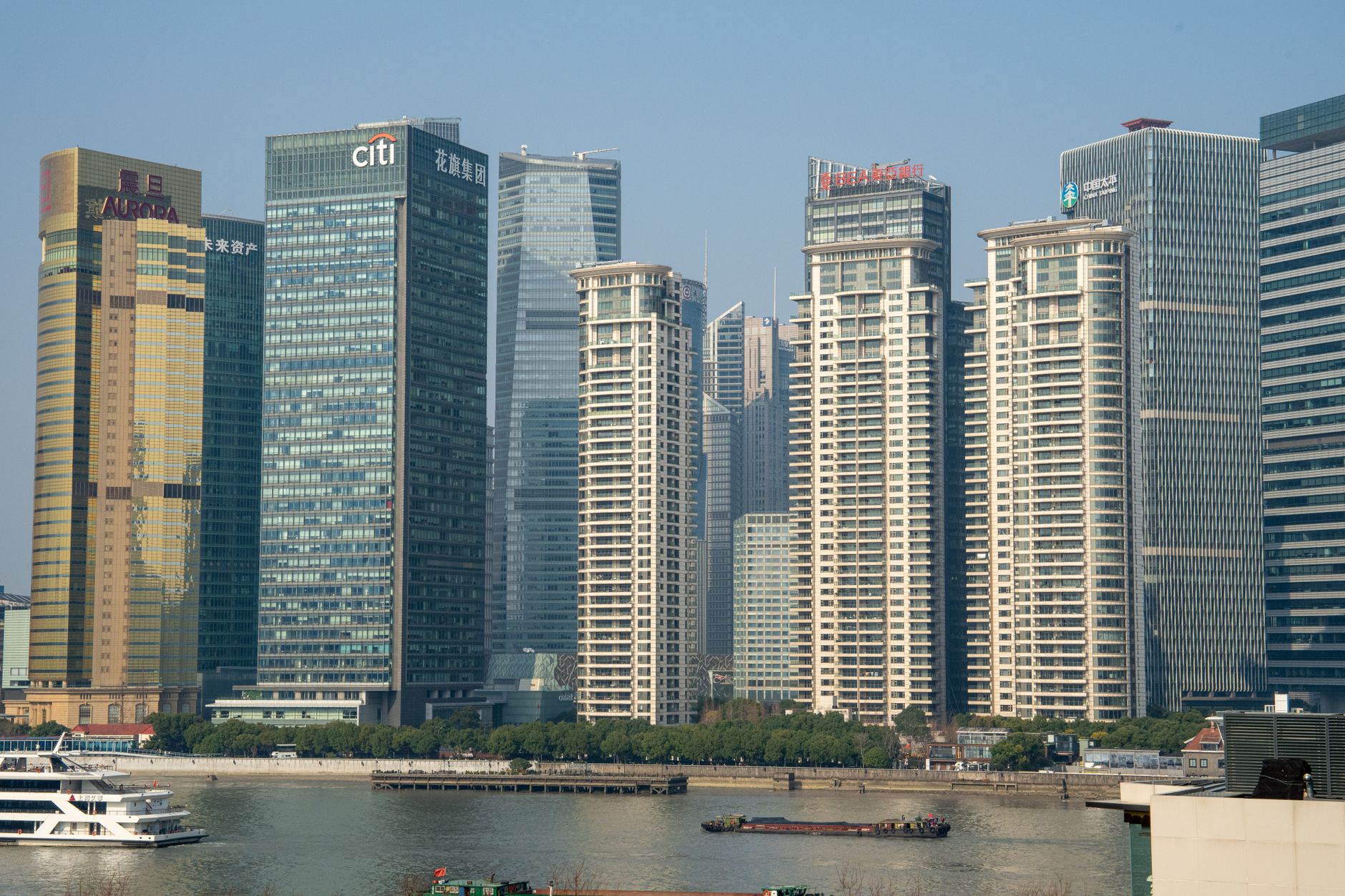
China’s capital markets have undergone a structural transformation over the past decade. What was once an opaque, relationship-driven system largely closed to foreign participation is now — selectively and with conditions — open to foreign institutional investors, PE funds, and even foreign-listed operating companies seeking to raise renminbi capital onshore. The opening is real, but so are the constraints. Understanding exactly which doors are open, which remain firmly closed, and how the regulatory architecture works is the starting point for any foreign company serious about China’s financial system.
The Regulatory Architecture: Who Controls What
Three regulators govern foreign access to Chinese capital markets. The China Securities Regulatory Commission (CSRC) oversees securities issuance, public listings, and cross-border investment programs. The State Administration of Foreign Exchange (SAFE) controls capital flows — how money moves in and out of China, in what currency, and under what reporting conditions. The National Development and Reform Commission (NDRC) manages foreign investment approvals in strategic sectors through the Foreign Investment Negative List, updated annually.
For foreign companies, navigating these three bodies simultaneously is often the first major challenge. Approvals from one regulator do not imply clearance from another. A company approved by CSRC to participate in a specific program can still be blocked by SAFE from repatriating profits if documentation is incomplete, or face NDRC scrutiny if operating in a restricted sector.
The foundational legal framework is the Foreign Investment Law (FIL), which came into force on January 1, 2020, replacing the three prior frameworks — the Sino-Foreign Equity Joint Venture Law, the Contractual Joint Venture Law, and the Wholly Foreign-Owned Enterprise Law. The FIL established “pre-establishment national treatment” plus a negative list as the governing model. Sectors not on the Negative List receive treatment theoretically equal to domestic companies. In practice, informal barriers, sectoral licensing, and data regulations often complicate this parity.
Equity Market Access: The A-Share Programs
The two primary channels for foreign institutional investors to access Chinese A-shares (onshore stocks traded in Shanghai and Shenzhen) are Stock Connect and the Qualified Foreign Institutional Investor (QFII) program.
Stock Connect
Shanghai-Hong Kong Stock Connect launched in 2014; Shenzhen-Hong Kong Stock Connect followed in 2016. Northbound trading (foreign investors buying A-shares via Hong Kong) operates under a daily quota system — currently RMB 52 billion per day for Shanghai and RMB 52 billion for Shenzhen, though in practice trading volume has rarely hit these ceilings. Stock Connect is the more accessible route: it requires no separate CSRC registration, uses offshore RMB (CNH) settled in Hong Kong, and operates under Hong Kong’s legal framework rather than mainland China’s. The universe of eligible stocks is limited to the constituents of defined indices (the SSE 180, SSE 380, and SZSE Component constituents, among others), which excludes the full A-share market.
QFII and RQFII
The QFII program, introduced in 2002 and significantly reformed in 2020, allows approved foreign institutional investors to invest directly in mainland securities using foreign currency. In 2020, SAFE removed the individual investment quota for QFII holders, effectively uncapping the program for eligible institutions. RQFII (Renminbi Qualified Foreign Institutional Investor) operates similarly but uses offshore RMB rather than hard currency. As of 2026, there are over 750 approved QFII institutions. Approval requires a minimum three-year operating history, assets under management typically above USD 500 million, and a track record of regulatory compliance in the home jurisdiction. Applications are filed directly with CSRC and typically take two to four months.
For operating companies — not investment funds — A-share access matters less than the debt market and the question of whether a foreign entity can raise capital domestically. This is a different and more restricted channel.
Raising Capital Onshore: The “Panda Bond” Market
Foreign companies and sovereign entities can issue RMB-denominated bonds on the Chinese interbank bond market (CIBM) — colloquially called “Panda Bonds.” Since 2016, the CIBM has been substantially opened to foreign participation, and Panda Bond issuance has grown significantly: total issuance exceeded RMB 200 billion in 2023, with issuers including HSBC, Volkswagen Finance, and various sovereign governments including South Korea and Poland.
For a foreign operating company, Panda Bonds represent a way to fund China-based operations in local currency, eliminating foreign exchange risk on interest and principal. The process requires CSRC registration, a credit rating from at least one recognized Chinese rating agency (Dagong, CCXI, or Golden Credit Rating being the major players), and ongoing disclosure obligations equivalent to those required of domestic issuers. Foreign companies also need a domestic bond underwriter — typically one of the major Chinese banks such as CITIC Securities, CICC, or a joint venture investment bank.
One practical constraint: Panda Bond proceeds must generally be used for China-based operations or projects. Repatriating Panda Bond funds offshore for general corporate purposes is not permitted under SAFE regulations, making them most useful for companies with significant and ongoing China-based capital expenditures.
Private Equity and Venture Capital: The RMB Fund Structure
Foreign PE and VC firms operating in China face a structural choice: run an offshore USD fund that invests into China via a Variable Interest Entity (VIE) or round-trip structure, or establish an onshore RMB fund licensed under Chinese law. The offshore approach is well-understood — most major US tech investments in China between 2000 and 2020 used the Cayman Islands holding structure with a VIE arrangement. However, regulatory tightening since 2021, particularly the CSRC’s revised overseas listing rules effective March 2023, has put additional scrutiny on VIE structures, especially for companies in restricted sectors.
The RMB fund route, which requires a Private Fund Manager (PFM) license from CSRC and registration with the Asset Management Association of China (AMAC), gives access to domestic LP capital — pension funds, state-guided funds of funds, and high-net-worth individuals — that cannot invest offshore. Several major foreign PE firms including Carlyle, Blackstone, and KKR have established or expanded RMB fund platforms in China specifically for this reason. The trade-off is operational complexity: onshore RMB fund managers must comply with AMAC reporting requirements, hold their assets in designated custodian accounts, and navigate profit repatriation through SAFE’s standard process.
This is closely linked to how you structure your Chinese entity from day one. If you are still working through whether a Wholly Foreign-Owned Enterprise (WFOE), representative office, or joint venture is the right entry structure, China Market Entry: A Step-by-Step Guide for Western Companies covers that decision framework in detail — the structure you choose directly constrains which financing options are available to you downstream.
Foreign Exchange Controls and Profit Repatriation
SAFE’s capital account regulations are one of the most practically significant aspects of doing business with Chinese capital markets. Current dividends — distributions of after-tax profits from an established Chinese subsidiary to its foreign parent — are considered current account transactions and are generally convertible without prior SAFE approval, provided the subsidiary has completed its annual audit and tax filings. However, equity investments, intercompany loans, and capital gains remain capital account items requiring registration and sometimes approval.
Foreign companies must register capital injections into their Chinese subsidiary with SAFE (specifically, register the foreign debt or equity capital via a bank authorized for foreign exchange). Subsequent increases in registered capital require amendment filings. Failure to maintain proper SAFE registration — for example, if a company has informally increased its China operations without corresponding registered capital increases — creates repatriation problems later that can be both expensive and time-consuming to correct.
The practical implication: foreign companies should document every capital flow into China carefully, work with a bank that has SAFE authorization (all major Chinese banks and most major foreign banks with China licenses do), and treat foreign exchange compliance as an ongoing operational matter rather than a one-time setup task. Currency volatility adds another layer of complexity — see our guide on managing currency risk when doing business with China for hedging strategies using onshore CNY and offshore CNH instruments.
The Negative List and Restricted Sectors
The Foreign Investment Negative List (updated most recently in 2021, with further revisions in 2024 for specific sectors) specifies industries where foreign investment is prohibited or restricted. “Prohibited” means no foreign equity whatsoever — broadcasting, news media, and certain internet services fall into this category. “Restricted” typically means foreign equity is capped, often at 49% or lower, and joint ventures with Chinese partners are required.
Sectors that remain significantly restricted for foreign capital include: commercial banking (foreign banks may hold minority stakes in domestic banks with approval), certain insurance categories, domestic air transportation, and most forms of value-added telecommunications services. The 2021 negative list notably opened full foreign ownership in financial services (securities, fund management, futures) for the first time — a significant shift that allowed firms like Goldman Sachs, JPMorgan, and Morgan Stanley to convert their joint ventures into wholly-owned Chinese subsidiaries.
Investors in sectors outside the Negative List still face licensing requirements specific to each industry. These are distinct from investment approval — a foreign company may be freely permitted to invest in China’s healthcare equipment sector, but operating in that sector still requires product registration with the National Medical Products Administration (NMPA), business licenses from local market regulators, and potentially additional permits from the Ministry of Industry and Information Technology (MIIT) if connected medical devices involve data collection.
Anti-Corruption Compliance in Financial Dealings
Any discussion of capital access in China must address corruption compliance. Financial transactions in China — particularly those involving government-linked entities, state-owned banks, or NDRC/CSRC approval processes — carry elevated compliance risk for foreign companies subject to the US Foreign Corrupt Practices Act (FCPA) or the UK Bribery Act. China’s own Anti-Unfair Competition Law and the Criminal Law contain bribery provisions applicable to domestic actors.
The pattern of enforcement is well-documented: facilitation payments to expedite regulatory approvals, undisclosed commissions to government-linked intermediaries in capital transactions, and entertainment expenses at the high end of the spectrum have all generated significant FCPA enforcement actions involving China-based operations. For a detailed compliance framework, China’s Anti-Corruption Laws: A Compliance Guide for Foreign Executives covers both Chinese domestic law and the extraterritorial reach of Western compliance regimes.
Free Trade Zones as a Capital Gateway
China’s Free Trade Zones (FTZs) — currently 22 across the country, with the Shanghai FTZ and its Lingang expansion being the most significant for financial services — offer a more permissive regulatory environment for certain financial activities. Within designated FTZ areas, qualified entities can open FTZ accounts (FT accounts) that allow more flexible cross-border capital flows, including the ability to invest offshore from the FTZ account with fewer restrictions than standard SAFE procedures.
The Shanghai FTZ has been the testing ground for financial liberalization. Pilot programs for cross-border RMB lending, free-trade accounts, and cross-border interbank markets have launched there before potentially rolling out nationally. For foreign companies considering significant investment in China, establishing a presence in an FTZ — particularly in the Lingang New Area, which has its own more permissive negative list — can provide meaningful structural advantages in capital management. The FTZ free trade account system is administered by SAFE’s Shanghai branch and requires a dedicated bank account at an FTZ-authorized bank.
The CSRC’s official investor relations portal and the State Administration of Foreign Exchange English-language site both provide current regulatory guidance on the access programs described above — these should be the first reference points before engaging local counsel or a licensed intermediary.
Practical Entry Points for Smaller Foreign Companies
Not every foreign company entering China is a global institution seeking QFII approval or a PE firm building a RMB fund. For smaller companies — mid-market manufacturers, SaaS businesses, professional services firms — the relevant capital market questions are more practical: How do I fund my China operations efficiently? Can I borrow in RMB onshore? What are my options if the parent company needs to inject additional capital quickly?
For onshore RMB borrowing by a foreign-invested enterprise (FIE), the key mechanism is the cross-border guarantee: the foreign parent provides a guarantee to a Chinese bank in favor of the Chinese subsidiary’s loan, registered with SAFE. This is the most common and efficient way for a foreign company to access Chinese bank credit without injecting additional equity. The amount that can be borrowed under such guarantees is limited to the registered capital of the Chinese entity, so right-sizing registered capital at formation matters more than many first-time investors appreciate.
China’s tech sector dynamics — including venture-backed companies and foreign tech partnerships — add additional complexity to capital structuring. Our overview of China’s tech sector opportunities and risks for Western partners addresses the investment and partnership structures specific to that industry.
Looking Ahead: The Direction of China’s Financial Opening
The trajectory of China’s financial liberalization has been broadly consistent since 2017: greater formal access for foreign institutions, but greater data and national security scrutiny on the information those institutions must share or the assets they can hold. The 2021 full opening of securities and fund management to foreign ownership was a landmark. The subsequent Data Security Law (2021) and the Personal Information Protection Law (2021) placed new constraints on what data foreign financial firms can move offshore — a meaningful operational constraint for risk management, trading systems, and client data.
The US-China Business Council’s annual member survey consistently identifies market access in financial services and regulatory transparency as top priorities for US companies operating in China — and consistently identifies data localization and cybersecurity review requirements as the fastest-growing compliance burdens. The gap between formal market opening and practical operational complexity continues to define the experience of foreign capital in China.
For companies evaluating whether and how to deploy capital in China, the framework is straightforward: the regulatory architecture for access is well-defined, the compliance requirements are extensive but navigable, and the key risks are operational — currency management, data compliance, anti-corruption controls, and the ongoing evolution of SAFE’s foreign exchange regulations. Companies that treat these as structural issues to design around from the outset, rather than problems to solve reactively, consistently perform better in China’s financial system than those that do not.