
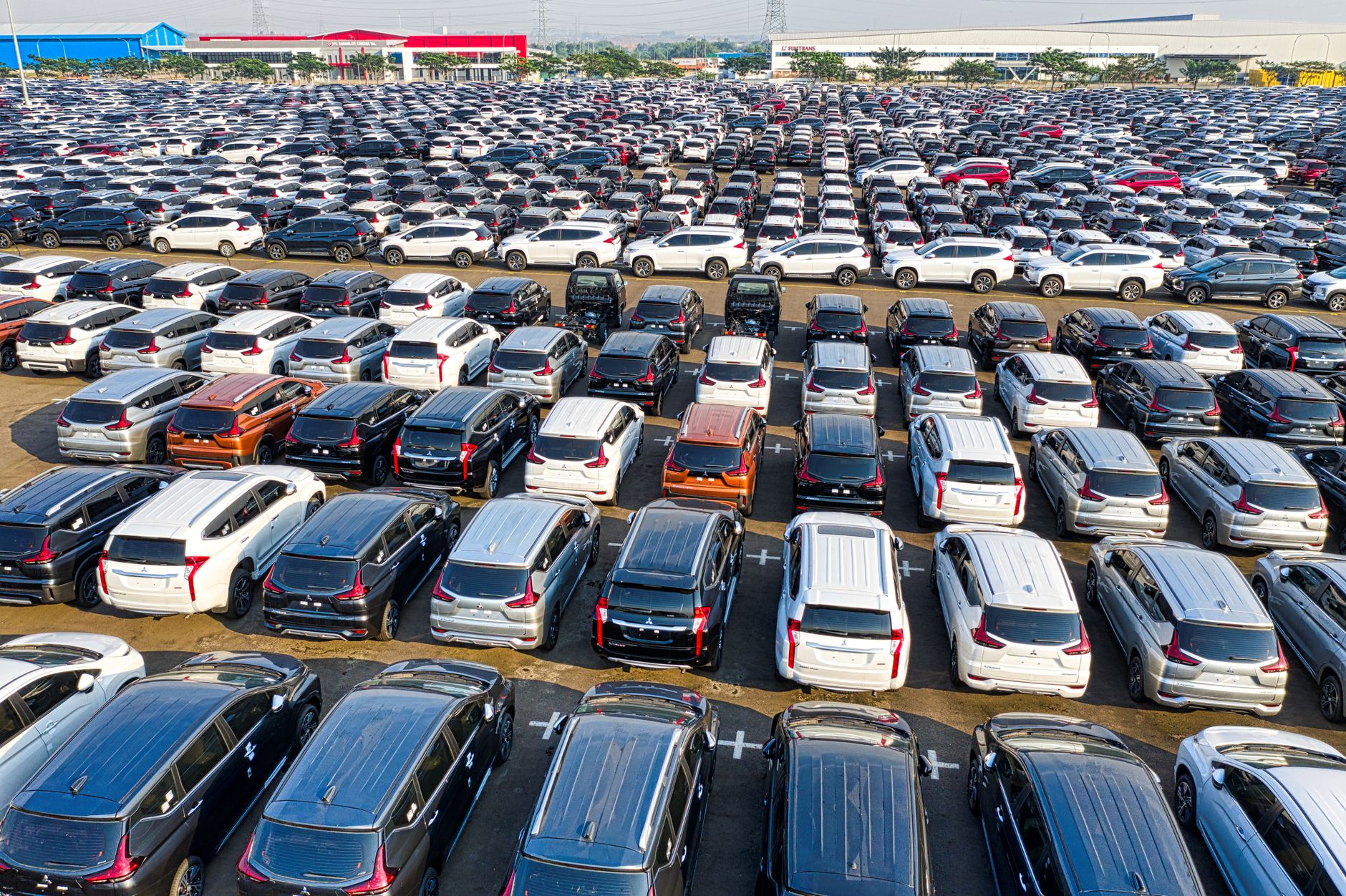
In 2023, China overtook Japan to become the world’s largest auto exporter, shipping 4.91 million vehicles to markets across Europe, Southeast Asia, the Middle East, Latin America, and Africa. By 2025, that figure had climbed past 6 million units. What made this milestone remarkable wasn’t just the volume — it was who was driving it. Alongside BYD and the headline EV brands, a cohort of mid-tier automakers — Chery Automobile, Great Wall Motor (GWM), and SAIC Motor’s MG brand — had quietly built some of the most aggressive international expansion strategies in the global auto industry. Their story is a textbook on how Chinese industrial companies climb the value chain, and what foreign partners, distributors, and regulators need to understand.
Chery Automobile: The Export Pioneer With 80+ Markets
Chery Automobile Co., Ltd. — founded in 1997 in Wuhu, Anhui Province — was China’s first significant private-label auto exporter. At a time when most Chinese manufacturers were building joint ventures to serve the domestic market, Chery was loading ships. By 2023, the company had sold vehicles in over 80 countries and crossed 1 million annual export units for the first time in its history, a milestone no Chinese automaker had previously hit under its own brand.
Chery’s export strategy rests on three pillars. First, deep localization: in Russia, where Chery has held a top-five passenger car market position since the withdrawal of Western brands in 2022, the Tiggo SUV lineup is tuned for cold-weather performance. In Brazil and Chile, Chery entered through CKD (completely knocked-down) assembly partnerships to reduce tariff exposure and create local employment. In the Middle East, right-hand-drive configurations and Arabic-language infotainment systems are standard.
Second, tiered brand architecture: the Omoda and Jaecoo sub-brands, launched in 2023, specifically target millennial buyers in emerging markets who want modern design without European price tags. The Omoda 5, positioned at roughly $18,000–$22,000 in target markets, directly competes with Hyundai and Kia on specification while undercutting on price.
Third, distributed manufacturing: Chery operates assembly plants or joint ventures in Russia, Brazil, Malaysia, Iran, and Egypt. This insulates revenue from shipping cost volatility and trade policy shifts — a structural advantage that pure-export manufacturers lack.
Great Wall Motor: SUVs, Pickups, and a Brand Architecture Built for Scale
Great Wall Motor (长城汽车), headquartered in Baoding, Hebei Province, built its global strategy around product discipline. The Haval H6 SUV held the title of China’s best-selling SUV for over 90 consecutive months between 2013 and 2022. When GWM turned to exports, it brought four distinct brands: Haval (mainstream SUVs), Wey (premium SUVs), Tank (off-road), and ORA (electric vehicles) — a brand architecture rarely seen in Chinese automakers that allows GWM to address multiple market segments without internal cannibalization.
In Australia, GWM has become a genuine force. The GWM Ute pickup consistently appears in top-20 national sales charts, directly competing with Toyota HiLux and Ford Ranger. The Tank 300 — a Jeep Wrangler-style off-roader priced around AUD $55,000 — found enthusiast buyers willing to accept a Chinese badge for the value. Australia is one of the few markets where a Chinese brand has competed on lifestyle desirability rather than pure price.
GWM’s most consequential strategic move was its $1.5 billion acquisition of the former General Motors Thailand plant in Rayong, giving it ASEAN manufacturing capacity for right-hand-drive vehicles. This positions GWM to supply Southeast Asian markets from inside ASEAN tariff structures — a move with significant implications as EU and US duties on China-origin vehicles increase.
SAIC Motor’s MG Brand: Heritage Engineering for Western Markets
The most sophisticated export story belongs to MG — a British brand with 99 years of heritage, acquired by SAIC Motor in 2007 for roughly $94 million when the brand was effectively bankrupt. SAIC transformed MG into an EV-forward brand manufactured in China and sold globally under British heritage positioning.
In Europe, MG was the fastest-growing car brand in 2022 and 2023. In the UK alone, the MG4 electric hatchback was one of the best-selling EVs of 2023, priced at £26,000–£32,000 against the Volkswagen ID.3 and Tesla Model 3. In Norway, MG achieved a top-10 EV market share. The MG playbook reveals a sophisticated understanding of brand psychology: consumers in Europe and Australia are far more receptive to a legacy brand manufactured in China than to an unknown Chinese brand with equivalent specifications. SAIC paid almost nothing for MG in 2007 and turned it into a billion-dollar export machine — one of the most underappreciated strategic acquisitions in recent automotive history.
The Tariff Headwinds
The surge in Chinese auto exports has triggered significant policy responses. In October 2024, the European Commission imposed countervailing duties on Chinese electric vehicles: 17% for BYD, 18.8% for Geely, and 35.3% for SAIC — on top of the existing 10% import tariff. SAIC’s higher rate reflects its limited cooperation with the investigation, and it directly affects MG’s European pricing competitiveness.
In the United States, the US Trade Representative finalized 100% Section 301 tariffs on Chinese-made electric vehicles, effectively closing the US market to direct Chinese auto exports. GWM’s Thailand plant and Chery’s CKD operations in third countries are partly designed as responses to exactly this kind of tariff architecture.
For Western distributors and fleet buyers, the tariff environment creates real complexity: Chinese-branded vehicles manufactured in tariff-preferred locations may qualify for different duty treatment than those shipped directly from China. This mirrors patterns in other Chinese industrial sectors — as covered in our analysis of China’s shipbuilding industry, Chinese manufacturers have consistently responded to trade barriers by building production inside target regions.
What Western Businesses Should Watch
For importers and distributors: Chery, GWM, and Omoda actively recruit exclusive distributor partners in markets they haven’t yet entered. First-mover dealership arrangements — especially in Eastern Europe, Latin America, and Sub-Saharan Africa — can be commercially compelling given factory support pricing and strong consumer demand growth. The risk is tariff exposure and brand policy instability.
For component suppliers: Chinese automakers initially bring their tier-1 supplier base into new markets but open to local suppliers as they scale. GWM’s Thailand plant has been proactive in local supply chain development, consistent with Thai government content requirements. Suppliers serving automotive OEMs in plastics, glass, seating, and electronics should begin Chery and GWM procurement qualification now.
For investors and analysts: understanding how Chinese auto exports correlate with domestic overcapacity — and how export incentives may shift under trade pressure — is essential for sector positioning. Our coverage of Geely’s global acquisition strategy examines the M&A dimension of this expansion in depth, while our overview of BYD’s 2026 global expansion tracks the EV-specific dynamics.
Companies with cross-border supply chain exposure should also be monitoring WTO dispute settlement proceedings on the EU measures, as the outcome will set precedents for how other jurisdictions frame similar actions.
Cultural Intelligence as Competitive Advantage
One underappreciated dimension of Chinese mid-tier auto success in emerging markets is the cultural intelligence embedded in their marketing operations. In the Middle East, Chery and GWM have sponsored local football clubs and Ramadan campaigns. In South America, they’ve invested in Spanish- and Portuguese-language content and local celebrity ambassadors. In Southeast Asia, they’ve built KOL (Key Opinion Leader) ecosystems that drive purchase decisions for younger consumers.
This stands in contrast to early Chinese export efforts in the 2000s, when brands like Lifan and Brilliance failed partly because they sent engineers to international markets instead of brand managers. Today’s generation of Chinese auto exporters understands that market entry is a brand-building exercise. The shift reflects broader maturation in Chinese corporate international strategy — a pattern consistent with how Anta and Li Ning rebuilt their global positioning through investment in brand narrative rather than pure distribution volume.
The Road Ahead
China’s mid-tier automakers are not staying in emerging markets. GWM’s Haval H6 is now sold in 60+ countries. Chery’s Omoda brand has distribution in Western Europe. SAIC’s MG is a genuine premium-adjacent brand in the UK, Australia, and Norway. As manufacturing localization reduces tariff exposure and EV infrastructure spreads globally, the geographic ceiling for these brands keeps rising.
For Western businesses, the strategic question is not whether to engage with this wave — it’s how and on what terms. Distribution partnerships, component supply agreements, co-manufacturing joint ventures, and competitive intelligence programs all represent legitimate business responses. The companies that engage early, understand the dynamics, and position themselves as informed partners will be best placed to benefit from what is, by any measure, one of the most significant industrial shifts of this decade.