
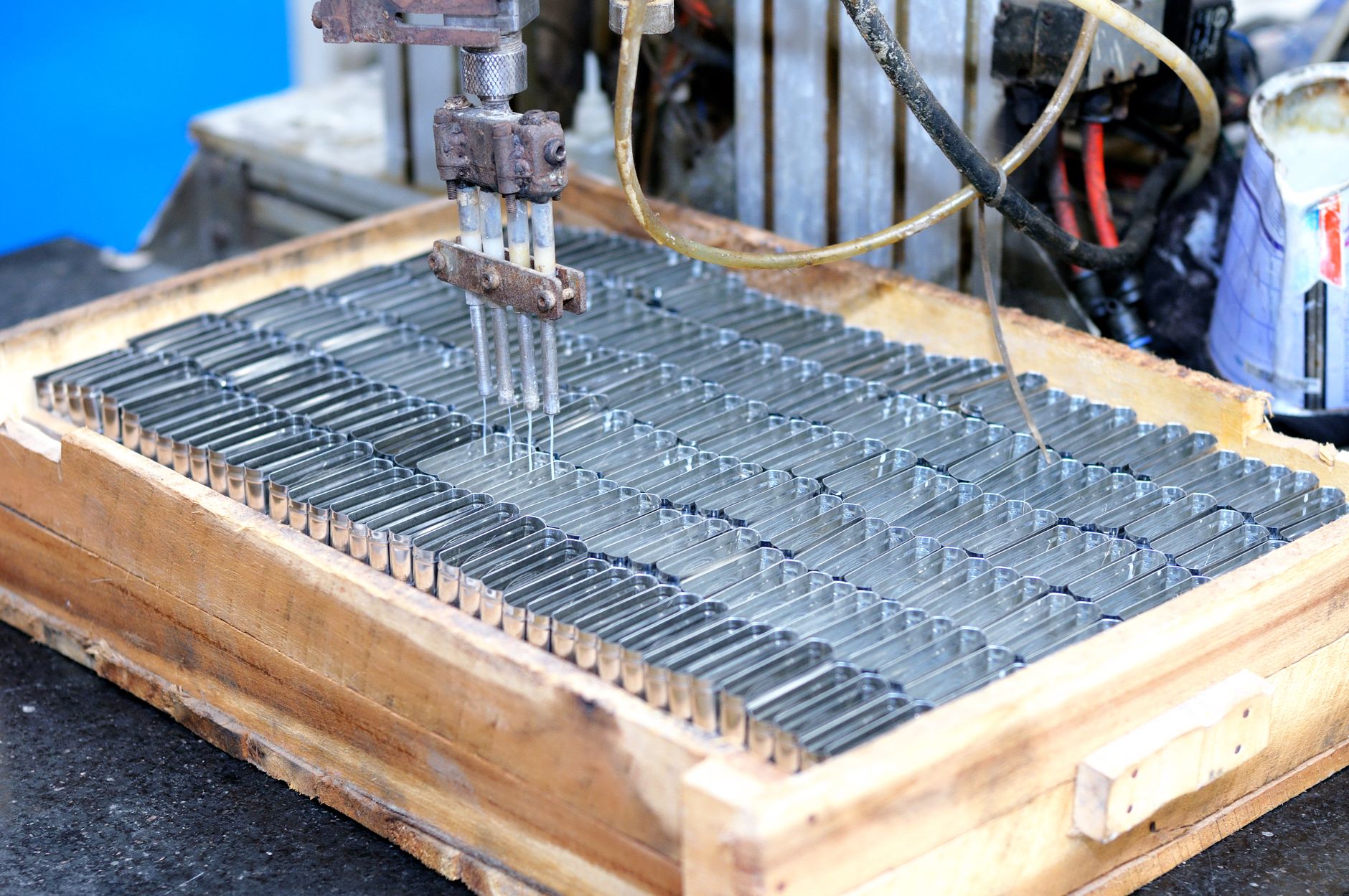
When global buyers order a valve assembly for an oil refinery in Texas, a pump component for a German automotive plant, or a hardware fitting for a construction project in Southeast Asia, the part often traces back not to Shanghai or Shenzhen — but to a cluster of mid-sized cities in eastern Zhejiang Province that most international businesspeople have never heard of: Taizhou, Wenling, and the surrounding towns of the Zhejiang coastal manufacturing belt.
These cities, along with clusters in Lishui, represent one of the most consequential and least-discussed dimensions of China’s manufacturing dominance. They produce the world’s hardware: valves, pumps, fasteners, flanges, pipe fittings, electrical connectors, precision machined parts, and tens of thousands of other industrial components that keep global infrastructure running. Understanding how these clusters work — and why they have proven almost impossible to replicate elsewhere — is essential knowledge for any procurement professional, trade consultant, or supply chain executive navigating the US-China supply chain corridor.
Taizhou and Wenling: The Valve and Pump Capital of the World
Taizhou, a city of roughly 6.5 million people in eastern Zhejiang, is home to one of the world’s most concentrated clusters of valve and pump manufacturers. The Linhai district alone hosts more than 800 registered valve manufacturing enterprises, producing everything from ball valves used in petrochemical facilities to butterfly valves specified by municipal water utilities across North America, Europe, and the Middle East.
Wenling, a county-level city within Taizhou, has an even more specialized identity: it is arguably the world’s single largest production base for small and medium-sized electric motors and water pumps. Data from China’s industrial associations puts Wenling’s pump and motor cluster at annual output exceeding RMB 60 billion (approximately $8.3 billion), with exports reaching more than 130 countries. More than 2,000 companies operate in the sector within city boundaries, ranging from family workshops with 20 workers to publicly listed manufacturers like CNP Pumps.
What makes Wenling’s cluster formidable is not merely scale but vertical depth. A pump manufacturer in Wenling can source motor windings, shaft forgings, impeller castings, mechanical seals, and painted housings from suppliers within a 30-kilometer radius. This proximity — what economists call agglomeration economies — compresses lead times, enables rapid prototyping, and allows even small suppliers to offer customization at near-commodity prices. This structural advantage, built over four decades, gives Chinese cluster manufacturers their enduring cost edge over competitors in Europe, India, or Southeast Asia.
The Lishui Model: Niche Manufacturing at Scale
Three hours inland from Taizhou, in southwestern Zhejiang, Lishui has developed a different but equally instructive cluster model. While less globally recognized than coastal cities, Lishui has built dominant positions in water treatment equipment, outdoor lighting hardware, mechanical cutting tools, and precision optical components.
The Lishui Economic Development Zone, established in 2002, attracted labor-intensive precision manufacturing as coastal Zhejiang costs rose. By 2024, the zone hosted more than 600 enterprises with combined annual output exceeding RMB 35 billion. The Lishui Municipal Government explicitly targets “specialty and precision” sectors — encouraging companies to own globally competitive positions in narrow product categories rather than competing on volume. This echoes the German Mittelstand model: deeply specialized exporters holding 40–70% global market share in obscure-sounding product categories that are nonetheless essential to global industry.
Hardware and Fasteners: The Yongjia and Wenzhou Ecosystem
No discussion of Zhejiang’s small-city manufacturing clusters is complete without Yongjia County in Wenzhou — a name well-known in the global valve trade but rarely mentioned outside it. Yongjia is home to more than 1,600 valve enterprises and is recognized by China’s industrial associations as the “China Valve City.” Its annual valve output exceeds 40 million units across industrial, commercial, and consumer applications. The Yongjia Valve Industry Association actively promotes the cluster internationally, coordinating participation at trade fairs including the Valve World Expo in Düsseldorf.
Wenzhou itself — the city of 9.3 million that encompasses Yongjia — has long been celebrated as China’s most entrepreneurial city. As explored in depth in the story of Wenzhou’s entrepreneurial model, the city pioneered private enterprise in the early 1980s when state planning still dominated China’s economy. That spirit of private ownership, risk-taking, and relentless cost optimization created the cultural substrate from which today’s hardware clusters grew.
Beyond valves, the Wenzhou-Taizhou corridor produces fasteners exported in the billions of units annually, electrical connectors, plastic pipe fittings, pneumatic components, and hydraulic parts. The US International Trade Commission has tracked these product categories closely in the context of Section 301 tariffs, and US procurement teams have had to develop sophisticated sourcing strategies to navigate price impacts while maintaining supply continuity.
How These Clusters Reach Global Markets
Most foreign buyers do not purchase directly from the 500-person factory in Wenling or the 200-person valve shop in Yongjia. They access these clusters through trading companies in Ningbo or Shanghai, independent sourcing agents who conduct factory audits, online B2B platforms (primarily Alibaba and Made-in-China.com), and twice-yearly participation at China’s Canton Fair.
The Ningbo-Zhoushan port complex — the world’s largest by cargo tonnage, as explored in depth in the Ningbo-Zhoushan trade gateway analysis — serves as the primary export artery. Wenling is 90 kilometers from Ningbo, keeping freight logistics efficient and cost-competitive even for heavy industrial components.
Tariffs, Reshoring, and Why the Clusters Persist
The imposition of US Section 301 tariffs on Chinese industrial goods beginning in 2018 — and their expansion through 2026 — was widely predicted to accelerate migration of hardware manufacturing to Vietnam, Thailand, and Mexico. This shift has occurred partially, but Zhejiang’s clusters have proven more durable than many analysts expected.
The reasons are structural. Building a valve cluster in Vietnam requires not just a factory but decades of accumulated supplier depth, trained machinists, materials testing infrastructure, and proximity to tooling specialists. These cannot be transplanted quickly. Vietnam and Mexico have absorbed volume in consumer-grade hardware and simple fasteners, but technically demanding products — high-pressure industrial valves, precision pump components, specialty fittings — remain predominantly sourced from Zhejiang.
The US International Trade Administration has published extensive guidance for US companies navigating tariff exposure on industrial hardware. The consistent finding: for technical-grade components, Chinese cluster sourcing remains competitive even with 25% tariff burdens, because landed cost advantages on complex parts frequently exceed that margin.
What International Buyers and Sellers Need to Know
For US and international companies sourcing from Zhejiang’s small-city clusters, several operational realities stand out.
Quality tiers are wide. Within any single product category, Zhejiang cluster suppliers span an enormous range from ISO 9001-certified manufacturers producing API-grade industrial valves to low-cost shops producing commercial-grade fittings unsuitable for pressure service. Effective sourcing requires specification clarity and factory audit capacity.
Minimum order quantities are increasingly flexible. B2B e-commerce has pushed many cluster suppliers to accept smaller trial orders. Sample runs of 50 units of a custom configuration are now routine for established exporters.
IP protection requires active management. Cluster environments facilitate technology diffusion. Companies with proprietary designs benefit from formal IP registration in China, supplier exclusivity agreements, and strategic decisions about which specifications to share. As detailed in coverage of China’s Special Economic Zone frameworks, IP mechanisms have strengthened considerably but active management remains essential.
The cluster model is upgrading. Investment in CNC machining centers, automated testing, and international certifications (PED, ASME, CE) is accelerating. The Zhejiang Provincial Government has explicitly targeted cluster manufacturers through its “Digital Economy First Province” strategy, subsidizing smart manufacturing adoption across the sector.
The Bilateral Opportunity
From a US-China trade perspective, Zhejiang’s small-city manufacturing clusters represent both a sourcing opportunity and a partnership canvas. American industrial distributors and OEM manufacturers that have developed deep relationships with cluster suppliers gain durable competitive advantages: customization capability, responsive supply chains, and pricing that large Tier-1 sourcing relationships cannot match.
For Chinese cluster manufacturers, the US market remains the most demanding and most rewarding export destination. American industrial buyers pay premium prices for certified, consistently quality-controlled products. Cluster manufacturers that invest in ASME, PED, and CE certifications alongside English-language commercial infrastructure often find their US revenue disproportionately profitable relative to volume. The relationship is genuinely bilateral: US buyers get competitive supply; Chinese manufacturers access the world’s most sophisticated industrial procurement ecosystem.
Understanding that the “China price” in hardware and precision parts is not simply a function of low wages — but of decades of specialized knowledge, supplier depth, and logistics infrastructure concentrated in a handful of Zhejiang cities most people have never heard of — is the beginning of sourcing wisdom in the US-China trade corridor.