
Most trade professionals can name Guangzhou, Shenzhen, and Shanghai without hesitation. Far fewer can speak confidently about Kunming and Yunnan Province — and that gap is costing them real business. Yunnan sits at the geographic center of one of the world’s most dynamic emerging corridors: a $3 trillion zone connecting China to Myanmar, Laos, Thailand, Vietnam, and Cambodia. For US and Western companies building resilient supply chains in 2026, understanding Yunnan is no longer optional.
The Geography That Makes Yunnan Strategically Unique
Yunnan Province covers roughly 394,000 square kilometers in China’s southwest, sharing borders with Myanmar (1,997 km), Laos (710 km), and Vietnam (1,353 km). Its capital, Kunming, sits at 1,900 meters elevation with a population of 8.5 million. China designated Kunming as a pilot city for the China-ASEAN Free Trade Area implementation in 2004. Two decades later, the strategic vision has materialized into hard infrastructure: the Kunming-Vientiane Railway, a standard-gauge line connecting Kunming to the Laotian capital, opened in December 2021 and has since carried over 30 million tons of freight. It is the first segment of what Beijing envisions as a pan-Asian rail corridor stretching eventually to Singapore.
For companies sourcing from Southeast Asia or attempting to access those consumer markets, Kunming is the Chinese rail gateway. No other city in China occupies this position.
Yunnan’s Industrial Economy: Beyond Tourism and Tea
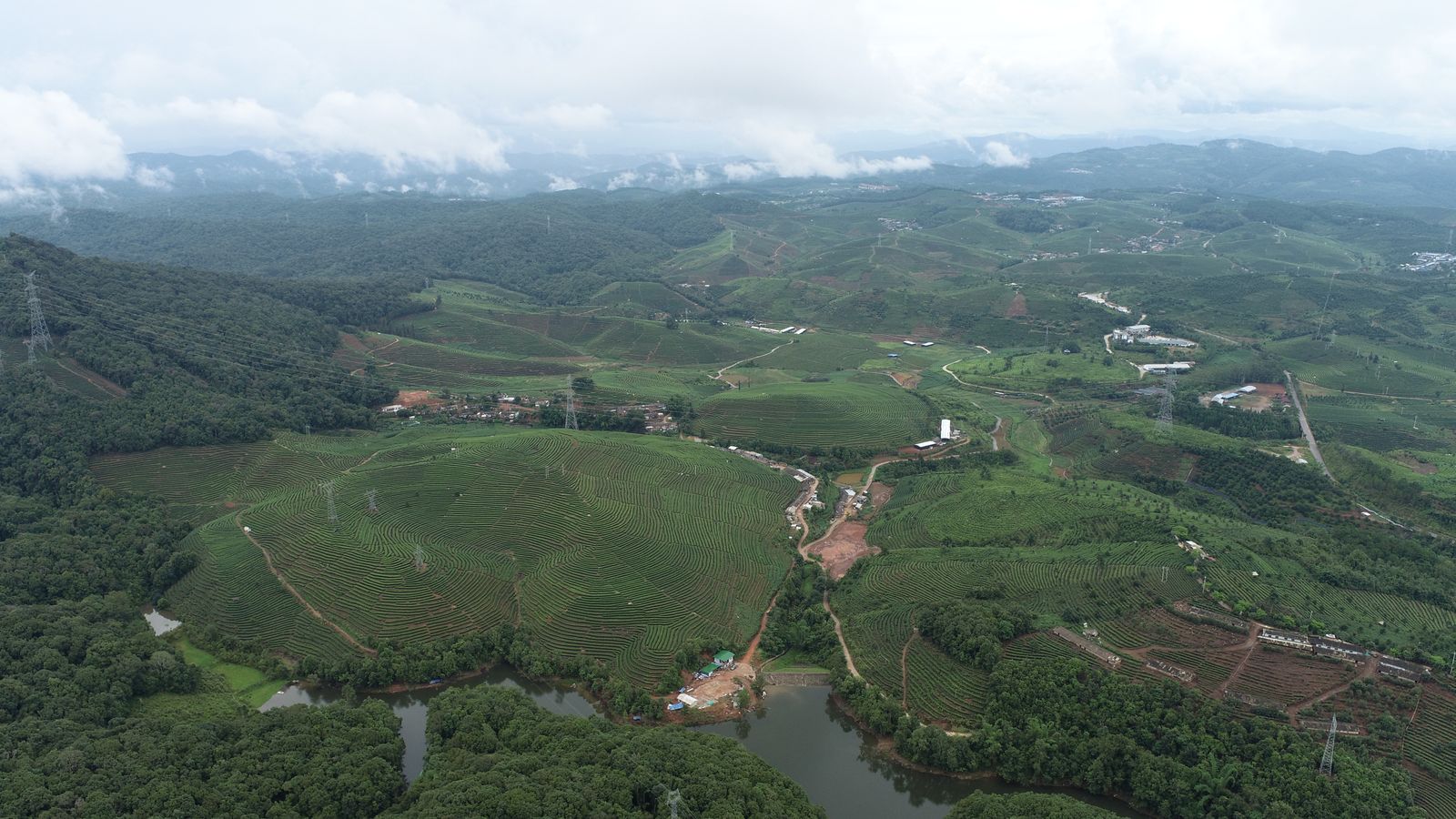
Western business media tends to portray Yunnan through the lens of tourism — the karst landscapes, minority ethnic cultures, and Pu-erh tea. That framing, while accurate, obscures a province with a diversified industrial base.
Nonferrous Metals and Mining
Yunnan is China’s leading producer of several critical nonferrous metals. The province accounts for approximately 30% of China’s tin production and 25% of zinc output. Yunnan Tin Group (云南锡业集团), headquartered in Gejiu, is the world’s largest tin producer with annual revenues exceeding 50 billion RMB. Yunnan Copper Industry Group, a subsidiary of China Minmetals, operates one of China’s largest integrated copper smelting complexes in Kunming with annual refining capacity exceeding 800,000 metric tons.
For US manufacturers in electronics, semiconductors, and specialty alloys, Yunnan is not a peripheral supplier — it is a critical node in the global metals supply chain. Any disruption to Yunnan’s mining or smelting operations sends ripple effects through global tin and zinc markets within weeks.
Hydropower and Green Energy
Yunnan holds some of China’s most significant hydropower resources. The Lancang River (upper Mekong) and the Jinsha River (upper Yangtze) both flow through the province, enabling cascades of massive dam projects. Yunnan’s installed hydropower capacity exceeds 100 GW, second only to Sichuan nationally.
This clean energy abundance has made Yunnan a preferred location for energy-intensive industries seeking green credentials. CATL, the world’s largest EV battery maker, has established a major manufacturing presence in Yunnan as part of its vertical integration strategy for the region’s lithium and mineral resources. Aluminum smelters and data centers have similarly relocated to capture low-cost renewable electricity.
Agriculture: Flowers, Tea, and Specialty Products
Yunnan produces over 70% of China’s fresh-cut flowers. The Dounan Flower Market in Kunming is Asia’s largest, trading more than 8 billion stems annually with transaction value exceeding 15 billion RMB — second only to Aalsmeer in the Netherlands globally. The province is also China’s leading producer of tobacco (Hongta Group in Yuxi is the country’s largest tobacco enterprise), Pu-erh tea, walnuts, and specialty mushrooms. For US importers in food and agriculture, Yunnan’s export processing infrastructure has expanded significantly through facilities in Kunming’s Chenggong District export processing zone.
The Kunming-Bangkok Corridor: A Supply Chain Shift in Motion
The most commercially significant development in Yunnan is the expanding rail corridor south. Thailand’s State Railway has committed to connecting Bangkok to the Laos network through the Thai-China High Speed Rail project, with Phase 1 between Bangkok and Nakhon Ratchasima under construction. When the full Kunming-Bangkok corridor is completed — projected between 2028 and 2032 — it will create the first overland freight alternative to South China Sea shipping for ASEAN-China trade.
For US companies manufacturing in Thailand, Vietnam, or Cambodia and shipping to China, this corridor changes the logistics calculus. Rail freight from Bangkok to Kunming will offer transit times of roughly 30 hours at cost points competitive with maritime options for time-sensitive goods. Kunming’s Wangjiaying International Airport, currently undergoing a major capacity expansion, will complement rail with air cargo connectivity to Southeast Asian capitals.
How Foreign Companies Are Operating in Yunnan
Yunnan’s FDI inflows of approximately $2 billion annually are modest compared to Guangdong or Jiangsu. But the composition of foreign investment is telling: the majority comes from ASEAN countries — Thailand, Myanmar, and Vietnam among the top source markets — reflecting Yunnan’s role as a cross-border hub rather than an export manufacturing base.
Western companies with meaningful presences in Yunnan fall into several categories. Agricultural technology firms leverage the province’s biodiversity: Syngenta (now owned by ChemChina) operates research facilities in Yunnan, and Pioneer (a Corteva brand) has seed production agreements with local cooperatives. International metals trading firms including Glencore and Trafigura maintain procurement relationships with Yunnan Tin and Yunnan Copper. In hospitality, Marriott, Hilton, and Accor operate properties in Kunming and Lijiang, reflecting sustained tourism demand from Chinese domestic travelers and growing ASEAN visitor flows.
The Yunnan Provincial Government actively courts foreign investment in five priority sectors: new energy and new materials, digital economy, advanced manufacturing, modern agriculture, and green food processing. Foreign-invested enterprises in these sectors qualify for a preferential corporate income tax rate of 15%, versus the standard 25%.
Practical Considerations for Trade Professionals
Yunnan operates 22 land border crossings with Myanmar, Laos, and Vietnam. The busiest are Mohan-Boten (China-Laos, now the rail terminus), Ruili-Muse (China-Myanmar, highest-volume land port for Myanmar trade), and Hekou-Lào Cai (China-Vietnam, a key transit point for electronics and consumer goods). The Mohan-Boten Special Economic Zone offers bonded warehousing, customs facilitation, and reduced tariff processing for qualifying goods transiting between China and ASEAN markets.
Foreign companies can establish operations through the Kunming Hi-Tech Industrial Development Zone or the Yunnan Free Trade Zone, established in August 2019. The FTZ covers three sub-zones — Kunming, Honghe, and Dehong — totaling 119.86 square kilometers, with streamlined customs procedures and a negative-list approach to foreign investment consistent with China’s national standards. For current guidance on regulatory requirements, the US Commercial Service’s China Market Overview provides province-specific entry frameworks. The Yunnan Department of Commerce publishes updated foreign investment directories at commerce.yunnan.gov.cn.
Yunnan in the Context of US-China Trade Strategy
For US importers and sourcing professionals, Yunnan represents an increasingly relevant node in “China plus one” diversification strategies. As companies shift production from coastal China to Southeast Asia, Yunnan’s emergence as a logistics and processing hub means that supply chains running through Myanmar, Laos, or Thailand will increasingly touch Chinese infrastructure through Kunming’s rail and road connections. Compliance teams need to understand this geographic reality when mapping country-of-origin claims and tariff exposure.
As the new generation of Chinese free trade zones continues to expand regulatory openness, Yunnan’s FTZ has positioned itself specifically as the ASEAN-facing experiment — the province where China is testing how to integrate its domestic economy with the supply chains of developing Southeast Asia. That experiment has direct implications for any US business with a footprint across the Indo-Pacific region.
For broader context on how China’s inland regions are evolving, the story of Wuhan and Central China’s industrial corridor offers useful comparative perspective. And for the macro infrastructure framework, our analysis of how China’s Belt and Road Initiative is reshaping global trade situates Yunnan’s rail connections within Beijing’s broader strategic vision.
The Bottom Line
Yunnan is not a manufacturing powerhouse in the Guangdong sense, nor a financial center in the Shanghai sense. It is something more strategically nuanced: a gateway province, a resource base, and an emerging logistics hub sitting at the intersection of two of the world’s fastest-growing economic zones. The Kunming-Vientiane Railway has already begun changing the economics of overland trade between China and Southeast Asia. Yunnan’s nonferrous metals industry is an irreplaceable link in global electronics and clean energy supply chains.
Trade professionals who dismiss Yunnan as peripheral to US-China business are missing a province that is quietly becoming central. The companies that understand Kunming’s geography, industrial clusters, and role in China’s ASEAN strategy today will be far better positioned when the Kunming-Bangkok rail line opens and the logistics map of Asia shifts again.