Tianjin rarely tops the lists of cities recommended to foreign investors. Shanghai gets the glamour, Shenzhen gets the tech narrative, and Beijing gets the political attention. Yet Tianjin — sitting just 137 kilometers southeast of Beijing — is one of China’s most strategically positioned cities for trade, manufacturing, and regional distribution. It is home to one of China’s busiest container ports, a nationally designated free trade zone, and a dense cluster of petrochemical, automotive, and advanced manufacturing industries. For foreign companies that take the time to understand it, Tianjin offers direct access to hundreds of millions of consumers in North China with fewer competitors than you’d face in the Yangtze River Delta.
Why Tianjin Matters: Port, Policy, and Proximity
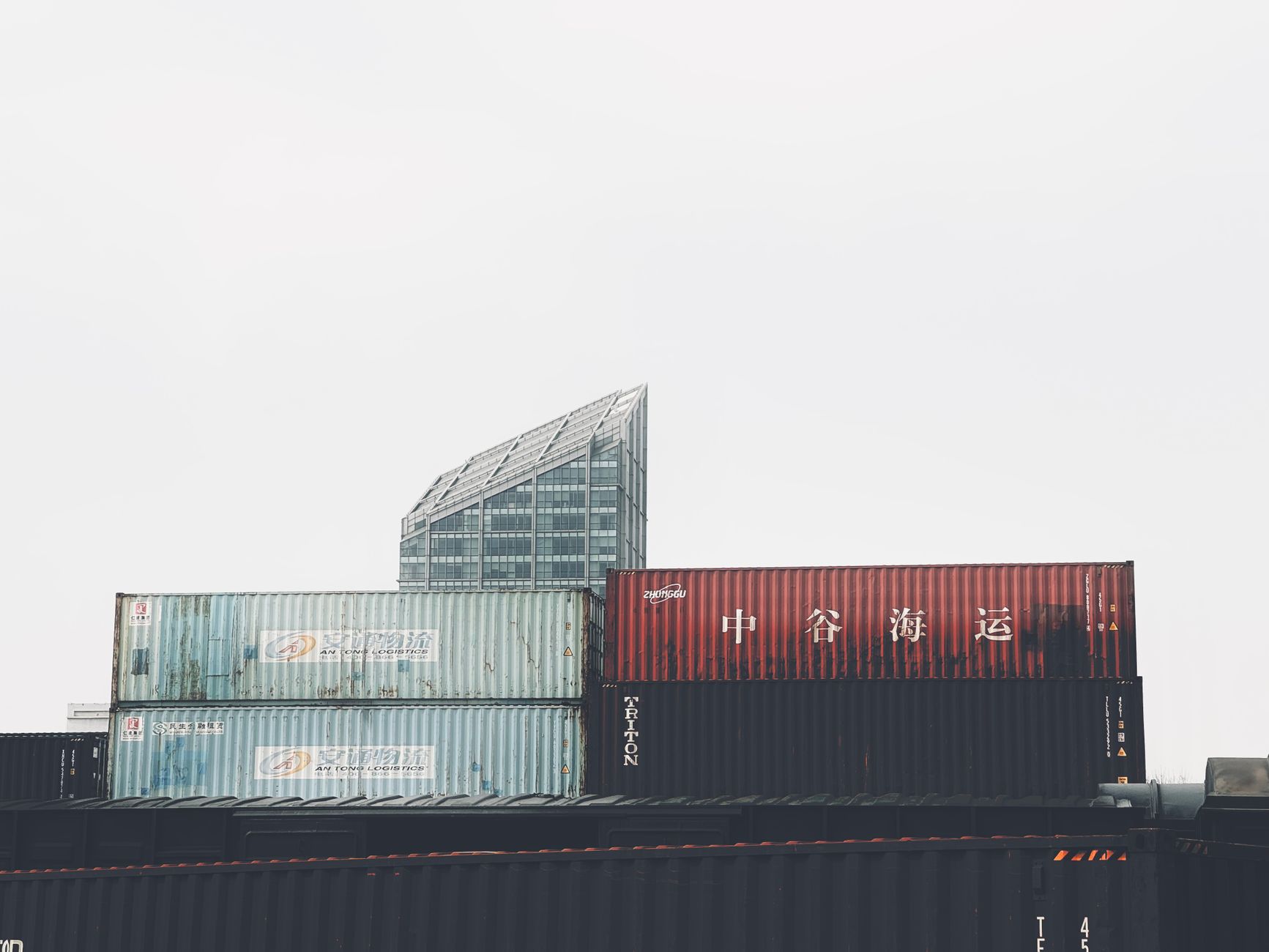
Tianjin Port is China’s largest northern seaport and ranks among the top ten busiest container ports globally, handling over 22 million TEUs annually. It connects to over 500 global shipping routes and serves as the primary maritime gateway for Beijing, Hebei, Inner Mongolia, and much of northern China. For importers and exporters, Tianjin’s port infrastructure is a significant operational asset that cannot be replicated by any inland city.
Tianjin also benefits from its inclusion in the Beijing-Tianjin-Hebei (Jing-Jin-Ji) integrated development corridor — a national strategy coordinating economic planning across three regions. Under this framework, Beijing has been actively relocating non-capital functions (manufacturing, logistics, back-office operations) to Tianjin and Hebei, creating structured inflow of businesses and infrastructure investment.
The city hosts the China (Tianjin) Pilot Free Trade Zone (TJFTZ), established in 2015. Unlike the Shanghai FTZ’s emphasis on financial services, Tianjin’s FTZ focuses on shipping services, equipment manufacturing, and cross-border finance. It spans three functional areas: the Airport Economy Zone, the Dongjiang Port Area, and the Binhai New Area Central Business District. Foreign-invested enterprises within the TJFTZ benefit from streamlined customs procedures and simplified foreign exchange management coordinated by China’s State Administration of Foreign Exchange (SAFE).
Key Industries: Where Foreign Capital Is Welcomed
Petrochemicals and Advanced Materials
Tianjin’s Nangang Industrial Zone is one of China’s largest integrated petrochemical parks, hosting BASF, Sinopec, and Mitsui joint ventures. Foreign firms with proprietary chemical processing technologies or specialty materials can find legitimate joint venture and licensing opportunities as China pushes its petrochemical industry toward higher-value specialty products. Encouraged sectors are listed in the Foreign Investment Negative List published by China’s Ministry of Commerce (MOFCOM).
Automotive and New Energy Vehicles
FAW Toyota has major production facilities in Tianjin. As China’s NEV transition accelerates, Tianjin is positioning itself as a battery component and EV supply chain hub. Foreign suppliers of precision manufacturing equipment, battery management systems, or EV charging infrastructure have active procurement opportunities in the Binhai New Area, where the municipal government has established dedicated industrial parks for new energy equipment.
Financial Services and Fintech
The Binhai New Area operates as an experimental zone for financial innovation. The TJFTZ permits offshore RMB business, cross-border financing, and has hosted pilot programs for equity-based financing structures. Foreign firms offering asset management, factoring, or structured finance products have found that Tianjin’s regulatory sandbox approach allows for faster product piloting than Shanghai or Beijing in select areas.
Navigating the Tianjin Regulatory Environment
Company Registration
Foreign companies establishing a WFOE or joint venture in Tianjin register through the Tianjin Municipal Bureau of Market Supervision and Administration, a local branch of China’s State Administration for Market Regulation (SAMR). Within the TJFTZ, a “single window” registration system allows businesses to complete registration, tax enrollment, and customs registration through one portal — typically within five to seven business days for straightforward WFOE structures.
The Foreign Investment Law (effective January 2020) commits China to pre-establishment national treatment for foreign investors in sectors not on the Negative List. Tianjin’s encouraged sectors — port logistics, advanced manufacturing, financial leasing — are largely absent from the restricted list, meaning foreign ownership barriers in these areas are minimal.
Customs and Bonded Logistics
Tianjin Port operates under one of China’s busiest customs districts. Companies in the Dongjiang Port Area of the TJFTZ can store imported goods in bonded warehouses without paying duties until goods enter the domestic market — a significant cash-flow advantage for companies building inventory. See our detailed overview of how Western companies use bonded warehouses in China for the full mechanics.
Tianjin vs. Other Regional Hubs
In our series on China’s city-level business environments, we’ve covered Xi’an as a manufacturing base for the Northwest and Chengdu as Western China’s service and tech hub. Tianjin occupies a different strategic category: it is fundamentally a trade city, with strengths in port access, logistics efficiency, and heavy industrial manufacturing rather than software, consumer brands, or entertainment.
Xi’an and Chengdu are best for companies targeting interior China or leveraging lower labor costs. Tianjin suits companies that need fast import-export cycles, large-scale manufacturing capacity, or proximity to Beijing’s decision-making apparatus without a Beijing address and its associated cost premium.
Practical Entry Steps
1. Define your operational model. WFOE, trading company, representative office, or JV — each has different capital requirements and licensing tracks. Representative offices cannot directly generate revenue; they are useful for market scouting only.
2. Map your sector against the Negative List. Check both the National Negative List and the FTZ-specific Negative List, published by MOFCOM. The TJFTZ version is more permissive and as of 2025 covers fewer than 30 restricted sectors.
3. Engage the Binhai New Area Investment Promotion Bureau. Tianjin’s investment promotion infrastructure is responsive by Chinese city standards. They can provide land pricing, utility rate cards, and introductions to local JV partners in your sector.
4. Lock in your customs strategy early. HS code classification, tariff engineering, and bonded versus non-bonded structure decisions will materially affect operating economics. Engage a licensed customs broker before finalizing supply chain design. For US exporters, the US Commercial Service’s China team at trade.gov can provide pre-market intelligence and vetted local service provider referrals.
5. Evaluate TJFTZ setup. If speed-to-market matters, the Dongjiang Port FTZ area offers bonded logistics, simplified customs, and experimental financial rules that can reduce landed costs. For the broader picture, our guide to China’s free trade zones explains how to choose the right FTZ structure for your business model.
The Bottom Line
Tianjin is not a glamorous market entry story. It lacks Shenzhen’s startup culture, Shanghai’s financial ecosystem, and Chengdu’s consumer dynamism. What it offers is infrastructure depth, reliable port access, a responsive investment promotion system, and a durable role in China’s northern industrial corridor. For companies in heavy manufacturing, logistics, petrochemicals, aerospace supply chains, and financial leasing, Tianjin deserves serious evaluation — and on the metrics that actually matter (cost, speed, supply chain connectivity), it will often outperform the obvious alternatives.