
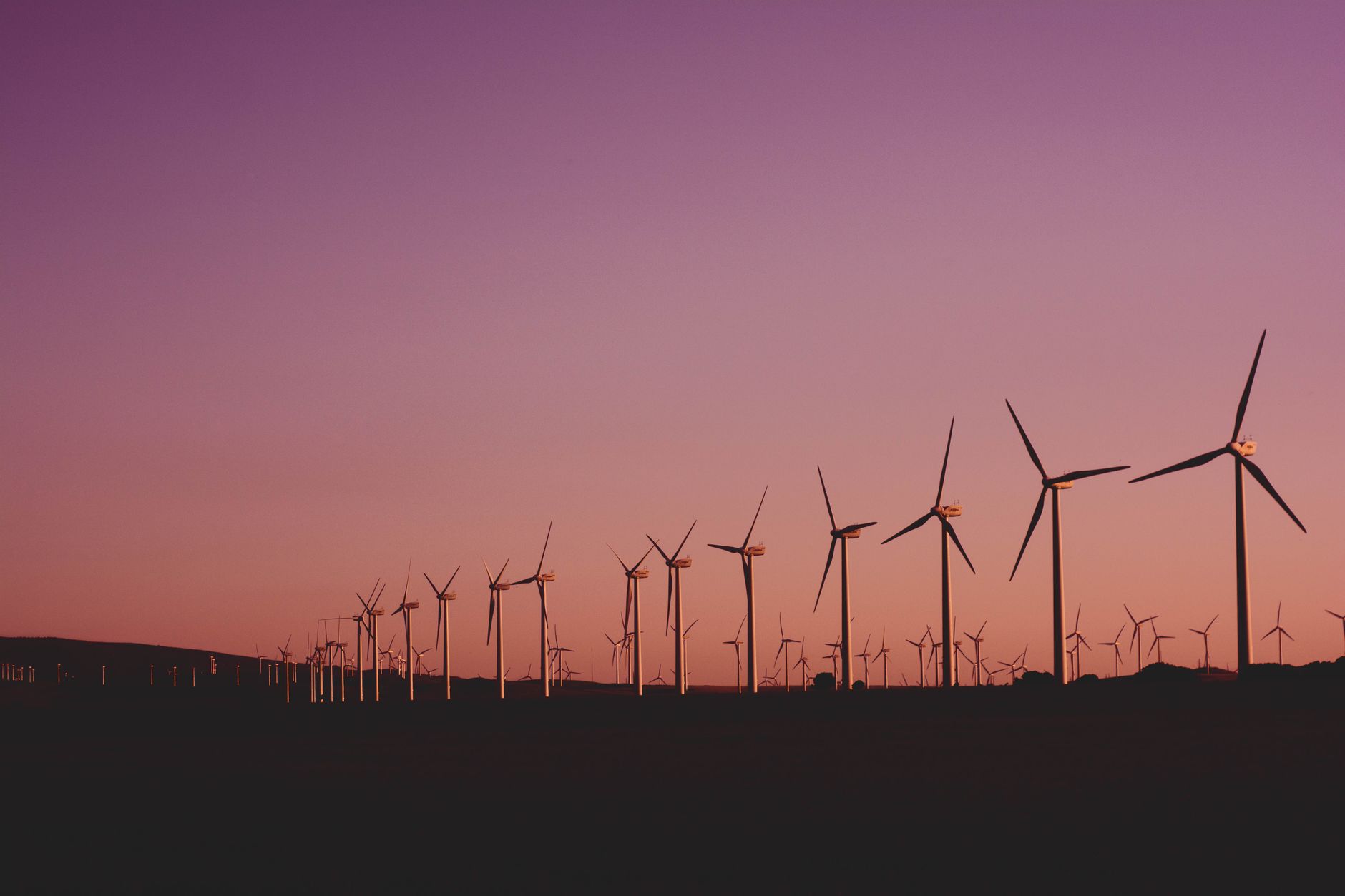
When Denmark’s Vestas and America’s GE Vernova assess the future of wind energy, they cannot avoid a central fact: China manufactures more than half of the world’s wind turbines, dominates the global supply chain for key components, and is now exporting its technology to markets from South Africa to Brazil to the Philippines. Three companies — Goldwind, Envision Energy, and Ming Yang Smart Energy — sit at the heart of this transformation. Understanding how they got here, and where they are pushing next, is essential for any energy developer, supplier, or trade professional operating in global renewables.
The Scale of China’s Wind Advantage
China installed more new wind capacity in 2023 alone than the entire rest of the world combined. According to the National Energy Administration of China (NEA), the country’s total installed wind power capacity crossed 440 gigawatts by the end of 2023. The country added 75.9 GW of new onshore wind that year alongside 6.8 GW of offshore — figures no Western nation approaches at scale.
This dominance is the product of twenty years of coordinated industrial policy, domestic demand that funded R&D through volume, and a manufacturing ecosystem that has driven turbine component costs to levels European and American producers structurally cannot match. Chinese wind turbines that cost $1,200 per kilowatt of capacity a decade ago now come off the production line at under $400 per kilowatt — a cost compression that mirrors what happened to Chinese solar panels between 2010 and 2020.
Goldwind: The Pioneer That Went Global
Xinjiang Goldwind Science and Technology was founded in 1998 in Urumqi. Goldwind’s early turbines were licensed from German manufacturer Vensys — a technology transfer arrangement that gave engineers a foundation to build on. By 2008, the company had internalized the core permanent magnet direct-drive (PMDD) architecture and stopped needing the license.
PMDD turbines have fewer moving parts than conventional geared machines, lower maintenance requirements, better performance in low-wind conditions, and longer operational life. Goldwind spent the following decade proving this architecture across China’s harsh northwestern wind corridors — the Gobi Desert, Inner Mongolia’s steppes, and Xinjiang’s high-altitude zones. By 2015, Goldwind had become the world’s largest wind turbine manufacturer by annual installed megawatts, a position it has held in most subsequent years.
Goldwind’s international expansion included establishing Goldwind Americas in Chicago and participating in projects across the United States, Australia, Chile, and Pakistan. In Australia, Goldwind turbines power the Stockyard Hill facility in Victoria, which at its completion was the largest wind farm in the southern hemisphere. The company’s global installed base outside China now exceeds 3 GW — a meaningful beachhead for a Chinese OEM in regulated Western energy markets.
For US developers, Goldwind’s American operation raises a direct procurement question. The company’s turbines are price-competitive and technically proven. However, the federal Department of Energy’s Wind Energy Technologies Office and procurement guidelines tied to the Inflation Reduction Act’s domestic content provisions create a complex framework within which Chinese-manufactured turbines must be carefully evaluated.
Envision Energy: Platform Thinking Beyond Hardware
Founded in 2007 by Lei Yong in Shanghai, Envision Energy has positioned itself less as a turbine vendor and more as an energy management technology platform. The company sells EnOS — an industrial operating system that connects and optimizes wind, solar, battery storage, and grid assets at enterprise scale. This distinction has opened doors in markets where purely hardware competition with established European players is harder to win.
Envision’s turbines compete at the frontier of onshore wind engineering: the company’s EN-252 model features a 252-meter rotor diameter, putting it directly alongside Vestas’s V236 and Siemens Gamesa’s SG 6.6-170. These are not follower products.
Globally, Envision has been particularly aggressive in emerging markets — supplying wind projects in South Africa, Brazil, Chile, India, and Southeast Asia. In 2022, the company announced a partnership with ACWA Power to supply turbines for Saudi Arabia’s NEOM project. The EnOS platform manages over 100 GW of connected assets globally, including installations operated by developers who have no turbine supply relationship with Envision — a software moat that gives the company leverage in long-term service contracts.
Ming Yang Smart Energy: Offshore Ambitions
Guangdong-based Ming Yang Smart Energy (listed on NYSE and HKEX) was founded in 2006 and has pursued offshore wind as its strategic focus. The company’s MySE 16-260 offshore turbine — with a 16 MW rated capacity and 260-meter rotor diameter — is among the world’s most powerful serial-production offshore machines. Ming Yang has also developed a hybrid wind-solar turbine that mounts photovoltaic panels on the nacelle and tower to generate additional electricity from the same seabed foundation, a product innovation without a direct Western commercial equivalent.
Ming Yang has announced offshore wind projects in Vietnam, the Philippines, and Europe, and is in discussions with developers in the United Kingdom and the Netherlands. For developers managing the high fixed costs of marine foundations and grid connections, the hybrid product’s ability to generate additional megawatt-hours from the same installed infrastructure is financially meaningful.
Supply Chain Control and Trade Implications
China produces more than 80% of the world’s wind turbine blades by volume, dominates the production of permanent magnet materials, and manufactures the majority of global wind tower sections. As covered in our analysis of China’s rare earth strategy, the neodymium-iron-boron magnets used in direct-drive turbine generators depend on Chinese rare earth processing in ways that European and American manufacturers cannot quickly substitute. European turbine makers — Vestas, Siemens Gamesa, and Nordex — have increasingly cited this cost asymmetry as a structural competitive disadvantage.
The US has imposed tariffs on Chinese wind components under Section 301, administered through the Office of the US Trade Representative, making direct Chinese turbine imports economically prohibitive for most US projects. But Chinese-manufactured steel in wind towers, blade materials, and drivetrain components flow through global supply chains in ways that tariff structures do not cleanly capture. The broader context of China’s industrial policy ambitions — which shaped the wind sector alongside electric vehicles and semiconductors — is examined in our post on Made in China 2025.
The offshore wind sector may be where bilateral dynamics shift most visibly over the next decade. US offshore developers are discovering that European supply chains are constrained — Siemens Gamesa has pulled back from multiple US projects due to cost overruns — and the pace of US offshore deployment has slowed from earlier projections. If Chinese offshore technology continues to advance at Ming Yang’s current trajectory, the policy question of whether permanent exclusion is tenable will become harder to avoid. The parallel to solar is instructive: tariffs slowed deployment while the underlying cost advantage of Chinese manufacturing remained intact.
For trade professionals tracking China’s energy sector evolution, our coverage of China’s national carbon market and China’s nuclear energy export strategy provide essential context for how Beijing’s energy transition priorities shape the commercial terms on which its wind companies compete globally.
The Bottom Line
Goldwind, Envision, and Ming Yang are not boutique challengers to the established wind order — they are the established order in the world’s largest and fastest-growing wind market, and they are exporting that dominance outward. For developers in emerging markets, they offer proven technology, competitive economics, and financing frequently backed by Chinese policy banks. For Western competitors, they represent the sharpest competitive challenge the global wind industry has faced in a generation. The professionals who understand this landscape — who know which turbine architectures Chinese manufacturers favor, how their international service organizations operate, and where trade policy creates real versus paper barriers — are the ones best positioned to navigate the next decade of the global energy transition.