
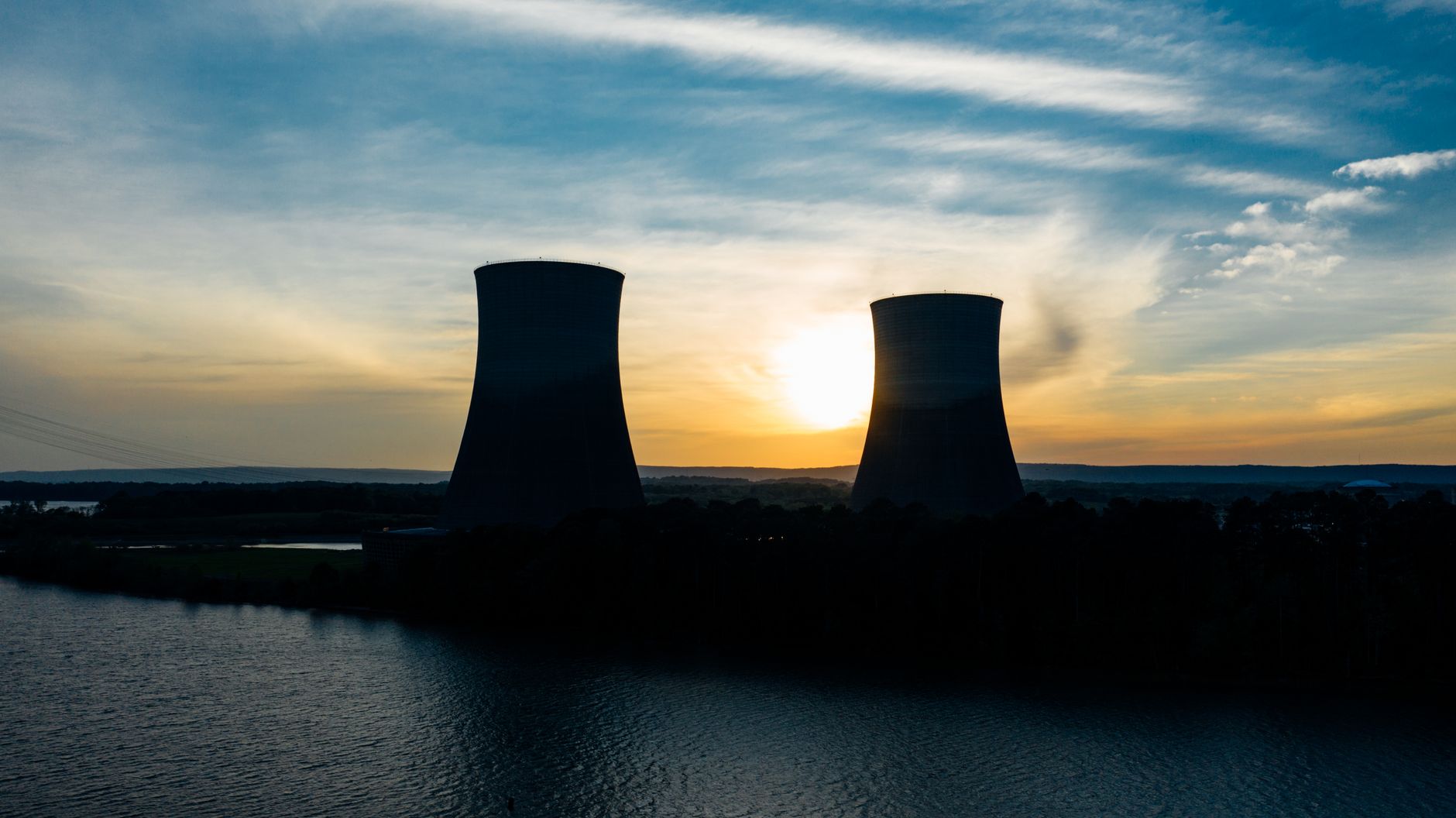
When the Hualong One reactor came online at Pakistan’s Karachi Nuclear Power Plant in 2022, it marked something more than a construction milestone. It was proof that China had developed a third-generation pressurized water reactor entirely on its own terms — one that could be exported, financed, and operated without Western technology licenses. For global energy professionals, infrastructure investors, and trade strategists, China’s nuclear sector is no longer a curiosity. It is a geopolitical and commercial force reshaping how the world builds baseload clean power.
China operates the world’s fastest-growing nuclear energy program. As of mid-2026, the country has 57 operational reactors with combined capacity exceeding 57 gigawatts, and more than 20 units under construction — more than any other nation on earth. The two state-owned giants driving this expansion, China General Nuclear Power Group (CGN) and China National Nuclear Corporation (CNNC), have become among the most consequential energy companies operating globally — yet they remain poorly understood by most Western business professionals.
Two Giants, One Strategy
China’s nuclear industry is effectively a duopoly. CGN, headquartered in Shenzhen and founded in 1994, was built on French technology licensing and the Daya Bay Nuclear Power Plant in Guangdong — China’s first large-scale commercial reactor. CGN has since expanded to 26 domestically operated reactors, with interests in the UK’s Hinkley Point C and Sizewell C projects. As of 2025, CGN reported assets exceeding 800 billion yuan (approximately $110 billion).
CNNC traces its lineage to China’s 1950s atomic weapons program and manages the country’s complete nuclear fuel cycle — from uranium mining and enrichment to spent fuel processing. It is the primary commercializer of the Hualong One (HPR1000) reactor design. In 2023, CNNC reported revenues of approximately 180 billion yuan, with civil nuclear power generation accounting for the largest share. Together, these two entities give China an integrated nuclear industrial base that few countries can match.
The Hualong One: China’s Export Reactor
The Hualong One is the centerpiece of China’s global nuclear ambitions. Jointly developed by CGN and CNNC, it is a 1,000-megawatt pressurized water reactor designed to meet post-Fukushima passive cooling requirements. Its commercial track record is strengthening fast: Unit 1 at Fuqing Nuclear Power Plant in Fujian achieved commercial operation in January 2021, the Karachi units in Pakistan followed in 2022, and Argentina has signed agreements for a Hualong One unit at Atucha III, financed by China Eximbank. Discussions are underway in Saudi Arabia, Egypt, Romania, and Sub-Saharan Africa.
The competitive advantage is not purely technical. China offers a package Western vendors cannot easily match: reactor design, construction, long-term fuel supply, training, and concessional financing — all from one counterparty. For developing nations with limited nuclear experience and constrained capital budgets, this bundled offer is genuinely difficult to resist.
The US-China Nuclear Trade Relationship
The commercial relationship between US and Chinese nuclear industries is more active than most observers realize. For decades, the framework governing nuclear trade was the US-China Agreement for Peaceful Nuclear Cooperation, in force since 1985. Under this framework, Westinghouse’s AP1000 reactor was deployed at Sanmen and Haiyang nuclear power plants in China — the first commercial AP1000 units globally, valued in the billions of dollars and critical to Westinghouse’s finances during a difficult period.
The geopolitical environment has tightened since. CGN was added to the US Commerce Department’s Entity List in 2019 over proliferation concerns, restricting exports of US items without a license. Despite this, the underlying commercial logic of US-China nuclear engagement has not disappeared. Component manufacturing, specialized materials, safety systems, and training remain areas where bilateral engagement continues at the project level. The US Department of Energy’s Office of Nuclear Energy has identified uranium supply security as a national priority, and the ADVANCE Act of 2024 aims to accelerate domestic licensing — in part to provide alternatives to Russian and Chinese enrichment services.
Small Modular Reactors: China’s Next Push
China is not limiting its nuclear ambitions to conventional large-scale reactors. CNNC’s ACP100 — a 125-megawatt small modular reactor — received construction approval in 2021. The Linglong One, the world’s first land-based commercial SMR, broke ground at Changjiang Nuclear Power Plant on Hainan Island in 2021 and is expected to enter commercial service in 2026. China is also developing floating nuclear power platforms designed to power remote coastal areas and offshore industrial installations.
The SMR space is genuinely competitive globally. US developers including NuScale, TerraPower, and X-energy are advancing their own designs under the Department of Energy’s Advanced Reactor Demonstration Program. For Western businesses monitoring the space, China’s deployment timeline is running roughly parallel to Western programs — and in some respects ahead on schedule.
What This Means for Global Business
China’s nuclear expansion creates specific commercial opportunities and risks that trade professionals should map carefully.
Supply Chain Opportunities
Chinese nuclear operators source globally for specialized components, instrumentation, and materials. Turbine generators, valve systems, specialty steels, and control room instrumentation are areas where Western suppliers have historically held strong positions. Licensed supply to CNNC-affiliated projects in third countries — Argentina, Pakistan, and others — remains viable for many US and European vendors under current export control frameworks.
Energy Diplomacy and Infrastructure Finance
Chinese nuclear exports are a dimension of the broader Belt and Road energy strategy. Countries that accept Chinese nuclear financing often develop longer-term commercial relationships across multiple sectors. For Western businesses competing for infrastructure contracts in the same markets, understanding China’s nuclear offer is essential competitive landscape mapping. As we analyzed in our coverage of China’s Belt and Road Initiative in 2026, energy infrastructure anchors broader economic relationships in Southeast Asia, the Middle East, and Africa.
Electricity Cost Competitiveness
China’s nuclear buildout directly affects electricity costs for Chinese manufacturers. Chinese operators report levelized costs of electricity from nuclear in the range of 0.35 to 0.45 yuan per kilowatt-hour — competitive with coal. As China’s grid adds nuclear capacity, energy-intensive industries including aluminum, chemicals, and advanced manufacturing benefit from stable, increasingly clean power. This intersects with themes covered in our analysis of China’s clean energy trade strategy and the critical mineral supply chains that undergird advanced energy technology.
Carbon Markets and ESG
Nuclear power generates zero direct carbon emissions. As China’s carbon market expands, nuclear generation increasingly carries value not just as electricity but as a carbon-avoidance asset. Foreign companies operating in China with Scope 2 emissions reduction commitments should monitor how nuclear power procurement options develop within China’s evolving electricity market reforms.
The Bilateral Calculation
China’s nuclear sector illustrates a pattern visible across its energy and industrial policy: identify a strategic technology, accept technology transfer to accelerate learning, develop domestic capabilities, then move from importer to exporter. The Westinghouse AP1000 story — where US technology was deployed in China, Chinese engineers mastered the design, and China then developed a competing reactor — is a case study in technology absorption that Western trade policy makers continue to examine.
For business professionals, the operative question is not whether to judge this trajectory but how to engage with it commercially. Chinese nuclear operators remain customers for specialized Western products and services. Third-country markets where Chinese nuclear exports compete represent opportunity for Western contractors willing to enter. And as both the US and China expand nuclear capacity in pursuit of clean energy goals, supply chain interdependencies will persist despite geopolitical friction. The Hualong One generates roughly 9 billion kilowatt-hours of clean electricity per year — equivalent to eliminating 8 million tons of carbon dioxide annually. Whatever the geopolitical context, the industrial accomplishment is real, and its implications for global energy trade will unfold for decades.