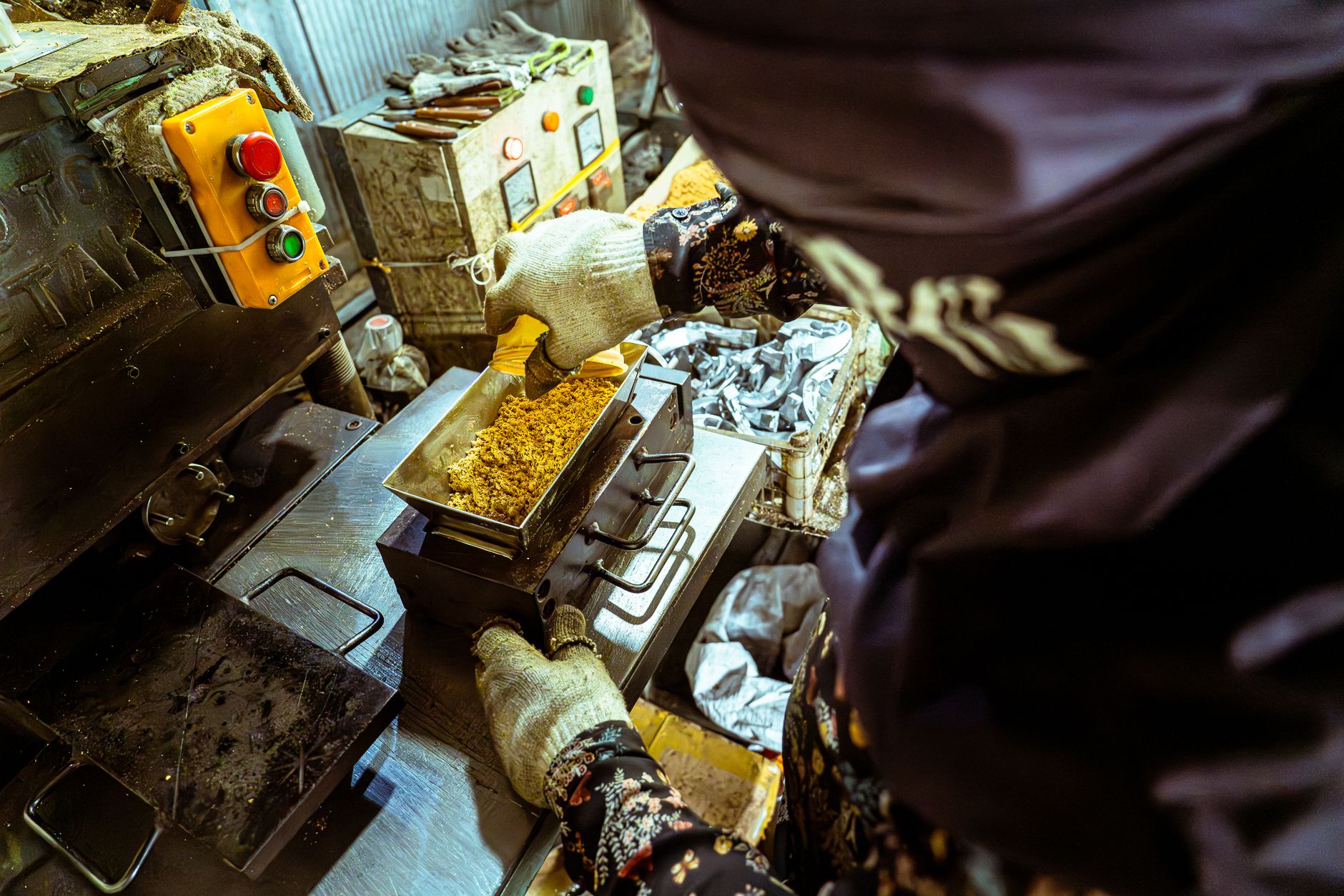
China processes and exports more food than any other country on earth. In 2023, its food and agricultural exports topped $97 billion, according to China’s General Administration of Customs — a figure that understates the true scale when you factor in value-added processing, re-export flows through Hong Kong, and Chinese-owned facilities operating offshore. Behind this output sits one of the most vertically integrated food manufacturing ecosystems ever assembled: raw material procurement networks stretching from Heilongjiang’s soybean fields to Xinjiang’s tomato pastes, cold-chain infrastructure built out at extraordinary speed, and a cohort of state-linked champions and privately owned processors who have quietly reshaped global food supply chains over the past two decades.
For importers, food-sector investors, and trade professionals working the US-China corridor, understanding how this industry works — its structure, its regulatory landscape, and its trajectory — is no longer optional. It is baseline competence.
The Scale: Numbers That Reframe the Conversation
China is simultaneously the world’s largest food producer and its largest food importer. It accounts for roughly 26% of global grain production, more than 50% of the world’s pork supply, and the majority of output in dozens of processed food categories including preserved vegetables, canned fish, instant noodles, and condiments. China’s food processing sector generates over ¥14 trillion ($1.9 trillion) in annual revenue, according to the China National Light Industry Council, making it the single largest manufacturing industry by output value in the country.
The export story is concentrated in a handful of categories. Aquatic products — including shrimp, fish fillets, and processed seafood — consistently rank as the top food export by value, with annual shipments exceeding $20 billion. Processed vegetables and edible fungi, primarily dried mushrooms and canned vegetables from Shandong and Fujian, account for another $8 to $10 billion. Condiments, sauces, and flavoring products — think soy sauce from Guangdong’s Foshan and Dongguan, chili paste from Hunan and Guizhou — have grown into a $4 billion export category as global demand for Asian flavors has accelerated.
The Industrial Clusters: Where Processing Actually Happens
China’s food processing industry is organized around geographic clusters, each specializing in specific product categories based on agricultural adjacency, port access, and historical industrial concentration.
Shandong: The Vegetables, Peanuts, and Aquatic Processing Capital
Shandong Province is China’s largest food-exporting province and one of the most important agricultural export bases globally. Shandong’s processing output spans frozen and preserved vegetables (garlic, ginger, scallions, capsicum), peanut oil and peanut products destined primarily for Southeast Asia and Europe, and an enormous aquatic processing sector anchored in Rongcheng, Rizhao, and Qingdao. Companies like Haidu Foods and Longda Foodstuff Group operate at industrial scale — Longda, based in Weifang, has annual revenues exceeding ¥5 billion and ships garlic and vegetable products to more than 80 countries. Shandong’s food exports account for approximately 18-20% of China’s total food export value in most years.
Fujian: Seafood, Tea, and Specialty Foods
Fujian’s coastal geography and long maritime trade history have shaped a food processing industry built around seafood, tea, and specialty preserved products. Fuzhou and Zhangzhou are major bases for eel and tilapia processing, with a significant share of output exported to Japan, the United States, and the European Union. Fujian is also home to Sunner Development, one of China’s largest chicken processing companies, with annual poultry processing capacity exceeding 200 million birds and revenues surpassing ¥10 billion. Tea processing in Anxi and Wuyi commands premium global positioning, with the province producing roughly 30% of China’s exported tea by value.
Guangdong: Condiments, Convenience Foods, and Snacks
Guangdong is the heartland of China’s condiment and flavoring industry. Foshan Haitian Flavouring and Food Company — commonly known as Haitian — is the world’s largest soy sauce producer by volume, generating revenue of approximately ¥25 billion ($3.4 billion) in 2023 and exporting to more than 90 countries. Lee Kum Kee, headquartered in Hong Kong but sourcing and processing primarily through Guangdong, has built one of the most recognizable condiment brands globally, with annual revenue estimated above HK$15 billion. The Pearl River Delta also anchors China’s baked goods and snack export industry, with companies like Dali Foods and Want Want (technically headquartered in Shanghai but with major Guangdong operations) supplying modern trade channels across Asia and increasingly in Western markets.
Heilongjiang and the Northeast: Grains, Dairy, and Soy
Heilongjiang, China’s northernmost province, produces more grain than any other province and serves as the raw material base for a significant portion of China’s soy processing, flour milling, and dairy manufacturing. Beidahuang Group, a massive state-owned agricultural conglomerate, manages over 5 million hectares of farmland and operates grain processing facilities with capacity that rivals major US agri-processors. The province’s dairy industry feeds national brands like Yili and Mengniu, which have expanded internationally — Yili acquired New Zealand’s Westland Milk Products and operates facilities in Indonesia and other Southeast Asian markets.
The Cold Chain Revolution
The single most consequential infrastructure investment in China’s food export capability over the past decade has been cold-chain logistics. As recently as 2015, China’s refrigerated trucking fleet was estimated at fewer than 400,000 vehicles — far below what a country of its food production scale requires. By 2023, the fleet had grown to approximately 700,000 refrigerated trucks and cold chain warehouse capacity had expanded to over 200 million cubic meters, according to the China Federation of Logistics and Purchasing.
This expansion was driven by a combination of government policy — cold chain logistics was designated a national priority under the 14th Five-Year Plan — and private investment from logistics companies including SF Express, which has built a dedicated cold chain subsidiary with revenue exceeding ¥4 billion, and JD Logistics, which operates temperature-controlled fulfillment centers in major processing regions. For foreign buyers and importers, the practical implication is that China can now consistently deliver temperature-sensitive products at scale and reliability levels that were not achievable a decade ago.
The Regulatory Framework: What Exporters and Importers Must Know
China’s food export regulatory architecture sits under the General Administration of Customs (GACC), which requires all overseas food exporters and their manufacturing facilities to be registered in China’s GACC system before products can enter the Chinese market — and Chinese exporters must comply with destination-country regulations at origin. The US Food and Drug Administration (FDA) maintains a Foreign Supplier Verification Program (FSVP) that places responsibility on US importers to verify that foreign food manufacturers meet US food safety standards. As of 2026, the FDA has approximately 1,400 registered Chinese food facilities subject to FSMA (Food Safety Modernization Act) oversight.
For Chinese food processors targeting the US market, practical compliance requirements include facility registration with FDA, compliance with HACCP (Hazard Analysis and Critical Control Points) protocols, labeling compliance under 21 CFR Part 101, and in many categories, compliance with USDA grading standards. The USDA Foreign Agricultural Service maintains a dedicated China office in Beijing that publishes market intelligence reports on Chinese food production and export trends — a resource that is underutilized by Western food trade professionals.
On the Chinese side, export food safety is overseen by GACC, which publishes updated lists of approved overseas facilities and destination-country-specific compliance guidance. The GACC English portal provides access to relevant customs regulations, food safety directives, and approved facility registries — essential reading for any professional structuring food import contracts with Chinese suppliers.
The OEM-to-OBM Transition in Food
Like electronics and furniture before it, China’s food processing industry is undergoing a structural transition from original equipment manufacturing (OEM/private label supply) toward brand ownership. For decades, Chinese processors supplied Western food companies with private-label products — canned goods under Kroger’s house brand, frozen vegetables for European retailers, condiments manufactured to spec for foodservice distributors.
That model is not disappearing, but it is being supplemented. A growing cohort of Chinese food companies is investing in international brand equity. Lao Gan Ma, the chili sauce brand founded in Guizhou by Tao Huabi, achieved cult status internationally without conventional marketing spend — its product now sits in mainstream Western supermarkets including Walmart and Costco at full branded margins. Nongfu Spring, China’s largest bottled water brand with 2023 revenue of ¥42.7 billion, has begun international distribution in select markets. Yili and Mengniu are investing in brand awareness campaigns in Southeast Asia and Australia, positioning for retail shelf space rather than purely industrial supply.
For Western food companies, this transition carries two implications. It opens partnership opportunities — Chinese food manufacturers increasingly seek Western co-branding, distribution agreements, and market access rather than simply volume orders. And it signals increasing competition in categories where Chinese brands have built quality reputations sufficient to support premium retail pricing.
Practical Sourcing Guidance for Importers
Foreign buyers sourcing processed food from China should apply a tiered verification approach. At the facility level, GACC registration status, ISO 22000 or BRCGS certification (for UK and EU buyers), and SQF or BRC certification (for US buyers) are baseline requirements. Factory audits conducted by third-party firms such as Bureau Veritas, SGS, or TÜV Rheinland remain standard practice for large-volume buyers and are increasingly expected even by smaller importers.
The China Canton Fair, held biannually in Guangzhou, remains the most efficient venue for identifying new food processing suppliers. The food and agricultural products halls attract thousands of exhibitors and offer a concentrated opportunity for face-to-face pre-qualification. Guangzhou and the Pearl River Delta remain critical hubs not only for condiments and convenience foods but for packaging supply chains that food exporters depend on. Understanding the role of major agri-food conglomerates like COFCO and New Hope in raw material pricing and supply allocation is essential context for any large-scale food sourcing relationship. And given how critical cold-chain logistics has become to food export quality, familiarity with Shandong’s industrial export infrastructure — where much of China’s food export volume originates — rounds out the operational picture.
The Trajectory: Where This Industry Is Heading
Three macro trends will define China’s food processing export industry through 2030. First, premiumization: Chinese processors are moving aggressively up the value chain, investing in R&D, clean-label reformulation, and packaging design to compete in the premium food segment globally. Second, diversification of export destinations: while Japan, the United States, South Korea, and the EU have historically dominated China’s food export recipient list, Belt and Road partner countries in Southeast Asia, Central Asia, and Africa are growing rapidly as destinations — supported by Chinese-financed cold-chain infrastructure in those markets. Third, food safety technology investment: blockchain-based traceability systems, AI-driven quality control, and digital HACCP monitoring are being adopted by leading Chinese processors not as regulatory compliance theater but as genuine competitive differentiation for premium buyers.
For trade professionals, the core message is consistent with what the broader China business landscape keeps demonstrating: this is an industry that moved from low-cost, low-margin, volume-oriented production to sophisticated, branded, technology-enabled export capability faster than most analysts predicted. The window for early-stage partnership positioning — whether in distribution, co-branding, ingredient sourcing, or technology licensing — remains open, but it is narrowing.