When most people think about China’s drone industry, they picture DJI — and with good reason. The Shenzhen-based company commands roughly 70 percent of the global consumer drone market and has redefined what aerial photography means for filmmakers, surveyors, and emergency responders. But DJI is only the most visible node in a far larger industrial ecosystem. China’s unmanned aerial vehicle industry has expanded well beyond consumer quadcopters into precision agriculture, urban air mobility, cargo logistics, and defense applications — generating an estimated $30 billion in annual revenue and positioning Chinese companies at the frontier of the next global transportation revolution.
For foreign investors, procurement managers, and technology executives, understanding the full breadth of China’s drone sector matters because the competitive dynamics, regulatory frameworks, and export implications extend far beyond anything a single brand represents. This analysis examines the companies, the markets, and the strategic forces reshaping an industry the world can no longer afford to overlook.
XAG: The Agricultural Drone Giant Most Westerners Have Never Heard Of
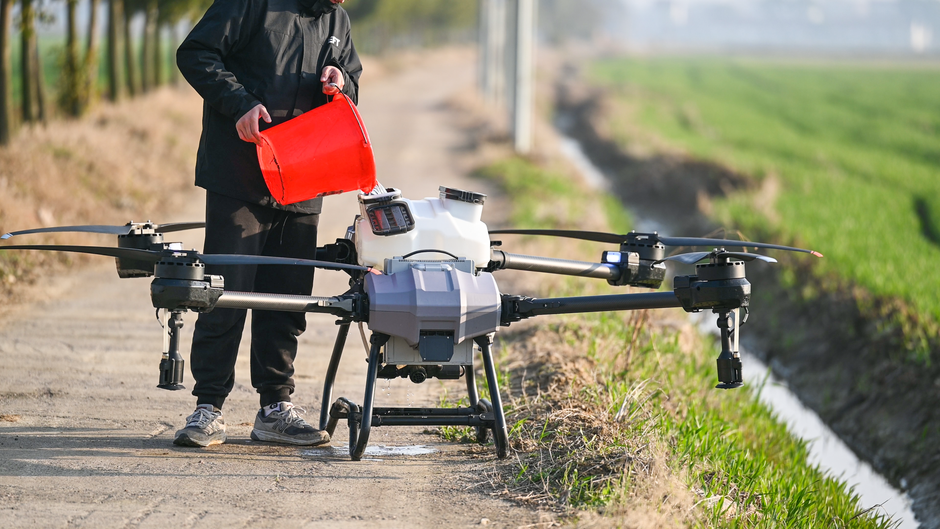
If DJI is China’s consumer drone champion, XAG (officially XAG Co., Ltd., formerly Xaircraft) is its agricultural counterpart. Founded in 2007 in Guangzhou, XAG focuses exclusively on precision agriculture: its drones spray pesticides, seed fields, monitor crop health via multispectral sensors, and generate actionable yield data for farmers managing tens of thousands of hectares.
By 2025, XAG had deployed more than 100,000 agricultural drones across China, and its machines had treated over 900 million acres of farmland cumulatively — a scale no Western competitor approaches. The company’s P Series and V Series drones carry payloads ranging from 16 to 40 liters and can cover 10 to 15 acres per hour, dramatically outpacing manual spraying in both speed and precision. XAG’s systems integrate satellite positioning, soil sensors, and cloud-based farm management platforms into a closed-loop agricultural intelligence stack rather than a standalone aircraft product.
Internationally, XAG has expanded into Southeast Asia, South Asia, and Latin America, where smallholder farms represent a massive underserved market for mechanized crop management. Its partnerships with Japanese trading house Marubeni and South Korean distribution networks illustrate how Chinese AgriTech companies scale globally through commercial intermediaries. For US agribusiness companies, XAG represents both a procurement opportunity and a competitive benchmark for what precision agriculture hardware can deliver at commercial scale. See also our analysis of China’s agricultural machinery industry for broader context.
EHang: Building the World’s First Commercial eVTOL Network
EHang Holdings (NASDAQ: EH) is pursuing a more audacious objective: replacing urban ground transportation with autonomous aerial vehicles. The Guangzhou-based company’s EH216-S is the world’s first electric vertical takeoff and landing aircraft (eVTOL) to receive type certification from a major aviation authority — China’s Civil Aviation Administration of China (CAAC) granted that approval in October 2023, a milestone Western rivals including Joby Aviation, Lilium, and Archer Aviation have yet to match in their home markets.
The EH216-S carries two passengers at speeds up to 130 km/h with a range of approximately 35 kilometers. It operates without a pilot onboard, relying on a ground-based command center — a design philosophy that prioritizes scalability over the pilot-transition model favored by US eVTOL developers. EHang has signed agreements with operators in over 40 countries, with commercial scenic tour flights and inter-island transport routes already running for paying customers in Guangdong Province.
For logistics operators and real estate developers, EHang’s infrastructure requirements — vertiports, ground control stations, regulatory corridors — represent a new category of built-environment investment that sophisticated players are beginning to plan for now.
Cargo and Logistics Drones: JD, SF Express, and Meituan
China’s largest logistics and delivery platforms have each built substantial drone operations that receive far less international coverage than their ground-based businesses. JD Logistics began drone delivery trials in Shaanxi Province in 2016 and by 2023 had completed over 700,000 deliveries across rural regions where road infrastructure makes conventional last-mile fulfillment expensive. JD’s fleet operates from dedicated drone ports attached to its regional warehouses, handling 5- to 15-kilogram payloads on routes up to 50 kilometers.
SF Express, China’s premium private courier with 2024 revenues of approximately 265 billion RMB ($37 billion), operates SF Drones, which achieved CAAC certification for beyond-visual-line-of-sight (BVLOS) operations in 2022. SF’s cargo drones focus on island chains, mountainous terrain, and time-sensitive pharmaceutical delivery.
Meituan has been the most aggressive on urban drone delivery, deploying rooftop drone ports on commercial buildings in Shenzhen and Guangzhou. By late 2024, Meituan had completed more than 300,000 drone-delivered food and grocery orders in Shenzhen, achieving average delivery times under 15 minutes. For a deeper analysis of this ecosystem, see our coverage of EHang, JD Logistics, and SF Express.
Export Controls: Navigating a Restricted Landscape
No analysis of China’s drone industry can avoid the regulatory headwinds confronting Chinese companies in Western markets. DJI was added to the US Department of Defense’s list of Chinese military companies in 2022, and the FAA Reauthorization Act of 2024 included provisions tightening restrictions on Chinese-manufactured drones in US national airspace. XAG faces analogous scrutiny in markets where agricultural drones could theoretically be repurposed for surveillance or payload delivery.
For companies sourcing Chinese drone technology, the compliance calculus requires engagement with both US Department of Commerce export licensing requirements and the evolving entity list. The US Bureau of Industry and Security provides the authoritative framework for assessing technology transfer risk: Bureau of Industry and Security — Export Administration Regulations.
Critically, however, restrictions targeting DJI and consumer-grade drones do not uniformly apply to all Chinese drone technology. XAG’s agricultural systems operate in a different regulatory category than surveillance or defense-adjacent platforms, and significant procurement of Chinese agricultural drone components continues in Southeast Asian and Latin American markets. The strategic question for global buyers is not whether to engage with Chinese drone technology broadly, but which segment, supplier, and end-use case passes compliance review. For the latest regulatory posture, our analysis of DJI in 2026 provides essential context.
China’s Drone Policy Architecture: The CAAC Regulatory Advantage
China’s Civil Aviation Administration has moved faster than any peer regulator in certifying commercial drone operations at scale. CAAC’s regulations for unmanned aircraft systems — updated in 2023 — created a tiered certification pathway calibrated to risk level rather than imposing blanket restrictions. This framework has enabled Chinese companies to accumulate operational hours, incident data, and iterative design improvements at a pace that Western rivals working through more cautious regulatory processes cannot match.
CAAC also established a unified UAS cloud platform for real-time flight tracking, geofencing, and identity verification. By mid-2024, over 1.26 million drones were registered on the platform, processing more than 400,000 flights per day. The official CAAC regulatory framework is available directly from the authority: Civil Aviation Administration of China — Regulatory Standards. For international standards bodies, China’s operational dataset is genuinely valuable — no other country has accumulated comparable real-world UAS experience at these volumes.
Strategic Takeaways for Global Business
China’s drone industry beyond DJI offers both opportunities and complexity for international business professionals. The core implications are worth stating plainly.
Agricultural buyers and distributors should note that XAG and its domestic competitors represent the most advanced commercially deployed precision agriculture drone technology available at scale. Regulatory pathways exist in most non-US markets, and even US-based operators can access Chinese agricultural drone expertise through licensing and data-platform partnerships that do not require hardware import.
Urban developers and logistics operators planning five-to-ten-year infrastructure should treat EHang’s eVTOL certification milestone seriously. The operational parameters and regulatory trajectory in China are running approximately three to five years ahead of equivalent Western markets.
Compliance officers and trade counsel should note that the drone sector sits at the intersection of export controls, CFIUS jurisdiction, and aviation safety regulation in ways that require coordinated legal analysis rather than siloed compliance review. The Office of the US Trade Representative also publishes guidance on technology trade policy relevant to procurement and licensing decisions involving Chinese drone platforms. Engaging early avoids downstream enforcement risk that has proven costly for companies treating drone procurement as a standard commodity purchase.
China built its drone industry through private entrepreneurship, state policy support, and a regulatory environment that permitted commercial experimentation at a scale impossible elsewhere. The result is a sector that now holds genuine global technological leadership across multiple commercial verticals — not as a derivative of Western innovation, but as an originator of new operational models the rest of the world is only beginning to adopt.