
In 2017, Starbucks operated more than 3,000 outlets across China and appeared untouchable. By 2023, a domestic startup had surpassed it by store count. By end-2024, that startup had crossed 20,000 locations. The story of Luckin Coffee’s rise, collapse, and resurrection is one of the most instructive brand strategy case studies of the past decade — and a clear signal to every Western company in China that the competitive landscape they entered is not the one they face today.
The Founding Thesis: Commoditize the Premium
Luckin Coffee was founded in Beijing in 2017 by Charles Lu Zhengyao and CEO Jenny Qian Zhiya, both from private equity and car rental rather than food and beverage. That outsider perspective was deliberate. They saw the China coffee market not as a beverage industry but as a logistics and technology problem: Starbucks had built a premium dine-in experience that worked well as an aspirational symbol, but it served poorly the majority of urban white-collar workers who wanted caffeine delivered efficiently to their desks.
Luckin’s thesis was simple: Chinese consumers did not need to pay 38 RMB (~$5.30 USD) for a latte. They needed a 9.9 RMB option delivered in 30 minutes or available for pickup within 300 meters of their office. The company would compete not on brand heritage but on price, convenience, and digital integration.
To fund the land grab, Luckin raised $200 million in a Series A in 2018 and $150 million in a Series B the same year. By the time it listed on NASDAQ in May 2019 — a record 18 months after opening its first outlet — it had over 2,370 locations and had already overtaken Costa Coffee as China’s second-largest coffee chain.
App-First Infrastructure and the Pickup Store Model
Luckin’s early growth combined three elements standard in China’s tech-driven consumer economy: subsidized pricing, social referral mechanics, and infrastructure designed for app-first ordering. New users received free drinks; existing users received post-purchase coupons; referrals earned free beverages for both parties. For much of 2018 and 2019, the average Luckin customer paid very little — a customer acquisition model borrowed directly from ride-hailing and food delivery.
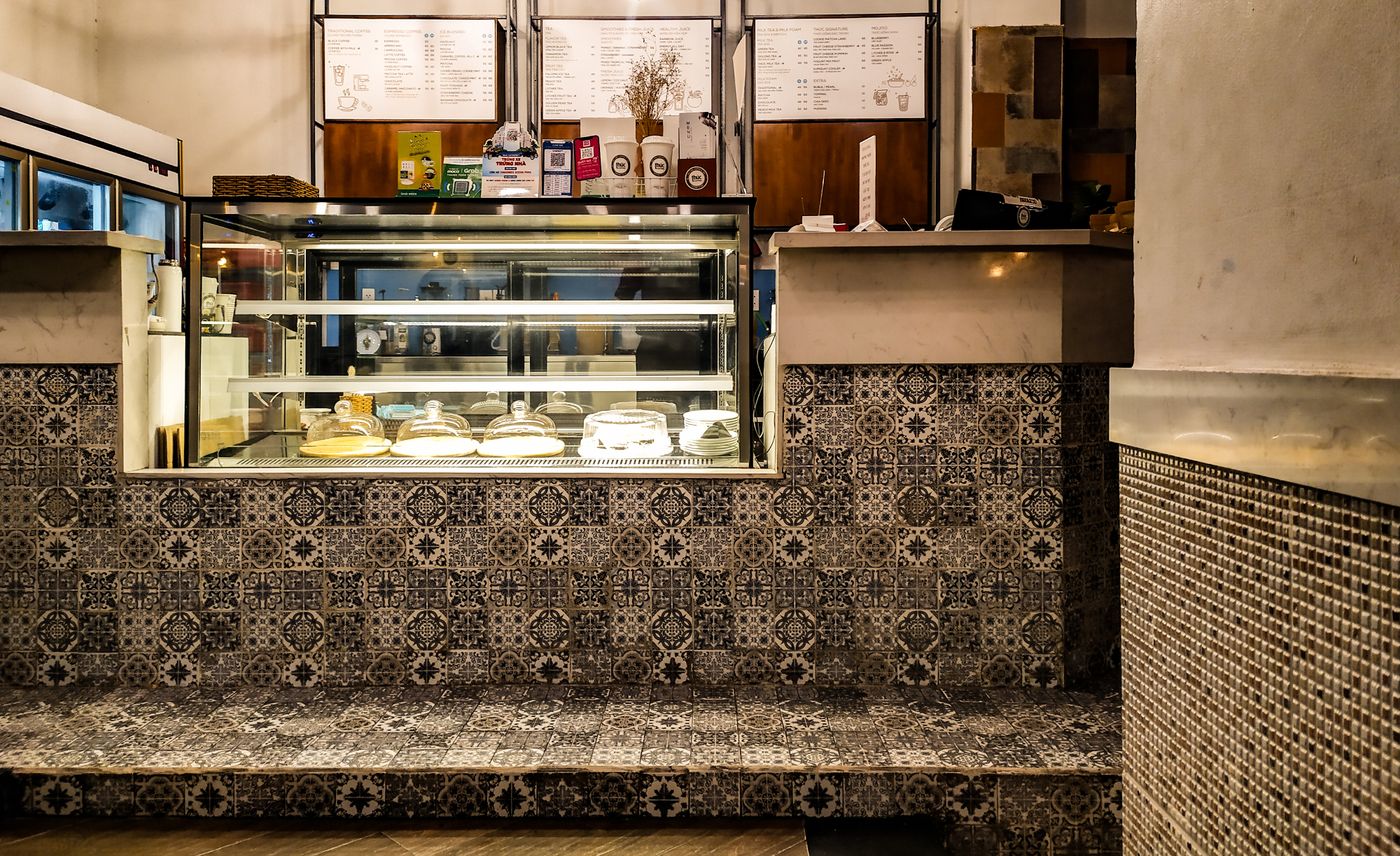
The store format reinforced this logic. Unlike Starbucks’ large flagship locations designed for lingering, Luckin opened “pickup stores” — 20-to-40-square-meter outlets with no seating, staffed by two to three baristas, with every order placed through the app. The result was dramatically lower rent and labor costs per cup, plus a real-time data infrastructure that Starbucks, with its cash-and-card legacy, could not replicate. By 2019 Luckin had more locations in Beijing’s central business district than any other coffee brand.
The Accounting Scandal
In January 2020, short-seller Muddy Waters published a leaked internal report accusing Luckin of fabricating roughly 2.2 billion RMB (~$310 million USD) of 2019 revenue. After the company confirmed the fraud in April 2020, its stock fell 75 percent in a single day. Luckin was delisted from NASDAQ in June 2020. The US Securities and Exchange Commission imposed an $180 million civil penalty — one of the first major enforcement actions against a Chinese company under that framework. CEO Qian Zhiya and Chairman Lu Zhengyao were removed.
The collapse was real. What happened next was not what most observers predicted.
Under new CEO Guo Jinyi, Luckin restructured its debts, settled with creditors, and exited Chapter 15 bankruptcy protection in April 2022. More decisively: it kept the stores open throughout. The fraud had inflated revenues; it had not fabricated the real demand that existed at hundreds of individual outlets, most of which were profitable on a standalone basis once subsidy spending was stripped away.
The 9.9 RMB Strategy and the Starbucks Overtake
Post-restructuring, Luckin’s defining strategic move was the permanent 9.9 RMB coffee campaign, launched at scale in 2023. By locking in the sub-$1.50 price point for a rotating selection of core drinks, Luckin created a pricing floor that forced every premium competitor to justify its margin in every transaction. The campaign drove an extraordinary surge: in Q1 2023 Luckin sold 478 million cups — a quarterly figure that exceeded the annual volume of most global coffee chains.
By June 2023, Luckin had 10,836 locations in China versus Starbucks’ 6,480 — the first time any domestic competitor had surpassed Starbucks by store count in any major market globally. Luckin reported full-year 2023 operating revenue of 24.9 billion RMB (~$3.4 billion USD), up 87.3 percent year-on-year, with net income of 2.74 billion RMB ($376 million USD).
Starbucks’ China segment, meanwhile, reported its first sustained same-store sales declines in years and cut its China growth targets. In fiscal year 2024, Starbucks China revenue fell 14 percent year-on-year, prompting the company to announce a strategic review of its China operations and explore partial divestiture. This is the competitive reality Luckin’s pricing created.
Product Innovation as Cultural Event
Luckin’s post-restructuring brand identity illustrates a trend visible across China’s broader FMCG sector: domestic brands now combine price aggression with genuine product innovation, forcing Western incumbents to compete on both dimensions simultaneously.
Luckin’s most successful single SKU was the “Maotai Latte” — a collaboration with Kweichow Moutai launched in September 2023. The drink sold 5.42 million cups on its first day at 38 RMB per cup, generating over 100 million RMB in single-day revenue and exhausting supply at most outlets. The Maotai Latte was not primarily a beverage; it was a cultural statement, pairing China’s most prestigious baijiu brand with accessible daily consumption. Its social media reach was unachievable through paid advertising alone.
Seasonal collaborations with regional ingredients — coconut milk from Hainan, osmanthus from Suzhou — and limited pop culture partnerships have become a consistent Luckin playbook. The mechanism mirrors what luxury brands use to manage consumer attention, applied at mass-market prices.
What Luckin Means for Western Brands in China
For Western companies operating in or considering the China market, Luckin’s trajectory carries lessons beyond the usual “move fast, go digital” advice.
The app-first infrastructure advantage cannot be replicated through loyalty program overlays. Luckin’s app was the operating system from day one — every transaction, location, and product preference feeding a unified analytics infrastructure. As our analysis of why Western brands have struggled in China documents, incumbents with physical-retail origins consistently find that digital-native challengers hold a structural data advantage that cannot be bridged through app upgrades.
The assumption that a Western brand name carries a durable price premium is being tested across sectors simultaneously — coffee, sportswear, automobiles. Luckin demonstrated that the relevant question is not “what is the brand worth?” but “what is it worth relative to a well-executed local alternative at one-third the price?” The answer, repeatedly, has proven uncomfortable for Western incumbents.
Finally, the fraud episode is instructive. The regulatory penalties fell primarily in the US jurisdiction; Luckin remained legally operational in China throughout. Its retail customers never stopped buying coffee. This underscores that brand resilience in China’s consumer market is anchored differently than in Western markets — operational convenience and price value can outweigh reputational damage in ways that Western brand managers find counterintuitive. The FTC competitive market guidelines offer a useful counterpart framework for understanding how the US market regulates consumer-facing competition.
International Expansion
Luckin began international expansion in 2023 with outlets in Singapore, Malaysia, Canada, and Australia, targeting Chinese diaspora communities before broader localization. The strategy replicates the China model: small-format pickup stores, app-first ordering, aggressive introductory pricing, and menus calibrated to local preferences. Singapore reached profitability within months. UK and Germany launches are targeted for 2027.
Whether Luckin can translate domestic dominance into a globally competitive brand remains open. The 2020 fraud narrative persists as a liability in markets where the NASDAQ delisting is still remembered. But the underlying model — technology infrastructure, product velocity, and relentless price discipline — represents what Chinese consumer brands are increasingly capable of executing across categories. Understanding Luckin is not optional for companies that take China seriously as a market or a competitive benchmark.
Key Figures
- Founded: 2017, Beijing
- NASDAQ IPO: May 2019 — raised $651 million
- Fraud disclosed: April 2020 (~2.2 billion RMB in fabricated 2019 transactions)
- SEC penalty: $180 million
- Bankruptcy exit: April 2022
- Store count (end 2024): 20,000+ globally
- 2023 revenue: 24.9 billion RMB (~$3.4 billion USD, +87.3% YoY)
- 2023 net income: 2.74 billion RMB (~$376 million USD)
For regulatory context on China’s consumer market standards, see the State Administration for Market Regulation (SAMR). For the US enforcement background, the SEC’s litigation release on the Luckin Coffee enforcement action provides the authoritative account of the fraud settlement and its implications for Chinese issuers in US capital markets.