Walk into any Chinese supermarket today and the shelves tell a story that would have seemed far-fetched two decades ago. Brands like Nongfu Spring, Yuanqi Forest, Proya, and Feihe sit front-and-center, while international giants that once commanded premium placement have been pushed to the periphery. China’s fast-moving consumer goods (FMCG) market — valued at approximately $1.6 trillion annually — is undergoing a fundamental power shift: domestic Chinese brands are winning, systematically and at scale.
For Western companies that built their Asia-Pacific strategies around China market share, this is not a temporary headwind. It is a structural realignment. Understanding how it happened, which Chinese companies led it, and what it means for foreign brands is now a survival-level competency for any multinational operating in or sourcing from China.
The Scale of the Shift
Kantar Worldpanel’s China data consistently shows domestic brands gaining penetration share across key FMCG categories. By 2025, Chinese brands controlled roughly 62% of overall FMCG spending in China, up from approximately 52% in 2018. In skincare, domestic share exceeded 40% for the first time in 2024. In bottled beverages, Chinese brands now hold dominant positions in nearly every growth segment.
The shift accelerated during and after the COVID-19 period. Supply chain disruptions exposed the risks of import dependency. A surge of nationalist sentiment among younger consumers — called guochao (国潮), or “national tide” — transformed “Made in China” from a liability into a badge of pride. Brands that understood this cultural moment and moved quickly built market positions that will be difficult for foreign competitors to dislodge.
Nongfu Spring: The Premium Provenance Playbook
No Chinese FMCG success story is more instructive than Nongfu Spring. Founded in 1996 by billionaire Zhong Shanshan, the company grew from a regional bottled water brand into China’s largest beverage company by market cap, with 2023 revenue of RMB 42.67 billion (approximately $5.9 billion). Nongfu Spring’s 2020 Hong Kong IPO briefly made Zhong the wealthiest person in Asia.
What Nongfu Spring got right was brand architecture. Rather than competing on price, it positioned its natural spring water as premium — sourced from protected mountain springs with strict environmental standards — and priced accordingly. The company then leveraged that brand equity to launch adjacent products: NFC juices, tea drinks, sports drinks, and infant formula. Each new line borrowed brand trust from the core water product while expanding consumer wallet share.
For Western brand strategists, the lesson is specific: Chinese consumers respond to authentic origin stories and premium positioning just as Western consumers do. The assumption that China is a “race to the bottom” market has cost many foreign companies significant ground.
Yuanqi Forest: The Zero-Sugar Disruption Model
Yuanqi Forest (元气森林), founded in 2016 by Tang Binsen, became one of the fastest-growing beverage companies in Chinese history by executing on a single consumer insight: younger urban professionals wanted zero-sugar sparkling drinks that actually tasted good. The company’s use of erythritol instead of aspartame delivered a clean taste profile that outperformed competitors in blind tests.
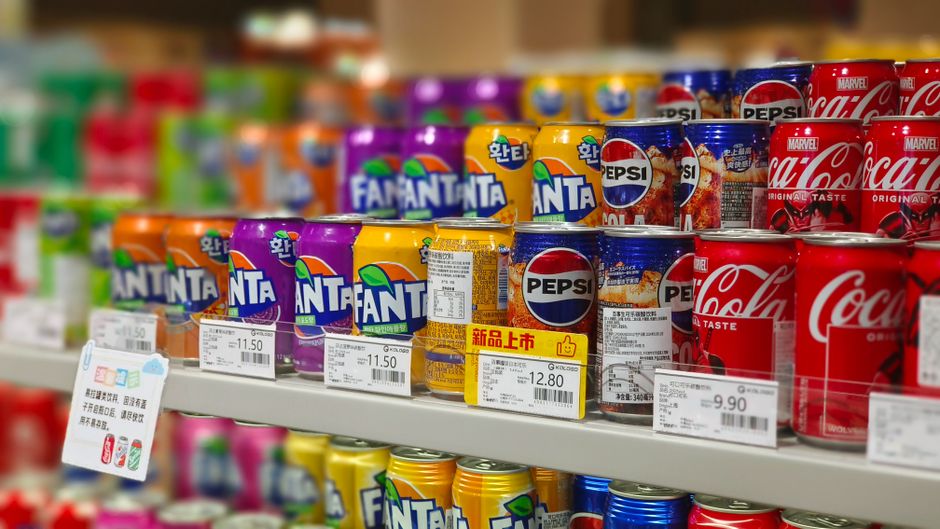
By 2021, Yuanqi Forest had achieved revenues of approximately RMB 7.5 billion ($1.05 billion) and a $6 billion Series D valuation. It reached 1 million retail points across China and began exporting to 40 countries. The brand forced Coca-Cola and PepsiCo to launch competing zero-sugar sparkling water lines in China within 18 months of its market entry.
What made Yuanqi Forest’s approach replicable: Tang Binsen, a former gaming executive, ran the business like a software product team — rapid prototyping, A/B testing on social media, real-time feedback loops, and iterative reformulation. This “internet methodology” applied to physical goods has since been adopted across the domestic FMCG sector.
Proya and the Beauty Nationalism Moment
In skincare and cosmetics, the domestic resurgence has been equally dramatic. Proya Cosmetics, listed on the Shanghai Stock Exchange, posted 2023 revenues of RMB 8.9 billion ($1.24 billion), a 37% year-over-year increase, while many international beauty brands reported declining China sales. Proya’s growth was driven by ingredient-led product development — its retinol and vitamin C “double anti” aging formula became a viral sensation on Douyin — and an aggressive livestream commerce presence that Western brands have struggled to match.
Brands like Perfect Diary, Florasis, and Judydoll collectively took share from L’Oreal, Estee Lauder, and Shiseido in the mass and mid-premium segments between 2020 and 2025. The mechanism: platform-native marketing through Xiaohongshu seeding and Douyin livestream, fast product iteration cycles measured in weeks, and price points calibrated for tier-two and tier-three city consumers.
Western beauty brands retain advantages in the luxury segment, men’s grooming (where domestic brands remain underdeveloped), and categories requiring internationally recognized clinical validation. Foreign companies that compete on genuine technical differentiation continue to perform. Those relying on brand heritage without product innovation adapted for Chinese preferences are losing ground.
Feihe and the Infant Formula Rebound
Perhaps nowhere has the domestic brand resurgence been more significant than in infant formula. Following the 2008 Sanlu melamine scandal, Chinese consumers abandoned domestic formula entirely. Feihe (China Feihe, 飞鹤) rebuilt trust through a specific claim: formula from Chinese fresh milk, designed for Chinese infants.
The company invested in traceable cold-chain supply infrastructure in Heilongjiang province, then marketed this provenance story relentlessly. By 2023, Feihe had revenues of approximately RMB 19.1 billion ($2.65 billion) and had overtaken Nestle to become the largest infant formula brand in China by value. Foreign formula brands still command premiums at the top end, but Feihe’s mid-premium positioning has captured the volume segment comprehensively.
What This Means for Western Companies
The domestic FMCG surge creates distinct implications depending on a company’s position in China.
For companies selling into China: The assumption that foreign origin automatically commands a premium is no longer reliable. Post-90s and post-95s consumers evaluate domestic and foreign brands on equal footing in most FMCG categories. Foreign brands that win in China today do so through superior consumer insight and local product adaptation. Joint ventures with domestic partners who understand channel dynamics and platform marketing remain among the most effective market entry structures — a topic covered in depth in our guide to how Western brands are navigating China’s luxury slowdown.
For companies sourcing from China: The same manufacturing and quality infrastructure enabling domestic brands to compete at premium price points is available to foreign companies for contract manufacturing and OEM production. China’s FMCG supply chain — packaging, ingredients, contract filling — has never been more sophisticated. As explored in our analysis of China’s printing and packaging industry, this supply chain depth creates significant advantages for foreign brands willing to leverage it.
For companies considering investment: Several high-growth domestic FMCG brands remain sub-scale internationally despite strong China positions. Cross-border distribution partnerships offer a route to access the product development and platform marketing capabilities Chinese brands have built. See our coverage of how Anta Sports and Li Ning went global for a model.
The Guochao Factor: More Than Sentiment
The guochao phenomenon deserves careful analysis rather than dismissal. Research suggests guochao preference is strongest in categories where Chinese consumers previously had negative quality experiences with domestic products and where domestic brands have now demonstrably improved. In other words, it is quality-driven as much as sentiment-driven.
China’s Ministry of Commerce has published multiple domestic brand cultivation guidance documents, reflecting a strategic priority unlikely to reverse regardless of trade conditions. Foreign companies in China need to plan around a competitive environment where domestic brands receive structural advantages — not as a temporary measure, but as long-term policy. The USTR’s China policy framework acknowledges these dynamics directly.
The rise of Chinese domestic FMCG brands is not solely a competitive threat narrative. Chinese FMCG companies are actively seeking partnerships with Western ingredient suppliers, flavor houses, fragrance companies, and packaging innovators. Categories like natural health ingredients, clinical skincare actives, and specialty food inputs see strong Chinese demand for Western-sourced products. For companies willing to engage China’s domestic sector as partners, the market dynamics of 2026 present genuine commercial upside — but only for those with the market intelligence and flexibility to act on it. Our analysis of how Lao Gan Ma built a global FMCG cult brand offers a useful template for the authentic brand storytelling that translates across markets.