
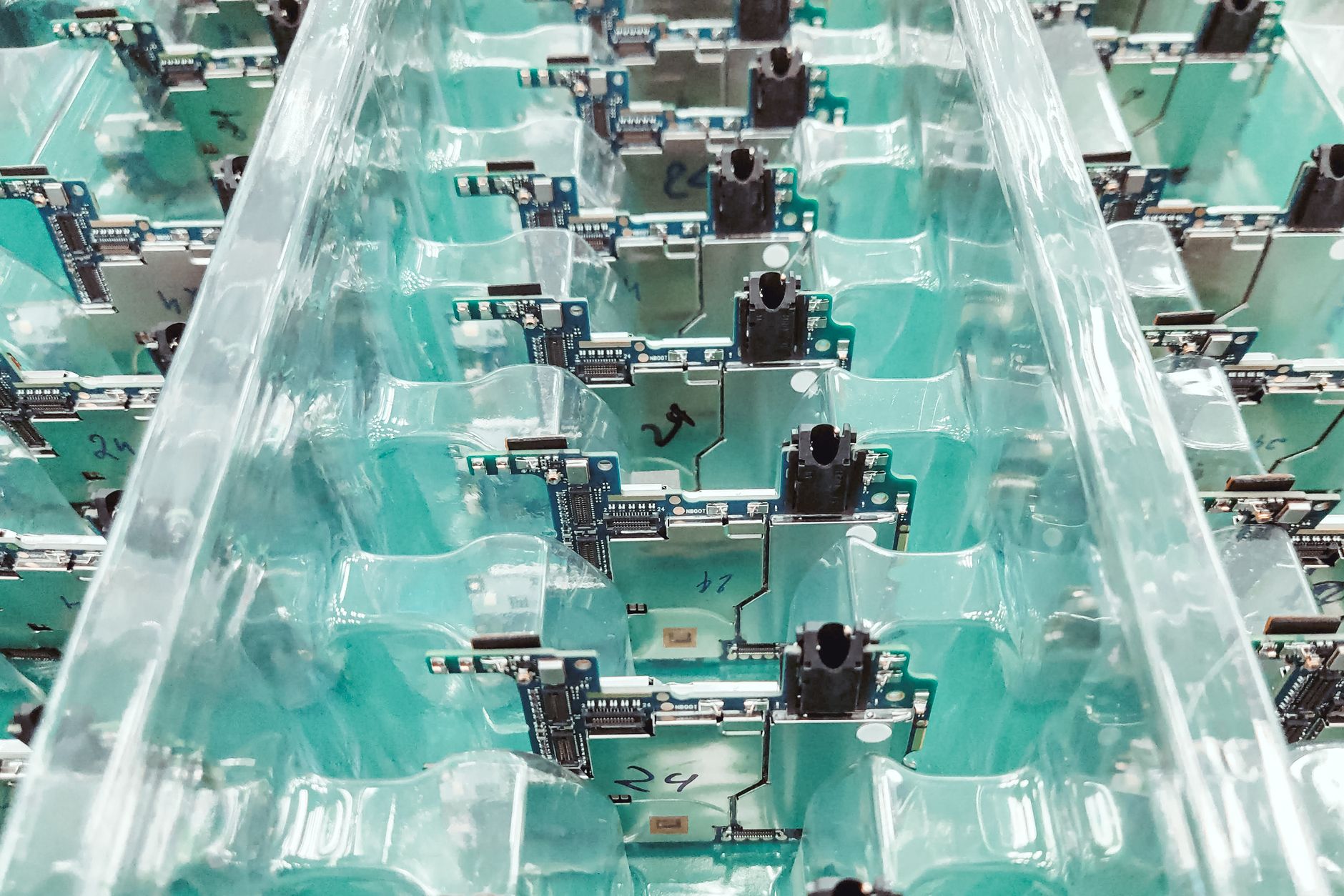
When Apple unveiled the original iPhone in 2007, it needed a manufacturing partner capable of assembling millions of precisely engineered devices at a price that made mass-market computing viable. It chose Foxconn — and in doing so, helped create one of the most consequential industrial partnerships in modern history. Nearly two decades later, Foxconn remains Apple’s single largest contract manufacturer. But the Foxconn of 2026 is a fundamentally different company from the one that built the first iPhone, and understanding that transformation is essential for any executive navigating global manufacturing strategy.
From Connector Maker to Global Manufacturing Colossus
Hon Hai Precision Industry Co., Ltd. — the legal name behind the Foxconn brand — was founded in 1974 in Tucheng, Taiwan, by Terry Gou. The company’s first product was a plastic channel-tuner knob for black-and-white televisions. By 2010, Foxconn had become the world’s largest contract electronics manufacturer, with more than 800,000 employees at its Longhua facility in Shenzhen alone — a campus so large it contains its own hospital, grocery stores, and fire station. The Longhua complex became the physical embodiment of the Shenzhen manufacturing miracle: a place where hardware innovation translated into production output at speeds and volumes previously unimaginable.
At its peak, Foxconn assembled more than 500,000 iPhones per day from its Zhengzhou facility — a production rate that required 350,000 workers, a dedicated freight rail spur, and a network of 40 component suppliers within a 10-kilometer radius. The mechanics of that achievement are covered in our piece on Foxconn and the iPhone Supply Chain: Contract Manufacturing at Scale. But the Foxconn story in 2026 is no longer primarily about iPhones.
The Apple Dependency Problem — and the Strategic Response
For most of the 2010s, Apple accounted for between 50 and 60 percent of Foxconn’s annual revenues. When Apple began diversifying its own supply chain after 2022 — shifting iPhone 14 and 15 production to India via Tata Electronics and Pegatron — Foxconn confronted a classic single-client dependency challenge. Its response, articulated by chairman Young Liu, is a “3+3” diversification framework: three emerging industries (electric vehicles, digital health, and robotics/AI) supported by three enabling technologies (artificial intelligence, semiconductor integration, and next-generation communications). The goal is not to walk away from electronics assembly, but to apply Foxconn’s core capacity-at-scale advantage to sectors where that capability has historically been absent.
The Electric Vehicle Bet: MIH and the CDMO Model
In 2020, Foxconn launched the MIH (Mobility in Harmony) EV Open Platform — a modular EV architecture designed to do for automobiles what Android did for smartphones. By 2026, more than 2,700 companies have joined the MIH Alliance, spanning tier-one automotive suppliers, software developers, and EV startups across Asia, Europe, and North America. The platform offers three core chassis sizes covering sedan, SUV, and commercial vehicle formats, with battery management systems and over-the-air update infrastructure included.
Foxconn has backed the platform with direct investments. In 2021, it acquired a 51 percent stake in Lordstown Motors’ Ohio manufacturing facility — its first North American EV production site — and subsequently announced vehicle assembly contracts under its FOXTRON brand. The company frames this as a “contract device manufacturer” (CDMO) model applied to automobiles: Foxconn builds vehicles under other brands’ names, just as it assembles iPhones under Apple’s. This strategy connects directly to the broader disruption underway in China’s automotive supply chain, where legacy Tier-1 and Tier-2 suppliers are adapting rapidly to EV-specific component demands.
AI Servers: The Higher-Margin Bet
Since 2023, Foxconn has become one of the world’s largest assemblers of AI server infrastructure — the high-density GPU clusters powering large language models and enterprise AI applications. Foxconn assembles AI server systems for Nvidia, with facilities in Taiwan and Guadalajara, Mexico, substantially expanded to serve hyperscalers including Microsoft, Google, and Amazon.
In fiscal year 2024, Foxconn’s cloud and networking product segment grew 46 percent year-over-year and overtook consumer electronics in gross profit contribution for the first time in company history. This is structurally different from iPhone assembly: while Foxconn’s net margin on Apple devices is estimated at 2 to 3 percent, AI server integration involves higher average selling prices, more complex work, and stronger pricing power. Management has guided for AI server revenue to reach NT$1 trillion ($31 billion USD) annually by 2027 — roughly 14 percent of projected total revenue.
Geographic Diversification: India, Mexico, and the China-Plus-One Reality
Foxconn’s manufacturing footprint in 2026 spans 30 countries, but its most strategically significant expansions are in India and Mexico. In India, Foxconn operates assembly facilities in Chennai and Bengaluru with capacity to produce approximately 20 million iPhones annually. The Indian government’s Production Linked Incentive (PLI) scheme, administered through Invest India, offers manufacturers up to 6 percent cash incentives on incremental electronics sales — and Foxconn is the largest single PLI beneficiary in mobile manufacturing.
In Mexico, Foxconn’s Guadalajara complex produces AI servers and networking equipment for US-based clients who require supply chains qualifying under the United States-Mexico-Canada Agreement (USMCA). This is a direct response to the tariff environment making China-origin manufacturing increasingly costly for US-market products — a dynamic analyzed in our US-China supply chain resilience guide.
What This Means for Sourcing Executives
Foxconn’s India facilities took six years to reach meaningful scale and required over $1.5 billion in infrastructure investment — and they still face component supplier ecosystem gaps that China’s industrial clusters do not. Companies planning supply chain diversification should build realistic multi-year timelines and assess ecosystem depth, not just facility headlines.
Semiconductor Ambitions: SiC and Advanced Packaging
Foxconn’s semiconductor push is targeted rather than sweeping. The company has focused on silicon carbide (SiC) power semiconductors — critical components in EV powertrains and AI server power delivery — where downstream manufacturing relationships provide structural sourcing advantages. In 2022, Foxconn acquired a 12-inch SiC wafer facility in Taiwan and established a joint venture with Yageo Corporation to expand SiC substrate supply. The logic is vertical integration: controlling a portion of the SiC supply chain reduces external dependency across both Foxconn’s EV assembly and AI server businesses simultaneously.
Looking Ahead
Terry Gou built Foxconn into the world’s largest contract manufacturer by understanding one principle: that the ability to produce at massive scale, at consistent quality, at predictable cost, is itself a world-class competitive advantage. Young Liu is now applying that principle to EVs, AI servers, and semiconductors. Whether Foxconn captures the market share it targets in these new categories remains an open question. But the company’s willingness to redeploy its operational DNA into new industries — rather than simply defending its existing position — makes it one of the most important companies to watch in global manufacturing strategy. For anyone tracking where physical supply chains are heading, Foxconn is not just a contract manufacturer. It is a leading indicator.