
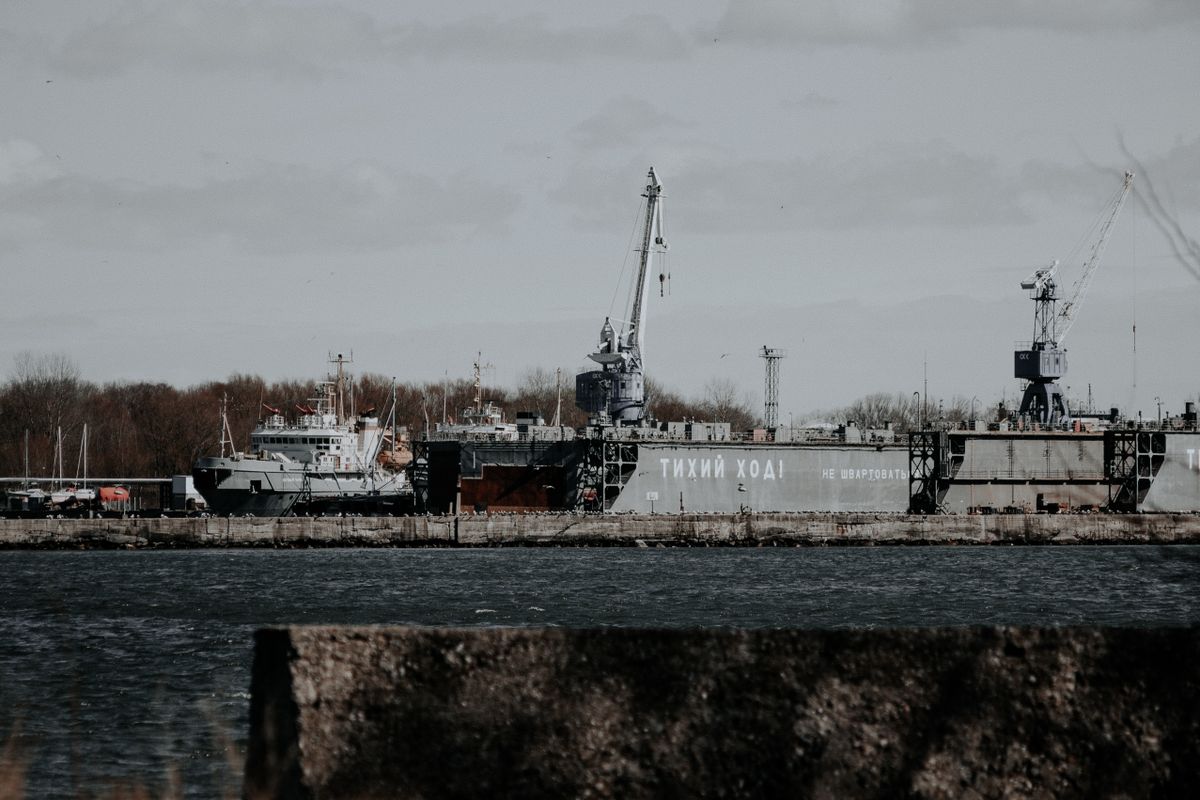
In 2024, China’s shipyards delivered more gross tonnage than the rest of the world combined — for the third consecutive year. Behind that statistic sits a strategic industrial transformation three decades in the making, anchored by two titanic state enterprises: China State Shipbuilding Corporation (CSSC) and COSCO Shipping Group, whose combined footprint now extends from the drydocks of Shanghai to deepwater terminals in Rotterdam and Long Beach.
For Western importers, freight operators, and supply chain executives, understanding how this dominance was built — and what it means for global maritime trade — is no longer optional background knowledge. It is operational intelligence.
The Scale That Defines the Industry
China’s shipbuilding industry held approximately 55% of global new orders by gross tonnage in 2024, according to Clarksons Research. South Korea accounted for roughly 26%, Japan around 14%, and the rest of the world shared the remainder. These are not temporary conditions. They reflect structural advantages in steel production, labor costs, government financing, and vertically integrated supply chains that have compounded over two decades.
CSSC — formed in 2019 through the merger of China Shipbuilding Industry Corporation (CSIC) and the original China State Shipbuilding Corporation — is the world’s largest shipbuilding conglomerate by capacity. Its subsidiaries include Jiangnan Shipyard in Shanghai, Hudong-Zhonghua Shipbuilding, and CSSC Offshore and Marine Engineering. The group employs more than 300,000 people and posted revenues exceeding 350 billion RMB (approximately $48 billion) in 2023.
CSSC builds virtually every category of commercial vessel: ultra-large container ships, very large crude carriers (VLCCs), bulk carriers, LNG tankers, car carriers, and ferry vessels. It is also the primary builder of China’s naval fleet — a dual-use capacity that gives Beijing strategic leverage in global shipping infrastructure discussions.
The COSCO Dimension: From Carrier to Maritime Empire
While CSSC builds ships, COSCO Shipping runs them — and invests in the infrastructure that moves cargo globally. COSCO Shipping Holdings operates the world’s fourth-largest container fleet, with over 500 vessels and approximately 3 million TEU capacity as of 2025. Its parent group also controls COSCO Shipping Ports, which holds equity stakes in terminals across Asia, Europe, the Middle East, and the Americas.
The strategic significance is clearest in Europe. In 2016, COSCO acquired a controlling stake in Greece’s Port of Piraeus, later expanding to majority ownership. Piraeus became the busiest container port in the Mediterranean within five years. COSCO now holds terminal stakes in Antwerp, Valencia, Vado Ligure (Italy), and Khalifa Port in Abu Dhabi, among others. For US importers routing cargo through European transshipment hubs, there is a meaningful probability the terminal handling your container is COSCO-affiliated.
How China Built the Shipbuilding Ecosystem
Three enabling factors drove China’s shipbuilding surge:
Steel availability and cost. China’s steel industry, anchored by Baowu Steel Group — the world’s largest producer at over 130 million tonnes per year — supplies shipbuilding-grade plates at prices structurally below international market rates. Baowu supplies CSSC subsidiaries under long-term agreements that compress material costs compared to Korean and Japanese competitors.
State financing. China Development Bank and Export-Import Bank of China offer buyers of Chinese-built vessels preferential financing, often at below-market rates, as part of broader commercial diplomacy. This makes Chinese yards competitive not just on price but on total cost of ownership for shipping companies worldwide.
Workforce scale. China’s maritime vocational training system produces tens of thousands of skilled welders, marine engineers, and naval architects annually at labor costs a fraction of those in South Korea or Europe, enabling round-the-clock production cycles that compress delivery timelines.
The LNG Tanker Breakthrough
Perhaps the most consequential recent milestone is China’s mastery of liquefied natural gas (LNG) carrier construction — previously a near-exclusive preserve of South Korean yards. Hudong-Zhonghua Shipbuilding delivered China’s first large domestically built LNG carrier in 2022. Since then, CSSC has secured orders for more than 80 LNG carriers, with a backlog extending through 2028.
The driver is explicit: China is the world’s second-largest LNG importer, and Beijing views dependence on foreign-built tankers as a strategic vulnerability. For Western energy companies and LNG traders, Chinese yards are now a credible competitive alternative to Korean builders for long-term fleet planning.
Green Shipping: China’s Next Competitive Front
The IMO’s 2023 Greenhouse Gas Strategy set a net-zero target for shipping by 2050, triggering a race to develop alternative-fuel vessels. China is positioning aggressively. CSSC has signed methanol dual-fuel ship construction agreements with Maersk for eight vessels. Yangzijiang Shipbuilding, a privately listed yard based in Jiangyin, Jiangsu, has become one of the world’s leading builders of methanol-ready vessels, with an order backlog exceeding $14 billion in 2024.
China’s structural advantage in green shipping is real: it is the world’s largest methanol producer, has a government mandate to accelerate green shipping under the 14th Five-Year Plan, and is integrating with domestic battery technology companies for hybrid propulsion in short-sea vessel applications.
What Western Companies Need to Know
Several practical implications follow for Western businesses operating in or adjacent to the global shipping ecosystem:
The container ship orderbook is overwhelmingly Chinese. The global orderbook for container ships as of early 2026 stands at roughly 22% of the existing fleet, and Chinese yards hold the majority. Within five to seven years, most vessels on the transpacific route will have been built in China. This is not a risk in stable trade conditions. In a scenario of severe bilateral tension, the concentration becomes a vulnerability with no quick substitute.
Port infrastructure ownership matters for due diligence. Companies routing cargo through Mediterranean, Middle Eastern, or Southeast Asian ports should understand whether terminal operators are COSCO-affiliated. Operationally, COSCO-managed terminals perform at global standards — but supply chain risk frameworks increasingly require ownership disclosure.
US regulatory scrutiny is intensifying. The US Maritime Administration and the Office of Naval Intelligence have published formal assessments of Chinese shipbuilding capacity and strategic implications. Executive orders from 2024 and subsequent 2026 policy reviews signal that US port fees, shipbuilding incentives, and procurement rules for government-contracted cargo are being restructured to reduce Chinese maritime dependence. Businesses with significant government or defense-related supply chains should track these developments closely through MARAD’s official guidance.
Bilateral commercial opportunity is substantial. US and European marine equipment manufacturers — navigation systems, propulsion components, safety equipment, marine electronics — supply Chinese shipyards at meaningful volume. Chinese yards are large, technically sophisticated, cash-rich customers. CSSC’s official procurement portal is the primary channel for foreign supplier qualification. The opportunity is to deepen those commercial ties on the basis of genuine technical partnership.
China’s shipbuilding dominance, like its semiconductor ambitions and EV success, was the product of deliberate industrial policy, patient capital, and institutional coordination at a scale that market economies find structurally difficult to replicate. Understanding how that model works — rather than simply reacting to its outcomes — is the baseline competency for any serious participant in global maritime trade.
Official data: The US Department of Commerce tracks shipbuilding and maritime trade statistics relevant to US-China commercial relations at commerce.gov/ita/transportation-and-machinery.
Related reading: China’s Ports and Logistics Infrastructure | COSCO Shipping: China’s Maritime Trade Force | CIMC and the Global Container Industry | Baowu Steel and China’s Commodity Markets