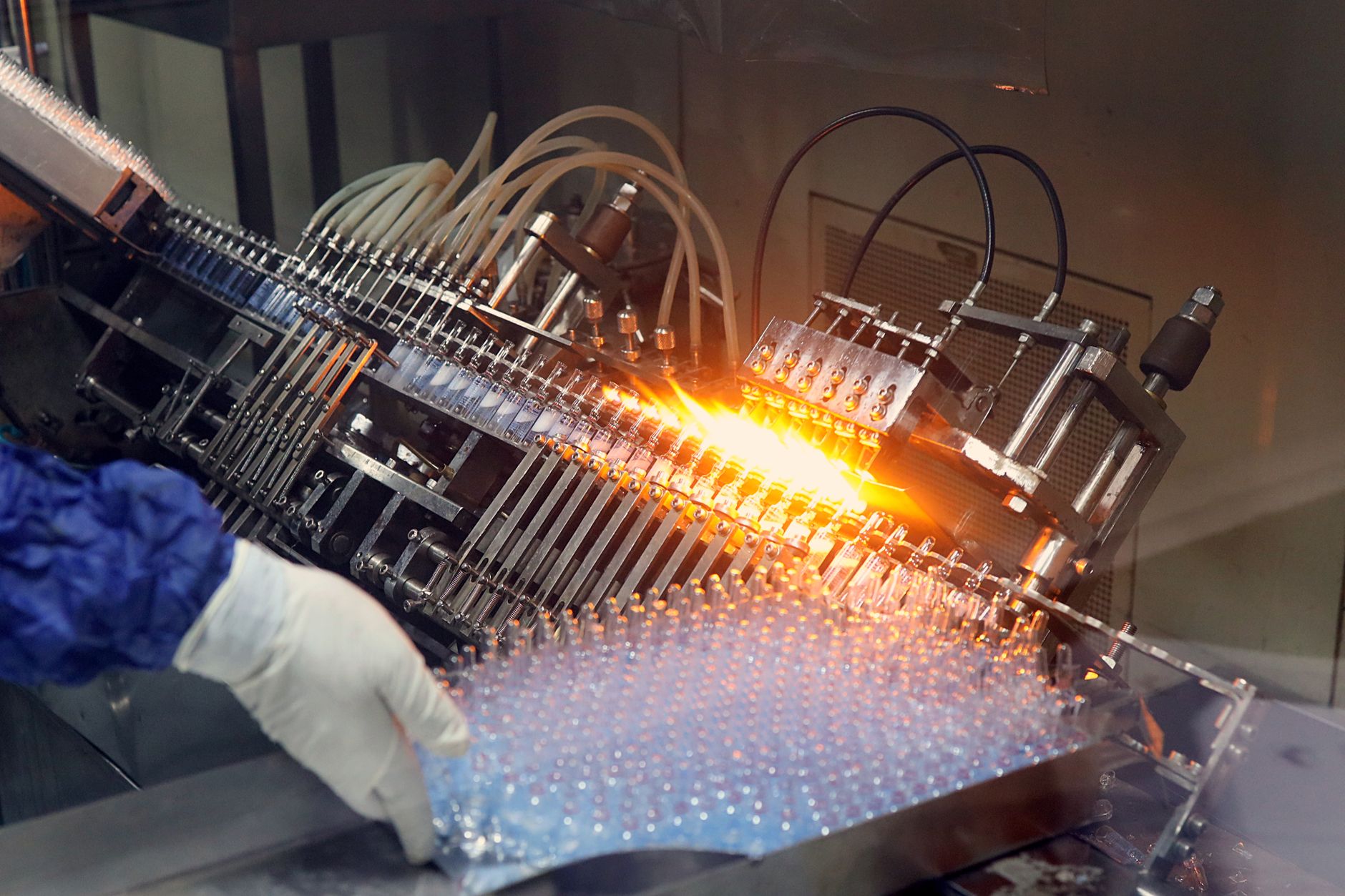
Walk through any hospital in the developing world and there is a strong chance the antibiotics, cardiovascular drugs, or anti-retrovirals in its pharmacy were manufactured in China. Walk through a biotech campus in Shanghai’s Zhangjiang Hi-Tech Park and you will find scientists running Phase III trials for biologics competing in American and European markets within this decade. These two realities define China’s pharmaceutical industry in 2026 — bulk chemistry and frontier innovation — and understanding both is essential for any professional operating at the intersection of global health and trade.
China is the world’s largest producer of active pharmaceutical ingredients (APIs), accounting for roughly 40% of global API supply by volume. It is the second-largest pharmaceutical market by sales. And it is now the fourth-largest source of new drug approvals globally, a position it did not hold as recently as 2015. The transformation has been fast, deliberate, and consequential for Western drug makers, healthcare systems, and trade negotiators alike.
The API Foundation: How China Became the World’s Pharmacy Workshop
The story begins not with innovation but with chemistry. In the 1980s and 1990s, Chinese manufacturers discovered that their combination of low-cost labor, abundant raw materials, and cost-competitive production gave them a decisive advantage in the chemical building blocks that go into finished drugs. APIs for antibiotics were among the first to migrate. By the early 2000s, China had become the dominant global source for paracetamol, vitamin C, heparin, and the majority of penicillin compounds.
The numbers are striking. China produces approximately 90% of the world’s ibuprofen supply and 70% of acetaminophen. It provides roughly 80% of the APIs used by Indian generic drug manufacturers, who in turn supply much of the medicine sold in Western pharmacies. This nested dependency received uncomfortable public attention during the COVID-19 pandemic, when supply chain fragility became a strategic concern for governments on both sides of the Atlantic.
Key companies in this space include CSPC Pharmaceutical Group, based in Shijiazhuang, which operates some of the world’s largest penicillin manufacturing facilities. Zhejiang Huahai Pharmaceutical became globally known — for the wrong reasons — when its valsartan API was found to contain a carcinogenic impurity in 2018, triggering one of the largest drug recalls in US FDA history. The episode was a turning point: it forced Chinese API producers to invest heavily in quality management systems and persuaded Western regulators to increase inspection frequency at Chinese facilities.
The Innovation Pivot: From Generics to Global Biotech
The most consequential shift over the past decade is not in generics but in innovation. In 2015, China’s National Medical Products Administration (NMPA) initiated sweeping regulatory modernization, streamlining clinical trial approvals and granting breakthrough drug designations for the first time. Chinese companies began appearing on the global stage as genuine innovators rather than copy-cats.
BeiGene is the most prominent example. Founded in 2010 with offices in Beijing and California, BeiGene developed zanubrutinib (Brukinsa), a BTK inhibitor for blood cancers that received full US FDA approval in 2023. Its global revenue exceeded $3.5 billion in 2024. Zai Lab, Gracell Biotechnologies (acquired by AstraZeneca in 2024 for $1.2 billion), and Hutchmed are among the companies demonstrating that Chinese-origin drugs can achieve international regulatory approval on merit. In the CAR-T cell therapy space, Nanjing Legend Biotech’s ciltacabtagene autoleucel — co-developed with Johnson & Johnson as Carvykti — is now approved in both the US and Europe.
China’s biotech pipeline also benefits from extraordinary data advantages. With 1.4 billion people and an increasingly integrated electronic health records system, Chinese researchers have access to patient datasets unavailable in smaller countries. This asymmetry is showing up in oncology, rare disease research, and drug discovery derived from traditional Chinese medicine compounds.
Government Policy as Accelerator
Beijing’s 2016 quality consistency evaluation program required generic drugs to demonstrate bioequivalence to branded originals. Before this reform, China’s domestic generics were often manufactured to lower standards than those produced for export. The program forced consolidation: thousands of substandard manufacturers were shut down, and the survivors emerged with world-class production facilities. A subsequent volume-based procurement (VBP) system drove prices down by 50 to 90% for many drug classes. Foreign branded companies including Pfizer, AstraZeneca, and Novartis lost significant hospital market share as a result — a dynamic that Western healthcare companies entering China’s market must understand from the outset.
Regulatory Harmonization and International Access
One of the least-reported but most consequential developments is China’s 2017 accession to the International Council for Harmonisation (ICH) as a regulatory member. In practice, this means clinical trial data generated in China is increasingly accepted by Western regulators, and vice versa. The NMPA’s 2023 announcement accepting foreign clinical trial data for serious conditions — without requiring separate China-based trials — reduced the time and cost for foreign drugs to enter China significantly. The NMPA’s English-language portal now provides regulatory guidance and approval announcements that Western companies should monitor regularly.
This harmonization trajectory will accelerate over the next five years. A drug approved by the NMPA is increasingly a credible precursor to FDA or EMA submission — a shift that makes Chinese biotech pipelines substantially more valuable to Western acquirers and licensees.
The Trade Tension: API Dependency, Tariffs, and Export Controls
The pharmaceutical sector sits at the intersection of the most sensitive US-China friction points. Since 2020, multiple US congressional bills have debated restricting or mandating disclosure of Chinese API sourcing in federally purchased drugs. China’s own export control framework adds complexity: in 2023, Beijing placed certain chemical precursors used in pharmaceutical manufacturing under export licensing requirements, signaling that API supply could be wielded as a trade lever.
On tariffs, Chinese pharmaceutical products face a shifting landscape. The Section 301 tariffs initially exempted most pharmaceutical products, but subsequent executive actions brought some chemical precursors into scope. Western importers should consult current US Trade Representative guidance on pharmaceutical trade and engage customs counsel before assuming any Chinese pharmaceutical product remains duty-exempt.
The Partnership Opportunity Western Companies Are Missing
Despite the geopolitical noise, the commercial case for US-China pharmaceutical collaboration remains strong. A drug that costs $2 billion to develop in the United States can often be taken through Phase II trials in China for under $200 million, due to lower clinical trial costs and a regulatory environment that now accepts global multi-center trial data. This cost differential is driving a wave of licensing deals.
AstraZeneca, which generates approximately 15% of its global revenue from China, has been the most aggressive Western pharma in building a China-integrated innovation model — running clinical trials in China, partnering with local biotechs, and establishing its global R&D center in Shanghai. Eli Lilly, Pfizer, and Roche have all expanded their China discovery partnerships. China’s outbound M&A and licensing evolution in life sciences mirrors the broader pattern of Chinese industry moving from acquisition to partnership as its own capabilities mature.
For smaller Western biotechs without capital to run global trials, a China licensing deal can provide the milestone payments needed to fund development elsewhere. The key negotiating considerations are data rights, territory exclusivity, regulatory submission ownership, and intellectual property protection — a concern that remains valid but is meaningfully lower-risk now than a decade ago, particularly for large-molecule biologics where manufacturing know-how is itself a form of protection.
The pharmaceutical industry is not an exception to China’s industrial upgrading story — it is one of its most advanced chapters. Companies that engage with it seriously will find both risk and remarkable opportunity in equal measure.