
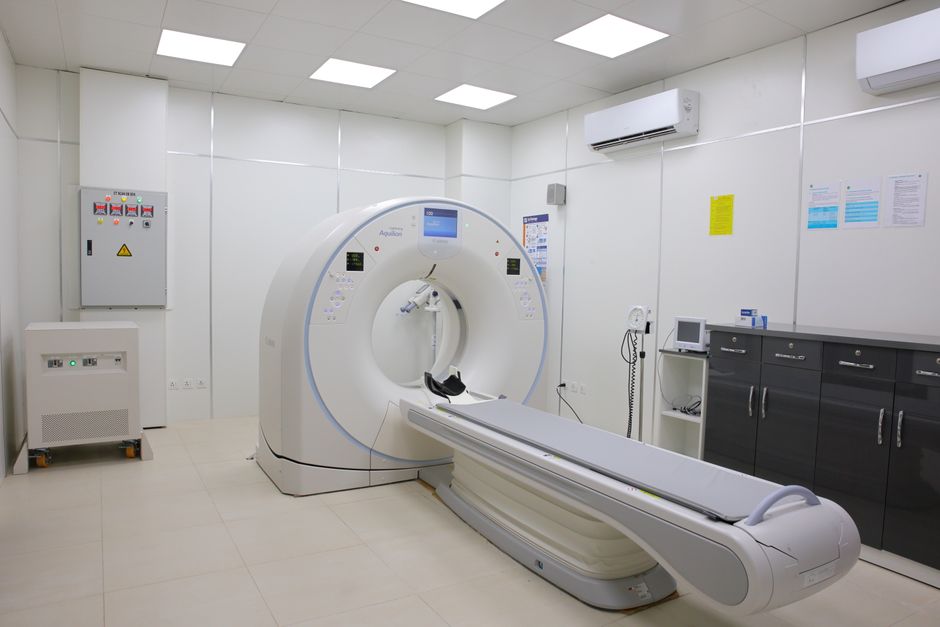
In 2010, China’s medical device market was worth roughly $12 billion. By 2024, it had grown to an estimated $110 billion, making it the second-largest medical device market in the world. More critically, China is no longer simply the world’s largest buyer of medical equipment — it has become one of its most formidable manufacturers and exporters. For Western healthcare companies, whether they sell into China, source from it, or compete against Chinese rivals in third markets, this transformation is not a future scenario. It is the current reality.
From Import Dependence to Domestic Dominance
As recently as 2015, China imported the majority of its high-value medical equipment. CT scanners, MRI machines, and surgical robots came predominantly from Siemens Healthineers, GE HealthCare, and Philips — a trio so dominant they earned the informal nickname “GPS” among Chinese hospital procurement officers. Foreign firms enjoyed premium pricing and strong hospital relationships.
The shift accelerated under “Made in China 2025,” which explicitly targeted medical devices as a strategic sector. The government funded domestic R&D, pushed state hospitals to preference domestic purchases, and streamlined NMPA (National Medical Products Administration) approval pathways for Chinese manufacturers. Domestic market share for CT scanners produced by Chinese companies rose from under 20% in 2015 to over 60% by 2023, according to Frost & Sullivan data.
The Companies Driving the Shift
Three companies define China’s medical device manufacturing ambitions. Mindray Medical (迈瑞医疗), founded in Shenzhen in 1991, posted 2023 revenues of approximately RMB 34.9 billion ($4.8 billion) and is now ranked among the top ten medical device companies globally. Its patient monitors, in vitro diagnostics systems, and imaging equipment are sold in over 190 countries, displacing Western brands in emerging markets on price-to-performance grounds. Mindray spent roughly 10% of revenue on R&D in 2023 — a figure that signals deliberate movement up the value chain, not cost-cutting competition.
United Imaging Healthcare (联影医疗), founded in 2011 and headquartered in Shanghai, targeted the most technically demanding segment: high-end CT, MRI, PET-CT, and radiotherapy systems. By the time of its 2022 Shanghai Stock Exchange listing, United Imaging had installed over 11,000 units in more than 50 countries. Its uMR Jupiter 5T MRI system attracted international clinical attention for its field strength and image quality. Western hospital procurement teams that dismissed Chinese imaging equipment five years ago are now conducting head-to-head technical evaluations against United Imaging systems.
Beyond these two, a deep second tier has emerged: Neusoft Medical in CT and MRI; Lepu Medical (乐普医疗) in cardiovascular devices; MicroPort Scientific (微创医疗) in orthopedics and surgical robotics. MicroPort’s acquisition of Wright Medical’s orthopedics division gave it genuine global distribution. China is building a complete domestic industry stack, not a single champion.
Policy as Market Architecture
Understanding China’s medical device industry requires understanding the government policy that shaped it. China’s volume-based procurement (VBP) program — initially focused on pharmaceuticals — has been extended to devices. Under VBP, provincial or national procurement pools negotiate massive contracts with manufacturers, driving prices down sharply in exchange for guaranteed sales volumes. The first national VBP round for coronary stents in 2020 cut average stent prices by approximately 93%, from around RMB 13,000 to under RMB 700. Foreign stent manufacturers who had built China businesses on premium pricing were priced out of the state hospital channel nearly overnight.
VBP effects extend beyond price. It creates accelerated certification pathways for domestic manufacturers, and it establishes domestic products as the default in state hospitals. Foreign companies seeking hospital access must now compete primarily through premium private hospitals and academic medical centers with international affiliations — a significantly narrower commercial footprint than a decade ago.
Export Ambitions: Where Chinese Devices Are Going
China’s medical device exports grew at roughly 15% per year over the past five years, reaching approximately $26 billion in 2023 according to China’s General Administration of Customs. The primary destinations are Southeast Asia, the Middle East, Africa, and Latin America — markets where price sensitivity is high, where Chinese companies can leverage diplomatic and Belt and Road commercial relationships, and where Western multinationals have historically underinvested in service infrastructure.
Mindray’s performance in Southeast Asia illustrates the export playbook. In Indonesia, Vietnam, and the Philippines, Mindray built direct subsidiaries, invested in local biomedical engineer training, and matched Western competitors on after-sales service. The combination of competitive pricing and credible service infrastructure converted price-sensitive procurement officers into repeat customers. Indonesian public hospitals now deploy Mindray patient monitors at significant scale.
FDA 510(k) clearance and EU MDR compliance remain harder, requiring clinical data and quality system investment that smaller manufacturers lack. But Mindray, United Imaging, and MicroPort are navigating FDA and EU processes actively. United Imaging’s PET-CT systems are FDA-cleared. The leading Chinese medical device companies are entering Western markets methodically.
What This Means for Western Companies
Western healthcare companies face three strategic challenges depending on their position.
Selling into China: The premium pricing window based on brand alone is largely closed in standard equipment categories and narrowing in mid-range imaging. Success requires genuine localization — local manufacturing partnerships, participation in VBP programs, and investment in Chinese clinical evidence. Companies like Siemens Healthineers and GE HealthCare have responded by deepening local manufacturing commitments (GE operates facilities in Beijing and Wuxi; Siemens has a major plant in Shenzhen). Pure import models are losing share systematically.
Sourcing components from China: China remains a dominant supplier of medical device components — PCBs, injection-molded plastics, optical components, and electronic subassemblies. Supply chain resilience has become a board-level concern following COVID-19 disruptions and escalating geopolitical tension. Western manufacturers should recognize that today’s contract component supplier may be tomorrow’s direct competitor in emerging markets. The rare earth dependency that affects semiconductors also applies to permanent magnets used in MRI systems — proactive dual-sourcing and IP protection strategies are essential.
Competing in third markets: Chinese medical device companies are not competing on low quality at low prices. They are competing on adequate-to-good quality at significantly lower prices, backed by increasingly competent service infrastructure. Relying on quality differentiation alone will prove insufficient. The competitive dimensions that matter are total cost of ownership, service availability, clinical training support, and financing terms — areas where Chinese companies can be formidable.
Regulatory and Compliance Considerations
China’s NMPA has undergone significant reform since 2017, implementing a risk-based classification system and aligning technical standards with IMDRF international norms. This alignment reduces (though does not eliminate) the documentation burden for dual registration. However, data localization requirements under China’s Personal Information Protection Law create real constraints for connected devices that collect patient data. Digital health products — remote monitoring systems, AI-assisted diagnostic tools — face a complex compliance environment. The NMPA’s English-language regulatory portal provides authoritative policy documents.
On the US side, transactions involving Chinese medical device companies trigger potential CFIUS review for investment activities and EAR export control analysis for technology transfers. The FDA’s Digital Health Center of Excellence maintains current guidance on cybersecurity requirements for connected devices — requirements with direct implications for Chinese-manufactured products entering the US market.
Parallel Lessons From Other Chinese Industries
The trajectory of China’s medical device sector mirrors patterns visible in industries that completed their globalization cycle earlier. China’s solar panel industry moved from importing German and American equipment to controlling over 80% of global module manufacturing capacity within roughly fifteen years — a story detailed in our analysis of China’s solar dominance. The semiconductor sector is undergoing a similar push, as covered in our piece on SMIC and China’s chip ambitions. Medical devices are further along this curve than chips and less constrained by advanced lithography requirements.
The consistent lesson from these industries: Western companies that engaged early and strategically — building local partnerships, investing in China-specific clinical evidence, developing local talent pipelines — maintained meaningful market positions even as competitive dynamics shifted. Those that treated China as an export market requiring minimal local investment were displaced fastest.
The Bilateral Opportunity
The rise of Chinese medical device manufacturing is not purely a competitive threat. Chinese hospitals manage disease burden at a scale unmatched anywhere in the world, generating clinical data and real-world evidence of significant scientific value to device developers globally. Chinese AI-health companies have developed diagnostic algorithms trained on datasets that Western companies cannot easily replicate. In specific segments — AI-assisted radiology, point-of-care diagnostics, hospital management software — Chinese partners offer capabilities that accelerate product development timelines meaningfully.
For Western healthcare executives building their China strategy in 2026, the starting point is an honest assessment of where Chinese competitors actually stand in their specific product category — not where they stood five years ago. The gap has closed faster than most Western boardrooms anticipated. Closing that intelligence gap is the prerequisite for every strategic decision that follows.