In February 2022, Genshin Impact — a mobile and PC role-playing game developed by a Shanghai studio with fewer than 700 employees at launch — crossed $3 billion in global revenue in just 18 months. The studio behind it, miHoYo (now HoYoverse), had been founded in 2012 by three graduates of Shanghai Jiao Tong University with roughly $10,000 in startup capital. No Western publisher was involved. No venture capital from Silicon Valley. The game reached 50 million downloads in its first week, outperforming console titles from studios with 10 times the headcount.
That story is not an anomaly. It is a pattern. China’s game industry, long viewed in the West as a copycat market for pirated foreign titles, has quietly become one of the most sophisticated creative and technical ecosystems on the planet — and it is now exporting that sophistication globally. Understanding what happened, and what it means for business, requires looking beyond the headlines about censorship and into the actual competitive mechanics that produced companies like NetEase, HoYoverse, and Lilith Games.
The Scale of China’s Game Market
China is the world’s largest gaming market by revenue. In 2023, the domestic game market generated approximately RMB 303 billion (roughly $42 billion USD), according to data from the China Audio-Video and Digital Publishing Association (CADPA). Mobile games account for over 70 percent of that figure. The market has roughly 670 million active gamers — a player base larger than the entire population of the United States and European Union combined.
This scale created infrastructure that foreign markets lacked for years: ultra-low-latency mobile networks, mature in-app payment rails through WeChat Pay and Alipay, and a hyper-competitive domestic publishing environment that forced studios to iterate faster and monetize more cleverly than their Western counterparts. The games that survived the Chinese market were, by definition, built to compete globally.
That competitive pressure also shaped the business model. China’s top studios pioneered the gacha monetization mechanic — a loot-box-style system that drives recurring revenue — and refined it to a degree of psychological and actuarial sophistication that Western developers are still catching up to. The free-to-play model was not invented in China, but it was perfected there.
NetEase: The Other Giant
When Western observers think of Chinese gaming, they typically think of Tencent — and for good reason. Tencent’s gaming portfolio spans Riot Games (League of Legends), Supercell (Clash of Clans), and partial stakes in Epic Games, Activision Blizzard, and Ubisoft. It is one of the largest game publishers on earth by revenue.
But NetEase — Tencent’s primary domestic rival — tells an equally important story. Founded in 1997 by Ding Lei in Guangzhou as an email and portal service, NetEase pivoted to gaming in the early 2000s by licensing Blizzard Entertainment’s titles for China. The Blizzard partnership — which included World of Warcraft, Diablo, Hearthstone, and Overwatch — ran for nearly two decades and gave NetEase deep expertise in operating Western IP at Chinese scale.
When that partnership ended abruptly in January 2023, NetEase did not retreat. It accelerated. The company had spent years building its own IP portfolio: Fantasy Westward Journey, Knives Out, and Identity V are all original NetEase properties with hundreds of millions of players. NetEase’s 2023 annual revenue reached approximately RMB 103 billion ($14.2 billion), with gaming contributing the majority. Its overseas game revenue grew over 30 percent year-over-year as titles like Naraka: Bladepoint and Marvel Rivals gained traction in Western markets.
NetEase’s overseas push is also a talent acquisition story. The company has opened studios in Seattle, Montreal, and Tokyo, hiring veteran Western developers with major IP experience. Its 2021 acquisition of Quantic Dream — the studio behind Detroit: Become Human — gave it credibility in the premium narrative game space that few Chinese publishers had previously reached.
HoYoverse and the Rise of Independent Chinese Studios
miHoYo’s international rebranding as HoYoverse in 2022 was not merely cosmetic. It signaled an explicit global strategy. Genshin Impact’s success was followed by Honkai: Star Rail in 2023, which generated over $500 million in its first six months. A third major title, Zenless Zone Zero, launched in 2024. Each game is released simultaneously in Chinese, English, Japanese, and Korean — a localization and cultural fluency that reflects years of investment.
HoYoverse’s model is instructive. The company built original characters, lore, and game mechanics from scratch, using anime aesthetics to appeal to a global audience while embedding Chinese cultural elements — architecture, mythology, music — in ways that feel natural. The result is a game that performs equally well in Tokyo, Los Angeles, and Jakarta.
Lilith Games, another Shanghai studio, followed a similar path. Its strategy game Rise of Kingdoms and idle RPG AFK Arena were built from the outset for global markets, with marketing campaigns run through Facebook, YouTube, and regional influencers rather than Chinese domestic channels. By 2021, Lilith ranked among the top five Chinese mobile publishers by overseas revenue, having generated over $1 billion in international sales.
The Regulatory Dimension: How Licensing Rules Shaped the Industry
No honest analysis of China’s game industry omits the regulatory environment. The National Press and Publication Administration (NPPA) controls game publishing licenses in China. All games — domestic and foreign — must receive an ISBN-equivalent approval before monetization. From late 2021 to April 2022, the NPPA issued no new licenses at all, creating a nine-month freeze that wiped billions from Tencent’s and NetEase’s market valuations. New rules restricted minors to three hours of gaming per week and required real-name registration across all platforms.
While disruptive, the licensing system has produced an ironic structural effect: studios that survive it develop compliance frameworks and government-relations capabilities that transfer well to other regulated markets. For foreign companies seeking entry, the process typically takes 12 to 18 months, requires a Chinese publishing partner, and involves content review that may mandate alterations to characters or narrative elements. The U.S. Department of Commerce maintains resources on technology transfer and market access considerations relevant to joint ventures in this space.
Esports and the Commercial Infrastructure Around Gaming
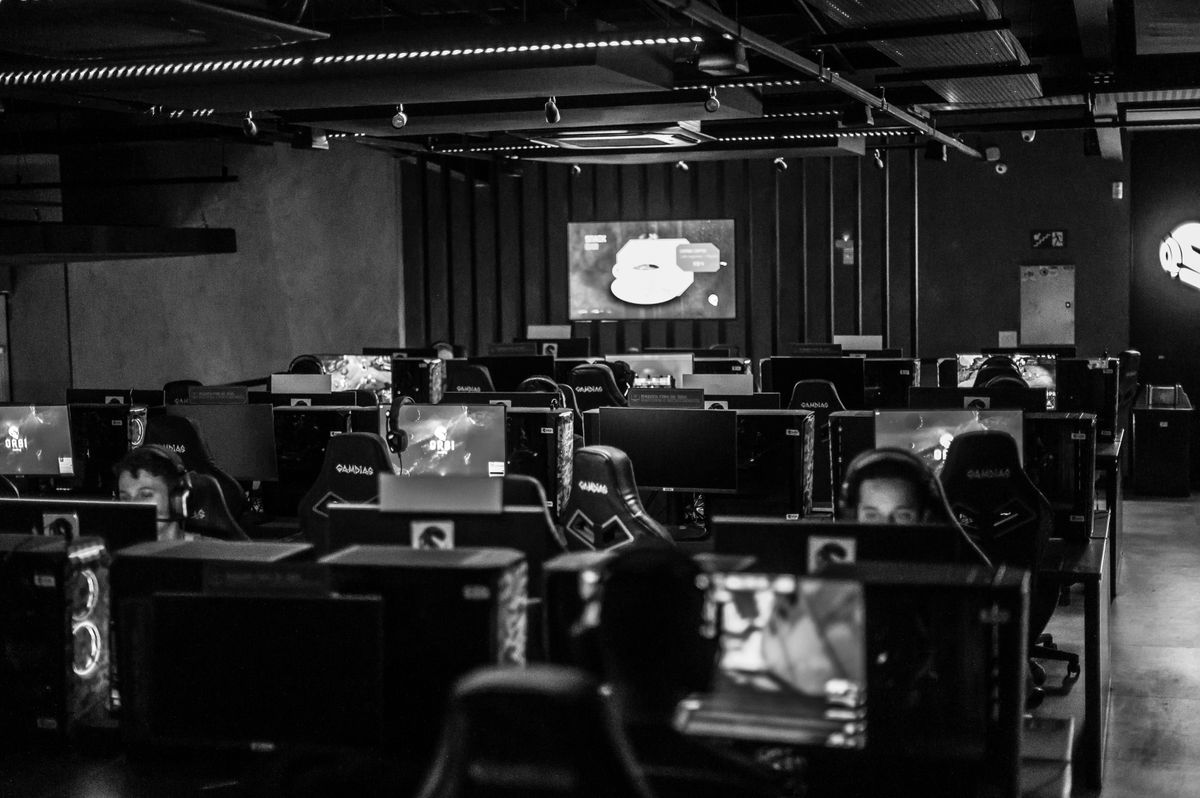
China’s game industry does not end at game sales. The esports ecosystem that has grown around titles like Honor of Kings (250 million registered players), League of Legends, and PUBG Mobile represents a parallel commercial infrastructure of considerable scale. China hosts more professional esports teams, tournament venues, and branded training facilities than any other country.
Cities like Shanghai, Chengdu, and Hangzhou have invested heavily in esports districts and arenas. Hangzhou became the first city to include esports as an official competitive event at the 2023 Asian Games — a milestone that gave the industry legitimacy previously reserved for traditional sport. Team sponsorships, broadcast rights, merchandise, and in-game brand integrations are increasingly attractive to Western brands targeting China’s 18-35 digital demographic. Nike, Red Bull, and Mastercard have all built esports sponsorship programs in China.
What Western Businesses Should Watch
For Western companies, China’s game industry matters on three distinct levels. First, as a competitive threat: Chinese studios are now winning market share in the United States, Europe, and Southeast Asia with titles that are better-localized, more aggressively priced, and backed by more sophisticated data-driven monetization than many Western alternatives. Any Western publisher or platform operator ignoring this shift is making a strategic error.
Second, as a partnership opportunity: NetEase, Tencent, Bilibili, and smaller studios are all actively seeking co-development arrangements, IP licensing deals, and distribution partnerships for Western content. China’s appetite for Western narrative games — RPGs, story-driven adventures, sports simulations — remains strong, and the licensing environment, while complex, is navigable with the right local partner. The licensing process for foreign game studios entering China involves specific regulatory steps that are worth understanding before committing resources.
Third, as a talent market: China’s game development workforce — numbering in the hundreds of thousands — is increasingly producing engineers, artists, and designers with world-class skills at compensation levels that remain below comparable talent in San Francisco or London. Studios like HoYoverse have already demonstrated that globally competitive products can be built from Shanghai. That dynamic will continue to shape where game development labor is sourced globally.
The trajectory is clear. China did not just become a large game market — it became a game-making powerhouse. The companies that treat it as simply a distribution target will find themselves outmaneuvered by the ones that engage with it as a source of capital, talent, and strategic partnership.