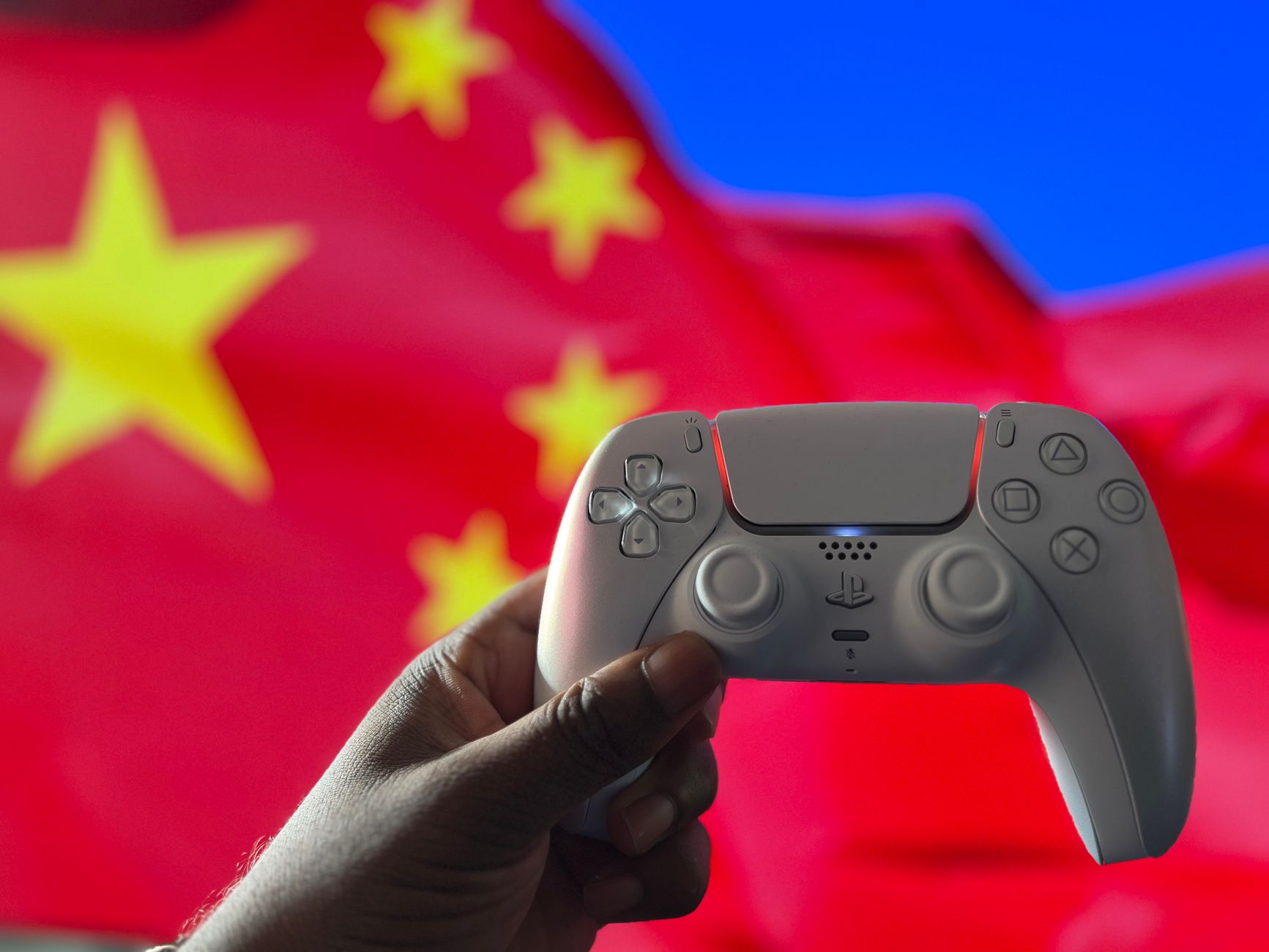
China is the world’s largest video game market by revenue, generating over $45 billion annually and hosting more than 660 million active players. For foreign game developers and publishers, that number is magnetic — and the regulatory maze standing between them and Chinese gamers is one of the most complex in any industry. Understanding how China’s game licensing system works, who controls it, and what it means in practice is not optional homework. It is the price of entry.
Who Approves Games in China?
The authority responsible for approving video games in China is the National Press and Publication Administration (NPPA), which operates under the Publicity Department of the Chinese Communist Party. The NPPA issues game license numbers — known in the industry as 版号 (bǎn hào) — for every title sold, distributed, or monetized in China, including mobile, PC, and console games. Without a valid bǎn hào, a game cannot legally be downloaded, sold, or offered with in-app purchases in the Chinese market.
The NPPA publishes its monthly approval lists publicly, and industry participants monitor these lists closely. Between April 2021 and April 2022, the NPPA froze all new approvals for nine months during a regulatory restructuring — a period that sent shockwaves through the domestic industry and brought foreign ambitions to a standstill. Since then, approvals have resumed on a monthly cadence, though the volume of licenses granted per cycle is far below pre-2021 levels.
The Foreign Game Licensing Process
Foreign games face a more restricted path than domestic titles. Under current rules, a foreign game company cannot apply for a bǎn hào directly. Instead, it must partner with a licensed Chinese publisher — typically a major platform like Tencent, NetEase, miHoYo, Bilibili Games, or a mid-tier specialist publisher — who will act as the official applicant and take legal responsibility for the title in China.
The approval process for imported games involves the following stages:
- Publisher agreement: The foreign developer signs a licensing or co-publishing deal with the Chinese partner, who becomes the domestic operator of record.
- Localization submission: The game must be translated into Simplified Chinese and adapted for local content requirements (see below).
- NPPA application: The Chinese publisher submits the application along with a full game review package, including screenshots, story synopsis, and content classification.
- Content review: The NPPA reviews the game for compliance with rules governing depictions of violence, gambling mechanics, historical narratives, political content, and portrayals of the Chinese military or government.
- License issuance: If approved, a 14-digit approval number is issued, which must be displayed within the game’s interface.
Turnaround times vary enormously. Routine mobile titles with uncomplicated content can receive approvals within three to four months. Games with complex narratives, international IP, or any content touching sensitive subjects may take six to eighteen months — or may simply never receive approval without modification.
Content Rules: What Gets Rejected (and Why)
The NPPA does not publish a complete rulebook with bright-line content prohibitions. What exists instead is a body of precedent built from rejected and modified applications over two decades. Foreign developers working with Chinese publishers should expect scrutiny of the following content areas:
Political and Historical Content
Any portrayal of China’s territory, maps, or historical events must align with official Chinese government positions. Games that depict Taiwan as an independent country, show contested South China Sea islands outside Chinese sovereignty, or portray historical events in ways that conflict with the state narrative will require modification. This is non-negotiable and has affected several major Western titles seeking Chinese release.
Simulated Gambling Mechanics
China has taken an increasingly strict stance on loot boxes and randomized reward mechanics that resemble gambling. Regulations require that the odds of all randomized reward systems be disclosed to players, and certain mechanics may need to be replaced entirely with direct-purchase or non-random unlock systems for the Chinese version of a game.
Violence, Bones, and Blood
Chinese regulations prohibit excessive depictions of gore, visible skeletons, and graphic blood effects. Games like World of Warcraft had to replace skeletal undead models with fleshed-out variants for their China release. Developers should build a “China mode” into their pipeline from the start, rather than retrofitting it as an afterthought.
Minor Player Protections
China’s 2021 minor protection rules — among the strictest in the world — limit players under 18 to three hours of online gaming per week (one hour on weekdays, two hours on weekends and holidays), and require strict identity verification. Games operating in China must integrate with the National Anti-Addiction System, a government platform managed by the NPPA that authenticates real-name registrations via national ID. This integration is a technical requirement, not optional compliance.
Choosing the Right Chinese Publishing Partner
The choice of Chinese publisher determines more than just distribution channels — it shapes your game’s commercial terms, localization quality, and ultimate approval timeline. Tencent and NetEase dominate the market, handling a combined majority of foreign game imports, but they are selective and demand favorable revenue splits. Mid-tier publishers offer more negotiable terms but may have weaker platform relationships with Tencent’s WeChat/QQ ecosystem or Bilibili’s community-heavy audience.
Key questions to evaluate when selecting a partner include: What is their bǎn hào approval track record? Do they have direct relationships with mobile app stores (iOS App Store China, Huawei AppGallery, TapTap)? How do they handle localization quality control? And critically — what revenue sharing model do they propose, and how do they handle in-app purchase revenue remittance to a foreign entity?
On that last point: foreign companies receiving royalties or licensing fees from Chinese publishers must comply with China’s foreign exchange rules administered by the State Administration of Foreign Exchange (SAFE). Revenue remittance typically requires proper documentation of the licensing agreement, tax withholding compliance, and in some cases, approval from local foreign exchange authorities. For a deeper look at China’s cross-border payment regulations, see our guide on China’s Cross-Border B2B Payment Regulations.
Console Gaming: A Separate Regulatory Track
Console gaming in China operates under a distinct and historically more restricted framework. Sony PlayStation, Microsoft Xbox, and Nintendo all operate in China — but their market share is dwarfed by mobile. Console hardware and software require separate approvals, and the path for foreign console titles mirrors the mobile process: a Chinese partner, a bǎn hào, and content compliance.
The Shanghai Free Trade Zone (FTZ) has served as the primary channel for console hardware imports since China officially reopened its console market in 2015. Console platform operators must establish Chinese entities or partner with licensed local distributors approved by the Ministry of Commerce (MOFCOM). The FTZ framework has been tested but remains the operative model for console market entry. For broader context on navigating China’s market entry frameworks, our article on franchising into China covers related structural considerations.
Blockchain and NFT Elements: Proceed With Caution
Games incorporating blockchain mechanics, NFTs, or cryptocurrency rewards face compounded regulatory challenges. China maintains a comprehensive ban on cryptocurrency trading and related financial instruments. The NPPA has not approved any game in China that includes playable blockchain or NFT-based reward systems, and the general counsel view among practitioners is that such mechanics should be fully removed or regionally disabled for the China version. For a detailed breakdown of China’s broader blockchain regulatory environment, see our piece on China’s Blockchain Regulations.
US Market Entry and IP Protection Considerations
For US-based developers entering China, the intellectual property dimension cannot be overlooked. China has made measurable progress on IP enforcement in recent years, but game cloning, unauthorized redistribution, and reverse-engineering remain real risks. Developers should register trademarks, game titles, and core character IP in China through the China National Intellectual Property Administration (CNIPA) before entering into any publishing discussions — not after. China operates a first-to-file trademark system, meaning registration priority goes to whoever files first, regardless of prior use elsewhere.
US developers can access structured market intelligence and advocacy support through the US-China Business Council, which tracks regulatory developments including gaming sector conditions, and provides member guidance on market access barriers. The International Trade Administration’s China market access resources also offer useful export guidance for digital products and entertainment.
Due diligence on your Chinese publishing partner is equally critical. Before signing any licensing agreement, verify the partner’s business registration, financial stability, and any past compliance history. Our detailed guide on how to conduct due diligence on Chinese partners applies directly to publisher relationships, not just product suppliers.
What the Opportunity Is Worth — and What It Costs
The business case for entering China’s gaming market is undeniable in scale. China accounts for roughly 25% of global mobile game revenue. Titles that achieve Chinese approval and strong localization can multiply their global revenue significantly — the success of miHoYo’s Genshin Impact globally is a useful inversion of this: a Chinese title dominating Western markets, demonstrating what quality localization and cultural adaptation can achieve.
The costs, however, are real. Legal fees for a comprehensive China publishing deal typically run between $50,000 and $200,000 depending on deal complexity. Localization of a mid-size title — including UI, dialogue, cultural adaptation, and voice acting — can add another $100,000 to $300,000. Factor in bǎn hào waiting periods, content modification cycles, and integration with China-specific payment systems (WeChat Pay, Alipay), and the total cost of market entry for a serious foreign game title routinely exceeds $500,000 before the first Chinese download occurs.
For companies with the resources and the right partner, that investment can generate returns that dwarf any other single market expansion. For those unprepared for the regulatory complexity, it becomes an expensive lesson in the distance between market size and market access.
The Bottom Line
China’s gaming market rewards developers who treat regulatory compliance as a creative constraint rather than an obstacle. The most successful foreign titles in China — from Honor of Kings spin-offs to Pokémon GO variants — have been designed with Chinese requirements in mind from the earliest stages. Build your Chinese compliance strategy before you need it. Choose your publishing partner before you reveal your IP to the wrong room. Protect your trademarks before your game title trends on Weibo.
The bǎn hào system is demanding, opaque, and slow. It is also the only door into one of the world’s most lucrative gaming markets — and for developers who understand the rules, it is absolutely navigable.