The Periodic Table’s Most Valuable Monopoly
There are 17 rare earth elements. They have names most people cannot pronounce — neodymium, dysprosium, terbium, europium. But every iPhone, every EV battery, every precision-guided missile, every wind turbine generator, and every flat-screen display depends on them. And roughly 60 to 70 percent of global rare earth production, along with an even higher share of processing and refining capacity, sits inside China’s borders.
This is not an accident. It is the result of five decades of deliberate policy, patient investment, and a willingness to tolerate the environmental and economic costs that other countries were not prepared to bear. Understanding how China came to dominate rare earths — and what that means for businesses, manufacturers, and policymakers worldwide — is no longer optional for anyone operating at the intersection of global industry and trade.
What Are Rare Earth Elements, and Why Do They Matter?
Rare earth elements (REEs) are a group of 17 metallic elements: the 15 lanthanides, plus scandium and yttrium. Despite the name, most are not especially rare in the Earth’s crust — cerium is actually more abundant than copper. The challenge is that REEs rarely occur in concentrated deposits, making economically viable extraction both technically difficult and geographically limited.
Their commercial importance is disproportionate to their geological abundance. Neodymium and praseodymium are critical for the powerful permanent magnets used in EV motors and wind turbine generators — without them, the global clean energy transition loses a key input. Dysprosium stabilizes those magnets at high temperatures. Europium and terbium create the red and green phosphors in displays and lighting. Lanthanum goes into catalytic converters and camera lenses. Cerium is the workhorse of glass polishing and petroleum refining catalysts.
The 2024 global rare earth market was valued at approximately $9.6 billion, with projections reaching $20+ billion by 2030 as clean energy demand accelerates. For context, China’s CATL depends on rare earth magnets in its motor components, and BYD’s EV lineup — now the world’s largest by volume — relies on a supply chain anchored in rare earth availability.
How China Built Its Dominance: The Deng Xiaoping Calculation
The story begins in the late 1970s. Deng Xiaoping visited Inner Mongolia in 1978 and is reported to have said: “The Middle East has oil; China has rare earths.” Whether the exact wording is apocryphal or not, the strategic intent was clear. China would build domestic capability in rare earth mining and processing as a national economic priority.
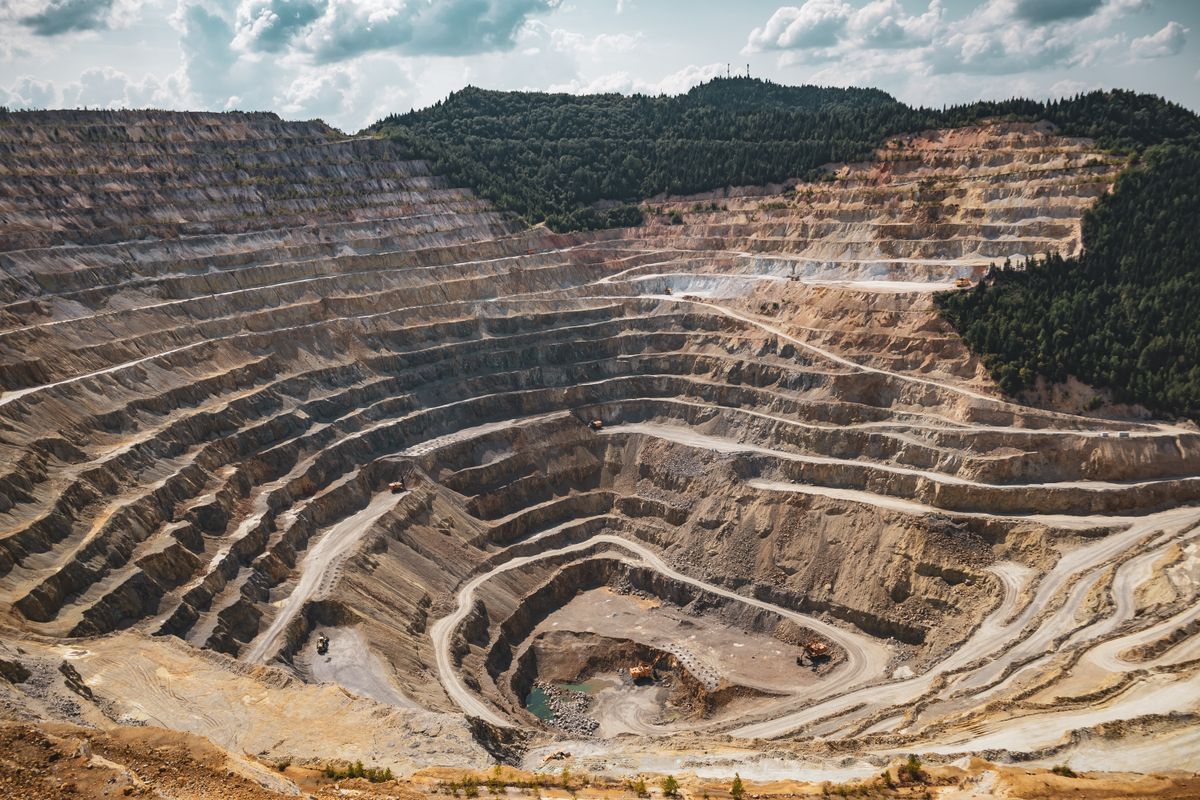
The Bayan Obo deposit in Inner Mongolia — discovered in 1927 but not commercially exploited until the 1950s — is the world’s largest known REE reserve, containing an estimated 800 million metric tons of ore. China’s total proven reserves account for approximately 34 percent of global deposits, but its production share far exceeds that ratio because of the processing infrastructure built around it.
Through the 1980s and 1990s, China pursued an explicit low-price strategy. State subsidies, low-cost labor, and minimal environmental enforcement allowed Chinese producers to undercut Western and Australian competitors on price. The result: by the early 1990s, the Mountain Pass mine in California — once the world’s dominant REE producer, operated by Molycorp — became uneconomical. It closed in 2002. Lynas Corporation in Australia survived, but barely.
By the mid-2000s, China controlled approximately 95 percent of global rare earth output. The consolidation of that dominance into state-managed enterprises accelerated under the China Minmetals and China Northern Rare Earth Group, the latter now the largest REE producer in the world.
The 2010 Crisis and the World’s Wake-Up Call
In September 2010, a Chinese fishing trawler collided with Japanese Coast Guard vessels near the disputed Senkaku/Diaoyu Islands. China did not formally announce a rare earth embargo against Japan, but shipments dropped sharply. Japan, which sourced nearly 90 percent of its rare earths from China for its electronics and automotive industries, experienced immediate supply disruption.
The episode sent a signal that reverberated through every advanced manufacturing economy. The US Department of Energy subsequently published its Critical Materials Strategy in 2010 and 2011, identifying rare earths as the highest-priority supply chain risk for clean energy deployment. The EU launched its Critical Raw Materials Initiative. Japan fast-tracked recycling programs and diversified toward Vietnam and Australia.
The WTO ruled against China’s export quotas on rare earths in 2014, and China formally removed the quotas the same year. But by then, the bottleneck had shifted: even if China exported raw ore, the global processing and separation capacity remained almost entirely in China. Mining rare earths is straightforward compared to separating individual REEs from mixed ore concentrates — a chemically intensive, capital-heavy process that requires purpose-built facilities developed over years.
The Huawei sanctions episode demonstrated how supply chain weaponization works in semiconductors; rare earths represent a similar leverage point, but one where China’s position is arguably more entrenched.
China’s Rare Earth Supply Chain: From Mine to Market
China’s dominance is not just in mining. It extends through every stage of the value chain:
Mining: China Northern Rare Earth Group (中国北方稀土), controlled by Baotou Iron and Steel Group, dominates light REE production from Bayan Obo. Chinalco Rare Earth and JL Mag Rare-Earth handle significant portions of heavy REE mining in Jiangxi, Fujian, and Guangdong provinces — the ion-adsorption clay deposits that are the primary global source of heavy REEs like dysprosium and terbium.
Separation and refining: China processes approximately 85 to 90 percent of global REE supply into separated oxides and metals. This is where the real bottleneck lies. US and European manufacturers who source REE ore from non-Chinese sources frequently still send it to China for processing, because Western separation capacity remains limited.
Magnet manufacturing: China produces around 90 percent of the world’s neodymium-iron-boron (NdFeB) permanent magnets, the type used in EV motors and wind turbines. JL Mag Rare-Earth, Earth-Panda Advanced Magnetic Material, and Zhongke Sanhuan are among the dominant producers.
End-use integration: Chinese manufacturers use REE-derived components in finished goods — EVs, wind turbines, consumer electronics — before export, capturing downstream value rather than just raw material revenue.
Export Controls: The New Leverage Point
In 2023, China announced export licensing requirements for gallium and germanium — two metals critical for semiconductors and defense applications — citing national security grounds. In 2024 and 2025, these controls were extended to antimony, graphite, and specific REE-derived products. While China framed the measures as standard export management, the timing correlated closely with US and EU restrictions on semiconductor exports to China.
For Western manufacturers, the message was unambiguous: rare earth dependency is a policy risk, not just a supply chain risk. China’s Ministry of Commerce holds significant discretion over which companies receive export licenses, and the criteria are not fully transparent. Companies in industries with military applications — aerospace, defense electronics, advanced radar systems — face particular exposure.
The US Geological Survey’s 2025 Mineral Commodity Summaries lists rare earths as among the most critical minerals for US industrial and defense supply chains. The USGS estimates that US net import reliance for rare earth compounds and metals was effectively 100 percent as recently as 2010, and remains above 80 percent for processed forms today, despite the reopening of Mountain Pass (now operated by MP Materials) and investment in domestic processing.
Diversification Efforts: Progress and Limits
The global response to China’s dominance has been substantial but slow-moving. Several developments are worth tracking:
MP Materials: The Mountain Pass mine in California resumed operations in 2018 under MP Materials and produced approximately 45,000 metric tons of REE content in 2023, making it the only significant US rare earth mine. MP Materials opened a processing facility in Fort Worth, Texas in 2023 and has a supply agreement with General Motors. However, full separation capacity remains partial.
Lynas Rare Earths: The Australian producer operates the Mount Weld mine (among the richest REE deposits outside China) and a processing plant in Malaysia. Revenue reached AUD 824 million in fiscal 2023. Lynas is building a US processing facility in Texas with US Department of Defense funding, targeting heavy REE separation.
EU Critical Raw Materials Act: Enacted in 2024, the regulation sets benchmarks requiring that by 2030, at least 10 percent of EU annual REE consumption should be domestically mined, 40 percent processed in the EU, and no more than 65 percent sourced from any single country. These targets are ambitious given the current state of EU REE infrastructure.
Japan’s recycling programs: Japan has invested significantly in urban mining — recovering REEs from end-of-life electronics and magnets — and in bilateral supply agreements with Australia, Kazakhstan, and Vietnam. Recycling now supplies a small but growing percentage of Japan’s REE needs.
For the battery and EV supply chain, REE security is now a boardroom-level concern at companies including Tesla, GM, Ford, Volkswagen, and their major supplier networks. The search for dysprosium alternatives in magnet formulations is a serious R&D priority at Toyota and several European automotive groups.
What This Means for Businesses on Both Sides
For Western Manufacturers and Importers
If your product contains an electric motor, a rechargeable battery beyond the lithium-ion cell itself, a precision sensor, or any display technology, your supply chain has REE exposure. The practical steps: map your tier-2 and tier-3 suppliers for REE inputs, understand whether your Chinese suppliers source from the six state-controlled REE groups (who are subject to policy direction), and assess your vulnerability to export licensing disruptions.
Companies like Apple, Tesla, and Lockheed Martin have disclosed REE supply chain risks in SEC filings. Smaller manufacturers often have not done this analysis. The US-China Business Council recommends that any company in advanced manufacturing, defense, clean energy, or electronics treat rare earth supply as a strategic procurement issue, not just a commodity purchase. The US-China supply chain resilience framework published by the US-China Business Council is a practical starting reference.
For Chinese Producers and Exporters
China’s rare earth sector is undergoing consolidation. The State Council’s 2021 Rare Earth Management Regulations established six authorized REE groups as the legal framework for production and trade: China Northern Rare Earth Group, China Minmetals Rare Earth, Chinalco Rare Earth, Guangdong Rare Earth Industry Group, China Southern Rare Earth Group, and China Minmetals Corporation. Operating outside this structure carries legal risk.
For Chinese companies exporting REE-derived products — magnets, alloys, phosphors — the key compliance issue is the export licensing regime administered by the Ministry of Commerce. Applications require documentation of end-use and end-user, and dual-use concerns are evaluated carefully. Working with licensed trade advisors and maintaining transparent documentation is essential to avoid shipment delays or license denials.
The Bilateral Opportunity
The strategic tension around rare earths is real. But so is the bilateral opportunity. China has accumulated unmatched technical expertise in REE processing and applications. Western countries have capital, environmental standards, and downstream manufacturing demand. Joint ventures in third countries — where Chinese processing expertise can be deployed against non-Chinese deposits under governance frameworks acceptable to Western partners — represent one viable path.
Mongolia, Greenland, Canada, and parts of Africa hold significant REE deposits. Investment structures that combine Chinese technical capability with Western finance and governance frameworks are commercially viable if the political conditions are managed carefully. The Geely-Volvo model — where Chinese capital combined with Western brand and engineering expertise to create mutual value — is instructive for how REE partnerships might be structured.
The Long View
China’s rare earth dominance was built over fifty years of consistent policy, technical investment, and competitive pricing. It will not be displaced in five years, regardless of how much capital Western governments deploy. The more realistic scenario is a gradual rebalancing over the next 15 to 20 years, with China retaining dominance in processing even as mining diversifies. The US Trade Representative’s critical minerals policy page outlines the US government’s current approach to securing supply chain independence for rare earth elements and other strategic materials.
For business practitioners, the frame should not be “how do we eliminate China from our supply chain” — that is neither practical nor bilateral. The better question is: “how do we structure our sourcing, hedging, and supplier relationships to manage REE exposure while maintaining the commercial efficiency that Chinese supply chains currently provide?” That is a solvable problem. The companies that solve it first will hold a meaningful competitive advantage in every advanced manufacturing sector of the next decade.