
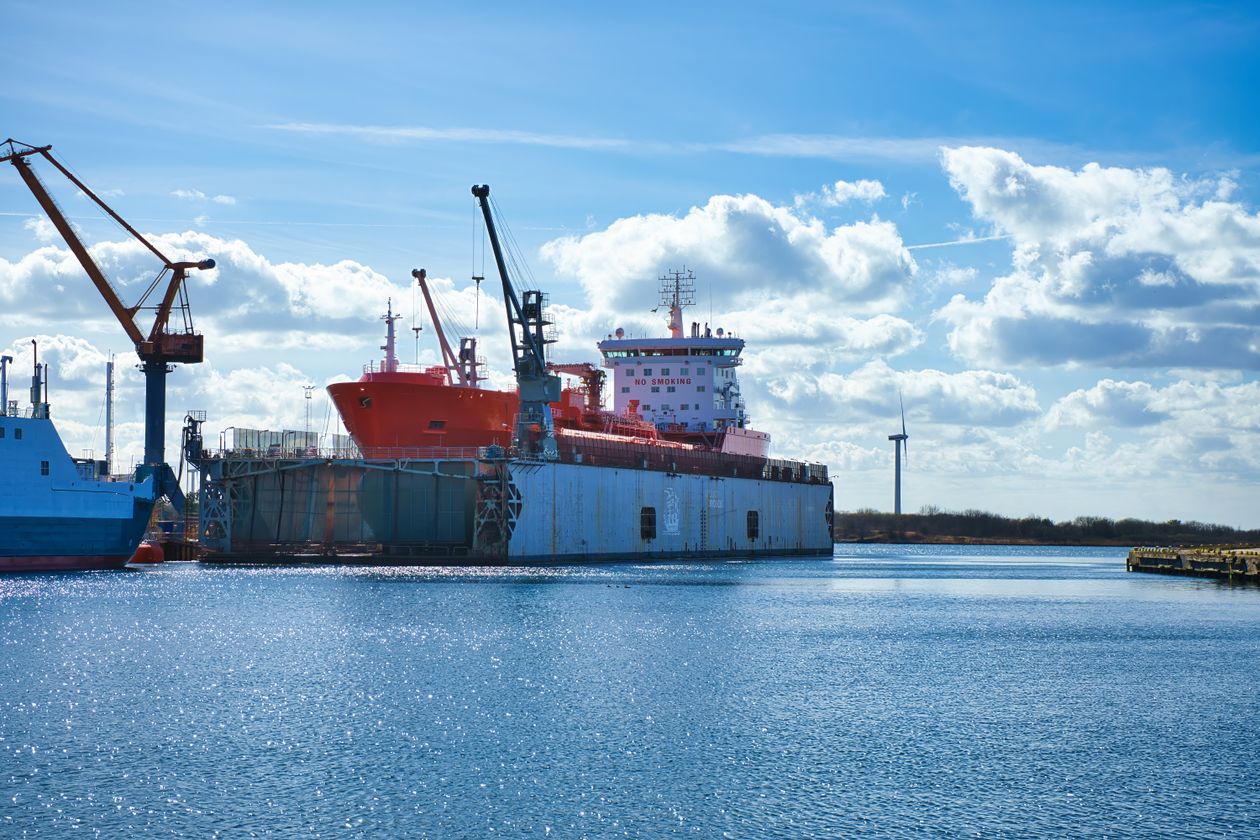
China builds more ships than any other country on earth. In 2024, Chinese shipyards delivered approximately 55% of global gross tonnage, according to data tracked by the Ministry of Commerce (MOFCOM). Whether you are a shipping company looking to commission new vessels, a component manufacturer seeking Chinese suppliers, or a foreign firm evaluating China as a production base for marine equipment, this guide gives you a practical framework for engaging with the world’s most prolific shipbuilding industry.
Why China Dominates Global Shipbuilding
Three structural factors explain China’s shipbuilding dominance: integrated supply chains, government policy support, and relentless cost discipline.
China’s three leading shipbuilders — CSSC (China State Shipbuilding Corporation), CSIC (China Shipbuilding Industry Corporation), and CMES (China Merchants Energy Shipping) — are state-backed enterprises with direct access to subsidized steel, preferential financing through policy banks like the China Development Bank, and deep relationships with major container, bulk carrier, and LNG shipping lines worldwide. CSSC and CSIC merged their civilian and military vessel divisions years ago, creating vertically integrated giants that can deliver everything from container ships to LNG carriers at prices competitors in South Korea and Japan cannot easily match.
For foreign buyers and suppliers, this concentration means the market is navigable — but requires understanding who controls what, and where the opportunities for foreign participation actually exist.
The Main Shipbuilding Clusters
China’s shipbuilding industry is geographically concentrated in five clusters, each with different strengths:
1. Yangtze River Delta (Shanghai, Jiangsu, Zhejiang)
The largest cluster. Shanghai’s Hudong-Zhonghua yard produces LNG carriers and is the only yard in China approved to build large-scale LNG vessels under technology licensing from GTT (France). Jiangsu province — particularly Nantong, Yangzhou, and Taicang — hosts dozens of mid-sized yards producing bulk carriers, tankers, and container ships. This region is the best starting point for most foreign buyers and suppliers.
2. Bohai Rim (Dalian, Qingdao, Tianjin)
Dalian Shipbuilding Industry (DSIC), a subsidiary of CSSC, is one of the largest shipyards globally. This cluster specializes in VLCCs (Very Large Crude Carriers), large bulk carriers, and naval-adjacent vessels. Component suppliers targeting heavy marine equipment should prioritize relationships in Dalian.
3. Pearl River Delta (Guangzhou, Zhuhai)
Guangzhou Shipyard International (GSI) is the flagship facility here. This region focuses on offshore engineering, ferries, and smaller specialized vessels. It is increasingly attractive for foreign firms supplying marine electronics, propulsion systems, and environmental compliance equipment.
Sourcing Marine Components From China: What Foreign Buyers Need to Know
If your goal is to source marine components — engines, navigation systems, pumps, winches, safety equipment — rather than commission full vessels, China’s supplier ecosystem is vast but requires careful qualification.
Classification Society Certification
Any component used on an ocean-going vessel must be certified by a recognized classification society. In China, China Classification Society (CCS) is the domestic authority and is a full member of IACS (International Association of Classification Societies). Foreign buyers typically specify Lloyd’s Register, Bureau Veritas, DNV, or ABS approval — and many Chinese suppliers now hold multiple certifications. Always verify certificates directly with the issuing classification society; do not rely solely on documents provided by the supplier.
Finding Verified Suppliers
The most reliable sourcing channels are:
- China International Marine Containers (CIMC) — largest container and offshore equipment manufacturer globally
- Trade shows: Marintec China (held biannually in Shanghai, next edition December 2025) is the largest marine industry expo in Asia and the best venue for qualifying suppliers in person
- CCS-approved supplier lists — downloadable from ccs.org.cn, covering thousands of equipment categories
- Canton Fair marine section — useful for smaller hardware, deck equipment, and safety gear
Before placing orders, conduct factory audits. Quality consistency remains variable across tiers — Tier 1 suppliers serving Hudong-Zhonghua or DSIC directly tend to have robust QMS systems; smaller sub-tier suppliers require closer oversight. See our guide on building a China distributor network for qualification frameworks that apply equally well to supplier vetting.
Commissioning a New Vessel From a Chinese Yard
For foreign shipping companies, commissioning a vessel from a Chinese yard is increasingly common — and increasingly complex given the evolving regulatory environment.
Step 1: Choose the Right Yard Tier
There are over 1,500 registered shipbuilding enterprises in China, but only a fraction have the capacity and track record for ocean-going newbuilds. Limit your initial shortlist to yards with:
- IACS-member classification society approval
- At least 10 similar vessel deliveries in the past five years
- Experience with your flag state’s requirements (Marshall Islands, Panama, Liberia are the most commonly used by international operators)
Step 2: The Shipbuilding Contract
Chinese yards typically use the SAJ Form (Shipbuilders Association of Japan standard form) as a base contract — it has become the industry standard in East Asia. Key terms to negotiate carefully include:
- Payment schedule: Standard is 20% at signing, 20% at steel cutting, 20% at keel laying, 20% at launch, 20% at delivery — but the first installment is at risk if the yard fails. Buyers with leverage negotiate smaller upfront tranches.
- Refund guarantees: Insist on bank-issued refund guarantees (not yard-issued corporate guarantees) covering all pre-delivery installments. This is non-negotiable for creditworthy transactions.
- Dispute resolution: Chinese yards prefer CIETAC (China International Economic and Trade Arbitration Commission) arbitration. Many foreign buyers successfully negotiate London arbitration. The choice matters significantly for enforcement.
Our post on handling force majeure clauses in Chinese contracts covers risk allocation provisions that are equally relevant in shipbuilding contracts, where delays due to material shortages or regulatory changes are common.
Step 3: Financing Options
Chinese yards are often able to arrange competitive financing through Chinese policy banks — particularly for buyers from Belt and Road Initiative countries. However, foreign buyers from developed markets typically access Export-Import Bank of China (EXIM) financing only through bilateral government agreements. Commercial financing through international banks (Citi, DBS, ING) remains the standard path for most Western operators.
The U.S. International Trade Administration’s China maritime sector briefings provide useful market intelligence for American companies evaluating Chinese shipyard partnerships, including current pricing benchmarks and financing market conditions.
Environmental Compliance: The IMO 2030 Factor
The International Maritime Organization’s Carbon Intensity Indicator (CII) and Energy Efficiency Existing Ship Index (EEXI) regulations are reshaping what buyers want — and what Chinese yards are investing in. Chinese yards are actively pursuing green ammonia propulsion, LNG dual-fuel systems, and methanol-ready vessel designs. CSSC launched its first methanol-fueled container ship in 2024, and several Jiangsu yards have added scrubber and ballast water treatment system production lines in-house.
For foreign buyers, this is relevant because ordering a vessel today that cannot comply with 2030 IMO requirements creates stranded asset risk. Always specify CII rating targets and fuel flexibility requirements in your shipbuilding contract’s specification annex. The MOFCOM industry guidance on green shipping outlines the Chinese government’s expectations for the sector through 2030.
Navigating Export Controls and Dual-Use Restrictions
Foreign companies supplying technology or components to Chinese shipyards must pay close attention to export control compliance. The U.S. Bureau of Industry and Security (BIS) maintains Entity List restrictions that affect which Chinese shipbuilding enterprises can receive U.S.-origin technology — including navigation electronics, propulsion control software, and certain materials.
Consult trade.gov for current guidance on dual-use export classifications relevant to marine equipment, and perform End User Review (EUC) checks on any Chinese yard or component buyer before completing a transaction. Note that CSSC-affiliated yards have faced U.S. export restrictions at various points — due diligence is not optional.
For a broader compliance framework in China operations, see our guide on using China’s Free Trade Zones, which also covers customs duty structures relevant to imported marine components.
Practical Takeaways
China’s shipbuilding industry offers genuine competitive value — on price, capacity, and increasingly on technology. But it is not a commodity market where you can transact at arm’s length. Success requires:
- Choosing the right yard tier and verifying certifications independently
- Negotiating contracts with proper refund guarantees, clear specification annexes, and workable dispute resolution
- Staying current on IMO environmental requirements so vessels retain long-term commercial value
- Conducting export control due diligence before supplying technology to any Chinese yard
- Building relationships through yard visits and industry events like Marintec pays dividends over time
The yards that consistently deliver on time and on spec are not hard to find — they have long client lists. The challenge is being a buyer those yards prioritize, which means showing up as a professional counterpart: organized, technically clear, and reliable in your payments.