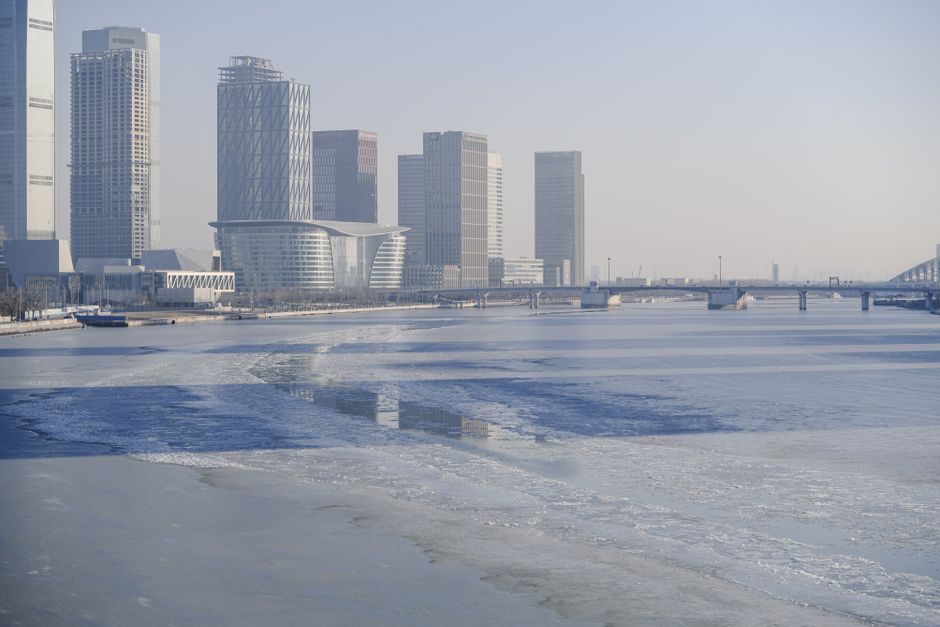
Walk into a boardroom in Beijing and mention where you’ve set up your China operations, and the answer “Tianjin” will draw knowing nods from any seasoned trade consultant. Forty-five minutes by high-speed rail from the capital, yet worlds apart in terms of industrial density, port infrastructure, and regulatory flexibility, Tianjin has quietly evolved into one of the most strategically significant cities in Northeast Asia. Foreign businesses that skip Tianjin in favor of Shanghai or Shenzhen are often leaving cost savings, government incentives, and proximity to a 10-million-person consumer market on the table.
This guide covers what Tianjin actually is, why it matters for foreign manufacturing, logistics, and finance operations, and how to approach it practically as a market entry point.
The Numbers: Tianjin by the Scorecard
Tianjin is a direct-controlled municipality — one of only four in China, alongside Beijing, Shanghai, and Chongqing — reporting directly to the central government rather than through a provincial layer. That political architecture matters: it means Tianjin’s leadership has both the authority and the budget to cut deals with foreign investors at speed.
The city’s GDP stood at approximately 1.63 trillion RMB (roughly $225 billion USD) in 2024, ranking it among China’s top ten municipal economies. Its population of around 14 million is concentrated in two zones: the historic urban core and the more recent Binhai New Area, a purpose-built economic district on the coast. Binhai alone, covering about 2,270 square kilometers, holds the Tianjin Port — the largest port in Northern China and the ninth-busiest container port in the world by throughput, handling over 21 million twenty-foot equivalent units (TEUs) annually.
For foreign businesses with supply chains oriented toward Northeast Asia, Northern Europe, or markets accessible via the Trans-Siberian corridor, Tianjin’s port position offers a distinct geographic advantage over Shanghai or Ningbo. Container routes from Tianjin to Northern Europe via the Suez Canal are competitive on transit time, and the port’s direct rail connections into Inner Mongolia, Shaanxi, and beyond make it the natural staging point for western China distribution. If you’re importing or exporting goods that will move through Beijing, Hebei, Shanxi, Inner Mongolia, or Xinjiang, Tianjin should be on your shortlist.
For a comparison of how China’s port infrastructure shapes global trade flows, see our analysis of Ningbo-Zhoushan: China’s Largest Port Complex and What It Means for Global Trade.
Tianjin’s Industrial DNA: From Heavy Manufacturing to Advanced Industry
Tianjin earned its industrial reputation in the first decades of the People’s Republic as a heavy manufacturing hub. Petrochemicals, steel, machinery, and textiles formed the backbone. Companies like TPCO (Tianjin Pipe Corporation), one of the world’s largest producers of seamless steel pipes and a critical supplier to the global energy sector, built their foundations here. TPCO’s capacity of over 2 million metric tons of seamless pipes annually serves clients in the oil and gas industries across the United States, the Middle East, and Europe.
But the Tianjin of 2026 has deliberately pivoted. The municipal government, working through Binhai New Area’s administrative structure, has invested heavily in attracting advanced manufacturing — aerospace, automotive, biopharmaceuticals, and new energy equipment — while phasing out the most polluting legacy industries. Airbus assembles its A320-family aircraft in Tianjin through a joint venture with Chinese partners, a facility that has delivered over 700 aircraft since 2008 and represents one of the most significant non-Chinese manufacturing investments in Northern China. Toyota produces roughly 400,000 vehicles per year in Tianjin through its joint venture with FAW Group, and Volkswagen maintains one of its largest Chinese assembly complexes here as well.
The automotive cluster around Tianjin is not just a final assembly story. A web of Tier-1 and Tier-2 suppliers — producing interiors, stamped metal parts, electronics modules, and drivetrain components — has grown up around the OEM plants. For foreign suppliers looking to enter the Chinese auto supply chain, establishing a presence in Tianjin’s automotive corridor provides natural proximity to major buyers.
The China (Tianjin) Pilot Free Trade Zone: A Practical Guide for Foreign Investors
In 2015, Tianjin was one of three cities (alongside Guangdong and Fujian) to receive China’s second wave of Pilot Free Trade Zone (FTZ) designations, following Shanghai’s 2013 pioneer launch. The China (Tianjin) Pilot FTZ covers around 119 square kilometers and offers a set of regulatory innovations that remain materially different from standard Chinese operating conditions.
Key advantages of the Tianjin FTZ for foreign businesses include:
- Simplified market access: The FTZ operates under a “negative list” system — foreign businesses can enter any sector not explicitly restricted, rather than needing specific approvals. As of the most recent update, the negative list for FTZs is significantly shorter than the national list, creating meaningful liberalization in financial services, logistics, and professional services.
- Financial sector openness: The Tianjin FTZ has developed as a center for financial leasing. Over 70% of all registered financial leasing companies in China are based in Tianjin, using the favorable FTZ regulations to structure cross-border aircraft, ship, and equipment leasing transactions. Global lessors including ICBC Leasing, BOC Aviation, and CDB Leasing have substantial Tianjin presences.
- Bonded logistics and processing: Goods can be imported into the FTZ bonded area, processed or assembled, and re-exported without triggering import duties — a structure particularly valuable for manufacturers who source globally and sell into Asian markets.
- Corporate registration speed: The FTZ’s “single window” administrative model compresses WFOE (Wholly Foreign-Owned Enterprise) registration timelines to as few as three business days for straightforward structures.
The Tianjin FTZ has also been a testing ground for cross-border RMB settlement, making it relevant for multinationals seeking to manage currency exposure on China operations. The People’s Bank of China has authorized expanded RMB convertibility frameworks within the zone that allow more flexible inter-company transfers than are available in standard operating conditions elsewhere in China.
Tianjin Port: The Strategic Anchor of Northern China Trade
Understanding Tianjin means understanding its port. The Port of Tianjin — formally managed by Tianjin Port Holdings, a state-owned enterprise — is not simply a container terminal. It operates as an integrated trade node with 159 operational berths, capacity to handle dry bulk, liquid bulk, roll-on/roll-off (for vehicle exports), and container cargo simultaneously. Annual throughput typically exceeds 500 million metric tons of total cargo, making it one of the busiest port complexes in absolute tonnage globally.
For foreign importers bringing consumer goods, industrial equipment, or raw materials into Northern China, Tianjin Port’s customs clearance infrastructure has been significantly upgraded since 2018 under China Customs’ “smart port” digitization initiative. Average customs dwell time has been cut to under 20 hours for pre-certified shippers using the advance declaration system. The port also operates a dedicated Cold Chain Logistics Zone, handling temperature-sensitive pharmaceuticals, food products, and biologics — a growth area as US-China trade in agricultural and food products rebounds.
COSCO Shipping, China’s dominant container carrier, uses Tianjin as one of its primary northern hub ports. For background on how COSCO’s global network structures port access and freight capacity for international shippers, see our detailed profile: COSCO Shipping: How China Controls a Significant Share of Global Maritime Trade.
Tianjin’s Higher Education and Talent Infrastructure
Foreign investors often underestimate Tianjin’s talent base. The city hosts over 50 universities, including Nankai University (consistently ranked among China’s top 10) and Tianjin University (China’s first modern university, founded in 1895 and a leading technical institution). Together they produce over 100,000 graduates per year. Tianjin’s engineering graduate output is particularly strong — mechanical, chemical, civil, and materials engineers trained in Tianjin feed directly into the city’s manufacturing and petrochemical industries.
For foreign companies operating advanced manufacturing or R&D facilities, Tianjin’s talent pool combined with its lower-cost operating environment relative to Beijing or Shanghai makes for a compelling equation. Office rents in Binhai’s central business district run at roughly 60-70% of comparable Grade-A space in Shanghai’s Pudong. Industrial land costs in Tianjin’s development zones are 30-50% lower than in Suzhou Industrial Park or Guangdong’s Pearl River Delta.
This cost structure explains why companies like Motorola Solutions, Samsung Display, and Honeywell have built significant operations in Tianjin. Honeywell’s Tianjin facility, for instance, produces process control systems and advanced manufacturing solutions sold globally, benefiting from both the engineering talent and the export logistics infrastructure the port provides.
How Tianjin Fits Into the Jing-Jin-Ji Mega-Region
Perhaps the most significant long-term structural factor for Tianjin is its role in the Jing-Jin-Ji (Beijing-Tianjin-Hebei) integrated development zone — one of China’s three national-level mega-region strategies alongside the Yangtze River Delta and the Pearl River Delta clusters. Formally launched in 2015 and accelerating through the 2020s, Jing-Jin-Ji aims to redistribute economic activity away from congested Beijing into Tianjin and Hebei Province, creating a coordinated metropolitan economy of over 100 million people.
The practical consequence for foreign businesses is significant. Beijing’s municipality has been systematically relocating non-capital functions — back-office financial operations, manufacturing, logistics, wholesale markets — to Tianjin and Hebei. Companies that serve the Beijing market can increasingly do so while operating from lower-cost Tianjin, with 35-minute high-speed rail connectivity providing de facto same-city access. The completion of the Xiong’an New Area development in Hebei (a major government investment city directly south of Beijing) is adding further infrastructure density to this corridor.
For context on how China’s infrastructure investment shapes regional economic development, our overview of Kunshan and Tianjin: Two Industrial Cities That Explain How China Became the World’s Factory explores the historical manufacturing integration patterns.
Belt and Road Connectivity: Tianjin as a Transcontinental Hub
Tianjin has been actively positioned as a Belt and Road Initiative (BRI) hub, particularly for the China-Europe freight rail corridor. The city operates regular China Railway Express (CRE) services to major European cities including Hamburg, Rotterdam, and Warsaw, with transit times of approximately 12-14 days — roughly half the sea freight transit time from China’s eastern ports to Northern Europe. For time-sensitive industrial goods, automotive parts, electronics components, or pharmaceutical products, this land-rail option through Tianjin provides a viable alternative to air freight at significantly lower cost.
The BRI connectivity also extends southward through sea routes. Tianjin Port has signed bilateral port cooperation agreements with 60+ ports globally, including in Southeast Asia, the Middle East, and East Africa, creating preferential cargo handling arrangements for BRI-corridor shipments. For the most current strategic picture of how BRI trade corridors are evolving in 2026, see our dedicated analysis: China’s Belt and Road Initiative in 2026: New Corridors, New Partners, and What Businesses Must Know.
Practical Entry: How Foreign Companies Establish in Tianjin
The entry playbook for Tianjin depends on the business type. For manufacturers, the standard route is to establish a WFOE (Wholly Foreign-Owned Enterprise) within one of Tianjin’s national-level development zones. The Binhai High-Tech Industrial Development Zone and the Tianjin Economic-Technological Development Area (TEDA) — China’s second-largest national-level ETDZ, established in 1984 — offer industrial land, utilities packages, and dedicated government service teams for foreign investors. TEDA has hosted over 5,000 foreign-invested enterprises and processed more than $80 billion in cumulative foreign investment since its founding.
For services companies or financial institutions, the Tianjin FTZ’s financial services cluster is the natural entry point. Registration in the FTZ allows access to the zone’s expanded regulatory frameworks while maintaining full connectivity to the national Chinese market. Service companies should budget 60-90 days for a standard WFOE registration process including bank account opening, though experienced local legal advisors frequently compress this to 45 days.
Due diligence on local government counterparts is straightforward by Chinese standards: Tianjin’s investment promotion bureau (the Tianjin Bureau of Commerce and Investment Promotion) publishes standardized incentive packages online and maintains English-language investor relations support — a relatively uncommon feature among Chinese cities outside the Tier-1 centers.
Risks and Considerations
Tianjin is not without challenges. The 2015 Tianjin port warehouse explosion — which killed 173 people and caused billions of dollars of property damage — exposed regulatory weaknesses in hazardous materials storage and left a lasting mark on the city’s public profile. The subsequent regulatory tightening on chemical and hazardous goods storage has actually produced a cleaner operating environment, but foreign companies in related industries should conduct thorough environmental compliance due diligence before signing leases in the port zone.
The city also carries significant local government debt exposure. Several Tianjin-based state-owned construction and investment vehicles (LGFVs) have faced debt restructuring difficulties since 2018, reflecting overly ambitious infrastructure expansion during the Jing-Jin-Ji buildout. This is a systemic risk shared with many Chinese cities, but Tianjin’s exposure has been notably visible. Foreign investors with financial exposure to local government-backed projects should apply conservative stress-testing to their counterparty analysis.
Finally, Tianjin’s dependence on traditional heavy industries means its economy remains more cyclically volatile than China’s more service-oriented cities. During periods of weak global commodity demand, the city’s headline growth numbers underperform. The ongoing restructuring toward advanced manufacturing, financial services, and logistics is real but gradual.
The Bottom Line for Foreign Business
Tianjin is the city for foreign businesses that prioritize cost efficiency, port access, proximity to Beijing, and manufacturing scale over the prestige address of Shanghai or the tech ecosystem of Shenzhen. For manufacturers supplying Northern Chinese OEMs, for logistics operators building Northern China distribution, for financial services firms serving the Beijing-Tianjin corridor, or for any business seeking FTZ regulatory flexibility with genuine industrial infrastructure behind it, Tianjin presents a compelling case.
The city’s 14 million consumers, its world-class port, its 50+ universities, and its Pilot Free Trade Zone together constitute an offering that few second-tier Chinese cities can match. The companies that have done the analysis — Airbus, Toyota, Volkswagen, Honeywell, Motorola, Samsung — have consistently validated the logic with capital commitments measured in the billions. For foreign investors willing to look north of Shanghai, Tianjin rewards the attention.