
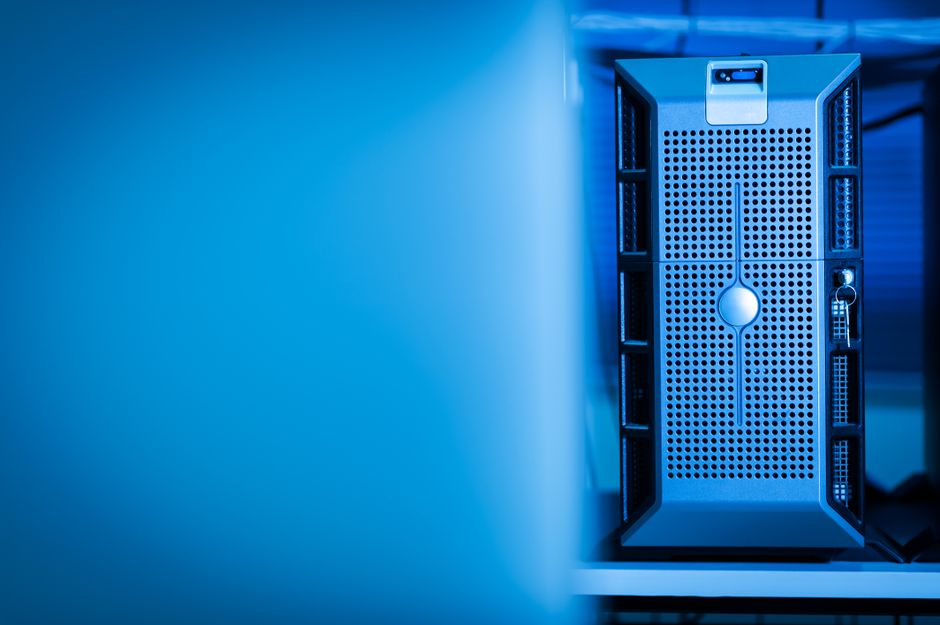
When most Western executives think of Lenovo, they still picture a laptop. That mental model is now significantly outdated. The Beijing-headquartered company that purchased IBM’s ThinkPad business in 2005 has transformed into a full-stack enterprise technology provider competing directly with Dell and Hewlett Packard Enterprise for data center contracts, AI infrastructure, and managed IT services. For any professional navigating technology procurement, US-China trade, or enterprise IT strategy in 2026, understanding Lenovo’s pivot is not optional — it is foundational.
The Numbers That Tell the Real Story
Lenovo Group’s fiscal 2023/24 revenues reached approximately $56.9 billion, ranking it among the world’s largest technology companies by revenue. The distribution of that revenue, however, reveals a fundamentally different business than the PC-centric firm of a decade ago. The Infrastructure Solutions Group (ISG), encompassing servers, storage, and data center products, generated $10.9 billion. The Solutions and Services Group (SSG), Lenovo’s highest-margin unit, posted $7.4 billion in revenue at operating margins exceeding 20 percent — compared to the 3 to 5 percent margins typical of hardware sales.
CEO Yang Yuanqing, who has led the company since 2005 and owns a meaningful personal equity stake, has consistently described this shift as a transition from device-centric to “device plus cloud plus services” revenue. The language mirrors what HP and Dell have articulated, but Lenovo’s execution context is distinct: a Beijing parent structure, significant Chinese state-adjacent institutional shareholders, and a commercial footprint spanning 180 markets worldwide.
From Servers to Supercomputers: Building Infrastructure Credibility
Lenovo’s data center ambitions trace to its 2014 acquisition of IBM’s x86 server business for $2.3 billion. That deal delivered manufacturing scale and customer relationships. Profitability took longer: ISG operated at a loss for several years before crossing into sustained profitability in fiscal 2022/23. Today, Lenovo’s server business holds approximately 9 to 10 percent global market share by shipments, placing it consistently in the top three globally alongside Dell and HPE.
In high-performance computing, Lenovo has been even more decisive. The company regularly claims the number-one position in the TOP500 list of the world’s fastest supercomputers, having supplied more systems than any other vendor across multiple successive editions. This ranking matters commercially: it signals engineering credibility to hyperscale customers, national laboratories, and research institutions evaluating AI and HPC infrastructure.
Lenovo’s Neptune liquid-cooling technology, developed in-house and applied across its ThinkSystem server line, has emerged as a genuine competitive differentiator as data centers globally confront the thermal challenges of GPU-dense AI compute. As noted in our coverage of Foxconn’s own pivot toward EVs and AI infrastructure, the reorientation of China’s most capable technology manufacturers toward higher-value compute is a broader structural trend, not an isolated case.
The AI Infrastructure Bet
The surge in enterprise AI investment after 2022 created an inflection point for ISG. Enterprises deploying GPU-dense AI clusters need far more than GPU cards: complete integrated solutions covering racks, networking, cooling, storage, power, and integration services. Lenovo’s ability to sell turnkey AI infrastructure has positioned it well for this spending cycle.
In fiscal 2023/24, Lenovo disclosed AI server order intake exceeding $3 billion. The company maintains strategic partnerships with NVIDIA for GPU integration, Intel for CPU platforms, and AMD for both CPU and GPU workloads. Lenovo has also committed over $1 billion in internal AI and infrastructure investment over a three-year period.
The geopolitical dimension is real and worth addressing directly. US export control regulations, including semiconductor restrictions introduced by the Bureau of Industry and Security (BIS) between 2022 and 2024, constrain Lenovo’s ability to ship the most advanced AI accelerators into certain Chinese customers. In the US commercial market, Lenovo’s infrastructure products are not prohibited; large enterprises in financial services, manufacturing, and cloud continue to evaluate and deploy Lenovo server infrastructure based on total cost of ownership. US federal and defense procurement is a different matter — agencies subject to supply chain security requirements are effectively closed to Lenovo.
Solutions and Services Group: The Margin Engine
SSG is the business unit that most clearly defines Lenovo’s long-term aspirations. The division encompasses IT asset lifecycle management, device-as-a-service (TruScale), hybrid cloud consulting, digital workplace solutions, and Premier Support managed services. Operating margins above 20 percent stand in stark contrast to hardware margins — this is the same strategic logic IBM executed a decade earlier: shift customers from capital expenditure hardware purchases to recurring operational expenditure service contracts.
SSG has grown at roughly 11 to 14 percent annually in recent fiscal years and now manages over 53 million devices globally. For multinational companies seeking a single vendor for device management that includes operations in China, Lenovo’s dual-competency across Chinese and international markets is a genuine operational advantage that few Western-only IT service providers can replicate.
The Geopolitical Lens: Navigating an Unusual Position
Lenovo occupies a unique position in the US-China technology landscape. It derives roughly 70 percent of revenues outside China. Its ThinkPad laptops remain common in US corporate environments. It has not been added to the US Entity List or subject to direct sanctions, which clearly distinguishes it from Huawei and ZTE.
The company has deliberately cultivated a multinational identity, maintaining significant operational headquarters in Research Triangle Park, North Carolina, and Stuttgart, Germany. Its manufacturing footprint includes facilities in Mexico, Hungary, and the United States in addition to China, reducing but not eliminating supply chain concentration concerns. Understanding how Lenovo fits into the broader pattern of China’s outbound M&A evolution from trophy acquisitions to strategic partnerships explains why both the 2005 ThinkPad deal and the 2014 IBM server acquisition were landmark transactions in Chinese corporate globalization.
For enterprise buyers in regulated industries, standard vendor risk assessment frameworks apply. The practical guidance is to evaluate Lenovo on the same technical and commercial merits applied to any major vendor while conducting regulatory-appropriate due diligence for your specific sector.
Zhongguancun Roots and the IBM Acquisitions
Lenovo was founded in 1984 by Liu Chuanzhi as a commercial spinout from the Chinese Academy of Sciences, beginning with 11 employees and RMB 200,000 in seed capital in Beijing’s Zhongguancun district. The rebranding from Legend to Lenovo in 2003 was a deliberate preparation for international expansion. As explored in our analysis of Zhongguancun’s emergence as China’s Silicon Valley, the district’s concentration of universities, research institutes, and venture capital created the conditions from which companies like Lenovo, Baidu, and ByteDance developed world-class engineering capability.
The ThinkPad acquisition in 2005, completed for approximately $1.75 billion including assumed debt, was widely predicted to fail. Lenovo proved those predictions wrong through meticulous integration planning, retention of IBM’s Raleigh product development team, and consistent investment in the ThinkPad brand’s enterprise reputation over two decades.
Practical Guidance for Buyers and Partners in 2026
For procurement teams evaluating Lenovo today: the PC and smart devices business remains the world’s largest by unit market share at roughly 23 to 24 percent globally, with the ThinkPad and ThinkBook lines holding strong commercial segment reputations. The ThinkSystem and ThinkAgile server portfolio offers genuine competitive pricing relative to Dell and HPE for mid-market and research workloads, with the XClarity management platform providing comparable tooling depth. SSG’s TruScale and Premier Support offerings are globally available and particularly well-suited for organizations with significant China operations.
For companies studying Chinese enterprise technology expansion, Lenovo’s trajectory offers three clear lessons. Sustained brand investment across acquisitions and market cycles builds durable credibility. Geographic diversification of both manufacturing and revenue is prudent risk management, not optics. And the separation between geopolitically sensitive government sectors and commercially competitive enterprise sectors is real and consequential — collapsing that distinction produces poor procurement decisions in both directions.
The U.S. Department of Commerce’s technology industry resources and China’s Ministry of Commerce official trade policy publications together provide the bilateral framework any enterprise professional needs when assessing technology vendors operating across both economies. Lenovo remains the most instructive case study in that framework — a Chinese company that has built genuine global enterprise credibility through consistent execution over twenty years.