When the United States government placed Huawei Technologies on the Entity List in May 2019, many analysts predicted the company’s slow decline. Cut off from Google’s Android ecosystem, TSMC’s advanced fabs, and Qualcomm’s Snapdragon chips, Huawei’s smartphone business collapsed from the world’s largest by shipment volume in Q2 2020 to a distant fifth place by 2022. Revenue fell from a peak of RMB 891.4 billion ($136 billion) in 2020 to RMB 636.8 billion ($91 billion) in 2022.
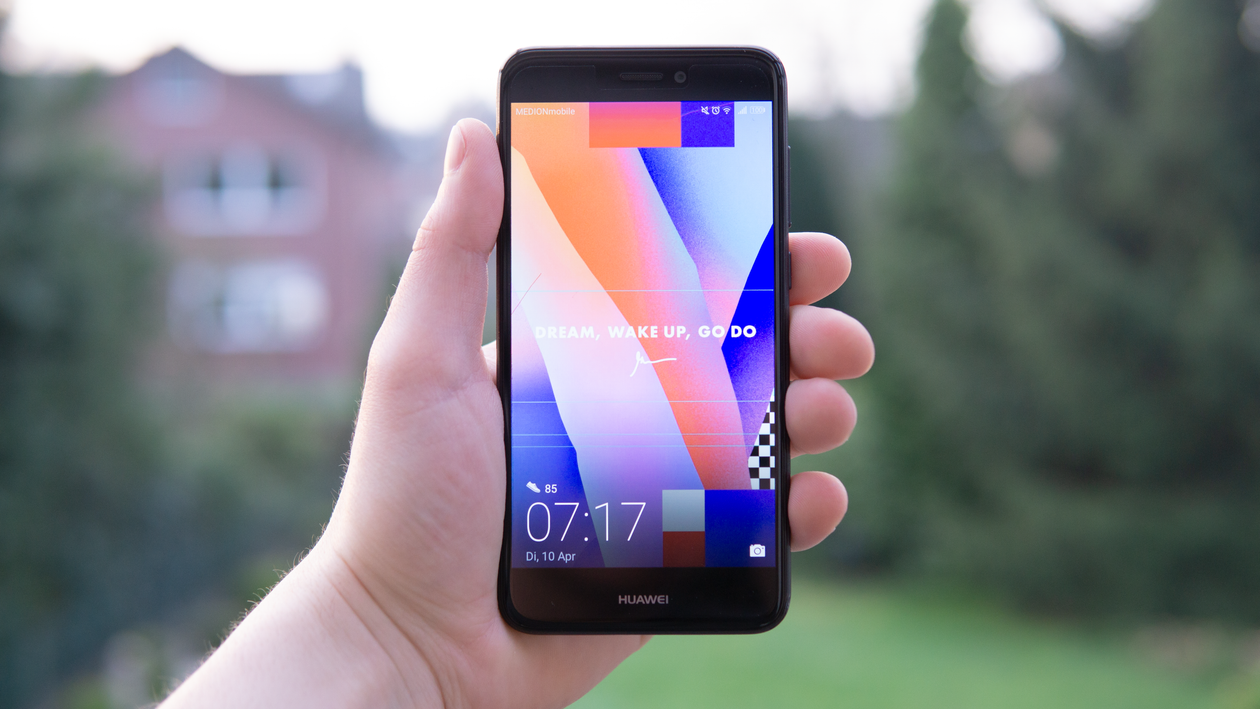
Yet by late 2023, something unexpected happened. Huawei quietly launched the Mate 60 Pro — a flagship smartphone powered by a domestically produced 7-nanometer chip, the Kirin 9000S, manufactured by SMIC (Semiconductor Manufacturing International Corporation). The device sold out within hours. By the end of 2024, Huawei had reclaimed the number-one position in China’s smartphone market, with a 16.4% share according to IDC. By mid-2026, Huawei’s annual revenue had recovered to approximately RMB 820 billion, a testament to one of the most remarkable corporate comebacks in technology history.
For global business professionals, Huawei’s trajectory is a masterclass in supply chain self-sufficiency, state-industry coordination, and the real-world limits — and unexpected consequences — of technology sanctions.
What the Sanctions Actually Blocked — and What They Didn’t
Understanding Huawei’s comeback requires understanding precisely what the sanctions did and did not accomplish. The US Bureau of Industry and Security (BIS) Entity List designation meant any company supplying Huawei with items containing more than 25% US-origin technology required a license — a threshold later tightened to cover foreign-produced items using US equipment or design tools, regardless of percentage.
In practice, this blocked Huawei from purchasing chips manufactured below 10 nanometers from foundries using ASML’s EUV lithography machines, severed access to ARM’s latest chip design architectures, cut off Android GMS (Google Mobile Services), and blocked purchases from Qualcomm, Intel, and Micron.
What the sanctions did not block was Huawei’s ability to design chips internally through its HiSilicon subsidiary, sell telecommunications infrastructure equipment in non-US-aligned markets, operate cloud computing and enterprise software businesses, and access mature-node manufacturing (28nm and above) from domestic foundries. These gaps became the scaffolding of Huawei’s recovery.
HiSilicon and the Kirin Chip: Designing Around the Blockade
Huawei’s semiconductor design arm, HiSilicon, had been building custom application processors since 2004 — a prescient hedge by founder Ren Zhengfei that would prove decisive. When TSMC cut off manufacturing services in September 2020, Huawei had stockpiled chips for roughly 12 months of smartphone production, buying critical time.
The appearance of the Kirin 9000S in the Mate 60 Pro — confirmed by TechInsights teardowns to be built on a process approximately equivalent to 7nm — shocked the industry. SMIC had publicly disclosed only 14nm production capability in 2020. The achievement came without EUV lithography, instead using multiple-patterning techniques with older DUV equipment. Yield rates are lower and power efficiency trails TSMC’s 4nm node, but the chip is capable enough for a premium smartphone experience.
For the broader chip manufacturing trajectory, see our analysis of SMIC in 2026: How China’s Largest Chipmaker Is Advancing Under US Export Controls, which tracks capacity expansion at SMIC’s Shanghai and Shenzhen facilities.
The Telecommunications Business: Huawei’s Fortress
While smartphones grabbed headlines, Huawei’s telecommunications equipment division never collapsed. Supplying 5G base stations, optical networking gear, and enterprise switches, this business operates on mature-node chips that SMIC can supply domestically and serves markets across Africa, Southeast Asia, the Middle East, and Latin America where US procurement influence is limited.
According to Huawei’s 2025 Annual Report, the ICT Infrastructure business contributed RMB 362 billion in revenue — approximately 44% of total group revenue. The company holds contracts in over 170 countries and has deployed more than 3 million 5G base stations globally. The domestic Chinese build-out, coordinated through China Mobile, China Unicom, and China Telecom under guidance from the Ministry of Industry and Information Technology (MIIT), provided a captive revenue base of extraordinary scale while the company rebuilt its commercial capabilities.
For the broader picture of China’s 5G rollout, see our companion piece on China’s 5G Infrastructure Rollout: How Huawei, ZTE, and China’s Carriers Built the World’s Largest Wireless Network.
HarmonyOS: The Ecosystem Built Out of Necessity
Losing access to Google Mobile Services forced Huawei to accelerate HarmonyOS (Hongmeng in Chinese), its proprietary operating system. Launched on smartphones in 2021, HarmonyOS had accumulated over 900 million activated devices by end-2025 across smartphones, tablets, smartwatches, smart TVs, and automotive infotainment systems. Its AppGallery now lists over 6.6 million applications.
HarmonyOS is designed as a distributed operating system capable of running seamlessly across heterogeneous hardware — a technical architecture that gives Huawei a differentiation advantage in IoT and smart home markets. In China, where Google services were never available, the missing Google ecosystem is a non-issue. The strategic question is whether HarmonyOS can gain traction in Southeast Asian and European markets where Huawei devices still sell in meaningful volumes.
What the Supply Chain Rebuild Means for Global Business
Huawei’s experience has become a textbook case in unintended consequences. Rather than eliminating a competitor, US sanctions accelerated China’s domestic semiconductor industry by an estimated five to eight years, according to analysts at Bernstein and SEMI. Government investment through the National Integrated Circuit Industry Investment Fund (the “Big Fund”) exceeded $50 billion across its first two tranches, with a third tranche of approximately $47 billion launched in 2024. For a full picture of how US export controls are administered, the US Commerce Department export control framework provides current guidance for companies navigating cross-border technology trade.
Three practical implications stand out for companies operating in or sourcing from China:
Dual sourcing is now standard practice. Having watched Huawei nearly collapse due to single-source dependency on Western chips, Chinese manufacturers across industries have systematically developed domestic backup suppliers for critical components — directly benefiting domestic toolmakers. Our analysis of China’s Semiconductor Equipment Industry: How NAURA, AMEC, and Domestic Toolmakers Are Closing the Gap tracks this investment wave.
Compliance requirements are intensifying on both sides. Western companies supplying components to Chinese customers now face detailed end-user verification requirements. Chinese companies have developed third-country sourcing structures — a compliance grey area generating demand for specialized trade lawyers and consultants in Singapore, Hong Kong, and the UAE.
Contract manufacturing hierarchies have been reshuffled. Foxconn and Pegatron, unable to assemble Huawei devices using US-origin components, shifted capacity elsewhere. Huawei’s manufacturing is now handled primarily by BYD Electronics, Longcheer, and DBG Technology. For context, see our analysis of Beyond iPhones: How Foxconn Is Reinventing Itself as the World’s Contract Manufacturer for EVs, AI Servers, and Semiconductors.
Strategic Lessons for Western and Chinese Companies
Huawei’s trajectory offers pointed lessons for any business navigating the current geopolitical environment.
Resilience investment is not optional at scale. Ren Zhengfei’s decade-long investment in HiSilicon looked like expensive redundancy until it became survival infrastructure. Companies reliant on single-geography or single-supplier models for critical components should treat Huawei’s near-collapse as a planning document.
The China market is large enough to sustain a global-tier company independently. Huawei’s recovery would not have been possible without China’s 1.4 billion consumers, its state sector procurement, and its government’s willingness to redirect purchasing toward domestic suppliers at scale. Treating China as only a manufacturing base rather than a self-sustaining technology market is analytically incomplete.
Sanctions create displacement, not elimination. Revenue and talent that left Huawei redistributed to OPPO, Vivo, Xiaomi, and Honor. The net effect on China’s technology sector was negative in the short term but acceleratory over the medium term.
For Western companies evaluating Chinese technology partners, the Huawei case demonstrates that compliance risk must be built into supply chain strategy from the outset, not retrofitted in crisis. For Chinese companies with global ambitions, it demonstrates that building technological self-sufficiency — even at significant short-term cost — is the only durable protection against geopolitical disruption. Huawei’s story is not finished. But its survival and partial recovery already constitute one of the defining corporate narratives of the US-China technology rivalry.