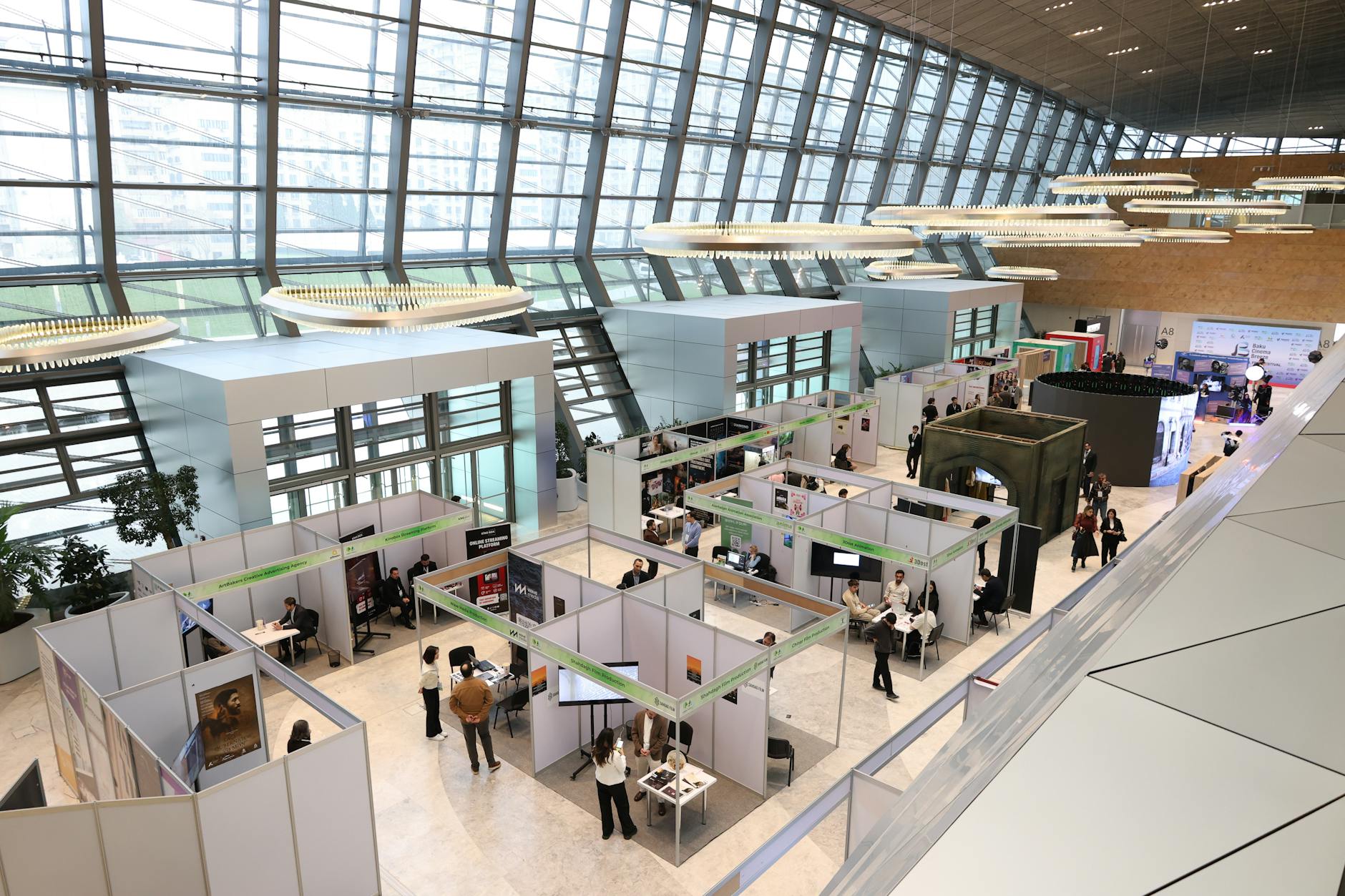
China’s trade show calendar is one of the most extensive in the world. There are hundreds of trade fairs across the country each year, covering everything from industrial machinery to cosmetics to agricultural inputs. For a foreign company trying to establish supplier relationships, scout the market, or build brand presence with Chinese buyers, the question is not whether Chinese trade shows matter. They do. The question is which ones deserve your budget and time, and how to work them effectively.
Why Chinese Trade Shows Are Different
Western trade fairs tend to be heavy on marketing and light on transactions. Chinese trade shows, particularly in manufacturing and industrial sectors, often operate as genuine procurement venues. Buyers come with budgets and sourcing mandates. Sellers come ready to quote, negotiate, and sign framework agreements on the floor. The culture of doing real business at events is embedded in the way Chinese buyers use these fairs, not just as discovery events but as annual purchasing touchpoints.
This matters for foreign participants. If you show up to a major Chinese trade show without samples, pricing authority, and people who can speak to specifications, you are leaving significant opportunity on the table. The operational preparation required to participate effectively is higher than for equivalent Western events.
The Shows Worth Knowing
Canton Fair (China Import and Export Fair)
The Canton Fair in Guangzhou is the single most important trade event in China for foreign buyers sourcing physical goods. Held twice a year in April/May and October, it spans three phases across more than 1.1 million square meters of exhibition space, covering consumer electronics, industrial machinery, home goods, apparel, food, and more. Over 200,000 foreign buyers attend annually across both editions.
For foreign companies sourcing from China, the Canton Fair remains the most efficient concentration of qualified suppliers in a single location. You can compare vendors across the same product category, meet multiple factory representatives in a single day, and gather competitive pricing across an entire product segment. The scale is overwhelming at first, but systematic preparation, including pre-registering, mapping booth locations by sector, and scheduling supplier meetings in advance, makes it manageable. Canton Fair participation is a near-mandatory step for any company doing meaningful product sourcing from China.
China International Import Expo (CIIE)
The CIIE in Shanghai, launched in 2018, is a different kind of event. Unlike the Canton Fair, which focuses on Chinese exports, CIIE was designed to showcase foreign imports to Chinese buyers. It is a politically significant event that signals China’s commitment to importing more goods and opening its domestic market. If your goal is selling into China rather than sourcing from it, CIIE is the highest-profile platform available to foreign brands entering the Chinese market. Participation sends a clear signal about your commitment to the Chinese market and provides access to government-affiliated buyers that few other platforms offer.
Yiwu International Commodities Fair
The Yiwu Fair, held in Yiwu, Zhejiang, focuses on small commodities, daily consumer goods, and manufacturing inputs. Yiwu itself is home to the world’s largest wholesale market, and the fair reflects that positioning. Foreign buyers of consumer goods, promotional products, and light manufacturing components will find competitive pricing and high supplier density here. It is less prestigious than the Canton Fair but highly practical for buyers working in specific consumer product categories where Yiwu’s manufacturing cluster dominates supply.
Bauma China (Construction Machinery)
For companies in construction, mining, and heavy equipment, Bauma China in Shanghai is the sector benchmark. Held every two years, it showcases Chinese and international manufacturers and is the primary meeting point for procurement teams in infrastructure, real estate, and industrial development. Chinese construction equipment manufacturers have moved from low-cost alternatives to genuine global competitors, and Bauma China is where that competitive landscape is most visible.
CIFIT (China International Fair for Investment and Trade)
CIFIT in Xiamen focuses on investment attraction rather than goods trading. Provincial governments, development zones, and investment promotion agencies use it to court foreign direct investment. For companies evaluating Chinese market entry, factory establishment, or joint venture partnerships with regional governments, CIFIT provides unique access to decision-makers at the provincial and municipal level. If you are at the stage of choosing where in China to establish operations, attending CIFIT provides a structured venue for those conversations. For context on the entity structures available for foreign investment, our guide on setting up a WFOE in China covers the legal framework in detail.
Industry-Specific Shows Worth Tracking
Beyond the generalist fairs, China hosts dominant sector-specific trade shows in several industries. SEMICON China in Shanghai is the key event for semiconductor and electronics manufacturing. Cosmoprof Asia (held in Hong Kong) is the benchmark for beauty and personal care. SNIEC in Shanghai hosts major food, pharma, and retail events year-round. ProWine China covers wine and spirits distribution. Identify the two or three shows that serve your specific sector and build them into your annual market intelligence calendar.
What Separates Productive Participation from Expensive Tourism
Pre-Show Work Matters More Than the Show Itself
The most common reason foreign companies leave Chinese trade shows underwhelmed is insufficient preparation. The floor is chaotic, the booths blend together, and without prior research into who attends and where they are located, you are navigating by chance. Before any major Chinese trade show: identify specific companies and booths to visit, register on the official platform to access the exhibitor directory, schedule meetings with key suppliers or buyers before you arrive, and prepare materials in Chinese including a company overview, product specs, and a clear statement of what you are looking for.
Bring the Right People
Chinese trade show interactions move quickly. Suppliers and buyers expect to discuss specifications, pricing, and terms in real time. If you bring only marketing staff without technical or procurement authority, you will collect business cards and leave without advancing any relationship. Bring people who can make decisions or who have clear mandates about what decisions they are authorized to make. A Mandarin-speaking team member or a professional interpreter is essential at most events outside of CIIE and international-oriented fairs where English fluency is higher. For context on how relationship dynamics influence Chinese business interactions, our guide on guanxi and relationship-building in Chinese business covers the cultural fundamentals.
Follow Up Immediately
Chinese business contacts made at trade shows expect prompt follow-up. Send a WeChat message or email within 24 to 48 hours of meeting anyone you want to develop. Reference specific topics from your conversation. Chinese counterparts who met you at a show and then heard nothing for two weeks will assume you are not serious. The follow-up is as important as the meeting.
Exhibiting vs. Attending
Exhibiting at a major Chinese trade show is expensive. A modest booth at the Canton Fair or CIIE typically costs between USD 15,000 and 50,000 including space rental, booth construction, staffing, and travel. That investment is justified when you have a product or service with genuine demand in the Chinese market, you are prepared to handle the volume of inquiries a successful booth generates, and you have Chinese-language materials and staff capable of conducting substantive conversations. Exhibiting before you are operationally ready to handle Chinese customer relationships consistently is a costly way to collect business cards you cannot convert.
For most foreign companies entering the market, attending as a buyer first, then evaluating exhibitor participation once you understand the event dynamics and have established initial relationships, is the more effective sequence.
Integrating Trade Shows Into a Market Entry Strategy
Chinese trade shows work best as one component of a broader market entry approach rather than a standalone strategy. The relationships you initiate at shows require sustained follow-up and relationship investment to convert. For companies building their China market entry strategy, our guide on China’s free trade zones covers the operational and regulatory framework for establishing a presence that supports sustained commercial activity. For entrepreneurs building global businesses, Hustlers Library covers the strategic and operational side of entering new markets from a standing start.
The companies that get the most from Chinese trade shows are the ones that treat them as an annual operational rhythm, not a one-time experiment. Show up prepared, follow up consistently, and build the market knowledge that makes each subsequent participation more productive than the last.