
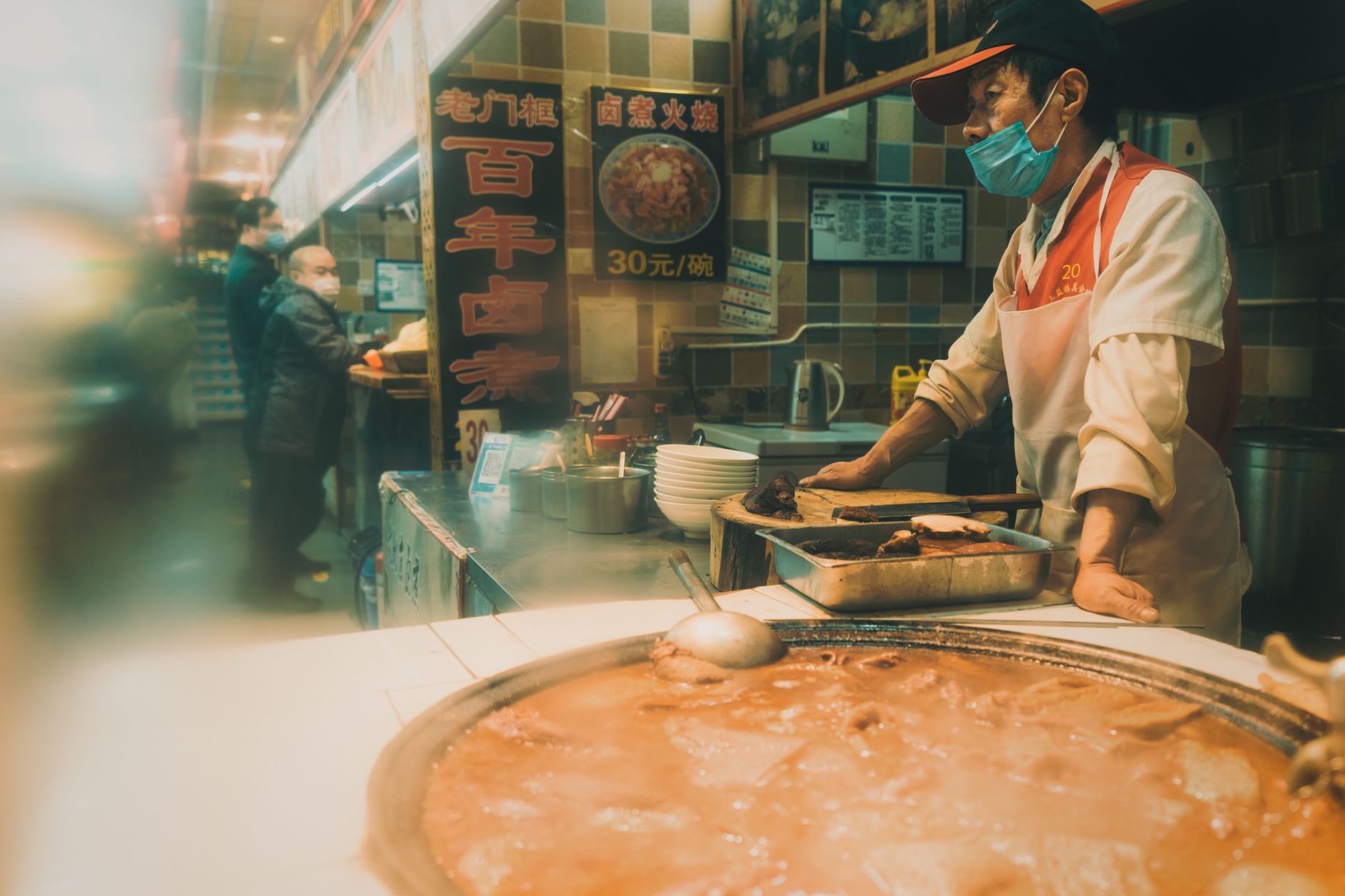
China’s food and beverage market is the largest in the world by consumer spending, projected to exceed $2.1 trillion USD by 2027 according to Euromonitor International. For Western brands, the opportunity is enormous — but so are the barriers. Regulatory approval is complex, distribution is fragmented, and consumer preferences shift faster than in most Western markets. This guide gives you the operational framework to enter China’s F&B sector the right way.
The Scale of the Opportunity
China’s F&B sector is driven by three converging forces: a growing middle class with rising disposable income, increasing health consciousness, and a persistent appetite for imported and “premium foreign” products. Nielsen IQ data from 2025 shows that 61% of Chinese urban consumers actively seek out imported food and beverage products, associating them with higher quality and safety standards — a perception shaped significantly by domestic food safety scandals over the past two decades.
Categories with the strongest growth trajectories for Western brands include:
- Health and functional foods — protein supplements, fortified cereals, organic snacks
- Premium dairy — infant formula, artisan cheese, specialty yogurt
- Alcoholic beverages — whiskey and craft beer have posted double-digit growth annually since 2020
- Ready-to-drink (RTD) beverages — cold brew coffee, kombucha, premium juice
- Plant-based foods — growing fast, though still a niche; Impossible Foods and Oatly have both established footholds
Second- and third-tier cities (e.g., Chengdu, Wuhan, Xi’an, Nanjing) are increasingly important. While Shanghai and Beijing remain the test markets of choice, growth rates in lower-tier cities are outpacing coastal megacities as infrastructure and logistics improve.
Regulatory Framework: What You Must Clear Before Selling
China’s food import system is administered primarily by the General Administration of Customs of China (GACC) and the National Medical Products Administration (NMPA) for functional and health foods. Understanding both is non-negotiable.
GACC Registration
As of January 2022, all foreign food manufacturers exporting to China must be registered with GACC under the updated Measures for the Registration and Filing of Overseas Manufacturers of Imported Food (Order 248). This replaced the old CNCA system. Registration is mandatory for 18 food categories including meat, dairy, aquatic products, and infant formula. Other food categories require filing (备案, bèi’àn) rather than full registration — a lighter-touch process but still mandatory.
Timelines for GACC registration vary by category: dairy and infant formula can take 12–18 months; other categories typically 3–6 months. Applications are submitted through GACC’s CIFER system (China Import Food Enterprise Registration). You will need a Chinese co-applicant or a registered agent with local standing.
GB Standards and Labeling Requirements
All food products sold in China must comply with GB (Guobiao) standards, China’s national standards system. Key standards for F&B include:
- GB 7718-2011: General labeling standard for pre-packaged food — mandatory fields, font size rules, Chinese-language requirement
- GB 28050-2011: Nutrition labeling standards, including the “4+1” rule (energy, protein, fat, carbohydrates + sodium)
- GB 2760: Food additive standards — many additives approved in the US or EU are not approved in China
Labels must be in simplified Chinese. Minimum font size is 1.8mm for most required fields. Claims like “natural,” “organic,” or “sugar-free” trigger additional regulatory review. Organic claims require China Organic Certification (中国有机认证) issued by a CNCA-accredited certifier — foreign certifications like USDA Organic are not automatically recognized.
Health Foods (保健食品)
If your product makes any health claim — even implied ones — it may be classified as a baojian shipin (health food) under the Food Safety Law of China (2021 revision). This triggers a separate approval pathway through NMPA, requiring clinical substantiation and can take 24+ months. Many Western supplement brands have stumbled here by not anticipating reclassification during customs review.
Distribution Channels: The Three Pathways In
1. Cross-Border E-Commerce (CBEC)
Cross-border e-commerce is the fastest and lowest-risk entry point for most Western F&B brands. Under China’s CBEC framework (administered jointly by GACC and MOFCOM), products sold through bonded warehouse or direct mail models to individual Chinese consumers are subject to simplified customs procedures and — in many cases — exempt from the GACC manufacturer registration requirement for initial market testing.
The primary platforms are Tmall Global (operated by Alibaba), JD Worldwide, and Kaola (now part of NetEase). Tmall Global accounts for roughly 45% of all imported F&B CBEC volume. Annual fees, deposit requirements, and commission structures vary — Tmall Global typically charges a $5,000–$10,000 annual fee plus 2–5% commission depending on category.
For a full breakdown of how to structure your Tmall Global store, see our guide on selling on Tmall Global.
2. General Trade (Traditional Import)
For brands targeting retail shelves — supermarkets, convenience chains, specialty food stores — traditional import (一般贸易, yīgān màoyì) is required. This involves full GACC registration, CN customs clearance, import duties, and VAT (typically 9–13% for food products). Distribution is usually handled through a tiered system: national importer → regional distributor → local wholesaler → retailer.
Key modern grocery retail chains worth targeting in China include Hema Fresh (Alibaba), Sam’s Club (Walmart’s highest-performing format in China), Ole’ and BLT (CR Vanguard’s premium formats), and Freshippo. Premium imported food sections in these stores are fiercely competitive but genuinely profitable if you can secure shelf space.
3. Foodservice and HoReCa
Hotel, restaurant, and catering (HoReCa) channels are underutilized by Western F&B brands but represent a significant volume driver — especially for premium proteins, specialty dairy, and alcoholic beverages. International hotel groups (Marriott, Hilton, IHG) operating in China maintain approved supplier lists and often have global procurement agreements that can be leveraged to get your product into Chinese properties.
Digital Marketing and the Role of KOLs
No F&B launch in China succeeds without a credible digital presence. The relevant ecosystem is distinct from anything in the West:
- Xiaohongshu (Little Red Book / RED): The dominant platform for food discovery among urban female consumers aged 18–35. A single post from a mid-tier KOL (100K–500K followers) can drive measurable CBEC sales within 48 hours. Critical for premium, lifestyle-adjacent F&B brands.
- Douyin (TikTok’s Chinese counterpart): Short-video format drives impulse purchases. Douyin’s in-app commerce capability (抖音电商) allows direct product links in videos — F&B livestream selling has become a primary channel for snacks and beverages.
- WeChat: Less useful for discovery, but essential for CRM, loyalty programs, and mini-program stores. Most established imported F&B brands run a WeChat Official Account as the hub for repeat purchasers.
Understanding China’s advertising and claims regulations is essential before you run any campaign. Certain health claims are restricted, and influencer disclosures are now regulated under the Internet Advertising Management Measures (2023). For a detailed breakdown, see our post on China’s advertising regulations for foreign brands.
Pricing Strategy: The Premium Trap
Foreign F&B brands often over-price on entry, assuming a foreign origin premium will carry the day. This works in narrow segments (ultra-premium spirits, infant formula) but fails in most categories. Chinese consumers are sophisticated comparison shoppers — platforms like Taobao, JD, and Pinduoduo make price transparency near-total.
A practical pricing framework:
- Anchor to a domestic premium benchmark, not your home market price. A $12 Greek yogurt that retails for $3 domestically needs to compete against Chinese premium yogurts at ¥18–25 ($2.50–$3.50).
- Factor in full landed cost: import duty (typically 15–25% for processed foods), VAT (9–13%), CBEC platform commission (2–5%), distributor margin (25–40%), and retail markup (20–35%). Total channel cost can easily be 2–3× your FOB price.
- Use CBEC pricing to test elasticity before committing to general trade pricing structures.
Consumer Trends Shaping F&B Demand in 2025–2026
Several macro trends are actively reshaping what sells in China’s F&B market:
Health and “Clean Label” Demand: Post-COVID consumer behavior has permanently elevated interest in immunity-supporting, low-sugar, and high-protein products. The concept of gong neng shi pin (functional food) has gone mainstream. Brands that can authentically speak to health credentials — with real certifications, not marketing claims — command premium pricing.
The “China Chic” (国潮) Counterwave: Domestic Chinese brands have become aspirational. Brands like Nongfu Spring, Genki Forest, and Bestore have built premium positioning that rivals international brands. Foreign brands can no longer assume Chinese consumers automatically prefer imports. Localization — flavor profiles, packaging design, ingredient adaptation — is now mandatory, not optional. Our analysis of how China’s middle class is reshaping consumer markets covers this shift in depth.
Singles Economy and Small-Format SKUs: With China’s unmarried adult population exceeding 240 million and single-person households rising, small-format packaging (single-serve, trial sizes) outperforms family packs in CBEC channels. This has direct implications for your SKU architecture and unit economics.
Regional Flavor Preferences: China is not one market. Sichuan consumers prefer bold, spicy flavors; Cantonese consumers lean toward lighter, fresher profiles; Northern consumers favor salt-forward foods. Brands that enter with a single national SKU often underperform regionally.
Key Risks and How to Mitigate Them
Distributor Lock-In: Chinese distribution agreements often include exclusivity clauses that can be very difficult to exit. Before signing, ensure any exclusivity is geo-limited (not national) and time-limited (12–24 months with performance benchmarks). The US-China Business Council publishes guidance on distribution contract pitfalls that is worth reviewing before any agreement: uschina.org.
IP and Brand Registration: China operates a first-to-file trademark system. Register your brand name in Chinese characters (transliteration or translation) with the China National Intellectual Property Administration (CNIPA) before entering. Squatting on foreign brand names is common — especially for food categories with high consumer demand.
Regulatory Changes: China’s food safety standards are updated regularly. GB standards are revised on a rolling basis and GACC can change import protocols with 30–60 days notice. Maintain a relationship with a China-based regulatory consultant who monitors GACC and NMPA updates. The US Commercial Service in Beijing publishes market intelligence and regulatory updates specifically for US exporters at trade.gov/china.
Counterfeit Risk: Premium imported F&B is a high-counterfeit category. Register on Alibaba’s IPP (Intellectual Property Protection) platform and JD’s Brand Protection program before or immediately after launch. Monitor CBEC platforms for unauthorized sellers using your brand assets.
Building a China F&B Strategy That Lasts
The brands that succeed long-term in China’s F&B market share a few characteristics. They invest in localization — both product and brand story. They treat CBEC not just as a sales channel but as a consumer research lab. They build local teams or find genuinely committed distributor partners rather than relying on arms-length relationships. And they treat regulatory compliance as a competitive moat, not a cost center.
China’s food and beverage market rewards patience and specificity. A focused entry — one region, one channel, one consumer segment — consistently outperforms broad national launches. Get the fundamentals right: GACC registration, compliant labeling, a credible digital presence, and a distributor with genuine retail relationships. From there, you can scale.
For the broader market entry framework that applies beyond F&B, see our step-by-step guide to entering the Chinese market as a Western company.