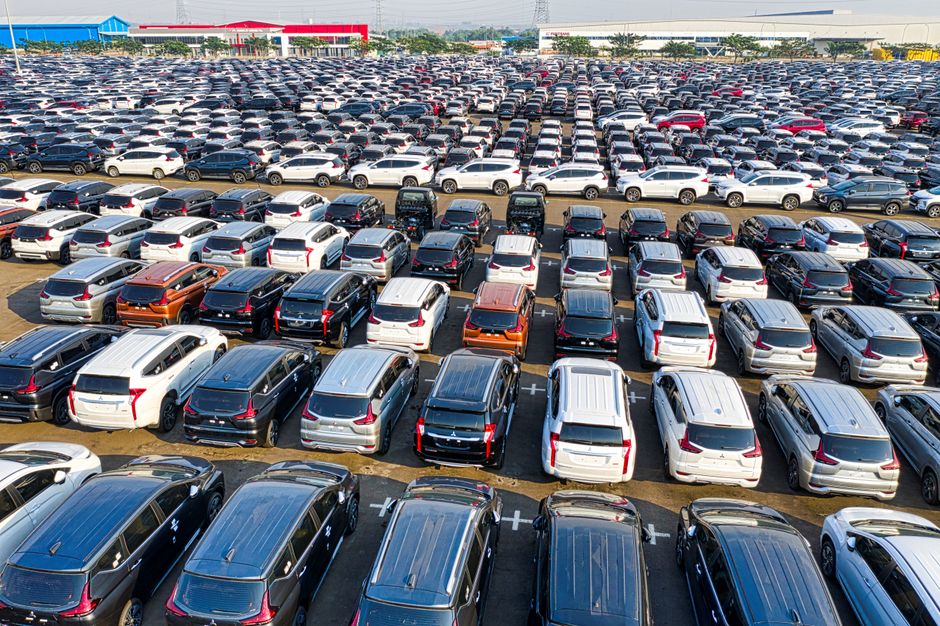
China is the world’s largest automobile market and its largest vehicle manufacturer. In 2023, Chinese automakers produced 30.1 million vehicles — more than the combined output of the United States, Japan, and Germany. But the story of China’s automotive dominance is not simply about assembly lines. It is about one of the most integrated and strategically important industrial supply chains ever constructed, and one that every global automaker, parts supplier, and logistics operator now depends on in ways that were barely imaginable a decade ago.
For foreign companies navigating this landscape, understanding who the key players are, where the leverage sits, and how the system is evolving is no longer optional. It is a baseline requirement for doing business in the modern global auto industry.
How China Built Automotive Supply Chain Dominance
China’s ascent did not happen overnight. The country’s modern automotive industry traces its roots to the 1950s, when First Auto Works (FAW) was established in Changchun with Soviet technical assistance. But the real inflection point came in the 1980s and 1990s, when China opened its market to joint ventures — requiring foreign automakers to partner with domestic firms to access Chinese consumers.
Companies like Volkswagen, General Motors, and Toyota entered those joint ventures and brought manufacturing expertise and technology transfers that seeded China’s parts and components ecosystem. Over the following three decades, local suppliers absorbed that knowledge, moved up the value chain, and began competing globally. Today, China’s automotive supply chain encompasses everything from raw material extraction — the country controls roughly 60% of global lithium refining capacity and dominates rare earth processing — through precision components, electronic systems, battery cells, and final assembly. China’s dominance in advanced materials, including titanium, tungsten, and magnesium, underpins not just automotive but the entire global manufacturing economy.
The Key Players You Need to Know
SAIC Motor
Shanghai Automotive Industry Corporation (SAIC) is China’s largest automaker by volume, producing over 5 million vehicles annually through joint ventures with Volkswagen and General Motors, plus its own brands including MG. SAIC’s supply chain spans over 1,000 tier-one and tier-two suppliers concentrated in the Yangtze River Delta, making it one of the most vertically integrated automotive organizations in the world.
BYD
Build Your Dreams (BYD) became the world’s largest producer of new energy vehicles in 2023, surpassing Tesla in combined EV and plug-in hybrid sales with over 3 million units. What distinguishes BYD is extreme vertical integration: the company produces its own batteries (through FinDreams Battery), its own semiconductors, and its own electric motors. This structural cost advantage is difficult for Western competitors to replicate. BYD’s global expansion now targets Brazil, Southeast Asia, Europe, and the Middle East with locally assembled vehicles.
Chery, Great Wall Motor, and the Exporters
Below the tier-one giants, a second wave of Chinese automakers has become aggressive exporters. Chery, based in Anhui Province, exported over 900,000 vehicles in 2023 — China’s top passenger car exporter. Great Wall Motor (GWM) has built a strong position in SUVs and pickup trucks, with manufacturing plants now operating in Russia, Thailand, Brazil, and South Africa. These mid-tier automakers carry deep supply chain relationships with Chinese parts producers and are extending those networks internationally as they open overseas factories.
Foxconn’s EV Pivot
The automotive supply chain extends beyond traditional automakers. Foxconn’s transformation into an EV contract manufacturer represents a new model: applying the same high-volume assembly discipline that built the iPhone supply chain to electric vehicles. Its open MIH EV platform allows automakers to outsource manufacturing entirely — a direct challenge to the traditional OEM model.
China’s Auto Clusters: Geography Matters
China’s automotive industry is organized into geographic clusters with distinct specializations:
- Northeast China (Changchun, Shenyang): Historical heartland of FAW and BMW Brilliance. Strong in conventional powertrain manufacturing and commercial vehicles.
- Yangtze River Delta (Shanghai, Nanjing, Wuxi): SAIC’s home base and home to Tesla’s Gigafactory Shanghai. Dense supplier ecosystem for both conventional and EV components.
- Pearl River Delta (Guangzhou, Dongguan): GAC Group headquarters. Growing EV manufacturing cluster, with BYD and Xiaomi’s SU7 drawing on Guangdong’s electronics supply chain.
- Chongqing and Sichuan: Historically China’s largest automobile production base by volume, home to Changan Automobile and dozens of major suppliers. Roughly 2 million vehicles annually, a critical node in China’s inland manufacturing strategy.
- Shenzhen: BYD’s headquarters city, emerging as the hub for EV electronics, smart cockpit technology, and intelligent vehicle software.
The EV Transition and Battery Concentration
The shift from internal combustion engine (ICE) vehicles to EVs is a fundamental restructuring of the automotive supply chain, and China has deliberately positioned itself at the center of it. Traditional ICE vehicles require roughly 1,400 moving parts in the powertrain alone. An electric vehicle requires approximately 200. This simplification eliminates competitive advantages that legacy Tier-1 suppliers like Bosch and Denso built over decades in fuel injection and transmissions. In their place, the critical components are batteries, electric motors, and power electronics — all areas where Chinese companies now hold leading global positions.
CATL (Contemporary Amperex Technology), headquartered in Ningde, Fujian, controls approximately 37% of global EV battery supply. Its customers include Tesla, BMW, Mercedes-Benz, Volkswagen, and Toyota. CALB, Gotion High-Tech, and EVE Energy round out a Chinese battery industry that collectively accounts for over 60% of global production capacity.
For Western automakers, this concentration creates both opportunity and risk. Opportunity because Chinese battery suppliers offer competitive pricing and unmatched scale. Risk because geopolitical tensions or export controls can cascade rapidly through production schedules. Several major OEMs — including GM and Ford — are pursuing dual strategies: partnering with Chinese battery firms for technology access while simultaneously investing in domestic production to reduce dependency.
Trade Policy and What It Means for Procurement
The US imposed Section 301 tariffs on Chinese automotive parts beginning in 2018, reaching 25% on many components. In 2024, tariffs on Chinese EVs rose to 100%, blocking direct vehicle imports. The EU followed with countervailing duties on Chinese EVs ranging from 17.4% to 38.1%. These measures have reshaped supply chain strategy without eliminating Chinese component dependence. Many Western automakers continue sourcing Chinese-made batteries, electronics, and materials, often routing through Mexico, South Korea, or Southeast Asia.
The US Office of the United States Trade Representative (USTR Automotive) publishes ongoing tariff and policy updates that procurement teams should monitor. On the Chinese side, the China Association of Automobile Manufacturers (CAAM) releases monthly production, sales, and export data that serves as an essential primary source for supply chain planning.
Practical Guidance for Foreign Companies
Three priorities stand out for foreign companies engaged with China’s automotive supply chain:
Map your Tier-2 and Tier-3 exposure. Most foreign companies have reasonable visibility into direct (Tier-1) suppliers. Far fewer have mapped Tier-2 and Tier-3 dependencies. In automotive, this often reveals unexpected concentrations in Chinese-sourced battery materials, rare earth-based magnets for electric motors, and semiconductor packages. The supply chain disruptions of 2021 to 2022 demonstrated the cost of this blind spot; the companies that fared best had invested in visibility before the crisis.
Engage strategically with the Chinese ecosystem. Treating China purely as a sourcing risk to be mitigated misses the innovation opportunity. Companies like CATL in batteries, BYD in power electronics, and Huawei’s automotive unit in intelligent driving systems represent genuine technological leadership. Foreign companies that engage proactively — through joint development agreements or co-investment — gain capabilities they cannot replicate at home at comparable speed or cost.
Build fluency with primary data sources. The CAAM and China’s Ministry of Industry and Information Technology (MIIT) publish granular production, NEV registration, and supply chain data. Companies that read these primary sources directly — rather than relying exclusively on Western analysis — make sharper sourcing decisions and anticipate market shifts earlier.
China’s automotive supply chain is not a peripheral concern for global manufacturers. It is the central architecture around which the industry’s next decade will be built. Understanding its structure, its players, and its trajectory is the price of admission for serious participation in global automotive business.