
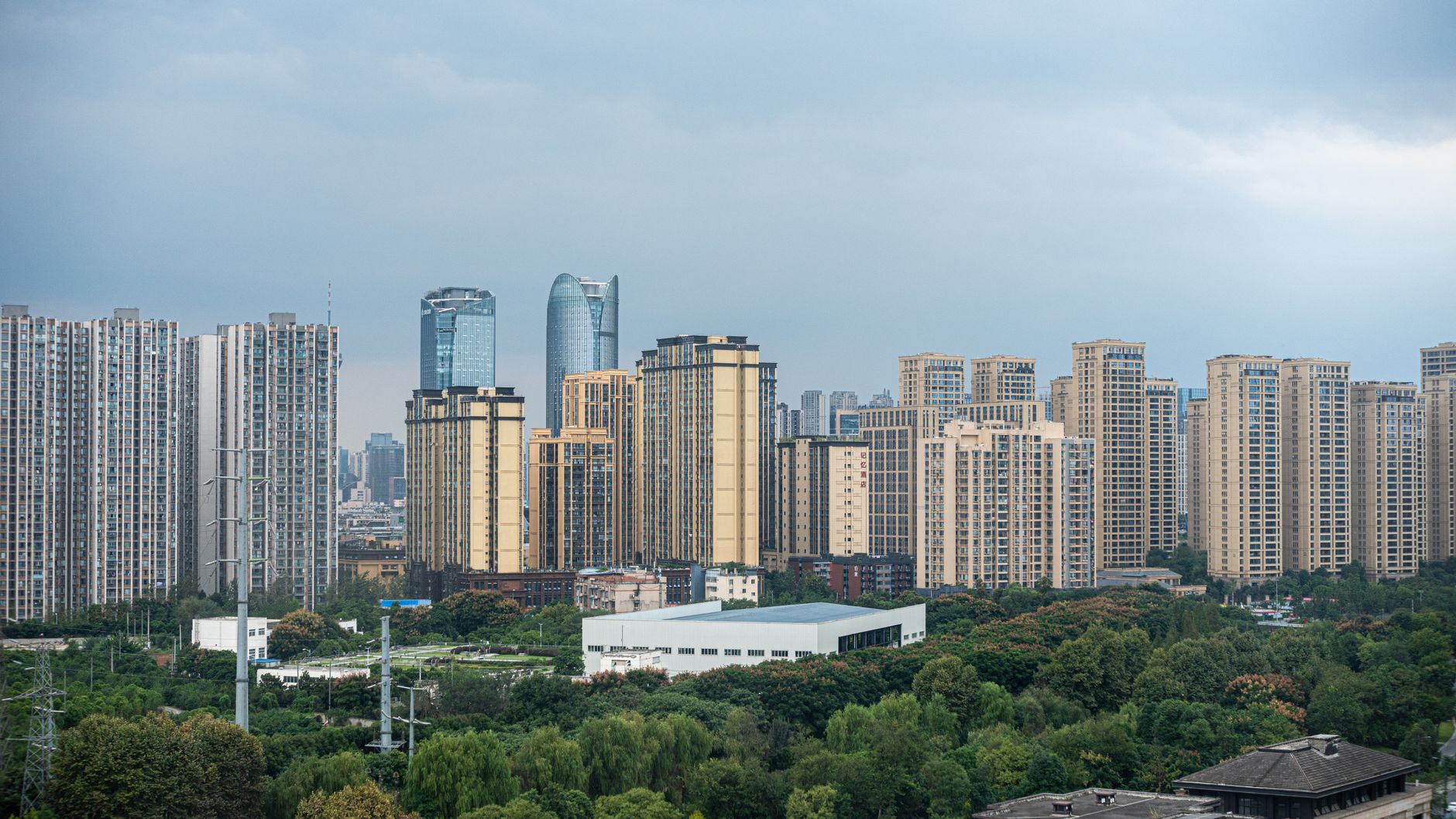
When global investors map China’s economic geography, their eyes land on Shenzhen’s hardware corridors, Shanghai’s financial towers, or Beijing’s Zhongguancun. Chengdu — the capital of Sichuan Province, roughly 1,800 kilometers from the coast — rarely makes the first shortlist. That oversight is becoming expensive. With a GDP surpassing 2.3 trillion yuan (approximately USD 320 billion) in 2024, a population of over 21 million, and industrial clusters anchored in gaming, biomedicine, aerospace, and advanced electronics, Chengdu has quietly emerged as one of China’s most consequential technology and consumer economy hubs.
For foreign businesses evaluating western China market entry, Chengdu is the primary gateway to a domestic market of over 400 million people spanning Sichuan, Chongqing, Yunnan, Guizhou, and Tibet. Understanding how its industrial clusters formed, which companies anchor them, and how trade policy shaped its growth is essential for anyone navigating the US-China business landscape in 2026.
The Strategic Logic: How Defense Policy Built a Tech Base
Chengdu’s rise as a technology center was the product of deliberate state policy. In the 1960s, China’s “Third Front” (三线建设) construction program relocated strategic defense industries deep inland. Aerospace, electronics, and defense manufacturers — including what became the Chengdu Aircraft Corporation (CAC), maker of the J-10 and J-20 fighter jets — were established there, laying an engineering talent base that later-generation tech companies inherited.
The 2000s “Go West” (西部大开发) national policy initiative directed further fiscal investment and regulatory incentives toward interior provinces. Chengdu’s High-Tech Zone (CDHTZ), elevated to national status, became a magnet for multinationals. Intel set up a chip assembly and testing facility in 2005. Texas Instruments followed with a wafer fabrication plant. By 2015, Chengdu produced roughly 30% of China’s integrated circuit exports by packaging volume.
The third driver was talent strategy. Chengdu is home to over 56 universities, including the University of Electronic Science and Technology of China (UESTC) and Sichuan University, graduating tens of thousands of engineers and biomedical researchers annually. Combined with living costs 30-40% below Beijing and Shanghai, Chengdu has consistently attracted talent that might otherwise cluster on the coast.
Gaming Capital: Chengdu’s Outsized Role in China’s Video Game Industry
No sector better illustrates Chengdu’s tech credentials than video games. The city hosts over 3,000 registered game companies. Tianmei Studio Group, one of Tencent’s premier internal studios, is headquartered here. Tianmei built Honor of Kings (王者荣耀) — a mobile title that exceeded 100 million daily active users at peak in China and launched internationally as Arena of Valor. The studio employs over 3,000 people in Chengdu and drives hundreds of millions in annual revenue.
NetEase also maintains major development operations in the city. Chengdu’s appeal for game studios is structural: lower costs than coastal cities, a concentrated university pipeline in computer science and art design, and active city government subsidies through the Chengdu Game Industry Alliance. For foreign game publishers evaluating co-development or licensing partnerships in China, Chengdu’s concentration of capable mid-tier studios — accessible in ways that Beijing and Shanghai are not — deserves serious attention. See our analysis of NetEase, HoYoverse, and the global rise of China’s game industry for the national competitive context.
Biomedicine: Chengdu’s Fastest-Growing Industrial Cluster
Chengdu’s biomedical sector has matured into one of China’s most significant life sciences clusters. The Tianfu International Bio-Town (天府国际生物城), established in 2016 in Shuangliu District, had attracted over 700 biomedical enterprises with combined investment exceeding 200 billion yuan (USD 28 billion) by 2024.
Key anchor companies include Chengdu Kanghong Pharmaceutical Group — listed on the Shanghai Stock Exchange with a market cap exceeding 40 billion yuan — which leads in ophthalmology biologics and has pursued US FDA approval for its anti-VEGF therapy Conbercept. Sichuan Kelun Pharmaceutical, one of China’s largest infusion and antibiotic manufacturers with annual revenues exceeding 20 billion yuan, exports active pharmaceutical ingredients (APIs) to Europe, Southeast Asia, and the Americas. For Western pharma firms, Chengdu offers CRO and CDMO infrastructure at costs well below Shanghai or Beijing, alongside accelerating clinical trial capacity. This is complementary to the national CDMO picture covered in our post on Wuxi Biologics, WuXi AppTec, and China’s CDMO boom.
Semiconductors and Advanced Electronics
Intel’s Chengdu facility — one of its largest chip assembly, test, and packaging plants globally — employs approximately 3,500 people and processes a significant share of Intel’s consumer and enterprise CPU packaging output for Asia-Pacific. Domestically, GigaDevice Semiconductor — a leading NOR flash memory producer whose components appear in automotive electronics, consumer devices, and industrial controls worldwide — reported revenues exceeding 3.5 billion yuan in 2023, distributing across 50-plus countries.
China’s Ministry of Industry and Information Technology has designated Chengdu as one of seven national “advanced manufacturing cluster” cities for integrated circuits, unlocking preferential tax treatment, R&D subsidies, and facilitated land allocation. For foreign semiconductor equipment, materials, and EDA software companies evaluating China sales strategies, Chengdu’s cluster represents a concentrated, growing customer base. Our analysis of China’s semiconductor packaging and advanced assembly sector provides broader supply chain context.
Consumer Economy: A Bellwether for Western China’s Retail Market
Chengdu consistently ranks first or second in China for retail sales growth among major cities. Its consumers spend proportionally more on dining, entertainment, and lifestyle than most peer cities — making it a preferred test market for international food and beverage companies entering China.
Starbucks operates over 250 stores in Chengdu, one of its largest single-city markets globally. IKEA opened its largest Chinese store here. Apple’s Chunxi Road flagship is among its highest-revenue stores in China. These are not coincidental choices — they reflect research confirming that Chengdu’s educated, younger consumer base represents the leading edge of western China’s consumer upgrade cycle. For foreign consumer brands mapping China expansion sequences, Chengdu belongs in the first wave after Beijing, Shanghai, and Guangzhou-Shenzhen.
Logistics: Chengdu on the China-Europe Rail Network
The China-Europe Railway Express (中欧班列) runs its largest single origination volume from Chengdu. In 2023, Chengdu dispatched over 5,000 China-Europe rail freight trains — more than any other Chinese city — carrying automotive parts, electronics, chemicals, and machinery to Germany, Poland, Hungary, and the Netherlands. Chengdu Tianfu International Airport (opened 2021) adds 90-million-passenger capacity and direct cargo routes to Frankfurt, Amsterdam, Chicago, and Los Angeles, substantially reducing logistics friction for manufacturers in western China. The Chongqing manufacturing corridor, 300 kilometers east, provides a complementary node worth evaluating in parallel.
Practical Guidance for Foreign Businesses
Chengdu’s city government is among China’s more proactive in courting foreign investment. The Chengdu Investment Promotion Bureau maintains English-language resources and dedicated foreign investment liaisons — relatively uncommon among Chinese provincial capitals. The US Commercial Service provides parallel resources for American companies; their China market access tools and country commercial guides are a practical due diligence starting point.
The Sichuan Pilot Free Trade Zone — of which Chengdu hosts the largest component — offers streamlined customs, reduced capital controls for certain cross-border transactions, and a negative-list foreign investment framework. For healthcare, financial services, and logistics companies, the FTZ can meaningfully reduce market entry friction. China’s Ministry of Commerce maintains updated foreign investment catalogs and FTZ regulatory guidance at mofcom.gov.cn.
The Strategic Verdict
Chengdu’s story is one of sustained industrial policy converting a wartime defense manufacturing base into a multi-sector technology economy, amplified by demographic density and a consumer culture that rewards quality and experience. Gaming, biomedicine, integrated circuits, and aerospace represent four distinct but reinforcing engines of growth — each with real entry points for foreign businesses that understand the local market structure.
For trade consultants advising clients on China market sequencing, the question is no longer whether Chengdu belongs on the map. It is how quickly it belongs on the roadmap. Western China’s 400-million-person domestic market is growing faster than coastal averages, and Chengdu is the city best positioned to serve as the operational hub for capturing that growth. The USTR China policy briefings provide up-to-date context on market access conditions that shape entry sequencing decisions for Western firms.