
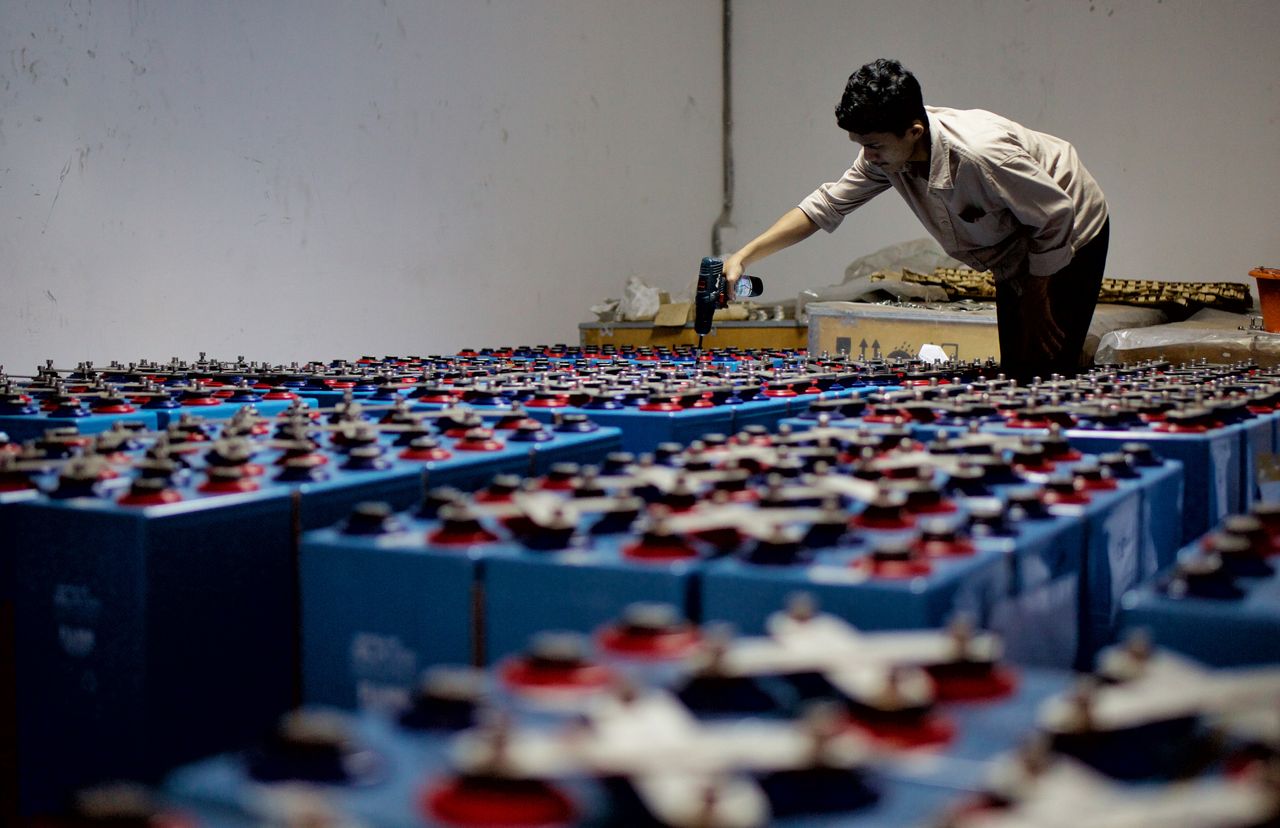
In 2011, a company called Contemporary Amperex Technology Co. Limited was spun out of ATL, a Hong Kong-based battery manufacturer, to focus exclusively on the electric vehicle market. Thirteen years later, CATL supplies batteries to Volkswagen, BMW, Toyota, Ford, and Tesla — and controls roughly 37% of the global EV battery market. Understanding how this happened is not optional for any professional in the automotive, energy, or advanced manufacturing sectors. CATL’s ascent is one of the defining industrial stories of the past decade.
From Consumer Electronics to Automotive Dominance
CATL’s founding chairman, Robin Zeng Yuqun, built his early career at TDK’s battery division before co-founding ATL in 1999. ATL became a world-class producer of lithium-polymer batteries for laptops and smartphones, supplying Apple and other major brands. When the Chinese government began aggressively subsidizing electric vehicles in the early 2010s, Zeng recognized that automotive batteries represented an order-of-magnitude larger opportunity — and required a dedicated operation.
CATL was incorporated in Ningde, Fujian Province, in 2011. The location was deliberate: Ningde offered land and infrastructure incentives, and it sat near both Fujian’s coastal manufacturing clusters and Guangdong’s electronics supply chains. The company’s first major customer was BAIC Group, followed by BMW’s Brilliance JV. The BMW partnership proved pivotal: it forced CATL to meet German engineering standards, creating internal discipline that shaped every subsequent global partnership.
By 2017, CATL had surpassed Panasonic to become the world’s largest EV battery manufacturer by volume. It listed on the Shenzhen Stock Exchange in 2018, raising approximately 5.46 billion yuan ($800 million USD). At peak market capitalization in 2021, CATL was valued at over 1.6 trillion yuan (roughly $250 billion USD) — one of the most valuable manufacturers in the world.
The Technology Bets That Built the Moat
CATL’s dominance is not primarily the result of government support, though that support has been real. It reflects deliberate technology investments made when the company could least afford to gamble.
The first critical bet was on lithium iron phosphate (LFP) chemistry. While Western manufacturers and Tesla’s Panasonic partnership pursued nickel-manganese-cobalt (NMC) cells for higher energy density, CATL doubled down on LFP. LFP batteries are cheaper to produce (no cobalt dependency), thermally more stable, and longer-lived. The energy density tradeoff was largely neutralized by CATL’s cell-to-pack (CTP) technology, which eliminates the module layer and packs cells directly into the battery pack. By 2023, LFP had captured over 40% of global EV battery market share — a reversal driven almost entirely by CATL’s sustained investment in the chemistry.
The second bet was manufacturing scale. CATL’s Yibin Base in Sichuan Province, opened in 2019, has grown into one of the world’s largest battery facilities, with capacity exceeding 100 GWh per year from a single complex. Total global manufacturing capacity reached approximately 700 GWh in 2024. Additional gigafactories are operational in Hungary (opened 2025), with facilities under development in Germany and through joint ventures in Southeast Asia.
The third investment — sodium-ion batteries — is now approaching commercial scale. CATL’s sodium-ion program, announced in 2021, targets the low-cost EV and stationary storage segments where even LFP faces cost constraints in emerging markets.
The Customer Portfolio and What It Signals
CATL’s customer list defines the global automotive industry. Domestically, it supplies BYD’s premium models, NIO, Li Auto, Xpeng, SAIC, and Geely. Globally, it counts Tesla, BMW, Volkswagen Group, Mercedes-Benz, Stellantis, Ford, and Volvo among battery partners.
The Tesla relationship deserves attention. Gigafactory Shanghai uses CATL LFP cells for standard-range Model 3 and Model Y — a deliberate cost-reduction choice in Tesla’s highest-volume market. This partnership validated CATL’s cells against the industry’s most demanding quality requirements and ended any remaining notion that Chinese battery technology was suited only to Chinese vehicles.
For Western OEMs, the CATL relationship goes beyond procurement. BMW and Volkswagen have structured deep technology co-development arrangements covering chemistry joint development, process sharing, and supply security. BYD’s decision to build its own battery subsidiary (FUDI Battery) illustrates the scale of investment required to compete with what CATL built over fifteen years.
Geopolitics and the Localization Imperative
CATL’s global expansion has collided with a new era of industrial policy nationalism. The US Inflation Reduction Act (IRA) and its “Foreign Entity of Concern” (FEOC) provisions — effective 2024-2025 — restrict EV tax credits for vehicles using battery components from Chinese-owned manufacturers. This directly targets CATL’s US supply relationships.
CATL’s primary response has been technology licensing. Its arrangement with Ford for the Marshall, Michigan BlueOval Battery Park facility — where Ford operates using CATL’s LFP IP under a licensing and technical service agreement — represents one structural model. CATL provides the know-how; Ford provides the capital and US regulatory presence. Whether this satisfies FEOC requirements remains an active legal question, with US Department of Energy guidance still evolving.
In Europe, CATL’s Debrecen, Hungary gigafactory (100 GWh planned capacity) commenced production in 2025, benefiting from over €4 billion in Hungarian government incentives. The plant primarily supplies BMW and satisfies EU local content requirements. A planned German facility near Erfurt has faced permitting and labor cost delays.
The Competitive Landscape
CATL’s primary global competitors are LG Energy Solution, Panasonic/PPES, Samsung SDI, and SK On — collectively holding roughly 35-40% of the global EV battery market. All have gigafactory capacity in Europe and the US, giving them structural advantages under current policy frameworks.
Within China, BYD’s FUDI Battery holds approximately 16% global market share. CALB and Gotion High-Tech are also expanding internationally. The competitive variable that matters most is cost: CATL’s estimated pack-level cost of $60-70 per kWh compares favorably to $90-110 for most Korean competitors. This gap reflects LFP chemistry savings, CTP manufacturing efficiency, and scale. Closing it requires either technological breakthroughs or protective regulation — most market participants are pursuing both.
What Businesses and Trade Professionals Must Know
For automotive OEMs and suppliers: CATL is a strategic technology partner, not a commodity vendor. The OEMs managing this most effectively — BMW, Volkswagen — have structured deep co-development agreements, not just purchase orders. CATL’s roadmap toward solid-state batteries (targeted 2027-2030) must factor into product planning cycles that already extend to 2030.
For energy storage and infrastructure investors: CATL’s EnerVision business has deployed over 50 GWh of grid-scale storage globally as of 2025. Its Tener product directly competes with Tesla Megapack and FLUENCE in utility-scale bids. The lithium and rare earth supply chains underpinning CATL’s production connect to China’s broader resource dominance story.
For policy and trade compliance professionals: The distinction between Chinese ownership and Chinese intellectual property is now the central question in battery supply chain analysis. The IRA FEOC rules are reshaping manufacturing geography, but Chinese technology remains embedded in much of what is being built. The US Department of Energy’s Loan Programs Office has committed over $15 billion to alternative battery manufacturing — but the LFP processes many of those factories rely on trace directly to Ningde. China’s Ministry of Industry and Information Technology maintains authoritative industry data on battery production and policy at miit.gov.cn.
The Broader Lesson
CATL is a case study in what happens when domestic market scale, industrial policy commitment, long-term R&D investment, and aggressive partnership-building converge at the right moment in a technology sector’s development. Made in China 2025 identified batteries as a priority sector before CATL’s global dominance was apparent to outside observers. The same structural conditions — massive domestic demand, government-directed transition, rapid-iteration manufacturing ecosystems — are now at work in industrial robotics, aerospace components, and advanced materials. The battery industry’s trajectory from 2011 to 2026 is the template for understanding what comes next.