
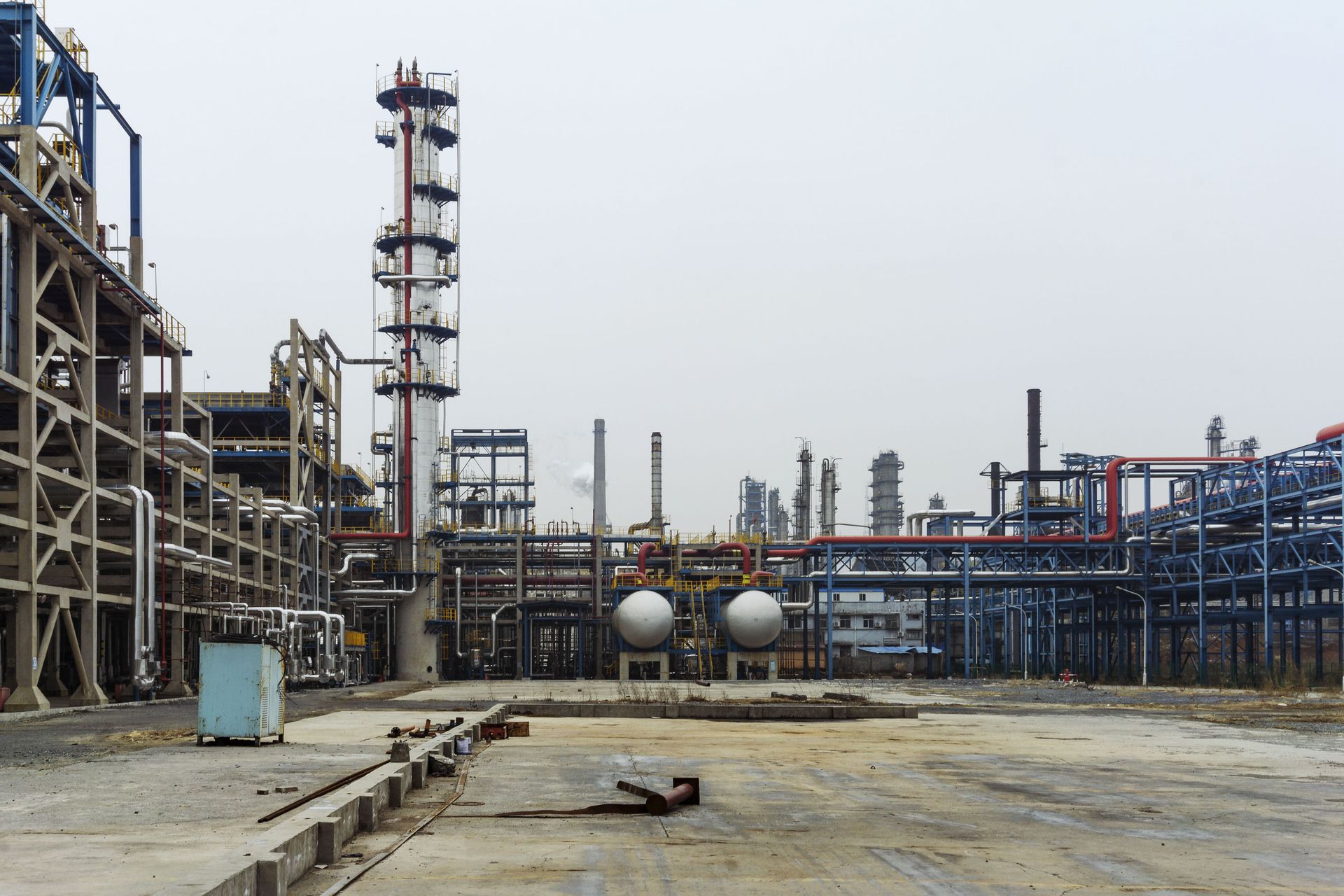
When global apparel brands source polyester fabric, when automakers spec engineering plastics, or when packaging engineers select PET film, they are almost certainly buying from a cluster of companies most Western businesspeople have never heard of. Hengli Petrochemical, Tongkun Group, and Rongsheng Petrochemical — headquartered within an hour’s drive of each other in Zhejiang and Jiangsu provinces — have built a chemical fiber and advanced materials complex that rivals BASF, Dow, and LyondellBasell in raw output, while surpassing them in integration depth and capital efficiency.
For any company that buys polyester, nylon, spandex, engineering resins, or PET packaging — and that is most of global manufacturing — China’s chemical fiber dominance sets the price, the specification, and the competitive baseline.
The Numbers That Define the Industry
China produces approximately 70% of the world’s chemical fiber by volume, according to figures published by the China Chemical Fiber Industry Association (CCFIA). In 2023, total output reached 72.4 million tons, up from fewer than 5 million tons in 1995. The sector generated export revenues exceeding $28 billion and supports an upstream-to-downstream value chain connecting oil refineries, purified terephthalic acid (PTA) plants, polymerization facilities, spinning lines, and finished fabric mills — often under one corporate roof.
Polyester dominates, accounting for roughly 78% of China’s chemical fiber output, with nylon at 10%, viscose at 8%, and high-performance fibers making up a fast-growing remainder. These materials flow into apparel, automotive interiors, tire reinforcement, industrial filtration, and a growing list of advanced applications.
The Three Giants: Hengli, Tongkun, and Rongsheng
Hengli Petrochemical
Hengli Group, founded by Fan Hongwei and based in Suzhou, Jiangsu, completed what was arguably the most audacious industrial construction project of the 2010s: a fully integrated refinery-to-polyester complex on Changxing Island in Dalian. The 20-million-ton-per-year refinery, commissioned in 2019, feeds a PTA plant with capacity of 6 million tons per year and downstream polyester spinning lines producing roughly 5 million tons of polyester filament annually.
By owning every step from crude oil to finished filament, Hengli captured margin at each stage and eliminated dependence on external PTA suppliers who had previously held significant pricing power. In 2022, Hengli Petrochemical reported revenues of approximately 230 billion yuan (about $32 billion), making it one of China’s largest privately owned industrial enterprises. Fan Hongwei spent nearly two decades building a textile and polyester base in Suzhou before committing to the upstream refinery investment.
Tongkun Group
Tongkun, headquartered in Tongxiang, Zhejiang, focused on becoming the world’s single-largest polyester filament producer through sheer scale and process efficiency. By 2023, Tongkun’s polyester filament capacity exceeded 10 million tons per year — a figure that surpasses the combined output of the entire North American and European polyester industries.
Tongkun’s Chairman Chen Shiliang built the company on relentless reinvestment in process automation and energy efficiency. Spinning lines in Jiaxing operate at utilization rates above 95%, with labor productivity per ton several times the global sector average. The company’s proximity to Zhejiang’s textile cluster — the fabric mills of Shengze, Keqiao, and Haining are within a two-hour truck drive — creates a commercial loop that is difficult to replicate elsewhere.
Rongsheng Petrochemical and Zhejiang Petroleum and Chemical
Rongsheng Petrochemical anchors Zhejiang Petroleum and Chemical (ZPC), a joint venture operating a 40-million-ton-per-year refinery on Zhoushan Island — one of the largest refineries in the world by nameplate capacity. ZPC is structured explicitly to supply aromatic feedstocks — paraxylene, benzene, and propylene — to downstream PTA, polyester, and nylon plants. In 2023, Rongsheng reported revenues of approximately 260 billion yuan.
Combined with the Hengli complex, these two projects gave China’s chemical fiber industry a level of feedstock self-sufficiency that was essentially non-existent before 2015. For buyers, this translated into more stable pricing and shorter lead times; for Western chemical companies, it removed a significant value-creation opportunity.
The Policy Architecture Behind the Buildout
None of these investments happened in a vacuum. China’s Five-Year Plans have consistently designated chemical fiber as a strategic industry, and the tools used to accelerate it are worth understanding for any executive modeling the competitive landscape.
Provincial governments in Zhejiang and Jiangsu provided preferential land pricing, streamlined permitting, and in some cases direct equity co-investment. State-owned banks — China Development Bank in particular — provided long-tenor, below-market financing for projects private capital markets elsewhere would have struggled to fund. The result was a capital allocation environment allowing private companies to take on projects with 15-20 year payback horizons. This is a structural advantage, not a temporary subsidy effect, and it shapes global chemical fiber markets for the foreseeable future.
High-Performance Fibers: The Next Frontier
Commodity polyester is not where the story ends. China’s production capacity for carbon fiber reached approximately 140,000 tons per year in 2023, up from under 10,000 tons a decade earlier, according to CCFIA data. Producers including Zhongfu Shenying and Jilin Chemical Fiber have moved from basic T300-grade material into T700 and T800 grades used in wind turbine blades, pressure vessels, and sports equipment.
Para-aramid fiber — the material in Kevlar — is being commercialized domestically by Sinopec and Taihe New Material Group, reducing dependence on DuPont and Teijin imports. Ultra-high-molecular-weight polyethylene (UHMWPE), used in body armor, is produced at scale by multiple Chinese manufacturers. In each niche, the playbook is identical: domestic R&D, state-backed procurement to build scale, then competitive displacement of imports.
For Western fiber specialists, this creates both competitive pressure in export markets and a real opportunity: Chinese producers are active buyers of process technology, specialty additives, testing equipment, and high-end spinneret technology that remains concentrated in Germany, Japan, and the United States.
Supply Chain and Trade Implications
Companies sourcing textiles, packaging films, or industrial fabrics from China — which includes virtually all large consumer goods and industrial manufacturers — are operating in a supply chain whose upstream economics are shaped by these integrated producers. Because China now controls so much of global PTA and polyester capacity, supply tightness in China ripples through to global polyester prices within days. Buyers who once had multiple competitive supplier regions now face a market where Chinese capacity sets the marginal price in commodity grades.
Sinopec’s own downstream fiber interests compound this dynamic, as the company’s refining and PTA divisions influence pricing signals across the chain. Shandong’s chemical industry adds another dimension: the province is home to major spandex producers including Huafon Chemical and Xiuyuan Fiber, which together hold an estimated 60% of global spandex capacity.
Chemical fibers and textiles have been a consistent pressure point in US-China trade policy. The US Commerce Department’s antidumping and countervailing duty database lists active orders on multiple Chinese fiber categories, including polyester staple fiber and nylon filament. Importers must work carefully through tariff classification and origin rules, particularly as production increasingly integrates through Southeast Asian finishing operations that may not confer sufficient transformation for duty preference purposes. Relevant duty orders are publicly searchable via the ITA’s Enforcement and Compliance portal at enforcement.trade.gov.
On the Chinese side, the CCFIA publishes monthly production and export data at www.ccfa.com.cn — the authoritative primary source for production statistics cited by global commodity analysts. Understanding these data flows is essential for procurement teams building long-range material cost models. China’s broader chemical sector, anchored by Sinochem and ChemChina, provides additional strategic context for executives trying to map the full upstream landscape.
The Bottom Line for Trade Professionals
China’s chemical fiber and advanced materials industry is not a story about cheap labor. Labor is a small share of cost in highly automated spinning facilities. It is a story about scale, integration, policy-enabled capital formation, and a 30-year commitment to moving up the value chain from commodity filament into performance materials. Hengli, Tongkun, and Rongsheng have built industrial assets that would be impossible to replicate outside China at comparable cost or speed.
For global buyers, that creates a durable dependency demanding strategic attention. For companies looking to sell into this ecosystem — specialty chemicals, precision equipment, testing technology, or intellectual property licensing — it represents one of the most technically sophisticated and capital-intensive industrial clusters in the world, one that rewards direct engagement and technical credibility over transactional relationships.