
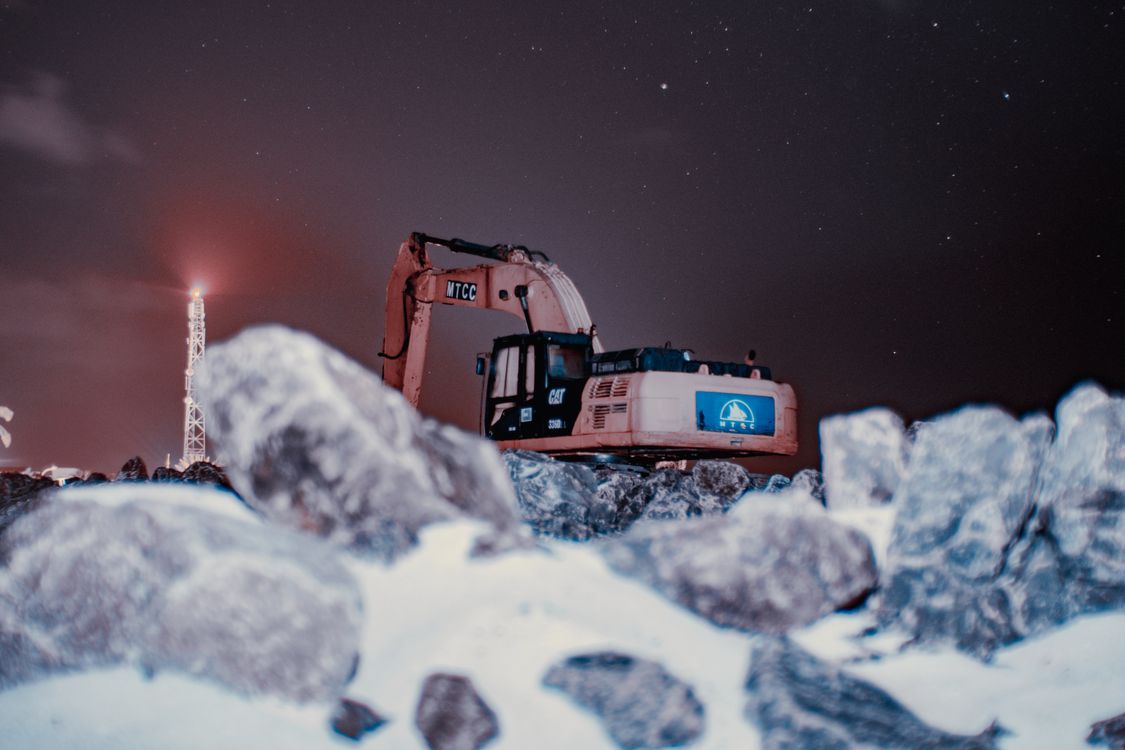
When a major highway gets built in Kenya, a dam rises in Pakistan, or a metro line opens in Serbia, there is a reasonable chance that a Chinese state-owned construction enterprise designed it, financed part of it, and supplied the workforce that made it happen. Two names appear on these contracts more than almost any others: China State Construction Engineering Corporation (CSCEC) and PowerChina. Together, they represent the most consequential — and most underanalyzed — segment of China’s global industrial footprint.
For Western businesses, understanding these firms is not merely an academic exercise. They are reshaping infrastructure competition on six continents, creating procurement opportunities and competitive pressures that affect everyone from steel exporters to multinational engineering consultancies.
CSCEC: The World’s Largest Construction Company
China State Construction Engineering Corporation is, by nearly every metric, the world’s largest construction and engineering firm. In 2023, CSCEC reported revenues exceeding 2.3 trillion yuan (roughly $320 billion USD), placing it atop the Engineering News-Record global contractor rankings for the eleventh consecutive year. The company employs approximately 360,000 people and operates through eight core engineering bureaus plus China Construction America (CCA) and China Overseas Holdings.
CSCEC was formally restructured as a state-owned enterprise in 1982. Its domestic portfolio includes landmark projects like the Beijing National Stadium, the Shanghai Tower, and the CCTV Headquarters. Internationally, CSCEC operates in more than 100 countries, with overseas revenue reaching approximately $28 billion in 2023, concentrated in Africa, the Middle East, Southeast Asia, and Latin America.
The company’s competitive advantage is its ability to offer integrated packages: land acquisition, design, financing (often via China Development Bank or Export-Import Bank), construction, and long-term maintenance — all under one roof. For governments in developing markets, this turnkey model dramatically lowers transaction costs. For Western competitors, it creates a bundled offering difficult to replicate without equivalent state financial backing.
PowerChina: The Global Energy Infrastructure Architect
PowerChina (officially China Power Construction Corporation) was formed in 2011 through the merger of Sinohydro, China Hydropower Engineering Consulting Group, and affiliated entities. The consolidation created a firm with unmatched capabilities in hydropower, water conservancy, thermal energy, and urban infrastructure. PowerChina’s 2023 revenues exceeded 700 billion yuan, with overseas new contracts approaching $30 billion.
Sinohydro — now a PowerChina subsidiary — was responsible for constructing the Three Gorges Dam, the world’s largest hydropower facility at 22,500 megawatts of installed capacity. That project gave PowerChina a decade-long engineering laboratory for large-scale dam construction. The institutional knowledge built during Three Gorges has since been deployed on Merowe Dam in Sudan, Bui Dam in Ghana, Nam Theun 2 in Laos, and dozens of other projects across Africa and Asia.
PowerChina’s renewable energy division has built more than 180 gigawatts of renewable capacity worldwide, acting as both EPC contractor and co-investor. Its solar construction work in the Middle East — including the Mohammed bin Rashid Al Maktoum Solar Park in Dubai — demonstrates that Chinese construction firms can win on technical quality as well as price in premium markets.
The Belt and Road Connection
Both CSCEC and PowerChina are core implementation vehicles for China’s Belt and Road Initiative. By 2025, China had committed over $1 trillion in infrastructure investment across more than 150 countries under the BRI framework, with Chinese state-owned enterprises winning the majority of construction contracts.
BRI projects typically combine policy bank financing with Chinese contractor mandates, effectively pre-packaging CSCEC or PowerChina as the builder. Western multilateral development banks generally use competitive international bidding — a process that Chinese SOEs also enter and often win on price, but which does not guarantee them contracts the way BRI structures sometimes do. State Grid Corporation of China frequently co-deploys with PowerChina on integrated energy infrastructure projects, creating a vertically coordinated state capacity that commercial competitors struggle to match.
How Western Businesses Interact With These Giants
For multinational corporations, interactions with CSCEC and PowerChina fall into three categories: competition, partnership, and supply.
Competition occurs primarily in international project bidding. Western construction firms — Vinci, ACS Group, Bechtel, Fluor — regularly compete against CSCEC subsidiaries for large infrastructure contracts in Asia, Africa, and Latin America. Chinese firms typically underbid by 15 to 30 percent on labor-intensive civil works, driven by lower wages, greater self-performance, and access to concessional financing that reduces their cost of capital.
Partnership is increasingly common in markets where Chinese firms face political headwinds or where their technical capabilities in specialized sectors are limited. CSCEC has formed joint ventures with French, German, and US engineering firms in the Middle East, where local content requirements and Western technology mandates create incentives for collaboration. PowerChina has partnered with European turbine manufacturers including Siemens Energy and Vestas on wind farm construction.
Supply chain relationships represent the most overlooked opportunity. CSCEC and PowerChina collectively procure tens of billions of dollars in equipment annually: turbines, pumps, electrical systems, construction machinery, specialty steel, and project management software. While Chinese state procurement increasingly favors domestic suppliers under the “dual circulation” strategy, significant international procurement still occurs — particularly for high-specification equipment without domestic alternatives. China’s industrial robotics industry is increasingly integrated into CSCEC’s smart construction initiatives, creating new convergence points on project specifications.
Regulatory Awareness Is Non-Negotiable
The US government has tracked CSCEC’s international activities closely. The US Department of Commerce has imposed entity list restrictions on select CSCEC subsidiaries related to military construction activities in the South China Sea. US firms considering joint ventures or supply relationships with CSCEC entities must verify against the US Bureau of Industry and Security Entity List before proceeding with any transaction. OFAC screening and jurisdiction-specific dual-use regulations add further layers of compliance obligation.
On the Chinese side, SASAC (the State-owned Assets Supervision and Administration Commission) oversees both firms as centrally managed SOEs. China’s Ministry of Commerce publishes annual outbound construction contract data, the most reliable public source for tracking where Chinese firms are active internationally — accessible via China’s Ministry of Commerce official data portal.
Strategic Takeaways
CSCEC and PowerChina are instruments of Chinese industrial and foreign policy that happen to operate with commercial efficiency at extraordinary scale. For any business operating in infrastructure-adjacent sectors, several conclusions follow.
In markets where Chinese financing is available, Chinese SOE contractors will usually win on bundled price-finance-build terms. The better competitive approach is differentiation on technical specialization, local partnerships, ESG credentials, or sovereign risk mitigation that Chinese SOEs cannot easily replicate.
Supply chain opportunities are real and growing. Both firms procure internationally, and their category managers respond to suppliers who understand their project pipelines and can offer specifications aligned with Chinese technical standards (GB standards) as well as international equivalents.
The world needs trillions in infrastructure investment over the next three decades. China’s state construction giants have positioned themselves to build a substantial share of it. For the financing architecture behind these projects, see our analysis of China Development Bank and Export-Import Bank of China — understanding the capital structure is as important as understanding the contractors.