
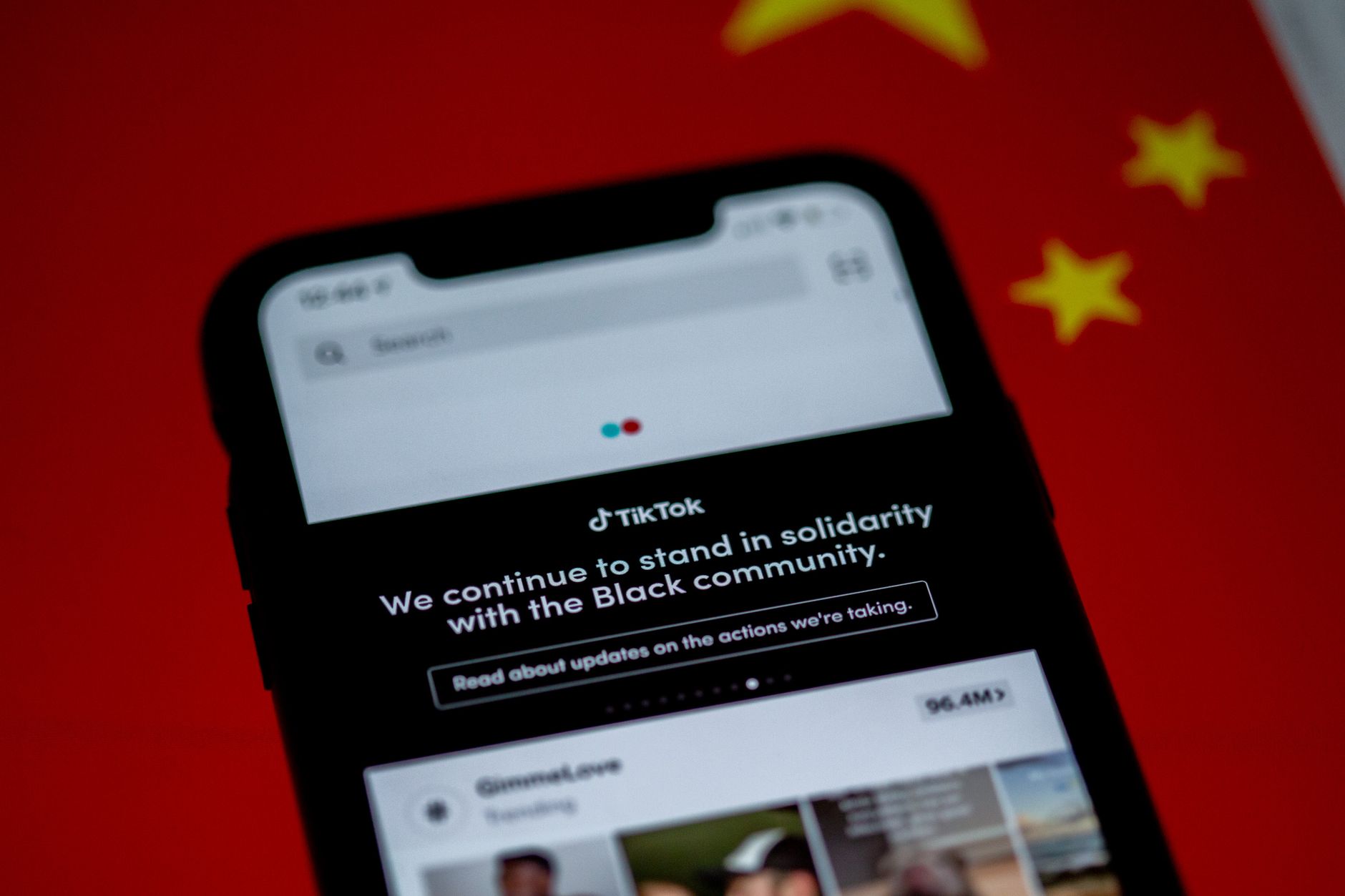
When Western analysts talk about Chinese e-commerce, they tend to reach for Alibaba, JD.com, and Pinduoduo. That framework is already outdated. The most consequential shift in Chinese retail over the past five years has been the rise of Douyin E-Commerce — the shopping infrastructure built directly into ByteDance‘s domestic short video platform. With more than $580 billion in gross merchandise volume (GMV) recorded in 2023 and projections pointing well past $700 billion for 2024, Douyin E-Commerce has become the fastest-growing major commerce platform in history. Understanding how it works, why it succeeded, and what it signals for global digital commerce is no longer optional for US-China trade professionals.
Douyin vs. TikTok: Two Platforms, One Architecture
ByteDance operates two separate but architecturally similar products: Douyin for the Chinese domestic market and TikTok for the rest of the world. While TikTok’s global expansion strategy has drawn most of the geopolitical attention, Douyin has quietly become the more commercially dominant product. Launched in 2016 under its original name A.me before rebranding, Douyin reached 700 million daily active users in China by 2023 — roughly half the country’s population opening the app every single day.
The critical distinction is that Douyin was commercialized far more aggressively and earlier than TikTok. ByteDance began building Douyin’s commerce layer in 2018 with in-feed shoppable links, escalated to a full native checkout experience by 2020, and launched Douyin E-Commerce as a formal business unit with dedicated merchant infrastructure, logistics partnerships, and a creator monetization ecosystem by 2021. By 2022, Douyin had already surpassed Pinduoduo in annual GMV and was closing rapidly on JD.com’s $550 billion figure. The platform achieved this without the decades of supply chain investment that Alibaba and JD had spent building.
The Livestream Commerce Engine
Douyin’s commerce model is built on a fundamentally different customer acquisition logic than traditional e-commerce. On Taobao or Amazon, a consumer arrives with purchase intent — they search for a product, compare listings, and buy. On Douyin, commerce is discovery-first: a consumer is watching content, gets captured by a livestream or a short video, and makes an impulse decision. The entire funnel — awareness, consideration, and conversion — happens inside the same session.
This model has produced extraordinary results. During the 2023 11.11 (Double Eleven) shopping festival, Douyin’s e-commerce GMV was estimated at 140 billion yuan (approximately $19.3 billion) over the promotional window — a figure that would have been the entire annual GMV of mid-sized European e-commerce markets just five years earlier. Livestreaming hosts command audiences of millions; top KOLs (key opinion leaders) like Luo Yonghao, who pivoted from a failed smartphone business to become a top-grossing Douyin seller, generated over 1.9 billion yuan in a single livestreaming day in 2023.
ByteDance has invested heavily in the merchant infrastructure supporting this model. The Douyin E-Commerce Merchant Center provides sellers with real-time analytics, traffic allocation tools, and algorithmic dashboards that make Amazon Seller Central look sparse by comparison. Product Blue Ocean discovery tools help merchants identify whitespace categories before competition materializes. The platform handles approximately 60 million orders per day — a logistics challenge ByteDance initially solved through partnerships with JD Logistics, SF Express, and Cainiao before launching its own fulfillment ambitions.
The Payment and Checkout Layer
One of Douyin E-Commerce’s structural advantages is seamless payment integration. China’s mobile payment ecosystem — dominated by WeChat Pay and Alipay, which collectively process over $67 trillion in annual transactions — means that Chinese consumers face essentially zero checkout friction. Douyin integrated both payment rails and added its own Douyin Pay option in 2021, creating a three-tap checkout experience: watch, click, pay. Conversion rates from livestream sessions to completed purchases routinely exceed 10 percent for established merchants — compared to sub-2 percent averages for Western e-commerce conversion benchmarks.
This frictionless payment infrastructure is a structural advantage that Western platforms simply cannot replicate without multi-year buildouts. When Meta attempted to introduce Facebook Shops and Instagram Checkout, adoption remained tepid because American consumers are conditioned to pay through separate apps or credit card entry forms. Douyin’s advantage is not algorithmic — it is infrastructural.
Category Dominance and Brand Strategy
Douyin E-Commerce’s growth has not been uniform across product categories. The platform initially dominated beauty, personal care, and apparel — categories where visual demonstration and impulse buying align well with short-video content. By 2023, Douyin had expanded meaningfully into food and beverage, home goods, maternal and infant products, and electronics accessories.
Foreign brands have found Douyin to be both an opportunity and an operational challenge. Estee Lauder, L’Oreal, and Adidas all maintain flagship Douyin stores and invest in regular livestreaming sessions hosted by brand ambassadors. Louis Vuitton and Burberry use Douyin for awareness campaigns rather than direct commerce, mindful of protecting brand equity in a format associated with discounting. The divergent strategies reflect a fundamental tension: Douyin’s algorithm rewards content that sells, and content that sells often features price promotions that luxury brands resist.
Domestic Chinese brands have generally adapted faster. Florasis (花西子), the traditional Chinese beauty brand, built its national recognition almost entirely through Douyin-native content and livestream selling before Hangzhou’s broader e-commerce ecosystem amplified its reach. Proya Cosmetics generated over 4.6 billion yuan in Douyin GMV in the first half of 2023 alone, representing approximately 40 percent of its total revenue — an extraordinary concentration that illustrates how central the platform has become to brand building in China’s consumer goods sector.
The Cross-Border Dimension
Douyin’s global commerce ambitions are directly relevant to US-China trade professionals. ByteDance launched Douyin Cross-Border in 2022, enabling foreign brands to sell directly to Chinese consumers through the platform without establishing a Chinese legal entity — provided they partner with bonded warehouse operators in designated cross-border e-commerce pilot zones. The US Department of Commerce has tracked this channel through its US-China Commercial Issues Overview, noting that cross-border digital commerce represents one of the few growth channels in bilateral trade that has remained relatively insulated from tariff escalations.
For American consumer brands — particularly in health supplements, premium food, beauty, and baby products — Douyin Cross-Border represents a genuine market entry option. The mechanics involve: registering with the General Administration of Customs of China (GACC), selecting a licensed customs broker and bonded warehouse partner, and establishing a Douyin merchant account through ByteDance’s official agent network. Regulatory oversight for this channel falls under China Customs (GACC) cross-border e-commerce policies, which have been progressively liberalized since 2015 and cover product categories, single-transaction caps (currently 5,000 RMB per order), and annual purchase limits (26,000 RMB per individual consumer).
The cross-border fulfillment infrastructure supporting Douyin has matured rapidly. Cainiao’s bonded warehouse network, covering more than 2 million square meters of cross-border storage capacity, provides guaranteed 3-5 day delivery windows for overseas merchants selling into China — a performance benchmark that was essentially unimaginable in 2015 when most cross-border packages took three to six weeks.
What Douyin’s Dominance Means for Global Commerce Strategy
The Douyin model has already begun reshaping platform strategy worldwide. TikTok Shop — its international extension — reached $20 billion in GMV in 2023 after launching in the US in September of that year, and ByteDance has publicly targeted $17.5 billion in US TikTok Shop GMV for 2024. YouTube Shopping, Instagram Checkout, and Pinterest’s shoppable content features are all explicit attempts to replicate the Douyin commerce funnel in Western markets, with varying degrees of success.
For US-China trade professionals, the strategic takeaway is not simply that a new Chinese platform is big. It is that the architecture of content-driven commerce — where short video, livestreaming, influencer trust, seamless payment, and instant fulfillment collapse into a single consumer experience — is now the dominant model in the world’s largest consumer market. Any brand selling into China, or competing with Chinese brands globally, needs a Douyin strategy in the same way that a brand entering the US market needed an Amazon strategy in 2015.
The platform’s rise also reinforces a broader pattern in Chinese digital commerce: ByteDance’s ability to move from zero to $580 billion in GMV in under five years reflects the same capacity for rapid infrastructure scaling that Alibaba demonstrated in the 2010s. The difference is speed. In China’s digital economy, the window between “emerging platform” and “dominant platform” is measured in years, not decades. That compression is itself the most important business intelligence available.
Practical Considerations for Foreign Brands
Foreign companies approaching Douyin E-Commerce should account for several operational realities. First, content localization is non-negotiable: Douyin’s algorithm prioritizes content that engages Chinese users authentically, and poorly localized brand content underperforms severely against native competitors. Second, the creator economy is central — partnering with mid-tier KOLs (100,000-500,000 followers) often delivers better ROI than flagship KOL partnerships, because their audiences are more engaged and their commission structures are more sustainable. Third, compliance requirements have tightened. China’s Cyberspace Administration and the State Administration for Market Regulation have issued successive guidelines governing advertising disclosures, health claims, and pricing practices on live commerce platforms. Brands that use Western advertising copy without reviewing it against Chinese standards routinely incur penalties.
Finally, brands should approach Douyin E-Commerce not as a standalone channel but as an integrated part of China’s omnichannel commerce ecosystem. Consumers routinely discover products on Douyin and then research them on Xiaohongshu (Little Red Book), compare prices on Taobao, and complete purchases wherever the friction is lowest. A Douyin strategy that ignores this multi-platform customer journey will consistently underperform against competitors who map and optimize the full path to purchase.
The $580 billion platform that most Western trade professionals have never seriously analyzed is not a story that can wait. It is already reshaping the terms of competition in the world’s largest consumer market — and its architectural influence on global digital commerce is only beginning.