
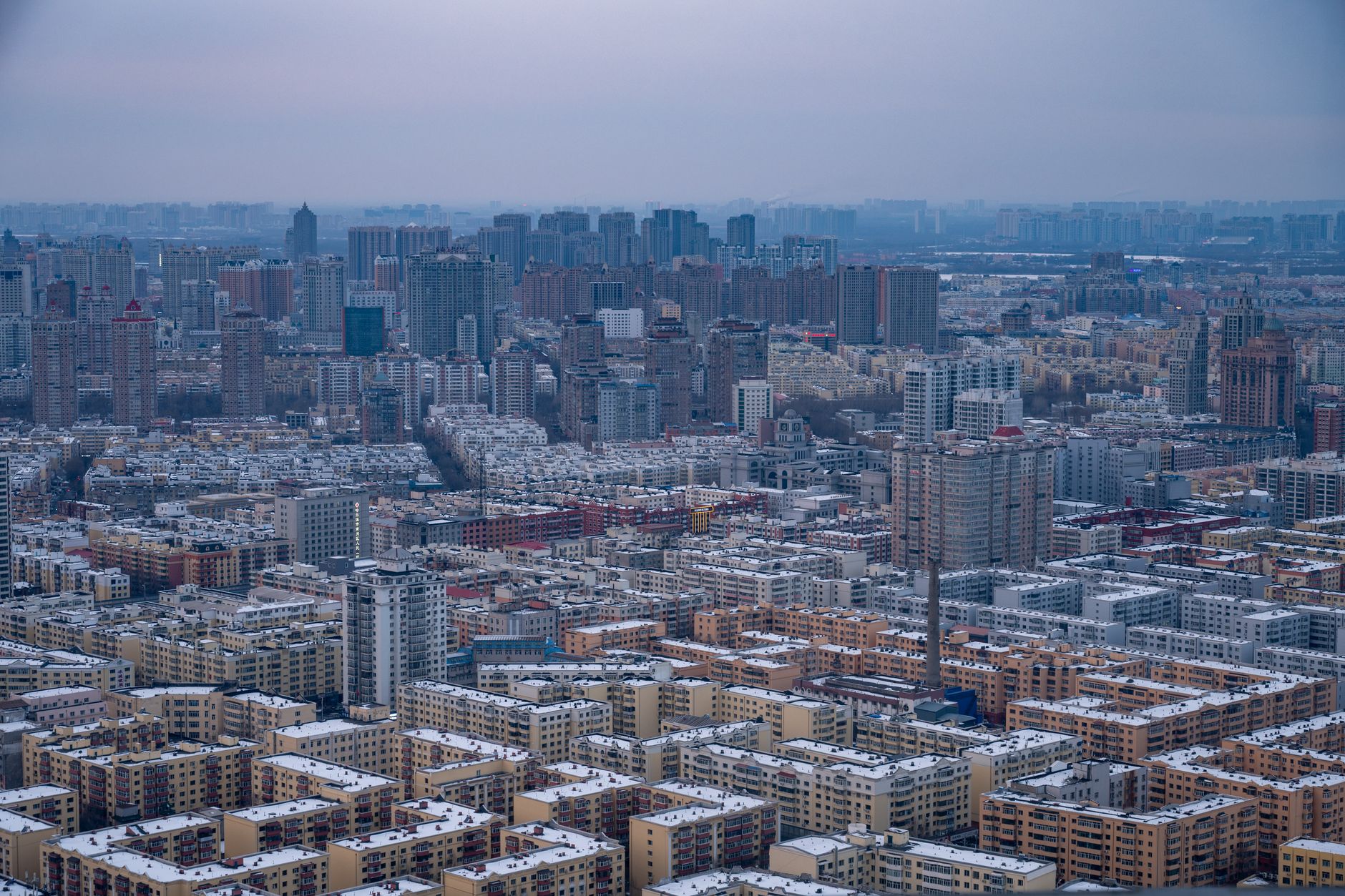
For most of the twentieth century, China’s industrial heartland was not the Pearl River Delta or the Yangtze River estuary — it was the northeast. A vast Manchurian plain stretching from Dalian on the Yellow Sea to Harbin on the Songhua River, anchored by Shenyang, produced a disproportionate share of the nation’s steel, machine tools, aircraft components, and military hardware. Then market liberalization accelerated in the 1990s, and the same region became China’s most visible symbol of industrial decline. Today, targeted government investment, private enterprise, and geopolitical tailwinds are reshaping what Beijing calls the “Northeast Revitalization Strategy” into a genuine — if uneven — economic pivot. For foreign businesses sourcing, investing, or mapping where Chinese industrial capacity is heading, understanding this transformation is no longer optional.
Three Cities, Three Industrial Identities
Shenyang, capital of Liaoning Province, is the region’s largest city (approximately 9 million residents) and its most diversified industrial base. Its Tiexi District was one of the first large-scale planned industrial zones in the People’s Republic, built in the early 1950s with Soviet technical assistance. At its peak, Tiexi housed over 200 state-owned factories producing machine tools and transformers. By 2000, most were bankrupt. The response — now studied in urban planning schools internationally — was to physically relocate surviving factories to a new development zone 30 kilometers west, redevelop Tiexi as a commercial-residential district, and brand the exercise as a model for China’s industrial transformation. Today, Shenyang produces BMW vehicles through a joint venture that manufactures over 300,000 units annually, aircraft components for COMAC’s C919 program, and pharmaceutical intermediates. The city’s 2025 GDP reached approximately 900 billion RMB.
Dalian, Liaoning’s coastal port city, offers a contrasting model. Founded as a Russian treaty port in 1898 and developed by Japan as Dairen, Dalian emerged from the reform era with natural advantages: deep harbor, mild climate, and proximity to Japan and South Korea. The Dalian Commodity Exchange, established in 1993, handles over 70 percent of global iron ore futures trading by volume — giving Dalian outsized influence over global commodity pricing. The city also hosts a substantial IT services industry, anchored by Dalian Software Park, which employs over 200,000 engineers serving Japanese and Korean clients. Dalian’s port handles approximately 500 million tons of cargo annually, with energy products and automotive components as primary freight categories.
Harbin, capital of Heilongjiang Province, sits 1,500 kilometers from Beijing and 280 kilometers from the Russian border. Its industrial signature is heavier and more state-centric: power generation equipment, aviation engineering, and agricultural machinery. Harbin Electric Corporation — a state-owned enterprise with revenues exceeding 60 billion RMB — is among China’s three largest producers of turbines for thermal, hydro, and nuclear power plants. Harbin Institute of Technology and Harbin Engineering University produce thousands of engineers annually, anchoring research-intensive industries. The city’s annual International Ice and Snow Festival draws over 18 million visitors, an asset the local government has explicitly linked to inbound business development.
The Northeast Revitalization Strategy
China’s central government has formally addressed northeast decline in three policy cycles. The first, launched in 2003, directed over 600 billion RMB into infrastructure and SOE restructuring over a decade. The second wave, in 2016, attempted to shift emphasis toward private sector development and service industries. The current iteration — embedded in the 14th Five-Year Plan and reinforced by a State Council action plan issued in 2023 — focuses on four strategic sectors: advanced equipment manufacturing, new energy vehicles and components, modern agriculture, and digital economy infrastructure.
The National Development and Reform Commission (NDRC) coordinates implementation. What the progress data shows is a region that has partially arrested decline but has not yet achieved self-sustaining growth comparable to coastal provinces. In 2023, Liaoning’s GDP growth rate (4.2%) lagged the national average of 5.2%. Heilongjiang posted 2.6%. The underlying challenge — population outflow — persists. Liaoning lost an estimated 2 million residents between 2010 and 2020, representing the departure of prime-age workers and entrepreneurs who chose Guangdong, Zhejiang, or Beijing over the northeast’s legacy institutions.
Yet dismissing the northeast on headline GDP alone would be analytically careless. The region’s gross value-added in manufacturing remains substantial, its logistics infrastructure (rail, port, cold chain) is world-class, and its proximity to Russia, Mongolia, and North Korea creates trade corridor opportunities that simply do not exist for coastal China. Since 2022, the expansion of China-Russia overland trade — coal, fertilizer, and agricultural commodities flowing southward — has materially benefited Harbin, Suifenhe, and Manzhouli as border trade hubs.
Automotive: The Northeast’s Most Visible Comeback Sector
The FAW Group, headquartered in Changchun (Jilin Province), is the northeast’s largest single employer. Founded in 1953 as China’s first automobile manufacturer with Soviet assistance, FAW today operates joint ventures with Volkswagen, Toyota, and Audi that together produce approximately 3 million vehicles annually. The FAW-Volkswagen plant in Changchun has produced more than 20 million vehicles since opening in 1991. As EVs accelerate, FAW has committed over 100 billion RMB to electric vehicle platform development through 2030, including its Hongqi (Red Flag) brand, repositioned as a premium domestic alternative to German luxury marques.
Shenyang’s BMW Brilliance joint venture — BMW holds 75% — operates two plants with combined capacity exceeding 650,000 vehicles per year. BMW’s decision to invest an additional 15 billion RMB in a new Shenyang plant (opened 2022) signals long-term commitment. For global auto suppliers considering Chinese manufacturing presence, Shenyang’s ecosystem of Tier-1 and Tier-2 parts manufacturers, built around the BMW and FAW anchors, is increasingly competitive with Guangzhou and Chongqing. For context on how China’s commercial vehicle industry — which includes multiple northeast players — is expanding globally, see our analysis of SINOTRUK, FAW Jiefang, and Dongfeng.
Energy Transition and the Heavy Equipment Export Platform
Historically, the northeast’s energy identity was built on coal and oil. Daqing oilfield, discovered in 1959 and lauded for decades as a model of socialist production, peaked at 55 million tons of annual crude output in 1976; current production is closer to 30 million tons. The transition story has two tracks. First, Heilongjiang and Inner Mongolia’s northern reaches host some of China’s most productive wind resources, with large-scale transmission infrastructure now connecting these assets to coastal demand centers. Second, Harbin Electric, Dalian Huarui Heavy Industry, and Shenyang Blower Works are global-scale producers of industrial equipment — turbines, compressors, heat exchangers — at precisely the moment when global power investment is accelerating.
These companies compete internationally for engineering procurement contracts on Belt and Road and other infrastructure projects. Our coverage of China’s State-Owned Enterprises Going Global provides useful context for understanding how northeast SOEs are positioning in international markets.
What Foreign Businesses Should Know
The northeast presents specific, underappreciated engagement opportunities for US and international companies:
Automotive supply chains: Companies supplying BMW or Volkswagen globally already have a pathway into Shenyang through existing OEM relationships. The city’s Economic Development Zone offers streamlined foreign-invested manufacturing approvals, and labor costs remain meaningfully below Shanghai and Shenzhen.
Energy hardware procurement: Northeast manufacturers are among the world’s most cost-competitive producers of turbines, compressors, and heat exchangers. US engineering procurement companies evaluating Chinese suppliers for infrastructure projects should include northeast manufacturers in any serious RFQ process. The U.S. International Trade Administration’s Market Intelligence resources include China-specific guidance for navigating procurement from state-linked suppliers.
Agricultural technology: The northeast is a test bed for China’s precision agriculture push. Drone-assisted planting, GPS-guided machinery, and satellite-monitored soil sensing are all being piloted at scale on Heilongjiang’s state farms — which operate plots of over 100,000 hectares. US agtech companies in seed genetics, precision input systems, and remote sensing have found northeast state farms to be accessible pilot partners because of centralized procurement and decision-making authority.
Russia corridor logistics: The expansion of overland China-Russia trade has created demand for bonded warehousing, customs broking, and multimodal freight along the Suifenhe-Vladivostok and Manzhouli-Zabaykalsk corridors. Infrastructure built to serve this trade will persist beyond any single political cycle, and logistics networks in Harbin and Suifenhe are already attracting third-country operators from Southeast Asia and the Middle East.
The northeast’s story is neither simple revival nor managed decline. It is a region in genuine structural transition, with specific sectors offering tangible bilateral trade and investment opportunities. Companies that understand the industrial geography of Shenyang, Dalian, and Harbin — rather than treating the region as an undifferentiated legacy economy — are better positioned to find the procurement partners, manufacturing bases, and market footholds the region actually contains.
For context on how another formerly coal-dependent Chinese province is managing industrial reinvention, see our profile of Shanxi Province’s clean energy transition. For the broader context of northern port infrastructure, our analysis of Tianjin as China’s Northern Gateway provides useful framing on how trade flows in this part of the country.