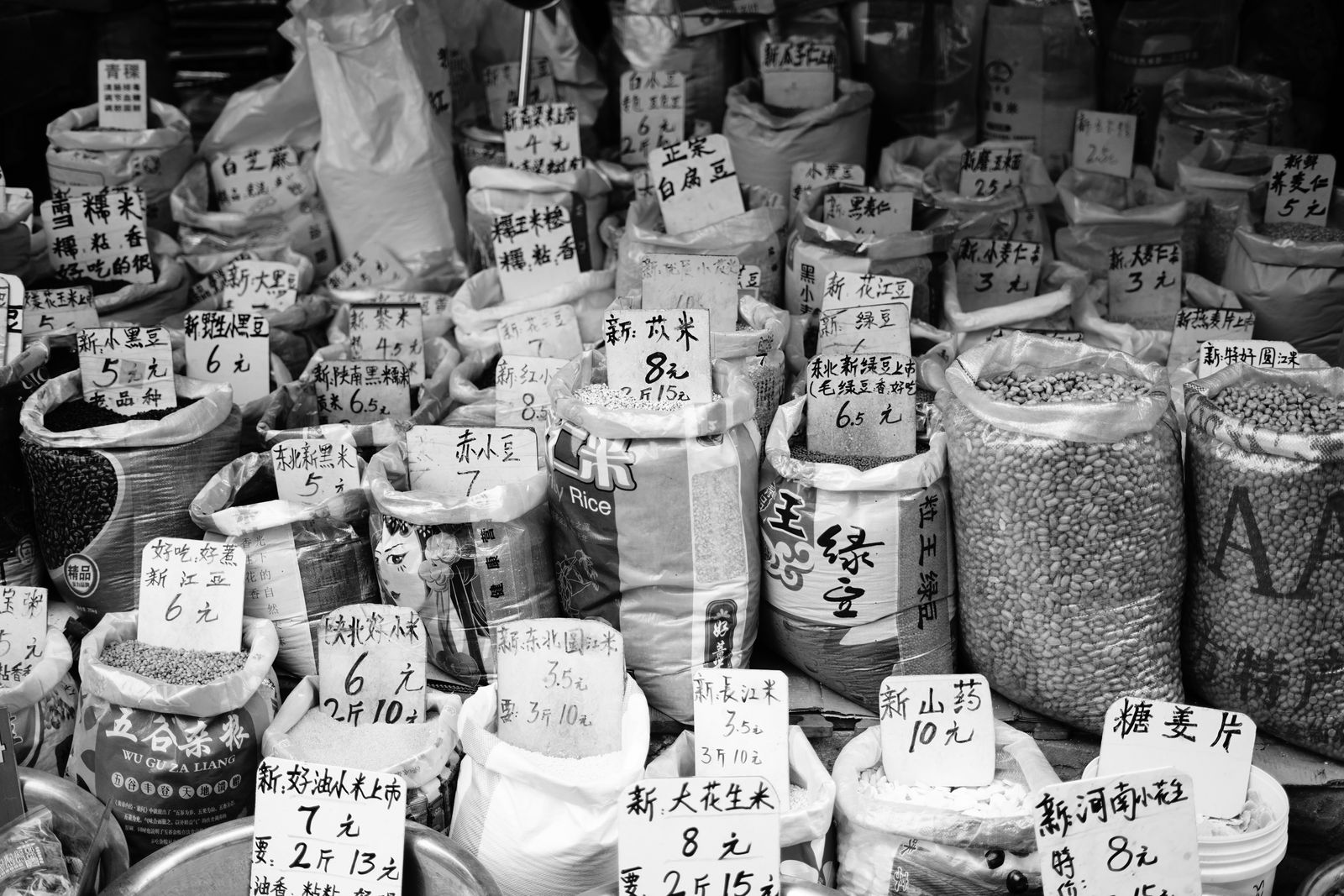
Every year, importers from more than 200 countries and regions descend on a mid-sized city in Zhejiang Province that most people outside the trade world have never heard of. They are not heading to Shanghai, Guangzhou, or Shenzhen. They are going to Yiwu — a city of roughly two million people whose economy runs almost entirely on the buying and selling of small commodities. The Yiwu International Trade Market, known locally as China Commodity City (中国小商品城), is by physical area the largest wholesale market on the planet: 6.4 million square meters across five districts, housing over 75,000 vendor booths selling everything from Christmas ornaments to industrial fasteners. If you source physical products for retail, e-commerce, or distribution and have never visited Yiwu, you are paying more than you need to.
How Yiwu Became the World’s Commodity Capital
The market’s origins trace to 1982, when local officials officially permitted street-stall trading in a 200-meter stretch of road. The city had a pre-existing tradition of itinerant merchants called huhulong (货郎担) — traveling peddlers who bartered brown sugar for chicken feathers used in manufacturing. That informal commercial culture gave Yiwu a competitive edge that government investment then scaled. By 2002, UNCTAD recognized Yiwu as the world’s largest small commodities wholesale center. The fifth-generation market complex, completed in 2011, spread across five trade districts. The “Yiwu-Xinjiang-Europe” rail freight line — a Belt and Road corridor running 13,052 kilometers to Madrid — has operated since 2014 and is among the most heavily used China-Europe cargo routes.
Inside the Five Districts
Each district covers distinct product categories. District 1: accessories, arts and crafts, flowers. District 2: toys, gifts, and holiday goods — Yiwu supplies an estimated 60 percent of the world’s Christmas decorations. Districts 3 and 4: hardware, tools, electronics, small appliances. District 5: fashion apparel, footwear, and knitted goods.
Vendors are mostly trading agents for factories in surrounding Zhejiang counties and nearby cities like Wenzhou and Taizhou — they are not manufacturers. Booth sizes run 10 to 20 square meters. MOQs typically start at one carton or one dozen units. International buyers settle via trade assurance platforms, T/T bank transfer, or through a local sourcing agent. Payment on the domestic side runs almost entirely in RMB.
The Practical Buyer’s Workflow
Preparation Before You Arrive
Define your category list precisely. Walking the market without a plan is expensive in time and mental bandwidth. Use the official Yiwu Municipal Government website or the China Commodity City digital directory to pre-identify which district floors carry your categories. Hiring a local sourcing agent or interpreter is strongly advisable for first-time buyers placing orders above $10,000. Quality agents in Yiwu charge $100 to $200 per day and can negotiate prices substantially more effectively than foreign buyers relying on translation apps. They also distinguish vendors with genuine factory relationships from pure middlemen adding a second margin layer.
On the Floor
Each booth has a seven-digit number stenciled above the entrance. Photograph both the booth number and the vendor’s business card. Request samples — legitimate vendors provide one or two at cost (RMB 20 to 50 per piece), not for free. Negotiate price across volume tiers: ask for quotes at 100, 500, and 1,000 units. Most vendors have a 20 to 35 percent spread between their opening quote and realistic volume pricing. Do not negotiate aggressively on a first visit; build the relationship across two or three interactions and prices sharpen without being forced.
Shipping and Logistics
The Yiwu International Logistics Center, adjacent to the main market, consolidates containers for export. LCL shipping to Los Angeles or Long Beach runs approximately 35 to 45 days door-to-door. The city has its own customs inspection facility that allows pre-clearance before goods move to Ningbo-Zhoushan for loading, making FCL rates competitive with Guangzhou or Ningbo origins.
US importers must have their Importer of Record number registered with US Customs and Border Protection before first shipment. Products in regulated categories — toys, electronics, personal care — require compliance documentation (ASTM, FCC, CE) before clearing US customs. Vendors will frequently claim certifications that are fabricated. Always request the original test report from the testing laboratory, not a vendor-produced certificate, and verify it in the lab’s own database.
Online Yiwu
For buyers who cannot travel, the market has built substantial digital infrastructure. The Yiwu Go platform (yiwugo.com) lists over 2.1 million products from verified Yiwu vendors with English-language support and escrow payment. Alibaba’s 1688.com also has deep penetration among Yiwu vendors but is primarily built for domestic Chinese buyers.
The digital market has limits. Product photography at Yiwu is notoriously unreliable — vendors frequently use stock images or samples from premium production runs that don’t represent actual bulk quality. Video calls are far more reliable than photos. Require a live video of the physical stock before placing any order above $2,000 with a vendor you have not previously visited in person. For context on how Alibaba’s digital wholesale infrastructure connects with physical markets like Yiwu, see our analysis of how Alibaba reshaped global e-commerce.
Tariffs and the US Buyer Reality
Section 301 tariffs apply fully to goods sourced from Yiwu. The majority of small commodity categories — holiday goods, toys, hardware, apparel accessories — carry rates of 7.5 to 25 percent above standard MFN rates. Electronics categories may face additional Section 232 tariffs. This has not eliminated Yiwu’s US business, but it has shifted the buyer mix: Southeast Asian, Middle Eastern, and Latin American buyers now represent a larger share than they did in 2017. US importers who continue to source from Yiwu have generally renegotiated prices downward with vendors or concentrated in higher-value categories where tariff percentages represent a smaller share of total landed cost.
The US International Trade Administration publishes detailed tariff schedules and Section 301 guidance that every US importer sourcing from China should review before ordering. HTS code classification determines exactly which rate applies, and misclassification at customs is expensive.
Quality Control: The Non-Negotiables
Because most Yiwu vendors are trading companies rather than manufacturers, they can switch factories between your sample order and your production run without disclosing it. Three controls are non-negotiable for serious buyers:
Pre-shipment inspection: Hire a third-party QC firm (SGS, Bureau Veritas, QIMA) to inspect at the Yiwu consolidation point before the container is sealed. Costs run $250 to $400 per man-day — among the highest-ROI investments in the sourcing chain.
Factory audit: For orders above $20,000, require an audit of the actual production facility, not the vendor’s trading office booth. The booth address is never the factory address.
Written production specs: Submit product specifications in both Chinese and English — dimensions, materials, packaging, labeling — before confirming any order. Verbal agreements in wholesale markets are unenforceable.
The Pearl River Delta manufacturing ecosystem, which feeds much of what is sold at Yiwu in electronics and apparel, operates under the same distributed-production logic. Our guide on Guangzhou and the Pearl River Delta covers that ecosystem in depth.
The Broader Yiwu Ecosystem
Yiwu is not just a market. The city has developed over 4,000 freight forwarding companies, 100-plus inspection agencies, and a residential international community from the Middle East, Africa, South Asia, and Southeast Asia — many of whom operate as regional sourcing agents for buyers in their home markets. Zhejiang Province, which hosts Yiwu, is one of China’s most entrepreneurially dense regions; the province’s clusters in Wenzhou (footwear, electrical components) and Taizhou (automotive parts, plastics) integrate directly with Yiwu’s trading function. Our profile of Zhejiang’s export economy provides essential regional context.
When to Go and How to Get There
Yiwu is most efficiently reached by high-speed rail from Hangzhou (40 minutes) or Shanghai Hongqiao (90 minutes). The market is a 15-minute taxi ride from Yiwu station. Best timing for negotiating leverage: January to February (post-Chinese New Year, when vendors are building annual order books) or September to October (before the holiday shipping peak). Avoid May to June and late October to November for first visits — these are peak sourcing periods when vendors concentrate on established high-volume buyers.
For any importer building a product-based business, Yiwu rewards preparation, relationship-building, and process discipline — the same fundamentals that determine whether China sourcing creates margin or destroys it.