
In October 2013, Xi Jinping outlined a vision at Nazarbayev University in Kazakhstan: a “Silk Road Economic Belt” connecting China to Europe through Central Asia. A month later, the “21st Century Maritime Silk Road” was added. Together, they became the Belt and Road Initiative — the most ambitious infrastructure and trade connectivity program in modern history, and the most consequential instrument reshaping global trade patterns in 2026.
Thirteen years in, the BRI has moved well past its announcement phase. What skeptics once dismissed as an overextended vanity project has become a functioning network of ports, railways, pipelines, power plants, and digital infrastructure spanning more than 140 countries. For any business professional navigating global supply chains, sourcing, logistics, or investment, understanding what the BRI actually looks like in 2026 is no longer optional.
What the BRI Has Built: The Scale in Numbers
By mid-2026, the China Ministry of Commerce and partner institutions record cumulative BRI-related investment and construction contracts exceeding $1 trillion since 2013, spanning more than 3,000 individual projects across six major economic corridors. The headline numbers:
- China-Pakistan Economic Corridor (CPEC): $62 billion in committed investment, linking Kashgar in western China to Gwadar Port on the Arabian Sea
- New Eurasian Land Bridge: The China-Europe freight rail network now runs more than 17,000 train services annually between Chinese manufacturing cities and European ports
- Laos-China Railway: Opened December 2021, carried over 40 million tonnes of freight in its first two years of operation
- Jakarta-Bandung High-Speed Railway: Indonesia’s first HSR, now serving more than 20,000 passengers per day since reaching full operation in 2023
These corridors are not abstract lines on a map. They represent measurable transit time reductions, logistics cost savings, and trade volume increases for businesses willing to learn how to use them.
The China-Europe Freight Rail Network: A Practical Trade Route
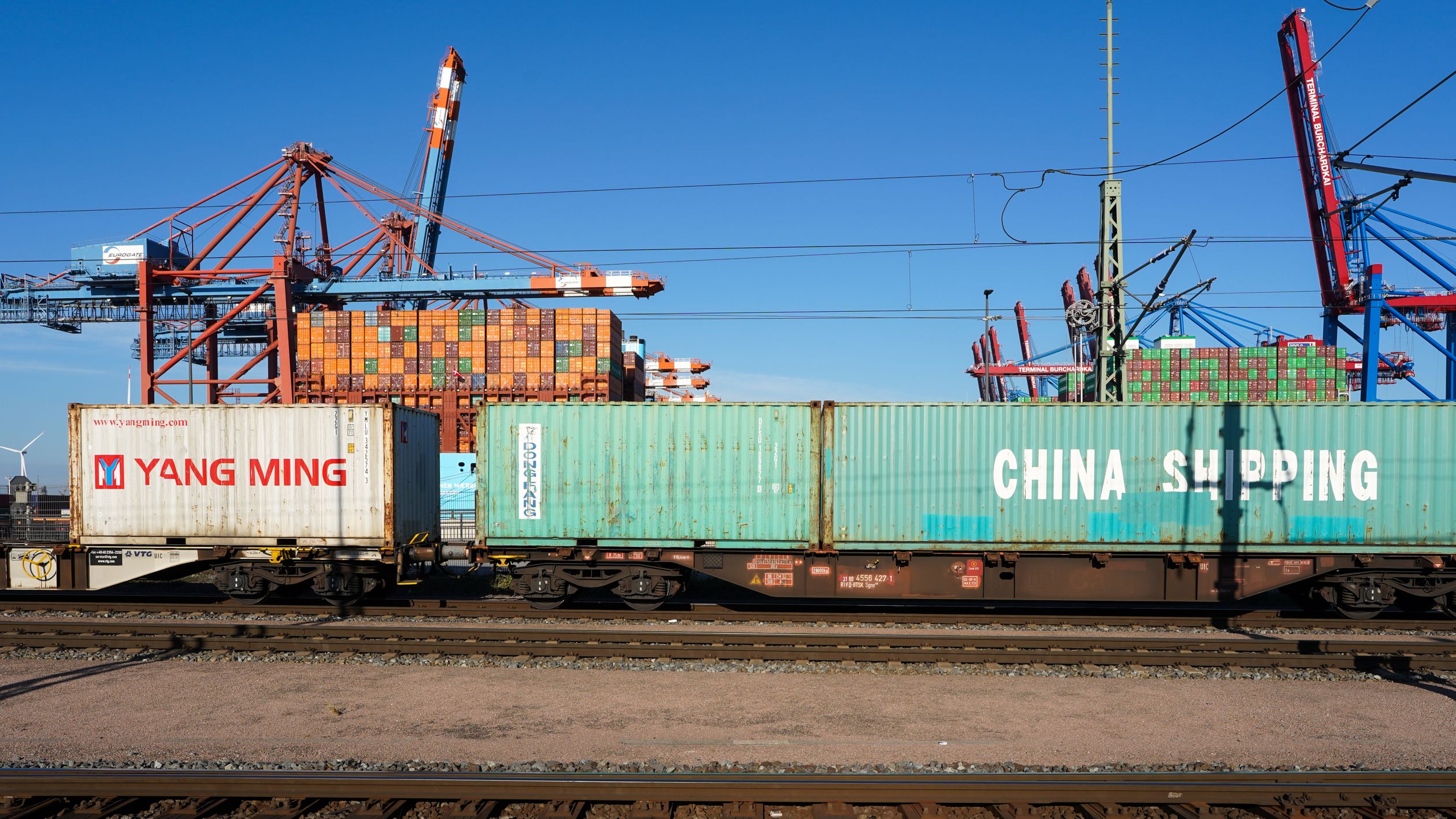
The most directly useful BRI development for international businesses is the growth of China-Europe freight rail. Operating under the “China Railway Express” brand (中欧班列), the network now connects more than 100 Chinese cities to over 200 European cities in 25 countries.
Transit time from Chengdu or Chongqing to Hamburg or Rotterdam averages 12 to 15 days by rail — roughly half the time of sea freight via the Suez Canal (28 to 35 days), and a fraction of air freight costs. For mid-value goods with time-sensitive delivery — auto components, medical devices, industrial machinery — rail has become a genuinely competitive channel.
Key Chinese hub cities: Chengdu, Chongqing, Xi’an, Wuhan, and Zhengzhou. European receiving nodes: Duisburg, Hamburg, Warsaw, and Rotterdam. Western companies sourcing from inland Chinese manufacturing clusters should evaluate China-Europe rail as a primary logistics option, not a backup.
The Middle Corridor: A Russia-Free Route to Europe
Following Western sanctions on Russian transit after 2022, the Trans-Caspian International Transport Route (TITR) — the Middle Corridor — saw a fivefold freight volume increase between 2022 and 2025. This route runs from China through Kazakhstan, across the Caspian Sea by ferry to Azerbaijan, then through Georgia and Turkey to European markets. Kazakhstan’s Aktau Port and Azerbaijan’s Alat Port have both undergone major capacity expansions. Transit time runs 18 to 22 days — a fully functional, geopolitically lower-risk alternative for companies that previously routed through Russia.
How the BRI Has Changed Since 2022
The BRI of 2026 is meaningfully different from the BRI of 2016. Under pressure from debt sustainability criticism — and following project cancellations in Myanmar, Sierra Leone, and Malaysia — China revised its BRI lending framework at the 3rd Belt and Road Forum in October 2023. Key changes:
- Smaller, higher-return projects: Average project size has decreased from approximately $500 million to $180 million, with a shift toward commercially viable “small but beautiful” investments
- Green BRI pivot: Following Xi Jinping’s 2021 pledge to stop financing overseas coal, green energy projects — solar, wind, hydropower — now represent roughly 40% of new BRI energy investment
- Multilateral co-financing: China increasingly co-finances BRI projects with the Asian Development Bank, European development finance institutions, and the New Development Bank, reducing financial risk and political friction
- Local content requirements: New BRI agreements increasingly require local workforce participation, technology transfer, and local material sourcing
This maturation creates more opportunities for Western companies to participate as sub-contractors, equipment suppliers, or co-investors in BRI-funded projects — particularly in renewable energy and digital infrastructure.
The Digital Silk Road: The Often-Overlooked Layer
The Digital Silk Road — the technology and telecommunications component of the BRI — includes undersea cable networks, data centers, smart city platforms, and e-commerce connectivity programs. By 2026, Chinese companies have laid approximately 14 undersea cable systems connecting Southeast Asia, Africa, the Middle East, and Europe to Chinese internet infrastructure. Huawei and ZTE have built telecom networks across more than 50 developing nations.
The Office of the United States Trade Representative has flagged Digital Silk Road expansion as a strategic concern, citing data sovereignty implications and preferential treatment of Chinese platform operators. The practical consequence for Western businesses: Chinese e-commerce platforms — Alibaba’s AliExpress, Lazada, and Daraz — have dramatically lower logistics and payments friction in countries where Chinese digital infrastructure operates. Competitive analysis must account for this first-mover structural advantage.
The BRI Financing Architecture: Who Funds the Projects
A persistent misconception is that BRI projects are entirely state-funded. The reality involves multiple channels:
- China Development Bank: The largest single funder; BRI loan book exceeded $300 billion as of 2025
- Export-Import Bank of China: Concessional loans to lower-income BRI partner governments at 2-3% over 20-year terms
- Asian Infrastructure Investment Bank (AIIB): The 109-member multilateral bank established in 2016 applies World Bank-equivalent procurement standards — meaning non-Chinese companies can bid for AIIB-co-financed contracts
This distinction matters operationally. As we have analyzed in our coverage of China’s infrastructure financing model, the funding channel determines what procurement rules apply and whether Western firms can compete for project contracts.
Strategic Implications for US and Western Businesses
The US government’s primary BRI counterweight — the Partnership for Global Infrastructure and Investment (PGII), launched at the G7 in 2022 — has committed $600 billion in infrastructure financing through 2027, including the India-Middle East-Europe Economic Corridor (IMEC) as a Western-aligned alternative to BRI routes.
The practical strategy for US and European businesses is not to choose between BRI and PGII infrastructure — it is to use both, wherever they offer the best logistics economics. Specifically:
- Map supply chains against BRI corridors: Identify which sourcing origins or destination markets sit within active BRI logistics networks. China-Europe rail, Southeast Asian rail, and African port networks may offer genuine cost savings.
- Monitor port investment patterns: As covered in our analysis of COSCO Shipping’s global maritime strategy, China Merchants Port Holdings and COSCO hold equity stakes in more than 60 ports worldwide. Port ownership determines which terminals receive priority berthing and fastest handling.
- Engage with AIIB co-investment structures: For companies in infrastructure-adjacent sectors — engineering, construction equipment, clean energy, telecoms — AIIB-co-financed projects offer a legitimate procurement entry point into BRI-funded markets. China’s major SOEs lead BRI project delivery, but joint venture structures increasingly accommodate third-country participation.
- Evaluate sourcing geography against corridor connectivity: As production continues to shift inland from China’s coastal provinces, understanding which cities are best-connected by BRI logistics is increasingly relevant. Our coverage of China’s export powerhouses provides the geographic context.
The businesses that capture the most value from BRI infrastructure are not those who view it through a purely political lens. They are the ones who treat it as a logistics and market access fact to be understood, mapped, and used for competitive advantage. Thirteen years in, that infrastructure is built, operating, and carrying real freight — with or without your company on it.