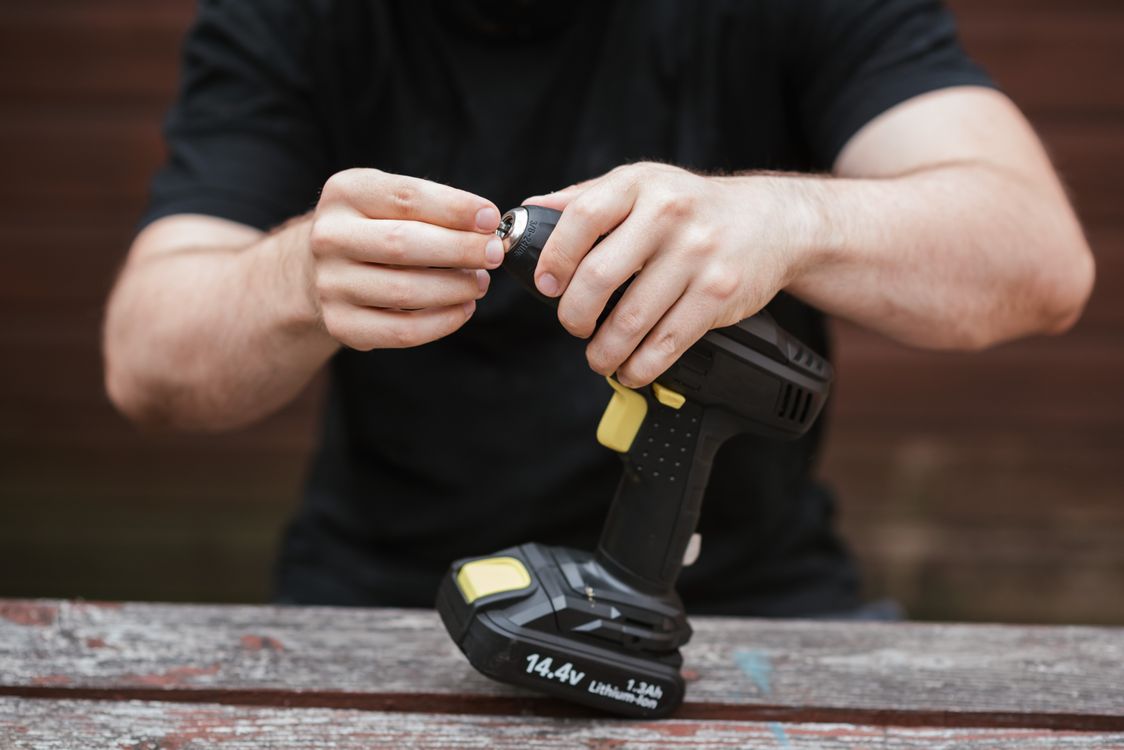
Walk into any Home Depot in North America, browse a Bunnings warehouse in Australia, or scroll through Amazon’s power tools category, and you will increasingly encounter brand names like Greenworks, EGO Power+, WORX, and Kress. Behind nearly all of them sits a small cluster of Chinese companies that have quietly executed one of the most decisive industrial pivots of the past decade.
China’s outdoor power equipment (OPE) industry transformed from a low-margin OEM supplier for Western brands into the world’s dominant developer and seller of battery-powered garden and outdoor tools. The journey is a masterclass in how Chinese manufacturers leverage scale, vertical integration, and patient brand investment to seize leadership in categories they once simply built for others.
From Assembly Lines to Battery Platforms
The outdoor power equipment market globally was worth approximately $38 billion in 2023 and is projected by Grand View Research to reach $57 billion by 2030, with battery-powered (cordless) tools capturing an ever-larger share as governments tighten restrictions on gasoline emissions and consumers embrace the convenience of electric alternatives. California’s landmark California Air Resources Board regulations banning the sale of new gas-powered small off-road engines by 2024 became a powerful accelerant, forcing the entire industry to electrify faster than anyone anticipated.
Chinese manufacturers were positioned to capture this transition precisely because they had spent fifteen years building battery cell expertise. CATL’s dominance in EV battery cells is well-documented, but the same deep supply chain extends to consumer power tools. Shenzhen-adjacent factories in Dongguan, Zhongshan, and Huizhou that originally made NiCd battery packs for Bosch and Makita gradually upgraded to lithium-ion, then to high-density 21700 and 4680-format cells, accumulating manufacturing know-how that Western incumbents could not easily replicate.
Greenworks: Globe International’s $2 Billion Platform Play
The most instructive case study is Globe International Holdings, a Changzhou-based company founded in 2001. Globe spent its first decade as a quiet OEM supplier before making a pivotal decision: build its own brands for Western markets. The result was Greenworks, launched in 2007 with a focus on battery-powered lawn mowers, string trimmers, and leaf blowers. Globe invested in its own battery management systems and “G-MAX” battery platform, which allowed consumers to share packs across a growing tool ecosystem. By 2022, Greenworks had become one of the top three battery outdoor power brands in North America, available at Home Depot, Walmart, and Costco. Globe International reported revenues exceeding $2.2 billion in its 2022 fiscal year, with North America accounting for more than 45% of sales.
By 2023, Greenworks had released its 82V commercial-grade line targeting professional landscapers, a segment historically dominated by Husqvarna and Stihl.
EGO Power+ and Chervon: Engineering-Led Premium Disruption
If Greenworks attacked the mass market, Chervon’s EGO Power+ attacked the premium tier. Founded in Nanjing in 1993 as a precision manufacturing supplier, Chervon grew into a $3 billion revenue enterprise and launched EGO Power+ in 2014 as an explicitly premium brand with a clear engineering proposition: the most powerful cordless outdoor tools available, period.
EGO’s 56V ARC Lithium battery platform became the industry benchmark. Independent tests by publications including Consumer Reports and Popular Mechanics consistently rated EGO’s battery-powered lawn mowers, chainsaws, and snowblowers on par with, or superior to, premium gas models from Honda and Toro. The EGO Z6 zero-turn rider mower, priced at approximately $5,000, challenged John Deere and Cub Cadet directly.
Chervon achieved this through significant R&D investment. The company holds more than 1,400 patents globally and operates research centers in Nanjing, Germany (acquired SKIL Europe in 2016), and the United States. Its acquisition of SKIL brand rights gave Chervon an established American heritage brand to complement EGO’s newer identity, a dual-brand strategy that mirrors how Geely positioned Volvo alongside its Chinese models.
Changsha-based Positec Tool Corporation, founded in 1994, followed a similar trajectory. Positec developed the WORX brand for consumer power tools and outdoor equipment, then added the ROCKWELL professional line. WORX’s “PowerShare” battery platform claimed compatibility across 100+ tools. Positec’s estimated annual revenue exceeds $1.5 billion, and the company invested early in smart connected tools, embedding Bluetooth and app connectivity into robotic mowers years before most Western competitors made these standard.
The Battery Platform Strategy: Why It Matters
The central competitive weapon these Chinese OPE companies share is the battery platform. Rather than selling individual tools, they sell ecosystem access. A consumer who buys a Greenworks 40V battery for a lawn mower can use the same battery in a drill, a chainsaw, a snow blower, and a leaf blower. This creates switching costs that rival Apple’s ecosystem logic applied to hardware.
Western incumbents like Stanley Black & Decker, which owns DeWalt and Black+Decker, understand this dynamic. The company spent heavily to develop its FLEXVOLT and 20V MAX platforms, but still sources a significant portion of its battery cells and packs from Chinese manufacturers. The irony is not lost: the factories that once assembled for Western brands now compete against them using the same supply chains.
The US International Trade Administration has tracked this shift closely, noting in its industry reports that Chinese brands now hold meaningful market share in the cordless OPE segment, particularly in the $100-$500 consumer price band that represents the highest unit volume.
Tariffs, Trade Policy, and Strategic Adaptation
The Section 301 tariffs imposed on Chinese-manufactured goods beginning in 2018 were a genuine stress test. Most Chinese OPE tools attracted 25% tariffs. The response was to accelerate manufacturing diversification: establish assembly operations in Vietnam, Cambodia, and Mexico. Greenworks opened a Morrisville, North Carolina R&D and manufacturing facility to signal commitment to the American market. These moves illustrate how Chinese industrial companies in 2026 treat trade policy not as a fixed barrier but as a variable to engineer around.
This is consistent with the broader evolution described in our analysis of how China’s manufacturers are building global brands and the supply chain strategies detailed in Guangdong vs. Zhejiang’s export economies.
The Retail Relationship: Winning Shelf Space
Getting a Chinese brand onto a Home Depot or Lowe’s shelf requires more than a competitive price. It requires compliance with US product safety standards administered by the US Consumer Product Safety Commission (CPSC), UL certification for electrical products, and CARB certification in California. Chinese OPE manufacturers invested significantly in these certification processes through the 2010s, building quality management systems and third-party testing relationships that gave US retailers the confidence to put unfamiliar brand names in front of American consumers.
They also offered private label manufacturing to retailers themselves. Home Depot’s “RYOBI” is manufactured by Techtronic Industries (TTI), a Hong Kong-listed company with mainland Chinese manufacturing. Milwaukee Tool, another TTI brand, is consistently ranked among the top professional power tool brands in the United States by contractor surveys. TTI’s 2023 revenue was approximately $13 billion. This is what successful Chinese brand ownership in Western retail actually looks like: not always visibly “Made in China” on the retail shelf, but unmistakably Chinese in terms of ownership, engineering leadership, and manufacturing base.
What This Means for Western Businesses
For US and Western businesses, the outdoor power equipment story offers several strategic lessons. First, brand ownership is more durable than manufacturing relationships. Western OPE brands that relied on Chinese contract manufacturing without investing in proprietary battery platforms have found themselves watching their former suppliers become their sharpest competitors.
Second, product certification and retail compliance infrastructure are genuine moats. Chinese companies that invested in CPSC compliance, UL certification, and multi-language customer service early gained access to distribution channels that remain difficult for new Chinese entrants to replicate quickly. US Census Bureau foreign trade data confirms outdoor power equipment imports from China have maintained strong volume even through tariff cycles, a testament to how deeply embedded these supply relationships have become.
Third, the category also points toward a near-term frontier: robotic lawn mowers. WORX’s Landroid, Greenworks’ Optimow, and several Chinese-origin robot mower platforms sold under white labels in Europe are building market share in what IDC projects will be a $3.5 billion robotic mower market by 2028. Chinese companies can price these products 30-50% below European equivalents because they control the motor, sensor, battery, and software stack end-to-end.
For sourcing professionals and buyers, the category exemplifies the risk and opportunity in Chinese supplier relationships. As we explore in our coverage of China’s consumer electronics export industry, the Pearl River Delta and its neighboring industrial clusters are not simply contract manufacturing locations; they are innovation ecosystems capable of launching globally competitive brands with surprising speed.
For a deeper look at the broader pattern of Chinese manufacturers ascending the value chain, see our analysis of How China Mastered the Art of the Overseas Acquisition.