
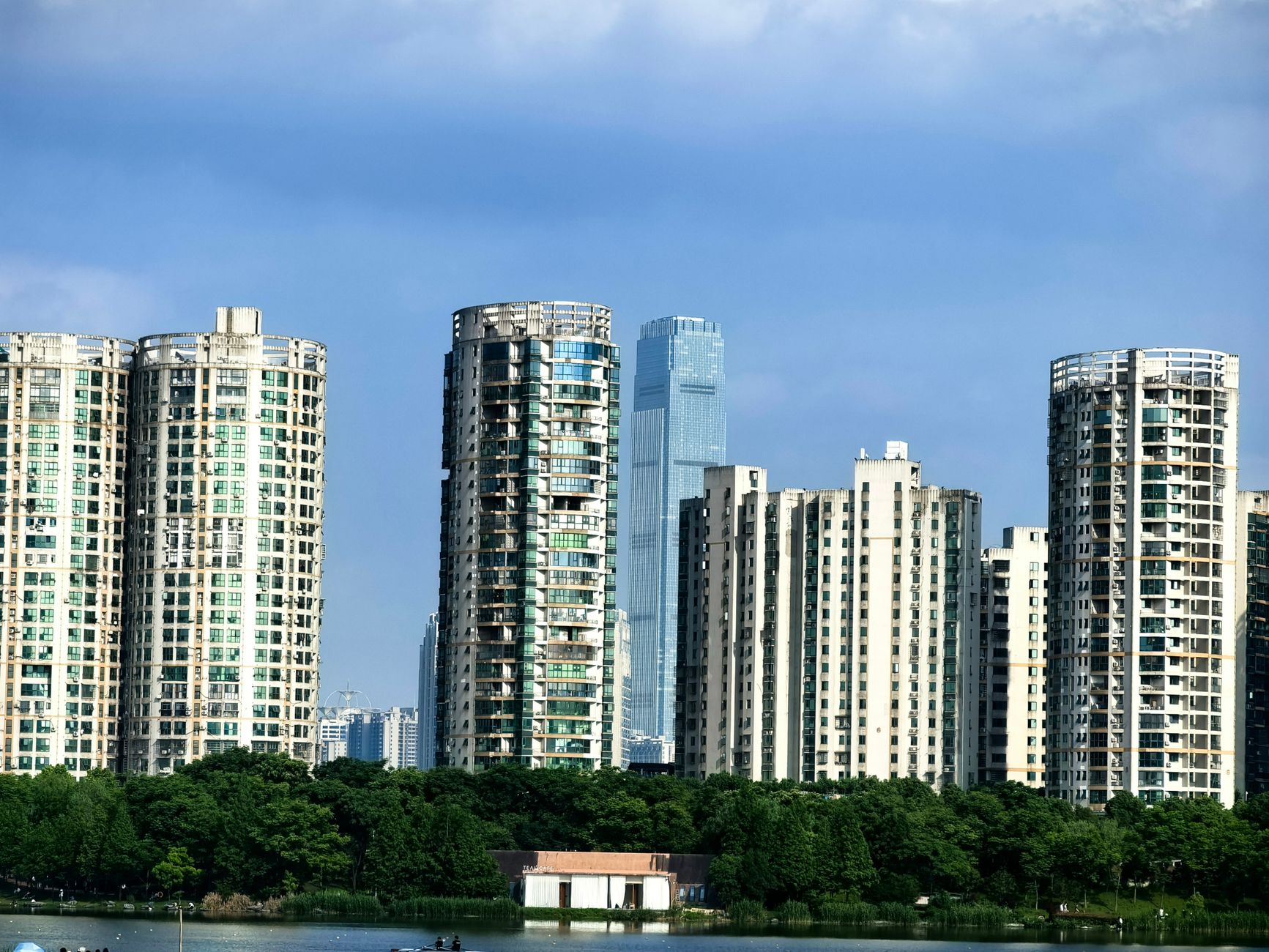
When global executives think about China’s industrial geography, their mental map typically ends at a handful of coastal names: Shenzhen for electronics, Shanghai for finance, Guangzhou for trade. Changsha, the capital of Hunan Province roughly 700 kilometers southwest of Shanghai, rarely makes that list. That oversight is increasingly costly. Changsha has quietly become one of China’s most consequential manufacturing and technology cities, home to world-leading construction equipment makers, a surging semiconductor sector, and a consumer economy that McKinsey China analysts cite as a bellwether for domestic consumption trends.
The Construction Equipment Capital of the World
The clearest reason to study Changsha is what happened to its construction equipment industry over four decades. In the 1980s, Hunan’s industrial base was dominated by traditional heavy manufacturing tied to state enterprise inertia. The transformation began when local companies expanded into excavators, cranes, concrete pumping machinery, and pile drivers during China’s infrastructure boom.
SANY Group, founded in 1989 by Liang Wengen with an initial investment of just 60,000 yuan, is now China’s largest and the world’s third-largest construction equipment manufacturer by revenue. In 2025, SANY reported global revenues exceeding 90 billion RMB (approximately $12.5 billion USD), with exports accounting for more than 40 percent of total sales. Its headquarters and primary R&D campus sit on the outskirts of Changsha, employing over 90,000 people globally. The company sells to more than 150 countries and operates manufacturing bases in Germany, India, Brazil, and the United States.
Zoomlion, established in 1992 as a spinout from China’s National University of Defense Technology in Changsha, built scale through acquisition. Its 2012 purchase of Italian crane manufacturer CIFA for approximately $530 million was among the first major Chinese industrial acquisitions in Europe, providing instant access to European engineering talent, distribution networks, and the credibility needed to sell premium machinery in markets where Chinese brands had previously struggled. As of 2025, Zoomlion’s international revenues represent roughly 35 percent of its business, with particular strength in Southeast Asia, the Middle East, and Africa.
Together, these Changsha-anchored firms have fundamentally altered the global competitive landscape. Western buyers who once defaulted to Caterpillar, Komatsu, or Liebherr now routinely include SANY and Zoomlion in competitive bidding, not just on price but on technology and after-sales support. The full story of how Chinese construction equipment giants conquered global markets connects directly to Changsha’s industrial ecosystem.
Semiconductors and the New Changsha
Construction equipment is Changsha’s established identity. Its emerging one is semiconductors and advanced electronics manufacturing, driven by deliberate policy from both the Hunan provincial government and Beijing under its “Made in China 2025” successor initiatives.
The Changsha Economic and Technological Development Zone (CETDZ), established in 1992 and elevated to national-level status by the Ministry of Commerce of the People’s Republic of China, now hosts over 200 high-tech manufacturing enterprises. Semiconductor-related companies including packaging firms, specialty chip designers, and materials suppliers have grown substantially since 2020, as China’s domestic semiconductor ambitions accelerated in response to US export control measures.
The Hunan provincial government’s 12-billion-RMB semiconductor industry development fund, announced in 2021, has targeted Changsha as one of four anchor cities in China’s inland semiconductor buildout. This is a strategic hedge against coastal concentration vulnerability that foreign tech companies should monitor closely.
National University of Defense Technology, based in Changsha since 1978, plays a structural role often underappreciated by foreign analysts. NUDT has produced some of China’s most significant computing achievements, including the Tianhe series of supercomputers (Tianhe-1 ranked as the world’s fastest in 2010). The talent pipeline from NUDT’s programs into Changsha’s commercial ecosystem gives the city a research depth that purely commercial cities lack.
Infrastructure Connectivity: The Hidden Advantage
A city’s industrial potential is bounded by its logistics infrastructure. Changsha, often dismissed as “inland” by investors who conflate geography with connectivity, has invested heavily to change that perception.
Changsha Huanghua International Airport handled approximately 24 million passengers in 2025 and is undergoing a Phase 3 expansion that will bring capacity to 60 million passengers annually by 2030. Changsha has eight high-speed rail connections, including direct HSR links to Beijing (3.5 hours), Guangzhou (2 hours), and Wuhan (1 hour), making it one of the best-connected interior cities in China. The broader investment context is covered in depth in our analysis of China’s high-speed rail network and its impact on regional economies.
For manufacturers, Changsha’s position in the center-south corridor provides strong access to both domestic consumption markets (the Yangtze River Economic Belt and the Guangdong-Hong Kong-Macao Greater Bay Area are both within 300 kilometers) and to western China’s growing industrial base via New Silk Road freight rail lines passing through Hunan Province.
The Consumer Economy: Why Changsha Matters Beyond Manufacturing
Foreign businesses focused solely on Changsha as a manufacturing base miss a critical dimension. Changsha has emerged as one of China’s most dynamic consumer markets, attracting Apple, Tesla, and multiple international luxury brands to open flagship stores in the city.
The statistics are striking. Changsha’s GDP exceeded 1.4 trillion RMB in 2025 (approximately $195 billion USD), placing it among China’s top ten cities by economic output despite a population of roughly 9 million. GDP per capita exceeds 150,000 RMB, higher than many coastal cities in Jiangsu and Zhejiang. Retail sales growth has consistently outpaced the national average since 2019.
Cha Yan Yue Se, a premium tea beverage brand that built a cult following in Changsha before expanding nationally, generated an estimated 2 billion RMB in revenue in 2024 and is a textbook case of how consumer trends incubate in second-tier cities before reaching the coastal mainstream. For foreign brands considering China entry, Changsha is a valuable test market: large enough to generate meaningful data, less saturated than Beijing or Shanghai. This is precisely why China’s rising industrial cities beyond the coastal giants deserve serious strategic attention.
The Central China Industrial Corridor
Changsha does not operate in isolation. It is part of a broader Central China industrial corridor running from Wuhan in the north through Changsha and extending west toward Chongqing. This corridor is reshaping how supply chains are organized across China’s interior.
The Wuhan-anchored Central China industrial corridor provides Changsha with upstream suppliers in automotive components, specialty chemicals, and electronic materials. To the west, Chongqing’s automotive and tech supply chain ecosystem creates demand for precision machined parts and industrial consumables that Changsha manufacturers increasingly supply.
For foreign buyers and investors, the implication is clear: sourcing from Changsha typically means entering a regional supply network where components, subassemblies, and talent flow between Wuhan, Changsha, Chongqing, and the smaller industrial cities of Hunan and Hubei provinces. Companies that understand the corridor consistently outperform those that evaluate each city in isolation.
Practical Entry Points for Foreign Businesses
The Changsha Economic and Technological Development Zone remains the primary entry point for manufacturing-oriented foreign direct investment. The zone offers preferential corporate income tax rates (15 percent for qualified high-tech enterprises versus the standard 25 percent), streamlined customs processing through an integrated bonded logistics center, and a one-stop administrative service platform covering business registration, environmental approvals, and work permit applications.
The U.S. International Trade Administration’s China Country Commercial Guide maintains updated market intelligence on China’s inland cities including Changsha. It is an underutilized resource for American companies doing preliminary due diligence on industrial zones. For companies already operating in China, ITA’s Commercial Service offices in Beijing, Shanghai, Guangzhou, and Chengdu can facilitate introductions to Hunan provincial officials and development zone representatives.
In the semiconductor and electronics space, foreign technology companies evaluating joint ventures or technology licensing arrangements with Changsha-based firms should engage early with legal counsel experienced in China’s evolving technology transfer regulations, including the 2021 amendments to the Technology Import and Export Regulations administered by China’s Ministry of Commerce.
What Changsha Tells Us About China’s Industrial Future
The Changsha story is, in microcosm, the story of Chinese industrial policy working as intended. A city with no deep-water port and no early reform-era preferential policies used anchor institutions, human capital, and deliberate infrastructure investment to build globally competitive industries over three decades.
For foreign business strategists, the lesson is not simply “look at Changsha” but rather “rethink your assumptions about which Chinese cities matter.” The coastal bias in foreign business strategy toward China is a structural blind spot. The cities generating the next wave of Chinese global companies are frequently located in provinces that foreign executives have never visited. Changsha is the clearest current example. It will not be the last.